Venezuela’s post-invasion future continued to take shape this week as acting President Delcy Rodríguez consolidated her status as the country’s leader. A potential United Nations visit, deepening ties with the Trump administration, and a difficult week for her political opponents combined to strengthen Rodriguez’s control. All the while, a government-led rebranding campaign with the slogan “Venezuela reborn” worked to erase historical memory.
News that Rodríguez planned to travel to New York City to attend the upcoming UN General Assembly was perhaps the most dramatic. Rodríguez would be the first Venezuelan head of state to attend the UN proceedings since 2018, when former President Nicolás Maduro delivered a blistering speech attacking the Trump administration for its war on Venezuela. Rodríguez had been vice president since 2018 but came to power in the wake of Maduro’s kidnapping by U.S. forces in January.
Rodríguez’s potential visit to New York City is yet another indication of warming ties with the Trump administration. Trump and Rubio have both expressed interest in meeting face-to-face with Rodriguez during her potential visit to the United States to discuss the future of the country, though no formal meeting is yet set. The Trump administration shored up Rodríguez earlier this week by removing Venezuela from a list of countries that it deems to have failed to combat illegal drug trafficking, citing cooperation with the U.S., including a joint strike on Venezuela soil that killed Héctor Rusthenford Guerrero, alias “Niño Guerrero,” the alleged leader of the the Tren de Aragua criminal group.
The Trump administration has also helped Rodríguez in other ways, namely by stymieing the return of former opposition leader and recent Nobel Prize winner María Corina Machado. Machado, an ardent opponent of Hugo Chávez and Nicolás Maduro, has spent years championing the type of interventionist U.S. policies that the Trump administration has recently carried out. However, in the wake of the recent massive U.S.-Venezuela oil deal, Machado has taken a nationalist stand, criticizing Rodríguez. Reports emerged once again this week that she is seeking to imminently return to Venezuela, though without U.S. support, her chance of substantially challenging the new status quo is minimal.
Rodríguez scored another key victory when it was announced that Alex Saab—a former ally of Maduro—had agreed to cooperate with U.S. prosecutors in their case against the former president. Saab, who was arrested and extradited to the United States by the Rodríguez administration, originally pleaded not guilty to money laundering charges, but changed hisplea this week, agreeing to cooperate with prosecutors for a lighter sentence. Saab will likely testify against Maduro, who is set to stand trial for drug trafficking charges next year.
Given the ongoing threat of U.S. intervention, interim leader Delcy Rodríguez has had extremely limited room to maneuver. Nevertheless, she has moved to dismantle the core remnants of the Chavista project, including oil nationalism, social welfare and anti-imperialism. Under the slogan of “Venezuela reborn,” it appears the state is even attempting to scrub Chávez from popular memory by painting over murals and taking down billboards of the former leader.
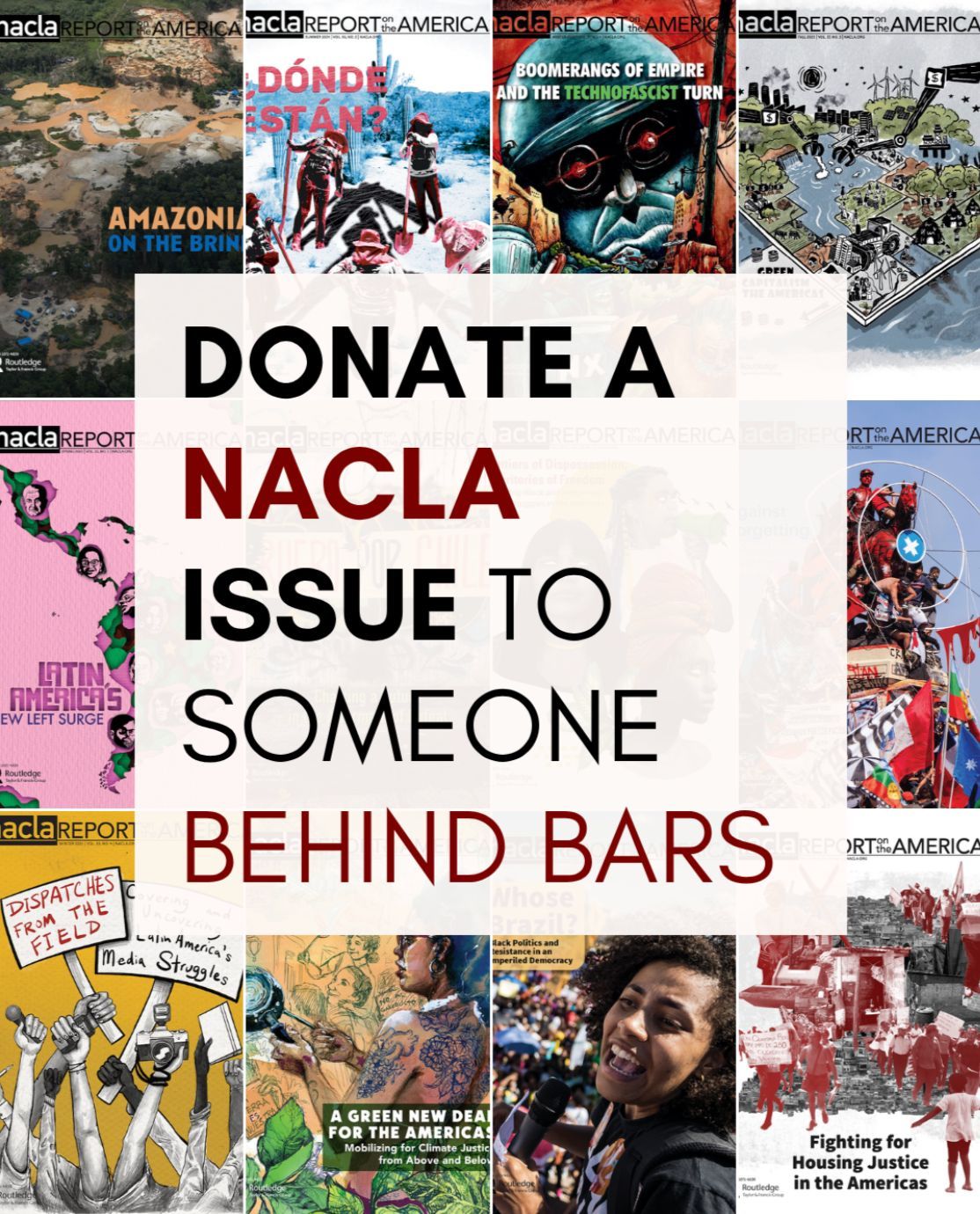
DONATE AN ISSUE OF THE NACLA REPORT TO SOMEONE BEHIND BARS
NACLA is proud to announce a new partnership with NYC Books Through Bars, a volunteer-run group that sends donated books to incarcerated people across the country.
NYC Books Through Bars has a standing call for Latin American and Indigenous histories, which NACLA is happy to provide.
For $15, you can donate an issue of the NACLA Report to someone who has been deprived of liberty in the ever-growing U.S. prison and detention system.
Want to donate your own books or NACLA issues to a local chapter? Look up a Books-Behind-Bars organization near you!
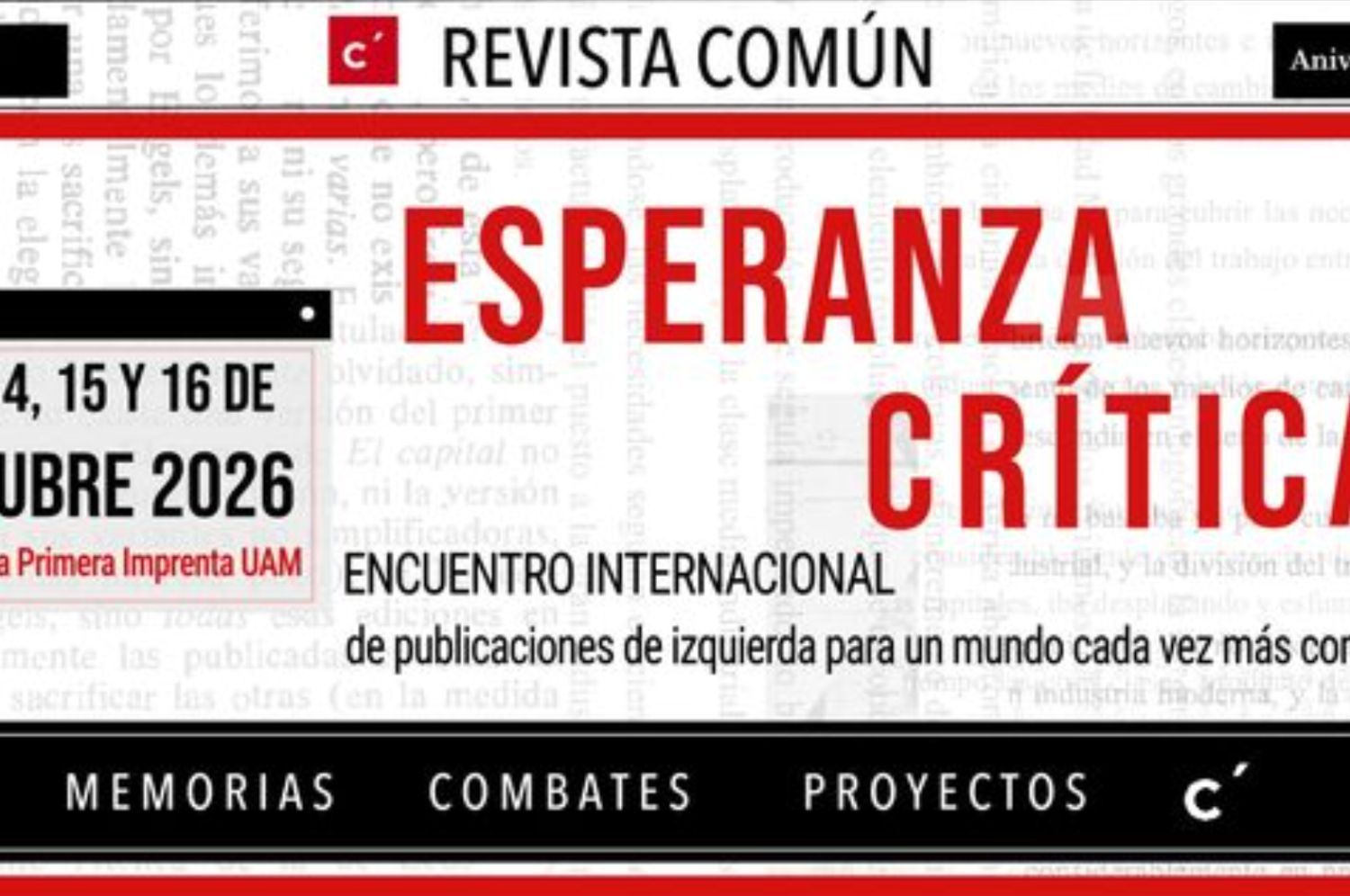
NACLA joins progressive publications from across Latin America in Mexico City to reflect on the rise of the far right, a changing media landscape, and the possibilities of critical left journalism.
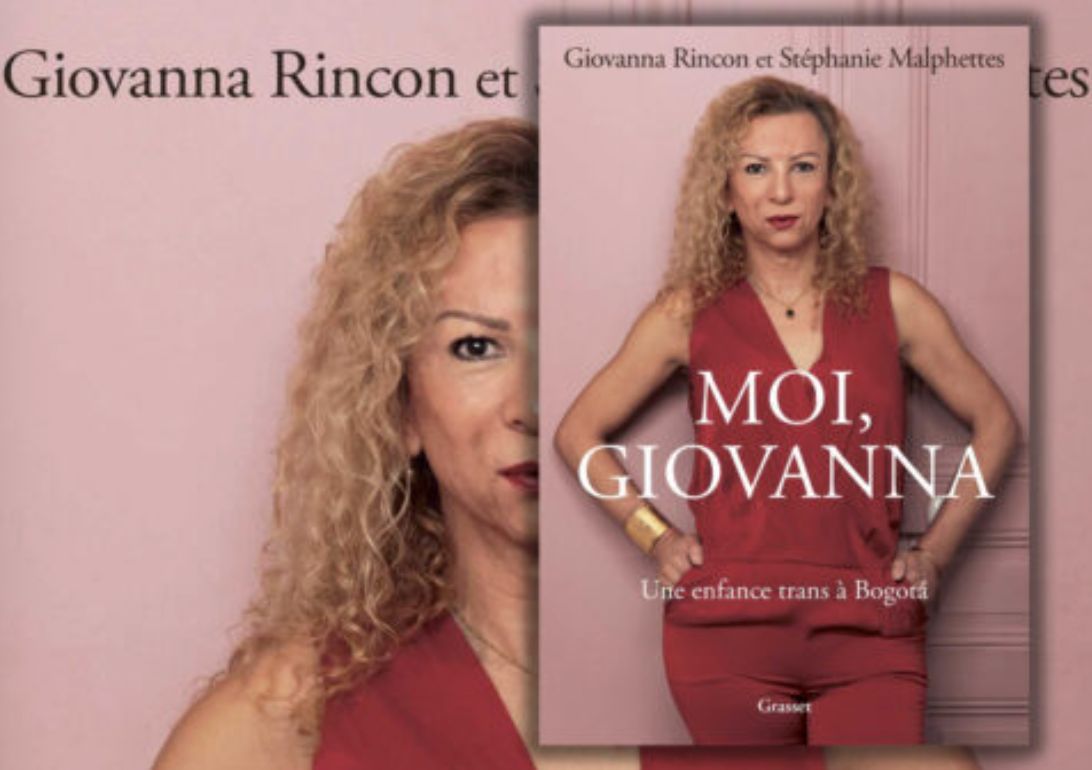
In her autobiography, Giovanna Rincón, a renowned transgender activist living in Europe, recounts her difficult upbringing in Bogotá, her battle with HIV, and her knack for survival
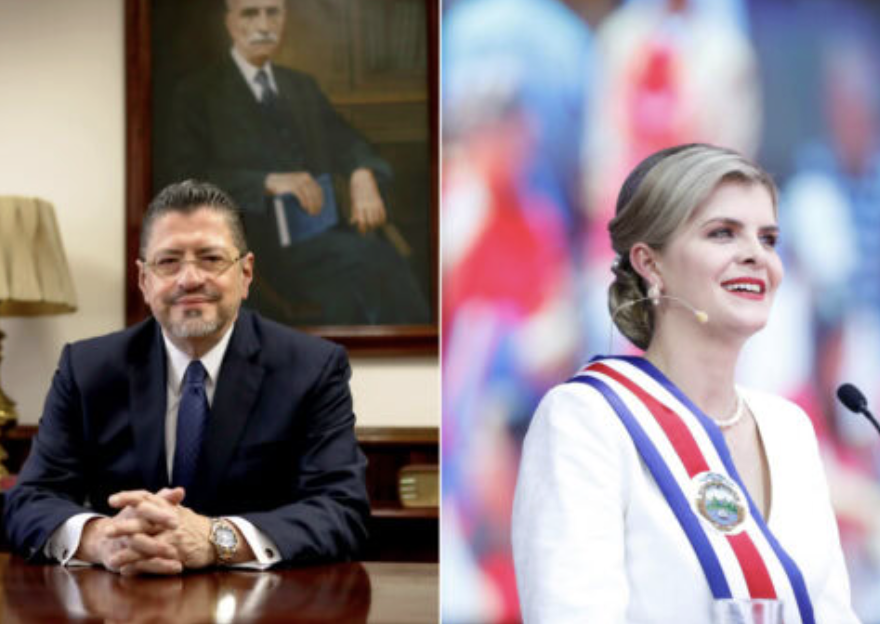
Costa Rica is in the midst of an intense period of political upheaval driven by the right-wing populist project of former President Rodrigo Chaves and his successor
IMAGE OF THE WEEK
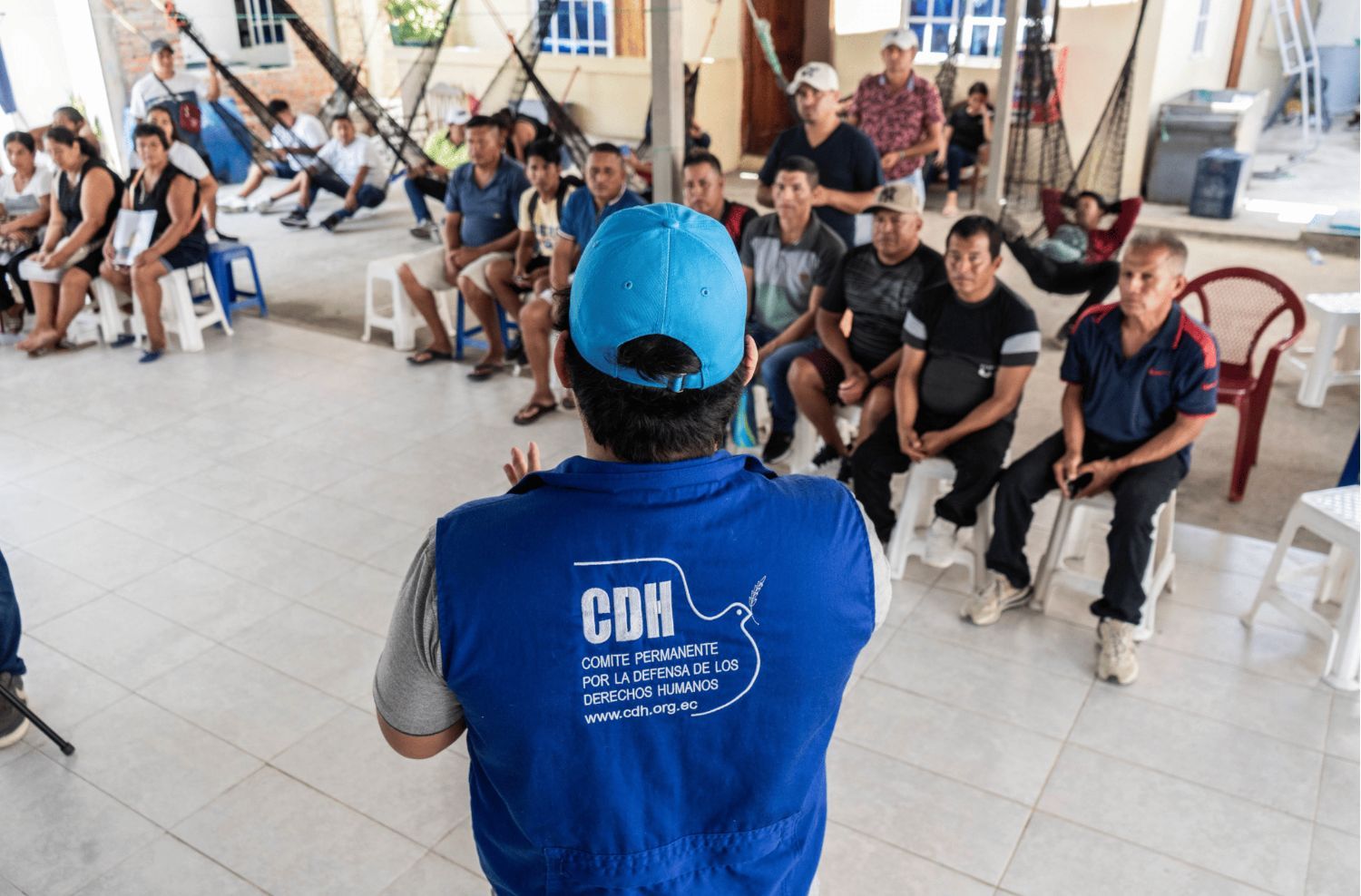
The Permanent Committee for the Defense of Human Rights (CDH) in the fishing community of San Mateo, Manta. Read more about how fishing communities in Manta have been devastated by U.S. attacks on boats in the Pacific in Blair Goodman's article for NACLA, published this week. (Billy Navarrete)
AROUND THE REGION
TORTURE AT THE DETENTION CAMPS?—Conditions at the infamous immigrant detention center “Alligator Alcatraz” in Florida were reportedly even worse than advocates feared. According to a report released this week by the Department of Homeland Security’s Inspector General, federal investigators visiting the site, which shut down in June, observed at least 79 cases of detainees being put in small metal cages labeled as “calming areas.” The report also detailed how the site, which consisted of makeshift tents constructed on an abandoned airstrip in the Everglades, did not comply with a number of other federal regulations on detention dealing with food safety, personal hygiene, medical care, and recreation. Detainees reportedly were served spoiled food, only permitted to shower three times per week and given about one-third of the living space mandated by law, among other crimes. Inhumane conditions remain a structural feature of the U.S. detention system. In the last year, three ICE detainees died at Delaney Hall in Newark.
COLOMBIA’S WAR ON STUDENT PROTEST—Colombia’s far-right President Abelardo de la Espriella has set his sights on the country’s powerful student movement. During a public address on Sunday, he announced that his administration would create a national protocol that would enable the police to enter public university campuses to quash protests that “threaten public security.” His announcement came days after student protests in Bogotá to defend higher education and express solidarity with Palestine led to minor incidents of vandalism and violent repression by police forces. De la Espriella also took aim at university autonomy itself, a hard-fought right that is enshrined in the Colombian Constitution. Though he gestured at protecting the right to protest, he cast public university campuses as lawless spaces, and spoke of urban terrorism. Security forces do not carry out security operations on large public campuses often, partly due to the bloody 1984 operation that killed at least 17 students on the campus of the Universidad Nacional in Bogotá. However, police can and do enter public campuses when a crime has been committed.
LATIN AMERICAN LAND DEFENDERS—Latin America was once again the most dangerous region to be an environmental activist in 2025. Global Witness’ Annual Report, published on Wednesday, showed that 85 percent of land defenders killed last year were from the region. Once again, Colombia was the deadliest country in the world, with 39 people killed; Brazil was second, followed by Honduras. While the total number of people killed was lower than in previous years, the report notes that the figures are likely an undercount. The decline can be partly attributed to powerful actors increasingly subjecting vulnerable communities to nonlethal attacks and judicial criminalization instead. The report noted that the Trump administration’s massive cuts to foreign aid have destabilizedlocal communities which can no longer rely on USAID-funded programs that helped Indigenous peoples and small landholders stay on their lands. Local communities across the region also warned that the renewed U.S.-led offensive on “narcogangs” is causing criminal groups to drive further into frontier communities to escape state pressure.
SHEINBAUM DEFENDS MEXICAN SOVEREIGNTY—During a morning press conference on Monday, Mexican President Claudia Sheinbaum lashed out at right-wing forces in the United States and their allies in Mexico, accusing them of seeking to gin up support for U.S. military intervention in the country. Sheinbaum referenced an extremely dubious State Department document cited by News Nation, a right-wing U.S. outlet which claims that a recent survey showed that a majority of Mexicans support direct U.S. intervention to dismantle drug labs, and arrest criminal leaders. Mexican news outlet Aristegui Noticias then picked up the story. Sheinbaum said the finding was absurd, pointing to the strength of Mexican nationalism and past instances of U.S. intervention as justification; she also said that a different poll had recently put the number below 10 percent. Speaking about opposition-aligned corporate media, she said “they’re becoming bigger and bigger liars; people are believing them less and less.”