| |  | | The final episode of the Under the Shadow podcast is out! Here, host and former NACLA editor Michael Fox shares his reflections on the making of the series. When I started working on the first season of my investigative history podcast Under the Shadow, I had a clear idea about the story I wanted to tell—a story of revolutionary uprisings and U.S. intervention in Central America. I'm pretty familiar with the history. Twenty years ago, I went to El Salvador as an election observer and ended up volunteering for months at the Museum of Word and Image in San Salvador, helping to preserve the archives of the rebel Radio Venceremos. In many ways, that experience planted the seed for this podcast. 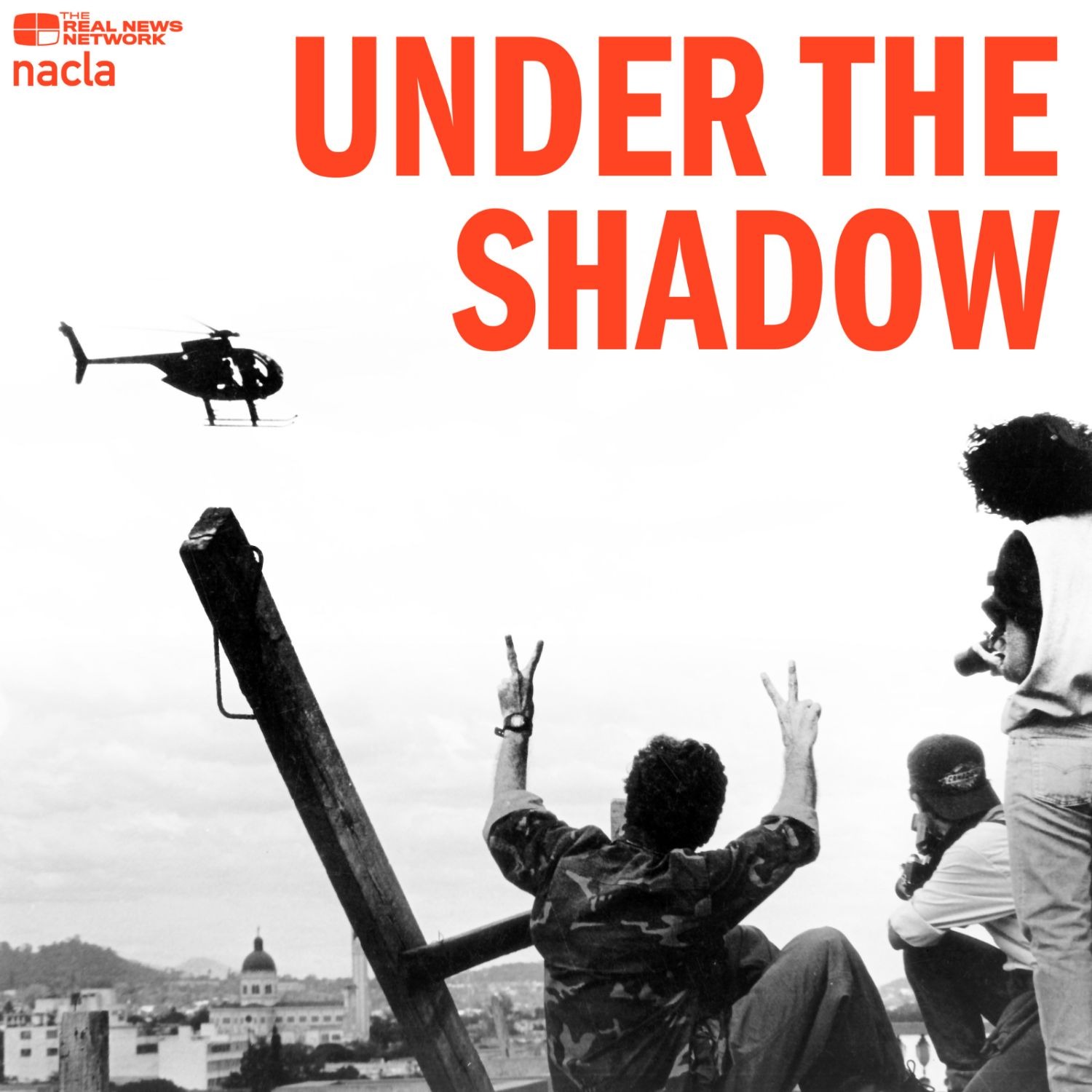 But when I started to walk into the past, digging through layers of history sometimes hidden in plain sight or buried just below the surface, I was surprised by just how much there was to uncover. Standing in the places where history was made and talking to people who have lived through the aftershocks, I became all the more convinced that we can’t make sense of Latin America today without really understanding the past.
And when it comes to a past too often forgotten or buried in history books, first, we have to go back in time.
That's what I've tried to do with this first season of Under the Shadow, co-produced by NACLA and The Real News Network. My goal was to take listeners on a journey across Central America, to touch the past, to understand the role of U.S. intervention abroad and the legacy of those actions today. I don't just talk about it. I take you there. My family and I spent most of last year traveling through Central America. In this series, I take you to the locations where key events happened. You hear from me on location, as well as from the people who were impacted by the struggles and conflicts that shaped the course of history. It has been an incredible journey. I found homes built by United Fruit. I visited memorials for the disappeared. I walked in the footsteps of U.S. filibuster William Walker. And I met victims of the 1989 U.S. invasion of Panama. Along the way, I also met many migrants heading north to the U.S. border. In one way or another, they are almost all fleeing past and current U.S. policies—the Monroe Doctrine, sanctions, support for authoritarian regimes, coups, and neoliberal policies—that have kept a boot on the region’s neck for 200 years. In the podcast, I walk you from the past into the present. My goal is to take you on an immersive ride. To let you close eyes and dive into a world decades in the past, in countries far away. My friend Santiago at El Salvador's Museum of Word and Image told me that the museum is “a song to the struggle of fighting against the forgotten.” This podcast is my own attempt at historical memory, my homage to the past, in honor of the victims of U.S. violence abroad. If you haven't heard it yet, give it a listen. You won't be disappointed. In solidarity,
Michael Fox P.S. If you enjoy the series, please help us by liking it, following it, and sharing it with a friend. You can listen on NACLA, Spotify, Apple, YouTube, or wherever you listen to podcasts. Helping us to spread the word is the best way to ensure that these stories are heard. Thank you so much. |
| |
|
|
|
| | UNDER THE SHADOW - FINAL EPISODE! |
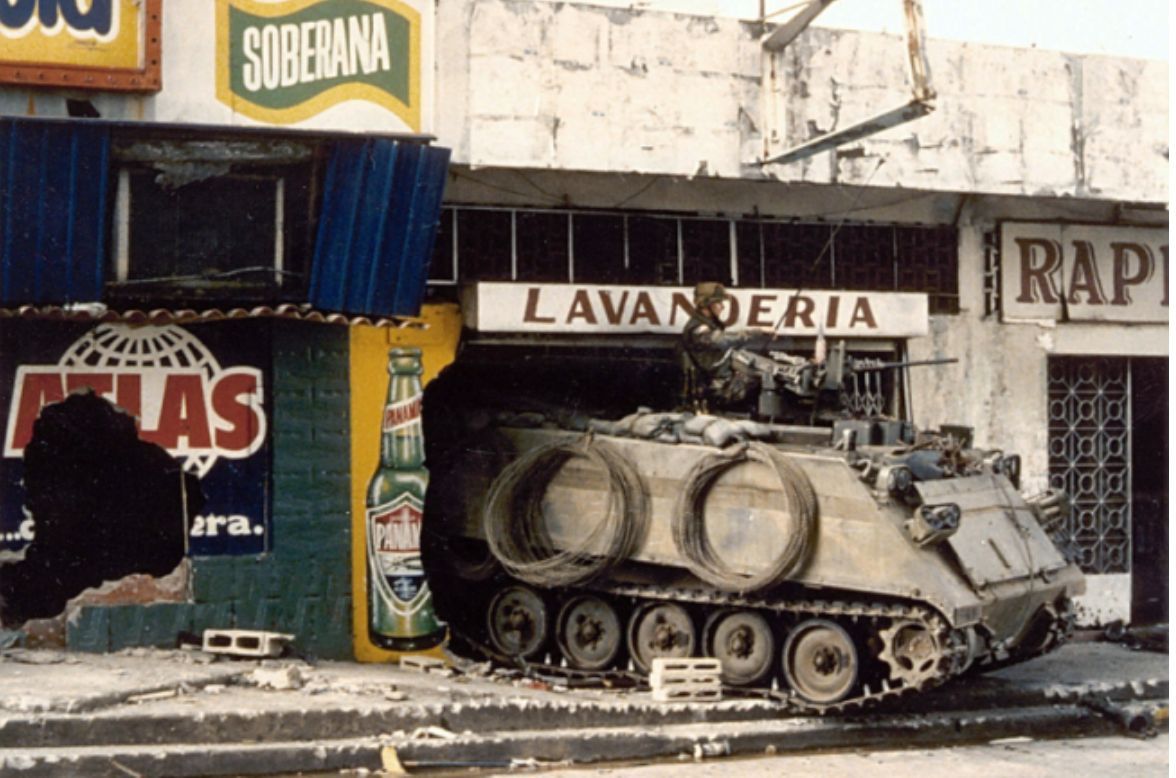
| THE U.S. INVASION OF PANAMA On December 20, 1989, the United States invaded Panama with tens of thousands of troops. It was the largest U.S. invasion since Vietnam. In this closing episode, host Michael Fox takes us to the working-class Panama City neighborhood of El Chorrillo, which received the brunt of the U.S. attack. Check out the complete season of Under the Shadow. And, consider supporting this kind of on the ground, investigative journalism by making a donation today. |
|
|
| | | | | | | | |
|
| | 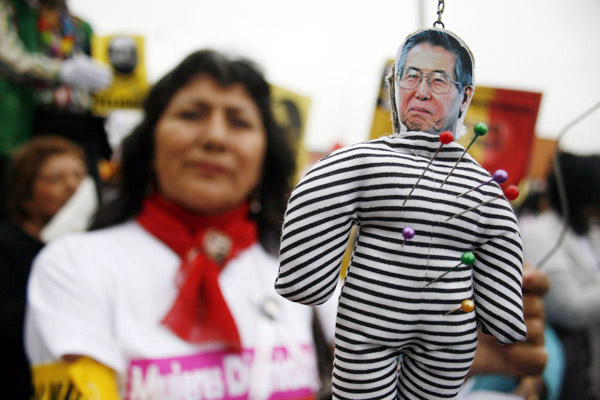 | "The people opened their eyes." A protest against the candidacy of Keiko Fujimori in Peru in 2011, featuring the face of her father and former Peruvian President Alberto Fujimori. Fujimori Sr. was convicted in 2009 of human rights abuses committed during the country's internal armed conflict. He died Wednesday in Lima. Read more in Javier Puente's piece for NACLA on his dark legacy. Image: Flickr / elhombredelotrodia |
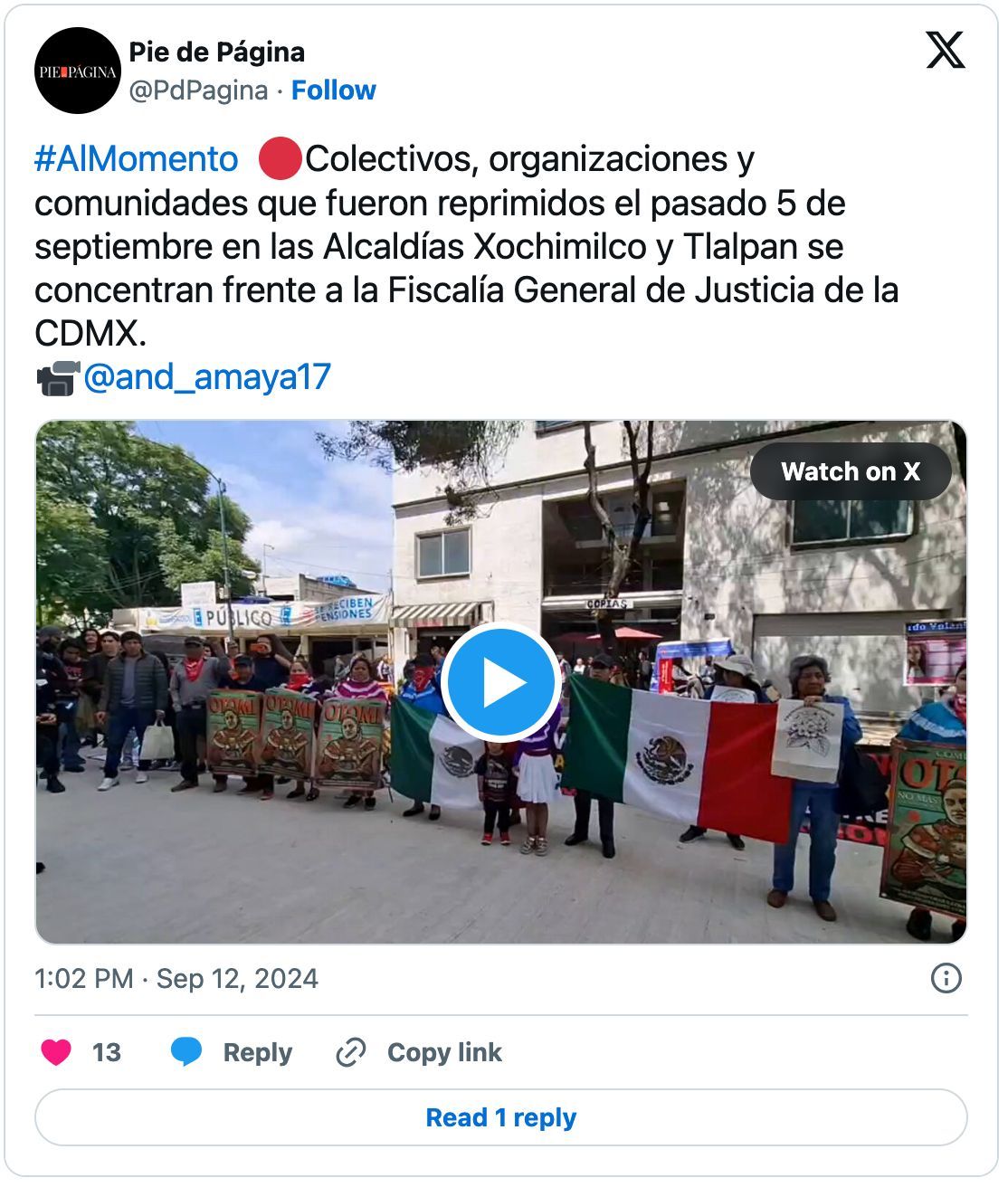
| | | - LAND DEFENSE AND REPRESSION IN XOCHIMILCO — During a peaceful protest in the Xochimilco district of Mexico City on September 5, demonstrators were brutally attacked by a group suspected of being hired by the local government. The protesters had gathered in support of land defender Hortensia Telésforo, who has been targeted by authorities and politicians for her efforts to defend the land, water, and public spaces in the San Gregorio Atlapulco community of Xochimilco. In August, Telésforo was notified of a criminal proceeding against her for the crime of “dispossession” for her role in efforts to recover a public library in the community that had been closed for years and reportedly used by members of the Mayor’s Office to host private parties. During the peaceful protest in Teléforo’s defense last week, 30 masked individuals with sticks and knives violently interrupted the action. Five demonstrators were detained during the repressive police response. Protesters believe that the attack was organized by Xochimilco municipal authorities in order to intimidate Telésforo and other community organizers. Allies are circulating a petition in support of Telésforo and Indigenous peoples fighting for self-determination in Mexico.
- GONZALEZ FLEES VENEZUELA — Venezuela’s opposition presidential candidate Edmundo González, who is widely believed to have won last month’s presidential election, fled to Spain on Sunday, days after an order was issued for his arrest. González met with Spanish Prime Minister Pedro Sánchez on Thursday, who posted on X that extending asylum to González was a sign of Spain’s “humanitarian commitment and solidarity with Venezuelans.” The move has strained relations between Madrid and Caracas. On Wednesday, the president of Venezuela’s National Assembly called for “the immediate rupture of all diplomatic relations, of all commercial relations” between the two countries. González says he will continue efforts to negotiate a transfer of power, although Reuters reports that his departure “has largely extinguished hope for political change” among the country’s voters. On Thursday, President Biden issued sanctions against 16 Venezuelan judges, election officials, and government allies for their alleged role in suppressing last month’s election results.
|
|
|
| -
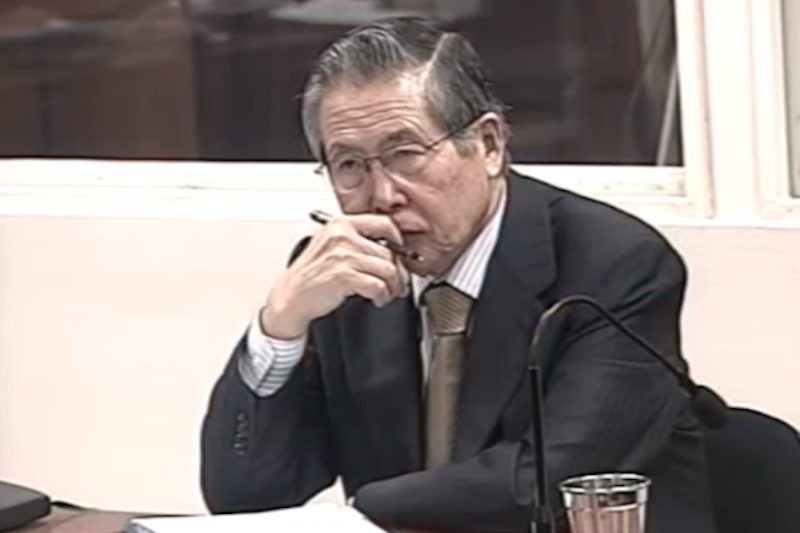
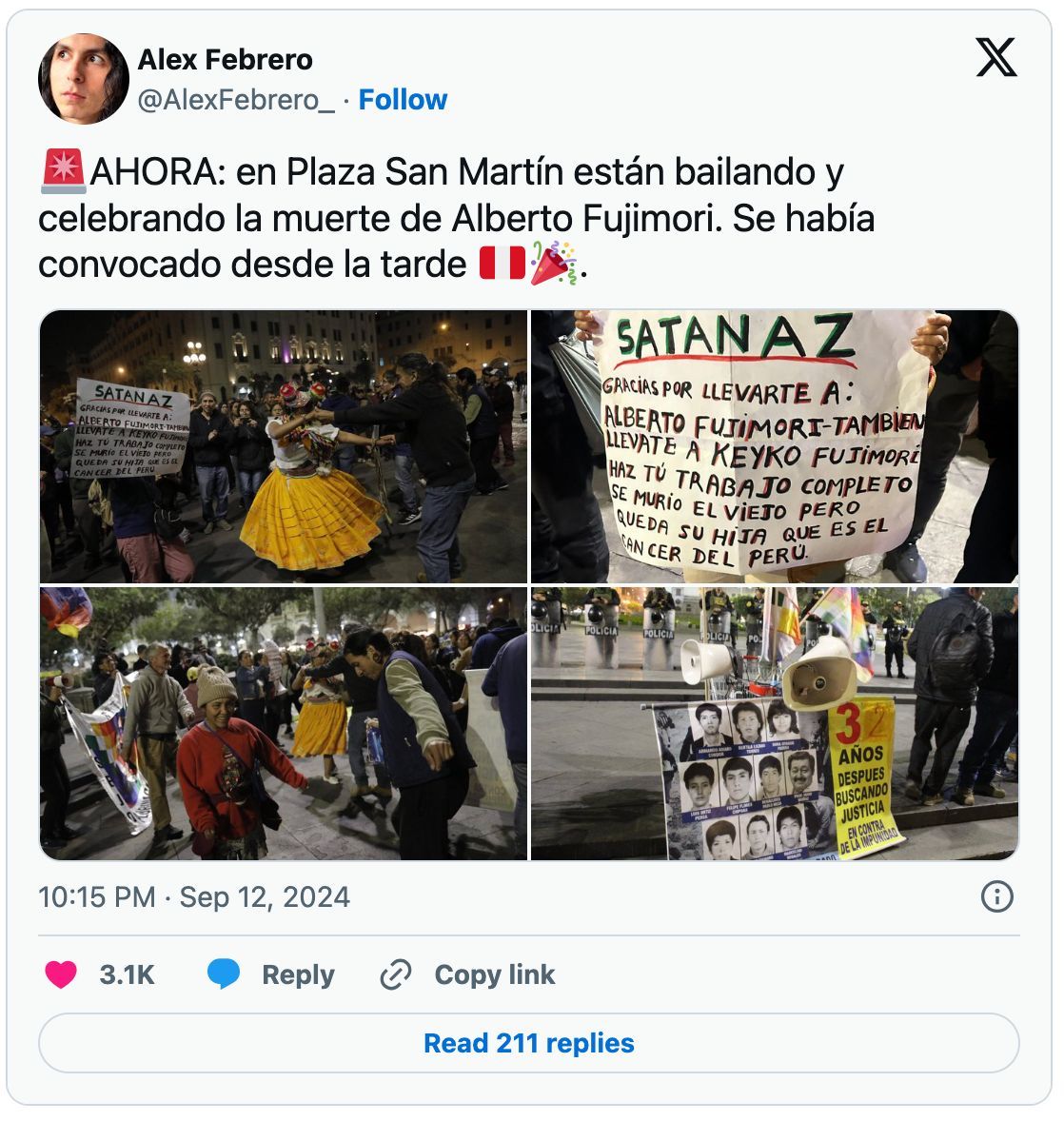
FUJIMORI’S DEATH — Former Peruvian President Alberto Fujimori died Wednesday in Lima. He was 86. Fujimori ruled the country between 1990 and 2000, during which time he oversaw gross human right violations in the context of the government’s war against the Shining Path. In 2009, he was sentenced to 25 years in prison for two massacres carried out by a military death squad under his command that killed 25 people. Fujimori repeatedly sought a presidential pardon, which was granted by President Pedro Pablo Kuczynski in 2017. The pardon was annulled by the country’s Supreme Court the following year, but last December, Peru’s Constitutional Court reinstated the pardon and ordered Fujimori’s release. His daughter, Keiko Fujimori, served as first lady of Peru from 1994 to 2000 after her mother accused Fujimori of kidnapping, corruption, and torture. Keiko ran for president in 2011, 2016, and 2021 but was defeated each time in the second round. In July, Keiko announced that her ailing father was planning to run for a another presidential term in 2026. Peruvian President Dina Boluarte has declared three days of national mourning for Fujimori and lowered flags to half-mast in government and military buildings. - PARAGUAY’S SEX EDUCATION CURRICULUM — Paraguay’s Ministry of Education has endorsed a national sex education curriculum for the first time. The program promotes abstinence, discourages contraception, introduces sex as “God’s invention for married people,” and makes no mention of sexual orientation or identity. Paraguay has the second highest rate of teenage pregnancy in South America and some of the world’s strictest abortion laws, which punish abortions with prison time even in cases of rape or incest. In 2017, Paraguay became the first country in the region to ban school discussions about gender identity. While some hoped the long-awaited sex education curriculum would help address Paraguay's youth pregnancy crisis, critics say the project is being driven by religious fundamentalism. According to the curriculum, masturbation causes “frustration and isolation” and girls should be careful about “how their way of dressing makes men behave.” Called the “12 Sciences of Sexuality and Affectivity Education," the curriculum will be piloted across five eastern regions in September before being implemented nationwide. Conservative parents’ rights groups praise the plan as a way of teaching morals and protecting young people.
- AMLO PASSES JUDICIAL REFORM — Mexico’s governing Morena party passed a controversial judicial reform in the early hours of Wednesday morning that will see judges elected by popular vote. Outgoing President Andrés Manuel López Obrador says the reform will reduce corruption and make judges more accountable to the people, but critics say it could undermine the country’s system of checks and balances and make judges susceptible to private interests. The plan has sparked weeks of protests by judicial employees, and protesters stormed the Senate chambers on Tuesday night in an effort to block the legislation, forcing the senators to relocate to another building. López Obrador said he would sign the measure into law by Mexico’s celebration of Independence Day on Sunday, allowing the president to finalize the judicial overhaul just weeks before he leaves office on September 30. Over the course of the tense debate surrounding the changes, there has been growing recognition, even among opponents, that some kind reform is necessary. Read an explanatory post by Alex González Ormerod of the Mexico Political Economist.
|
|
|
|
|
|
|
| | | North American Congress on Latin America
53 Washington Sq South, Fl. 4W | New York, New York 10012
(212) 992-6965 | [email protected] |
| |
|
| |
|
|