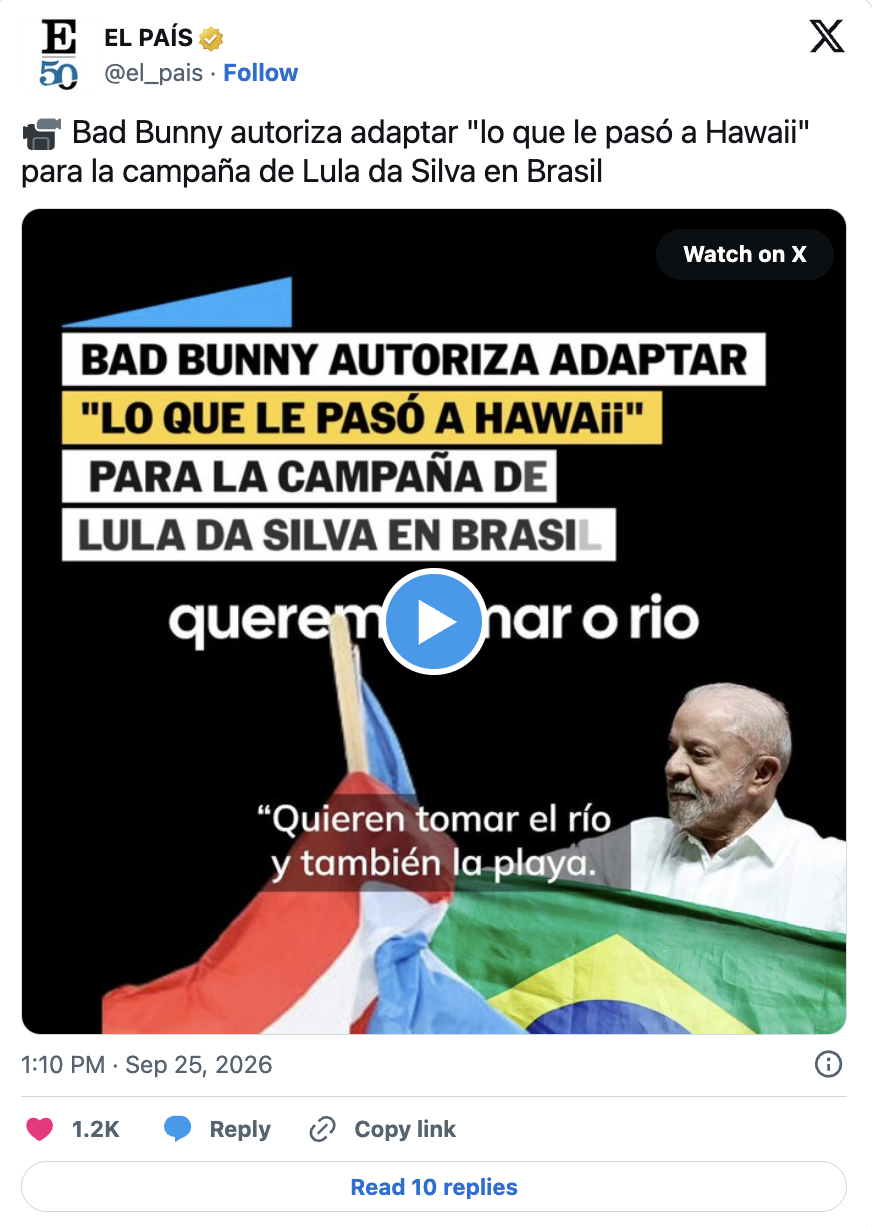
All eyes are on Brazil. On Sunday, nearly 160 million voters will go to the polls in the region’s largest democracy, economy, and source of critical natural resources. Luiz Inácio “Lula” da Silva, the incumbent center-left leader running for a historic fourth term, is currently narrowly leading far-right challenger Senator Flávio Bolsonaro, son of former President Jair Bolsonaro, in the polls. Nevertheless, the margin is extremely thin and a second-round run-off, set for October 25, is expected. But while the setting may be familiar, the stakes are different: the Trump administration’s renewed economic and military offensive in the region has put sovereignty and national defense at the center of the campaign.
Lula, the 80-year-old former metalworker seeking a fourth term, has long centered economic issues on the campaign trail. In the lead-up to Sunday’s elections, he has sought to bolster his image as a champion of the working class, banning sports-betting, boosting welfare payments, and creating new debt-relief initiatives. Even still, while economic matters remain important, this time, the focus has been largely on defending Brazilian “sovereignty,” a word that appears 31 times in his platform. Lula has adeptly cast himself as a left-wing nationalist—a tricky endeavor in a country with a history of military dictatorship that he himself helped topple —and reaped political benefit from his right-wing rivals’ ties to the Trump administration. U.S. tariffs, some of which were the product of direct lobbying by the Bolsonaro family, have wreaked havoc on the economy, and U.S. sanctions on judges and threats of military intervention have not been well received. In recent weeks, Lula has gone to great lengths to bolster his nationalist bona fides, focusing intensely on the defense sector, praising the country’s armed forces, and declaring in his UN speech that Brazil does “not fit in anyone’s backyard.”
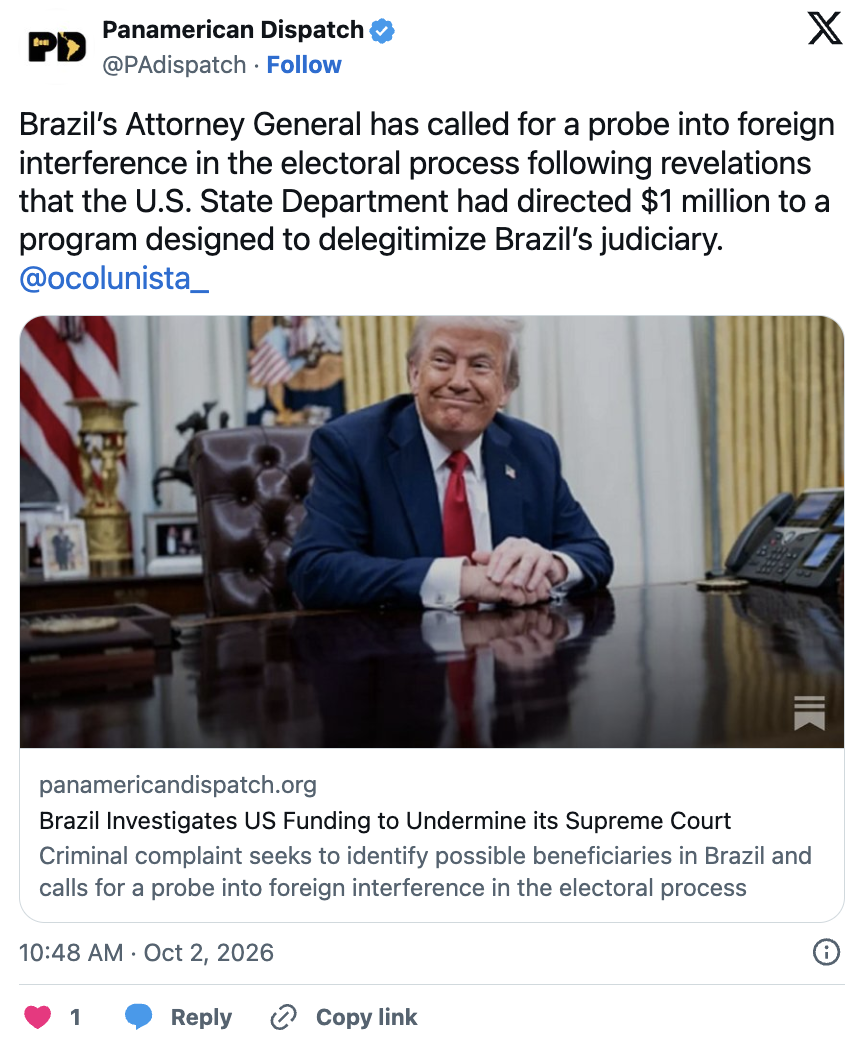
The Brazilian left’s warnings against U.S. intervention are not hypothetical—the Trump administration has been credibly accused of financing pro-Bolsonaro content and attempting to tilt prediction markets in his favor. Even still, in the days leading up to the election, this interference is likely to accelerate.
Lula’s campaign, dynamic in its messaging and positive in its vision for the future, stood in stark contrast to that of his opponent Flávio Bolsonaro, whose homophobia, penchant for defending the country’s military dictatorship, and fearmongering about crime echo the recent campaigns of his far-right allies across the region. Nevertheless, while Brazilians are worried about organized crime, the Trump administration’s use of the “terrorist” label against criminal organizations like the country’s criminal groups Primeiro Comando da Capital and Comando Vermelho—directly asked for by Flávio —has been widely perceived as a direct form of election interference. Bolsonaro has also failed to tie Lula to these organizations and has gotten in legal trouble for his slanderous accusations that Lula has abetted terrorism. The far-right candidate has also been dogged by his father’s legal trouble: in November, Jair Bolsonaro was sentenced to 27 years in prison for his role in an attempted coup d’etat in 2022. Even still, Flávio is polling neck and neck with Lula, and the alleged ties of some of the incumbent’s allies in a massive banking scandal, known as Banco Master, have made it harder to hammer Flávio for his blatant corruption.
Brazilians are also voting for legislators, which will determine the balance of power in the country and the prospects for governing moving forward. All 513 members of the Chamber of Deputies and 54 Senate seats are up for grabs, with the right expected to do very well. Governors across the country will be on the ballot as well.
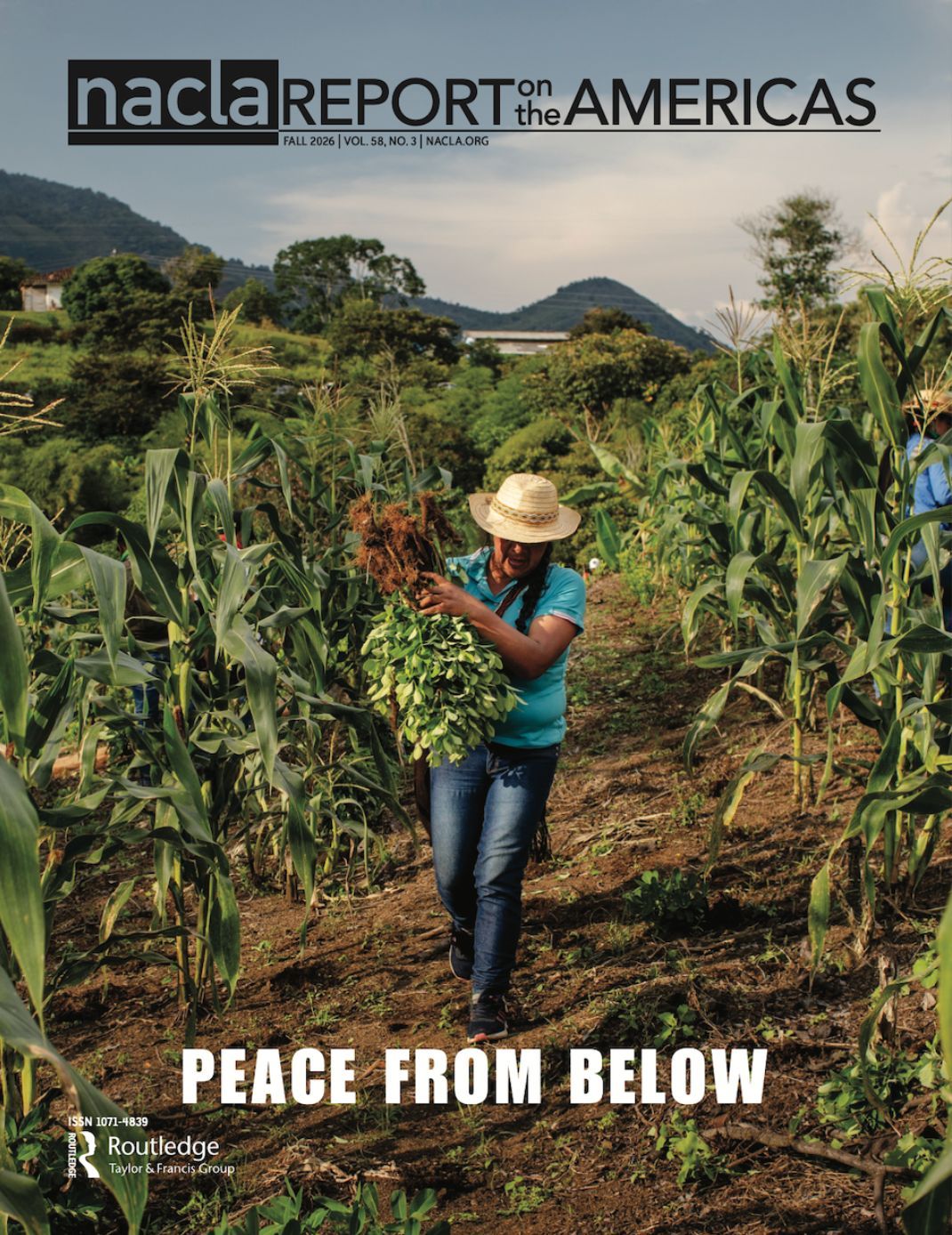
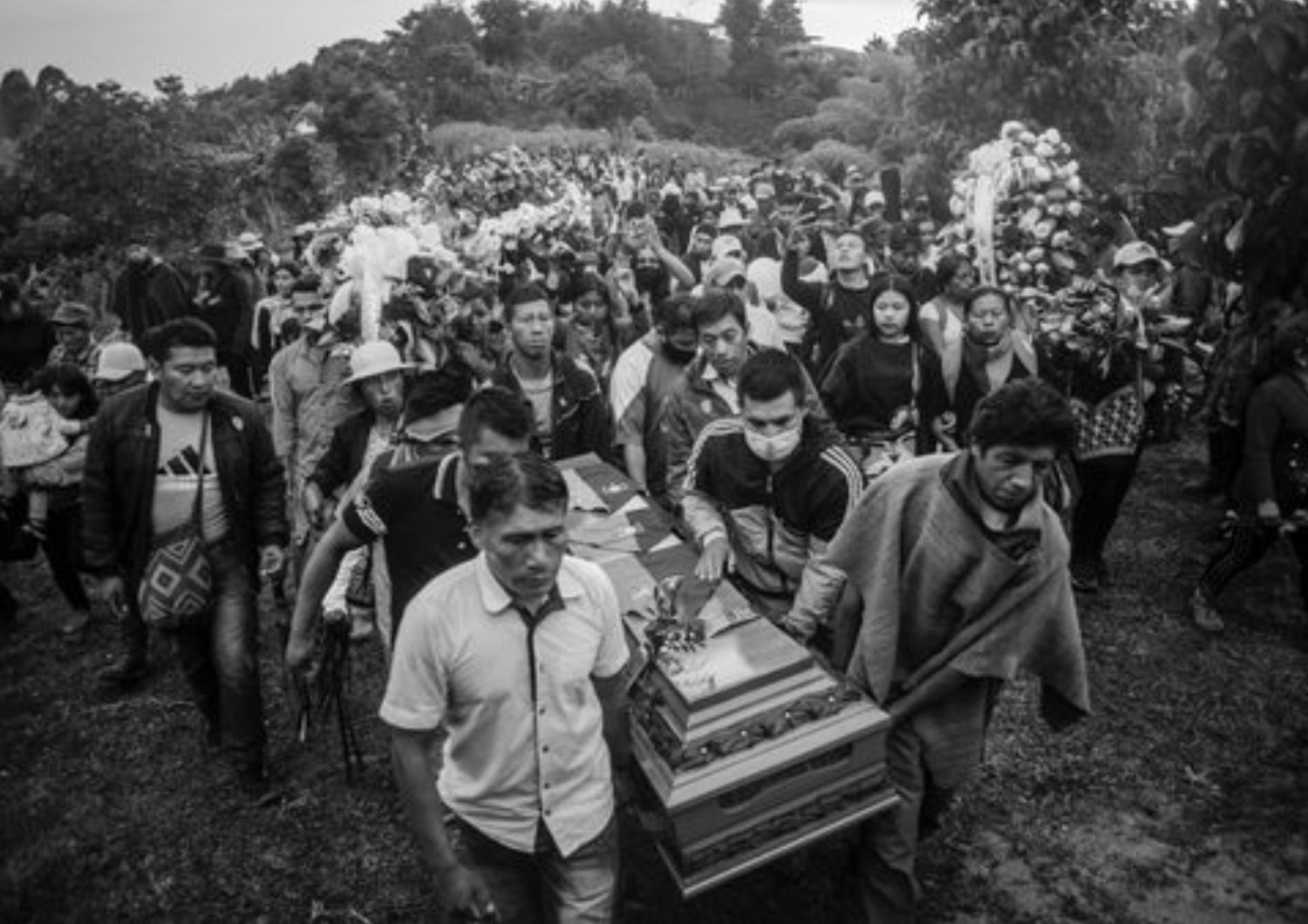
The Fall 2026 issue of the NACLA Report, "Peace from Below," guest edited by Anthony Dest and Diana Gómez Correal, reflects on the promises, achievements, and shortcomings of the Peace Agreement by foregrounding the people and communities most affected by the armed conflict. Bringing together voices from across Colombia—including Peace Agreement signatories, victims’ organizations, campesinxs, Indigenous and Afro-descendant communities, and women’s and LGBTIQ+ organizations—the issue examines how communities continue to organize amid enduring violence and uncertainty. At a critical political juncture, their experiences illuminate both the limits of institutional peacebuilding and the possibilities of building peace from below.
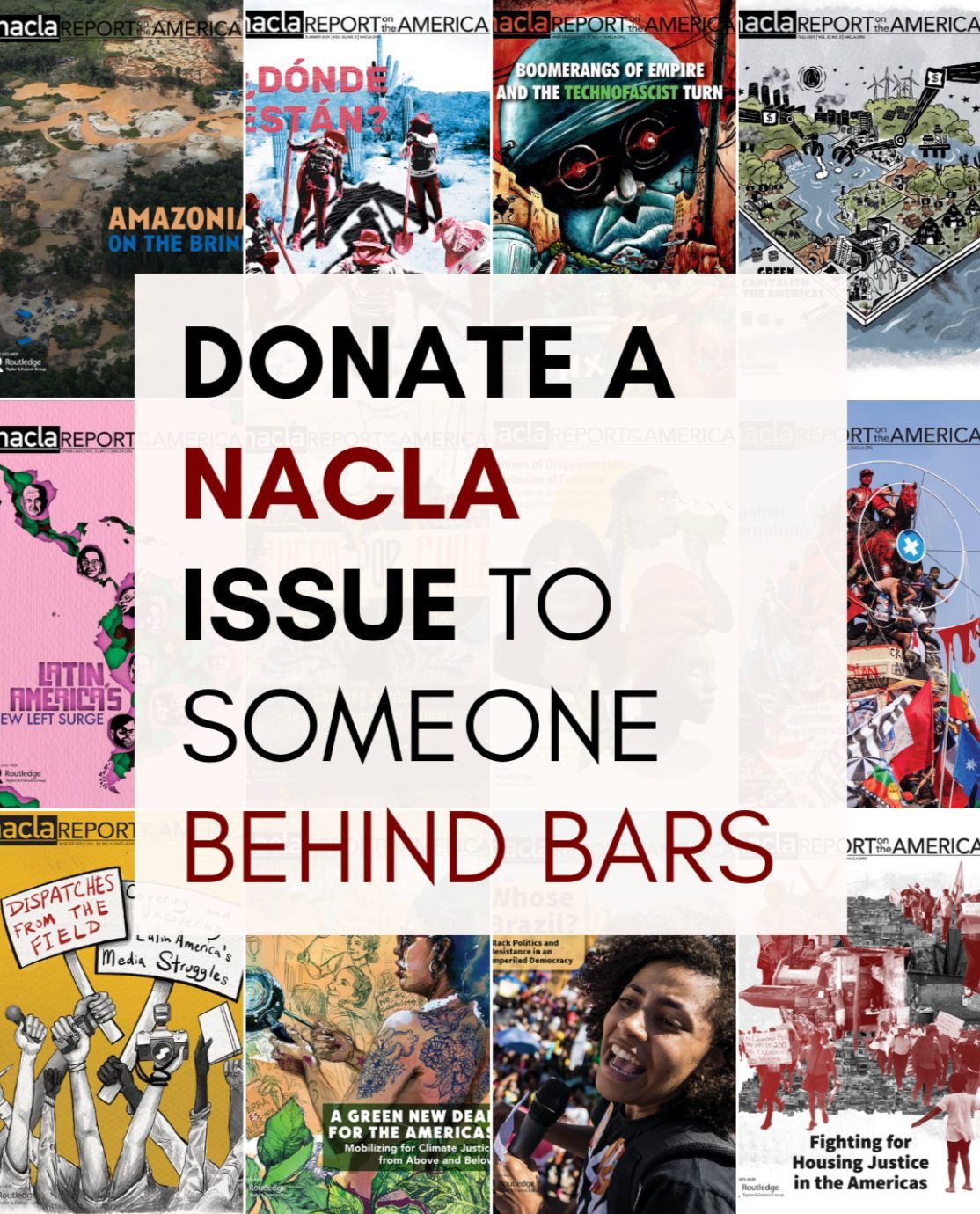
DONATE AN ISSUE OF THE NACLA REPORT TO SOMEONE BEHIND BARS
This past rainy Sunday, we dropped a box of NACLA Report issues to Michael, a NYC Books Through Bars volunteer, who was busy sorting letters and book requests from people deprived of their liberty. Michael recounted how grateful he was for NACLA’s reporting while he wrote his thesis, decades ago. While we have tools to measure NACLA’s current reach, the number of people who have held NACLA in their hands over the past 60 years is incalculable.
For years, we’ve talked about getting NACLA into the hands of people behind bars: Now, for $15, you can donate an issue of the NACLA Report to someone in the ever-growing U.S. prison and detention system.
Want to donate your own books or NACLA issues to a local chapter? Look up a Books-Behind-Bars organization near you to get involved!
Panamerican Dispatch is a new independent journalism project created in September 2026 to produce and distribute news and analysis from Latin America, within the United States. Panamerican Dispatch is a project of The Real News, in partnership with Global Exchange and NACLA.
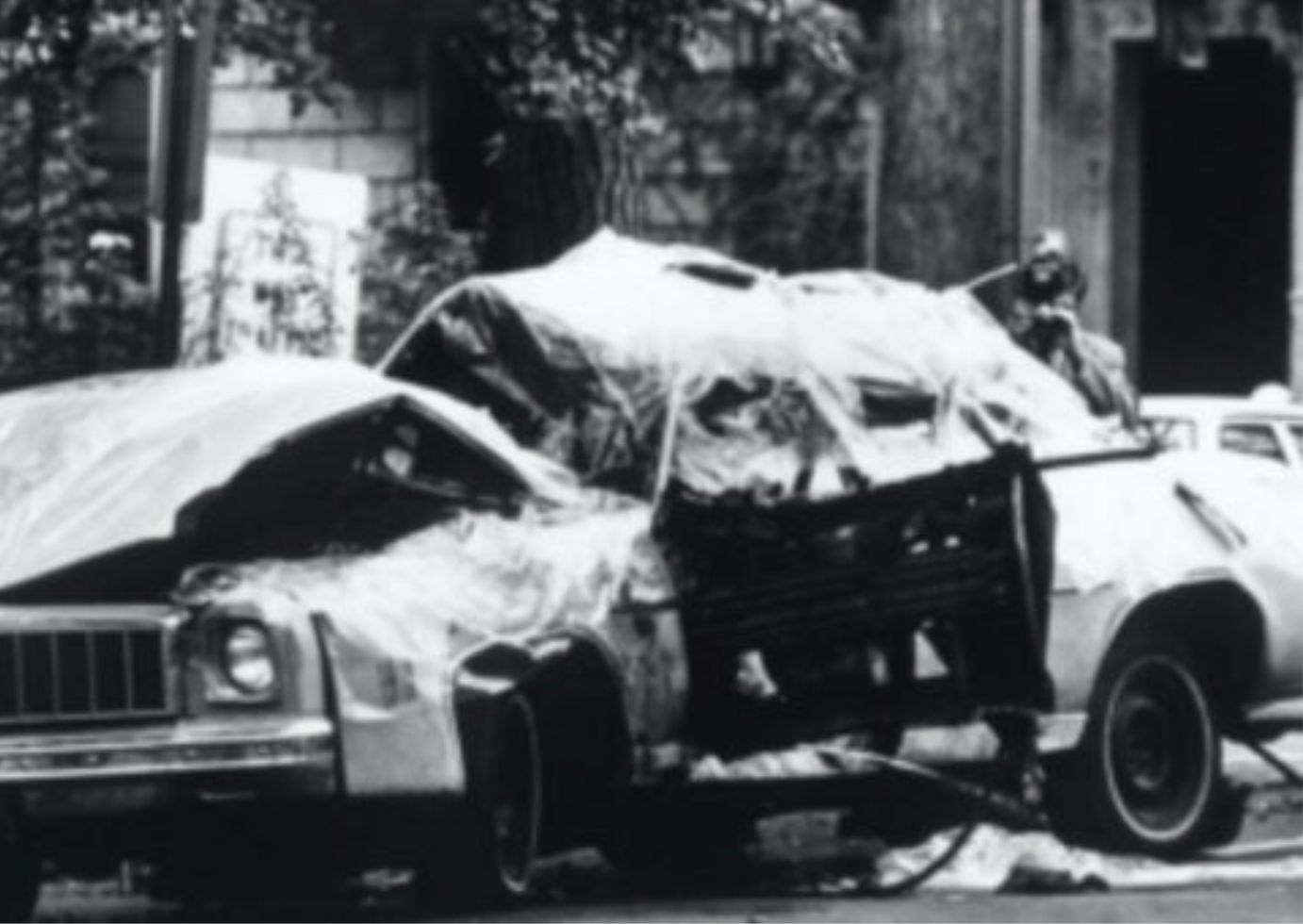
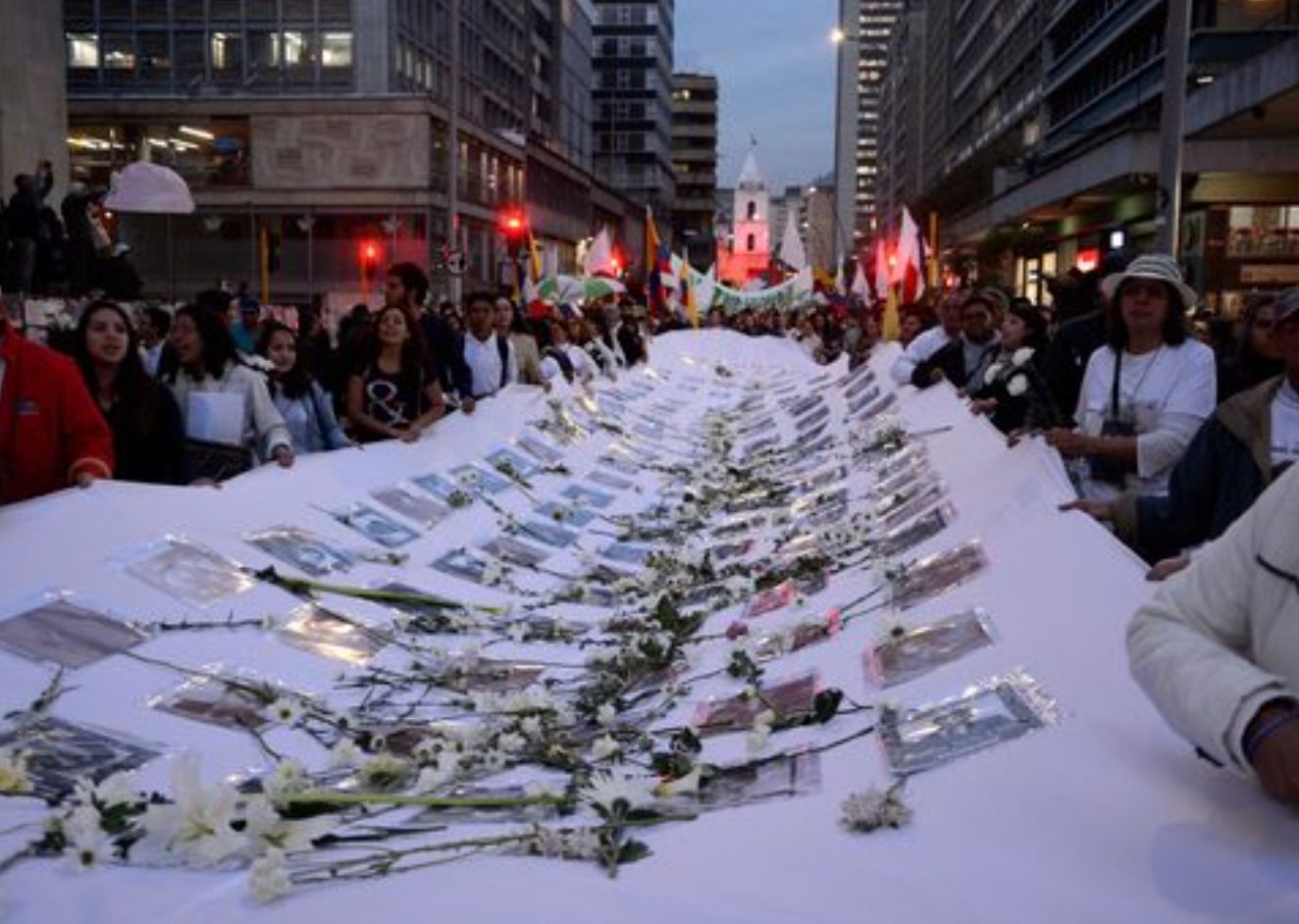
Orlando Letelier was assassinated 50 years ago this week on Embassy Row. Henry Kissinger could have stopped it. Now, transnational terrorism is a commonplace.
The Fall 2026 issue of the NACLA Report marks the 10th anniversary of Colombia’s Peace Agreement, centering grassroots struggles for dignity, justice, and lasting peace.
El número de otoño de 2026 del NACLA Report conmemora el décimo aniversario del Acuerdo de Paz de Colombia, poniendo en el centro las luchas populares por la dignidad, la justicia y una paz duradera.
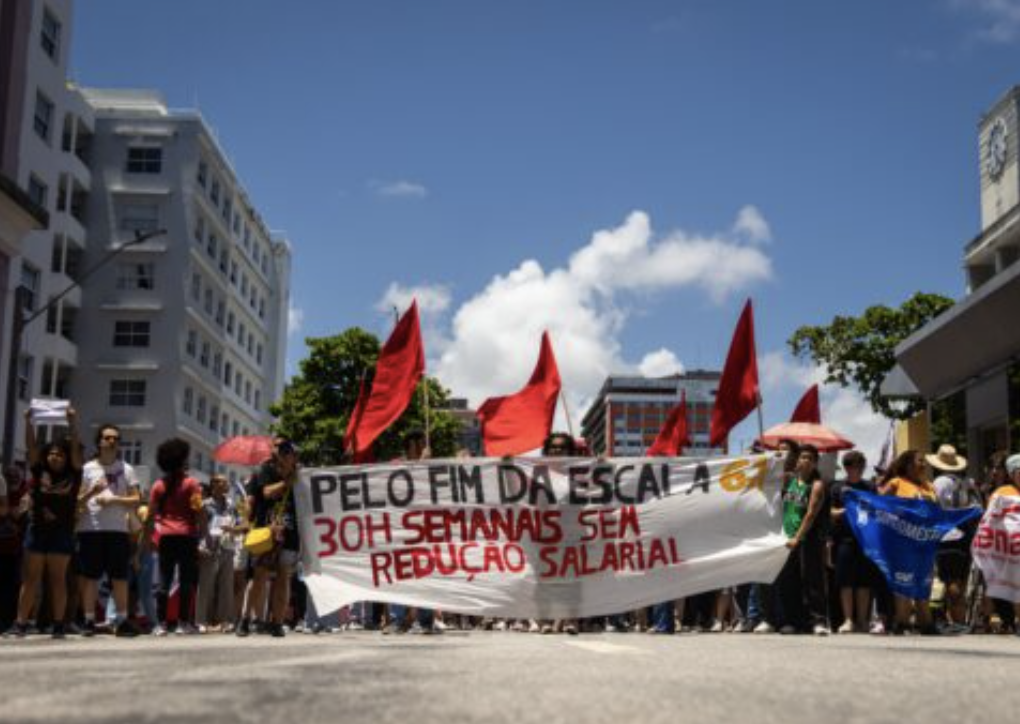
Ahead of the country’s general elections, a proposal to shorten the workweek from six days to five is gaining ground.
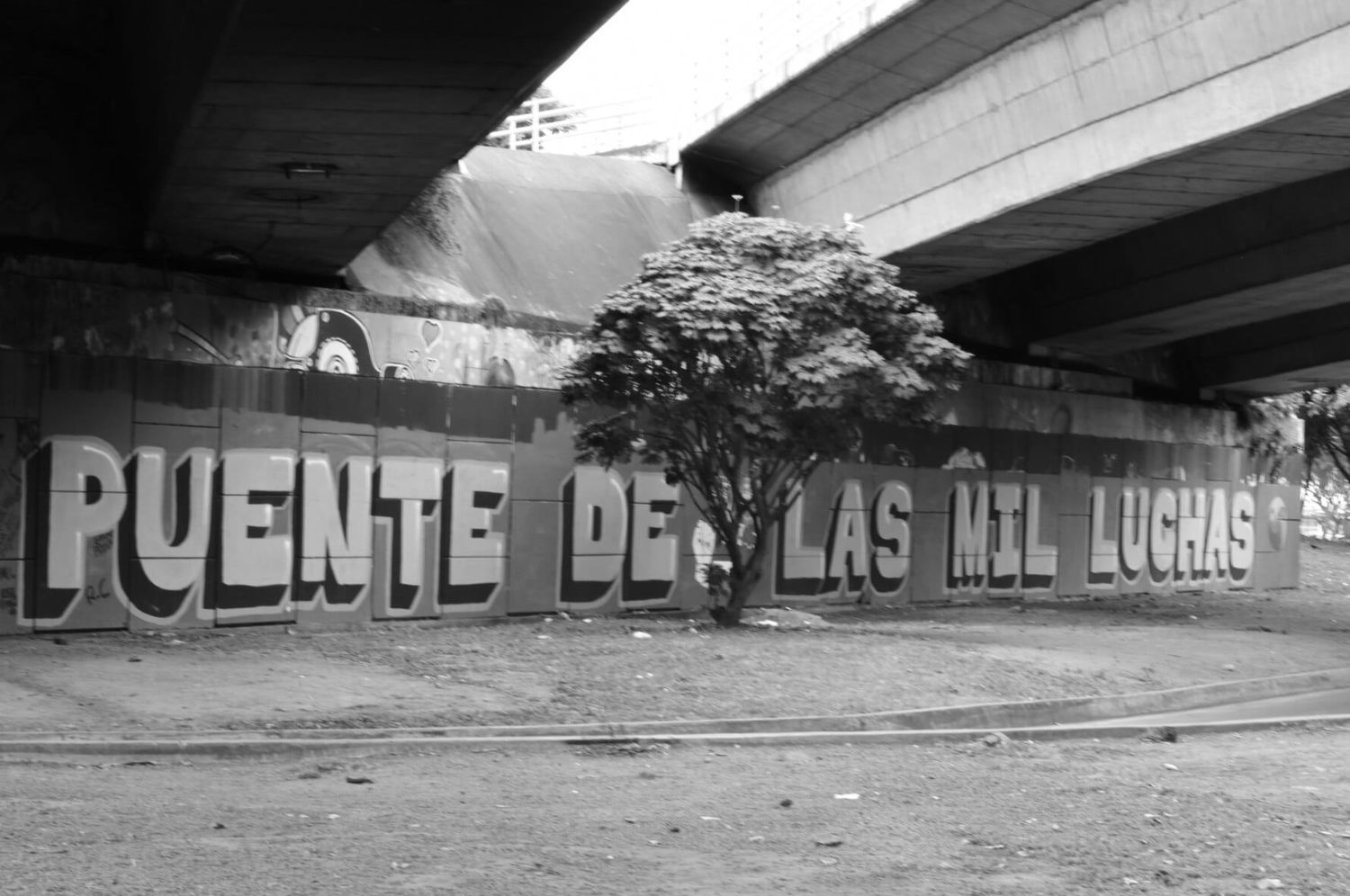
IMAGE OF THE WEEK
The Puente de las Mil Luchas ("Bridge of a Thousand Struggles") Resistance Point during the 2021 National Strike in Cali, Valle del Cauca. This photo was taken by Anthony Dest, co-editor of our new fall issue. Read the full editors’ introduction and explore more from our new issue!
AROUND THE REGION
U.S. REVOKES VISAS OF POLITICAL ENEMIES—The Trump administration accelerated its diplomatic and economic attack on its political opponents across the region on Monday, announcingsanctions on 27 Latin American officials, former officials, and their families. The Trump administration justified the visa revocations as a means to “fulfill the commitments to defend democratic governance across our hemisphere against corruption and narco-trafficking.” The targets include judges, officials, politicians, and prominent businessmen from Colombia, Ecuador, Peru, and Bolivia—all countries governed by right-wing allies whose leaders had reportedly complained about these figures’ intransigence. The most prominent official listed was Roger Mariaca, Bolivia’s acting Attorney General, who was accused of “accepting bribes to facilitate narcotrafficking.” Days later, Mariaca—along with 13 other Bolivian officials, many of whom are tied to the left-wing administration of Luis Arce—was arrested in an operation launched with the “cooperation of the U.S. government.” Right-wing governments, with U.S.-backing and pressure, have used flimsy accusations of corruption and ties to drug trafficking organizations to threaten, remove, and arrest pesky officials and left-wing political opponents. At the same time, ties between certain regional right-wing figures and narcotraffickers are well-documented.
THIRD-COUNTRY NATIONALS—The Supreme Court ruled on Tuesday that the Trump administration could continue deporting people to countries with which they have no ties, a policy known as third-country deportations. While the ruling was only a partial victory for the Trump administration—the Court declared that it would fast-track the case and hear oral arguments in December—it temporarily stayed a lower-court ruling that had blocked the policy. The Trump administration has made third-country deportations a centerpiece of its immigration crackdown, signing agreements with at least 35 countries to receive vulnerable migrants who often don’t speak the local language and have no family connections. Colombian migrants have been deported to Liberia, Iranians have been sent to the Central African Republic, and Cubans to South Sudan; in many cases, migrants have then been deported back to the countries from which they originally fled. Countries that sign these agreements with the Trump administration are directly implicated in the ongoing destruction of the international order; they are grotesque transfers of cash for people. At the same time, the deals are often signed under U.S. pressure—countries that have agreed to take deportees from the United States have often received U.S. investment or had their visa restrictions lifted.
A THIRD TERM FOR BUKELE?—El Salvador’s electoral tribunal has set the date for the country’s next general elections: February 28, 2027. The announcement, which formally opens the registration period for parties to submit their candidates, was made on Wednesday by an electoral body that incumbent President Nayib Bukele has bent to his will, providing sufficient pressure in the past to secure support for his unconstitutional re-election bid in 2024. Bukele, who has achieved widespread popularity through an iron-fisted crackdown on El Salvador’s gangs that runs roughshod over human rights and institutional checks and balances, is expected to be elected for a third term. Bukele has chipped away at the country’s democracy by naming allies to key positions, attacking the press, and jailing political opponents, all under the cover of a state of exception in which more than 90,000 people have been detained. Last July, his allies changed the constitution to allow for indefinite re-election and extend presidential terms to six years. Though the presidential election—as well as the day’s legislative and municipal elections—will feature opposition candidates from traditional left- and right-wing parties, Bukele’s grip on power is tight.
GANG VIOLENCE IN HAITI—The mandate of the Gang Suppression Force (GSF), the international security force deployed to Haiti to help address escalating gang violence, has been extended by six months. On Tuesday, the United Nations Security Council voted to extend the GSF’s mandate until March 31, 2027. Currently, around 1,500 international troops have been deployed to Haiti, mostly from Chad, and an additional 4,000 are set to arrive in the next few months. The UN authorized the GSF last September, granting it expanded powers compared to its predecessor, a Kenyan-led police deployment known as the Multinational Security Support Mission, which failed to reduce violence. Nevertheless, while the new force has been empowered to act independently of the Haitian military, the situation in large parts of the country has continued to spiral out of control. On Monday, a gang-led attack killed at least 11 people in the Artibonite Department. According to recent data from the International Organization for Migration, upwards of 80 percent of Haiti’s nearly 1.5 million displaced people live outside of the capital, Port-au-Prince.