| |  | | The COP16 climate conference opened in Cali, Colombia, on Sunday, with President Gustavo Petro announcing in his opening remarks that “the battle for life is about to begin.” The conference’s tagline, “Peace with Nature,” is a nod to Petro’s efforts to achieve “Total Peace” with the country’s armed groups, many of which operate in the Amazon rainforest. “We have realized that peace cannot be consolidated in the territory without the inclusion of diversity,” said minister of environment and sustainable development Susana Muhamad, “without also making ‘peace with nature.’” Protection of the environment and clean energy have been key pillars of Petro’s platform, but the breakdown of peace negotiations with armed groups has hindered the government’s efforts to halt deforestation. A new report from the International Crisis Group shows that rates of deforestation in Colombia are rising, and armed groups that control vast swaths of the Amazon have “the power to slow or accelerate deforestation at will.” One group in particular, the Estado Mayor Central (EMC), a dissident FARC faction, has a dominant hold on the Amazon rainforest, which makes up over 40 percent of Colombian territory. “From the outset of Petro’s government,” reads the Crisis Group report, “this guerrilla faction displayed the power to curb forest razing, using it as a good-will gesture during incipient negotiations with state officials.” When the group imposed limits on logging and clearing land, deforestation in the areas under its control dropped by 51 percent, and by about a third nationwide. As peace talks with the Petro administration have faltered, however, the EMC has eased restrictions on tree cutting, and illicit activities like logging, mining, coca cultivation, and cattle ranching have surged. Based on data from the first half of 2024, deforestation in the Colombia Amazon is likely to surpass figures from 2021, “effectively erasing all gains made by Petro’s administration,” notes Joshua Collins of Pirate Wire Services. The EMC has also prohibited authorities from the ministry of environmental or National Parks Service from entering protected areas under its control. According to the Crisis Group report, the EMC has also gained access to global carbon credit funds meant to protect the very forests it has infiltrated. All the while, the group actively expanded ranching, logging, and mining operations in protected areas. Environmental protection and security are intertwined. “Instead of viewing the security issue as a distraction,” James Bosworth writes in World Politics Review, “Petro and [Brazilian President] Lula should view the summit as an opportunity to expand the agenda and the stakeholders involved in protecting biodiversity and countering climate change.” With security challenges rising across the region and billions of dollars going to defense, some of those resources could be directed towards combating large-scale environmental offenders. Such an approach would align with the policy recommendations outlined in the Crisis Group report, which calls for reasserting authority in the Amazon by “fostering livelihoods that do not harm the environment, efforts to combat large-scale environmental offenders and reinforced coordination of security, peace and environment policies. |
| |
|
|
|
| | | PART-TIME WEB EDITOR The web editor spearheads NACLA’s web publishing. This is a part-time position ideal for candidates with an interest in alternative media, nonprofit publishing, and left politics in Latin America and the Caribbean. Previous editing/journalism experience and Spanish-English translation skills are required. Knowledge of Latin America and the Caribbean region highly desirable. This is a hybrid position based in New York City, but remote work will be considered for the right candidate. Estimated Start date: November 6, 2024 Learn more about this opportunity our website. |
|
|
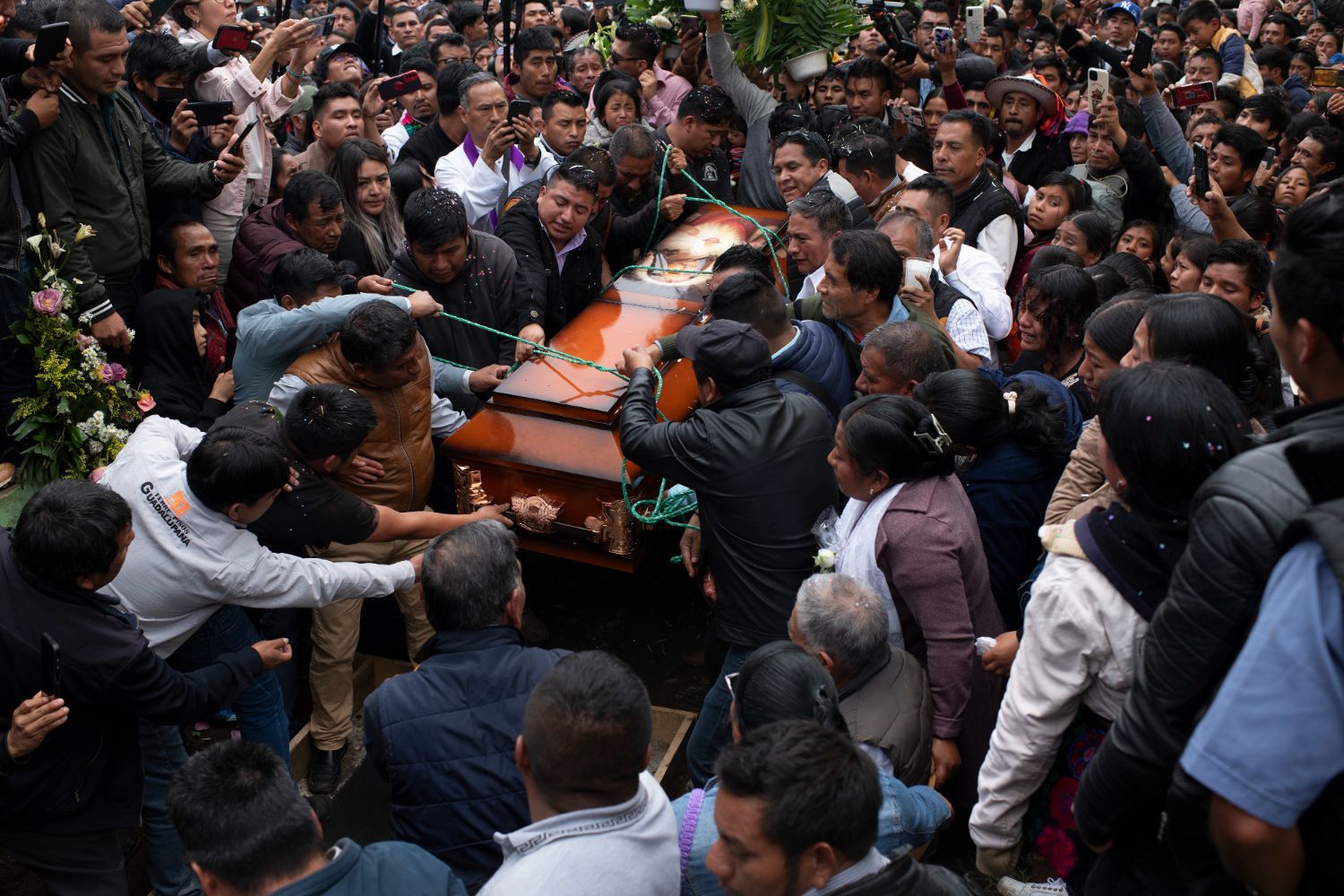
| | | | | | | 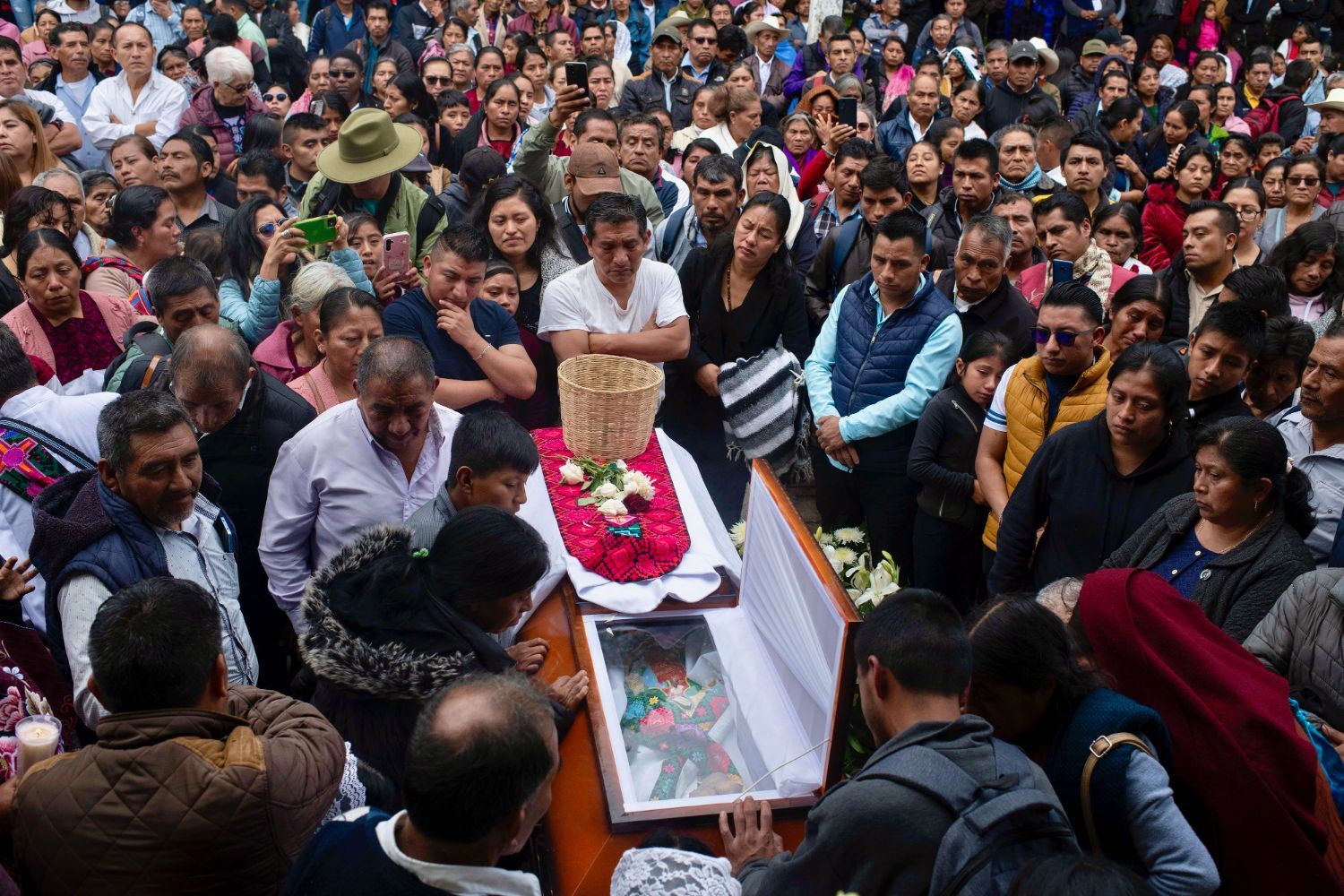 | Parishioners and community members gather in San Andrés Larráinzar to pay their final respects to murdered priest Marcelo Pérez Pérez in Chiapas, Mexico on October 21. A liberation theologist and longtime advocate for local Indigenous communities, Father Marcelo was gunned down on October 20. Read Madeleine Wattenbarger's account of the funeral and wider context of violence in Chiapas, with photos by Encarni Pindado. Image: Encarni Pindado |
| | | -
ELECTIONS IN URUGUAY — Uruguayans will go to the polls on Sunday to choose a new president. Yamandú Orsi from the left-wing Broad Front coalition has a substantial lead in the polls, followed by Álvaro Delgado of the governing right-wing National Party. Delgado served as the chief of staff to incumbent President Luis Lacalle Pou, who is ineligible to run for a second consecutive term due to constitutional term limits. Orsi is backed by former progressive president José “Pepe” Mujica who governed from 2010 to 2015. To avoid a run-off election, Orsi would need to obtain at least 51 percent of the vote in the first round. The electorate will also vote on two controversial referendums. The first would allow nighttime police raids on homes in response to rising fears about crime and public security. The second involves a comprehensive pension reform that would lower the retirement age by five years, tie pensions to the minimum wage, and deprivatize the management of social security funds. Put forward by Uruguay’s national trade union, the pension referendum would be binding. Unions say the changes would redistribute wealth and give workers more dignity in retirement; opponents argue it could weaken the Uruguayan economy. Writing for NACLA, Grace Livingstone notes that both candidates are running on extractivist platforms that threaten the country’s water sovereignty and sustainability. -
BLACKOUTS AND HURRICANE IN CUBA — A nationwide blackout left Cubans without electricity through the weekend, followed by the passage of Hurricane Oscar, which made landfall as a Category 1 storm on Sunday. Seven people were killed by the hurricane on Cuba’s eastern coast, with heavy rains leaving some areas under three feet of water. Around 15,000 people were evacuated from their homes in the province of Guantánamo, and more than 17,000 homes sustained roof damage. Power was restored to much of the island by Monday, but the government announced that schools would remain closed and non-essential workers should stay home through the remainder of the week to conserve energy. While power outages are frequent in Cuba, this was the worst blackout in years, prompting scattered protests throughout the country. The collapse of the electrical grid is “just the most visible aspect of the acute humanitarian crisis facing the Cuban people, a crisis marked by shortages of food, medicine, fuel, and the breakdown of essential public services,” writes William M. LeoGrande for Foreign Policy, in an article imploring the Biden administration to ease sanctions and extend humanitarian support to the Cuban people. |
|
|
| -
FORMER PERUVIAN PRESIDENT CONVICTED — Former Peruvian President Alejandro Toledo was sentenced in Lima on Monday to more than 20 years in prison in a corruption case involving the Brazilian construction company Odebrecht. Toledo governed from 2001 to 2006, and was accused of accepting more than $35 million in bribes from the company in exchange for licensing the construction of a highway linking Brazil to southern Peru. Part of a corruption scheme that spanned three decades and 10 Latin American countries, three other former Peruvian presidents have been accused of accepting bribes from the company. Toledo was arrested in California in 2019 while serving as a visiting scholar at Stanford and was extradited to Peru in 2022. He has denied the accusations and plans to appeal the sentence. Toledo will serve his sentence at a prison on the outskirts of Lima that was built specifically to house former presidents. In 2016, Odebrect executives pleaded guilty to an $800 million bribery scheme delivered to public authorities in 12 countries. In 2020, the company was rebranded as Novonor. -
PRIEST KILLED IN CHIAPAS — Marcelo Pérez Pérez, a well-known Catholic priest and champion of Indigenous rights, was laid to rest in Chiapas, Mexico on Tuesday. Pérez was shot to death upon leaving mass in San Cristóbal’s Cuxtitali neighborhood on October 20. He spent two decades fighting for the rights of the Tzotzil people and was a sought-after mediator in local disputes. Pérez was vocal about denouncing the escalating violence in Chiapas, and just weeks before his death he led a march from San Cristóbal to the state capital to demand peace in the region. NACLA contributors Madeleine Wattenbarger and photographer Encani Pindado were in Chiapas when Father Marcelo was killed and reported on the two-day funeral proceedings that were attended by thousands of parishioners and community members. “What stands out about Marcelo is his role as a mediator, a peacemaker, his method of analysis, reflection, the responsibility of getting involved in the process of peace,” Gerardo González, a researcher at the Colegio de la Frontera Sur who knew Pérez personally, told Wattenbarger. “I think he woke up thinking about justice. I can understand why people hated him, because a lot of people hate peace.” -
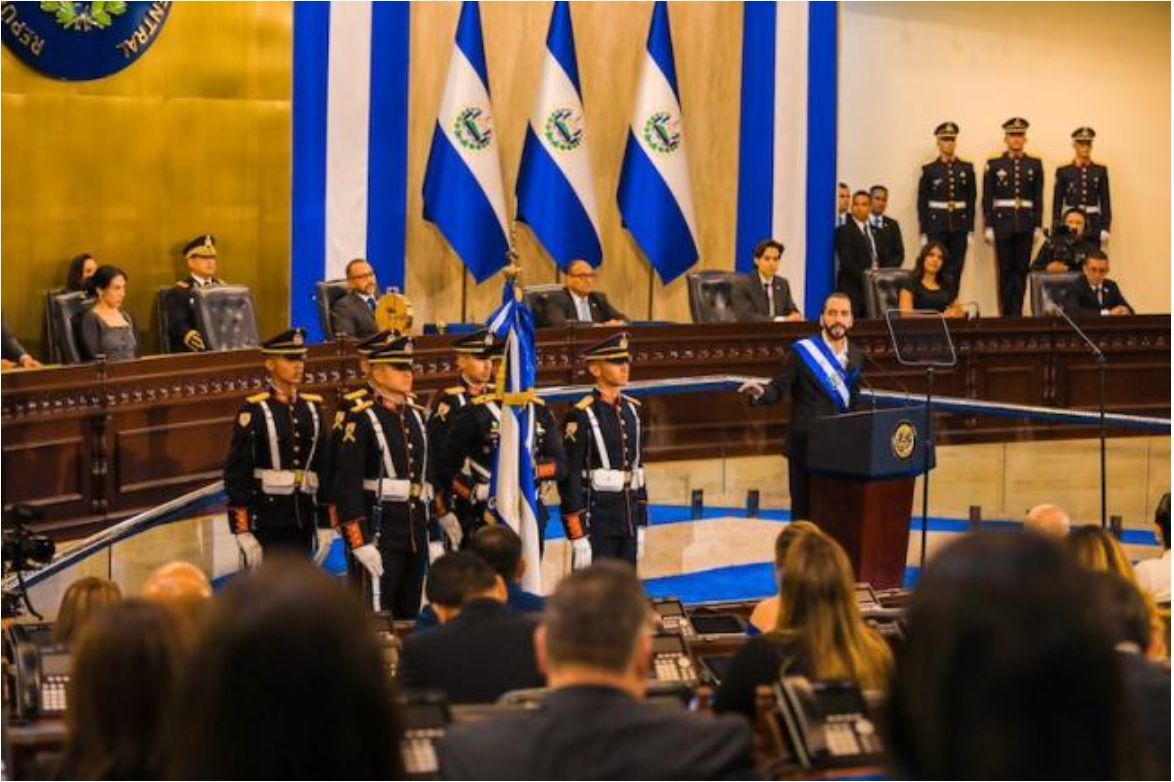
SANTA MARTA 5 ACQUITTED — In a key victory for El Salvador’s social movements, a tribunal dismissed a case last week against five prominent water activists that was widely seen as politically motivated. The water and land defenders were instrumental in achieving a historic metals mining ban in El Salvador in 2017. They are also former rebels from the militant Farabundo Martí National Liberation Front (FMLN), and were detained in January 2023 on charges involving a 1989 civil-war era crime that was not supported by evidence. Environmental and human rights groups have maintained that the five men were criminalized for their environmental activism amid rumors that President Nayib Bukele plans to reverse the metals mining ban. A national and international campaign to denounce the arbitrary detentions and call for the charges to be dropped may have helped secure the release of the political prisoners, although, as the Committee in Solidarity with the People of El Salvador (CISPES) underscores, “hundreds of political opponents, labor leaders and human rights defenders remain imprisoned” in El Salvador. NACLA editorial committee member Jorge Cuéllar served as a member of an international delegation that observed the trial. Listen to him discuss the case with Yvette Borja on the Radio Cachimbona podcast. |
|
|
|
|
|
|
| | | North American Congress on Latin America
53 Washington Sq South, Fl. 4W | New York, New York 10012
(212) 992-6965 | [email protected] |
| |
|
| |
|
|