All eyes are once again on Brazil. Since Flávio Bolsonaro’s surprise lead after the first round on October 4, several issues have made the headlines, including the role of big-tech companies like Meta in favoring the Right; the first debate between Bolsonaro and incumbent Luiz Inácio “Lula” da Silva; and the issue of the candidates’ bank and phone records. Nevertheless, the terrain remains largely the same since the first-round vote—the left is playing catch up and, though the gap may be closing, it is an uphill battle. No candidate who trailed in the first round has won a runoff since Brazil returned to democracy in 1989.
The week began with a bang: the two candidates faced off in the campaign's first debate on Sunday. The two men frequently called each other “liars,” aired accusations of corruption, and tried to link the other to crime—Lula called Flávio a “militiaman,” due to his family’s documented ties to organized crime, while Flávio blamed Lula for the country's rising insecurity. When Flávio attempted to link Lula directly to organized crime by asking why “73 percent of inmates voted for him,” Lula responded by saying “I wish it was 100 percent, including your father,” a reference to Jair Bolsonaro, who is currently under house arrest after being sentenced to 27 years in prison for his role in an attempted 2022 coup. Another attempted gimmick by Flávio backfired as well: his writing of the word “corrupt” on his palm, meant to direct attention to Lula’s alleged misdeeds, instead was interpreted as a sign of his own guilt, sparking a viral sensation in which Brazilians wrote self-descriptions on their own hands.
Lula appears to be gaining momentum, narrowing the gap significantly. His supporters have taken to the streets en masse to rally against Bolsonaro; he has secured major legislative victories like the recent approval of a 40-hour work week, a key demand of popular sectors; and he has rolled out a slate of new proposals seeking to address affordability issues, including bolstering student aid, debt forgiveness, and even free public transportation. He has also sought to defend himself from accusations of corruption, saying that he would soon publicly release his and his family’s telephone and bank records. He challenged Flávio to do the same and, after agreeing to certain terms, it appears he will do so as well.
Even if polling shows a tightening race, Flávio remains clearly in the driver’s seat. He has received support from other right-wing presidential candidates and has himself proposed a slate of policies meant to address the country's rising affordability crisis. His promise to crack down on crime, as Augusta Lunardi noted in a piece for NACLA published this week, has also been a boon to his campaign, no matter how much affected communities fear an escalation of police violence. Even so, corruption allegations remain an issue—he is currently under investigation for over $12 million given to him for a film from a disgraced banker—and he has at times been hammered for his and his family’s connections to the Trump administration, leading to accusations that he won’t defend the country’s sovereignty and claims of foreign interference.
A scandal erupted in the last week that, in a similar vein, has drawn popular outrage: Meta—the massive tech company owned by billionaire and Trump ally Mark Zuckerberg that owns Facebook, WhatsApp, and Instagram—has been accused of manipulating its platforms to favor Bolsonaro. While Meta rejected the allegations, internal messages lend credibility to the Lula campaign’s accusations of unfavorable treatment; independent organizations presented supporting documentation; and the company’s own oversight board raised concerns about its role in elections. In response to mounting evidence of digital discrimination against the left, the UN weighed in this week to express concern, Lula’s campaign filed a lawsuit, and hundreds protested against Meta at its Brazilian offices in São Paulo. It’s not just Meta that has been found to favor Bolsonaro; Google’s AI search engine was found to be erasing key details from the right’s shady past, including the fact that there was a plan to assassinate Lula after the 2022 elections; in addition, popular AI chatbots like Grok, ChatGPT and Claude were all found to be presenting Lula unfavorably, including by front-loading alleged cases of corruption that have already been closed.
If Lula loses, U.S. interference is not solely to blame. The right has surged across the region and popular disenchantment with progressive leaders is real. Even still, Brazil’s elections have become a troubling laboratory for a new type of U.S. foreign interference that attempts to bully voters into submission through threats of tariffs, diplomatic offensives, manipulation of digital infrastructure, and fear-mongering about military intervention. A Bolsonaro win would nearly complete U.S. dominance over the region and put the fate of the planet’s climate at grave risk.
(Read more about Brazil’s elections at Panamerican Dispatch, a partner project of NACLA).
"To say we are in difficult times is an understatement. The right-wing has lurched toward fascism with hemispheric Trumpism. The reactivation of the Monroe Doctrine and extrajudicial violence across the region boomerang in the form of ICE violence, militarism, and impunity across the United States. Here at NACLA, our editors and writers grapple with these issues every day—both as reporters and as citizens of the Americas. But after almost 60 years, we are struggling to keep NACLA itself going. We need your help today.
For the last six decades, NACLA has delivered rigorous, nuanced, and progressive analysis from journalists, academics, and community leaders. We’ve been a thorn in the side of the powerful since the Reagan years (whose anger we once proudly earned), and we intend to stay one, for the likes of Hegseth, Rubio, and Trump. But we cannot do it without our readers’ support.
We rarely ask this of our readers. We’re asking now because we have to. Please give today.
PURCHASE THE FALL ISSUE AND CHECK OUT WEB COLLECTION
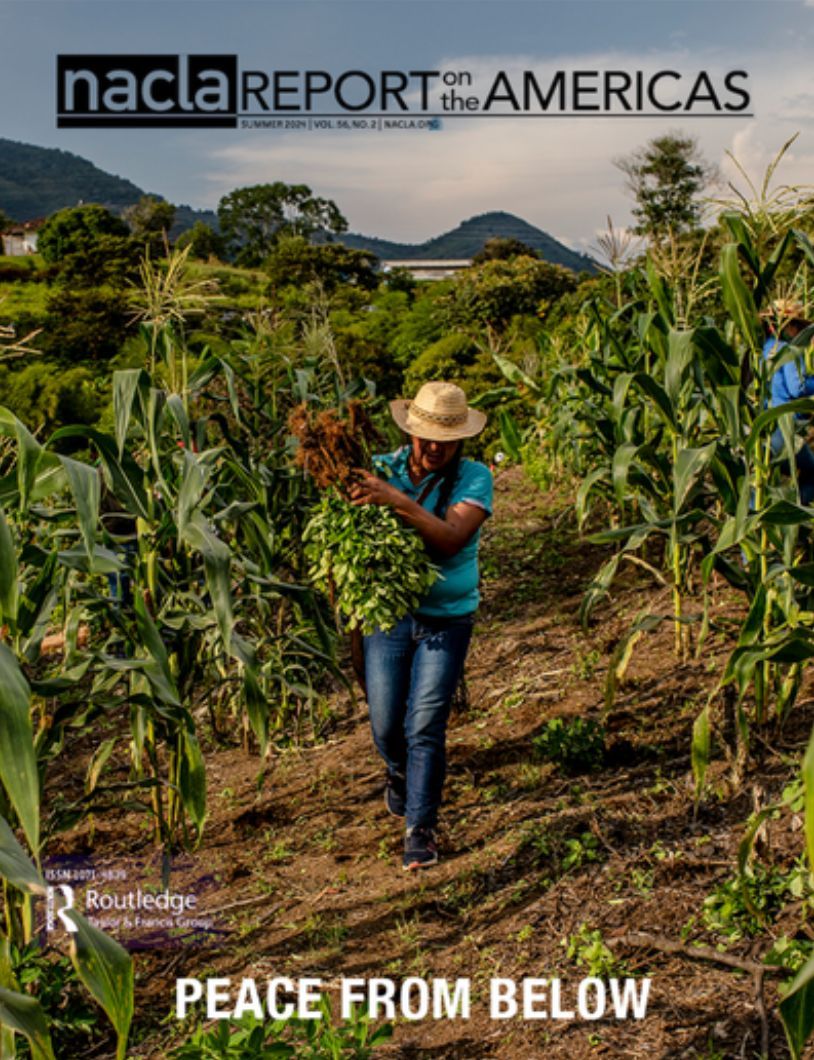
The Fall 2026 issue of the NACLA Report, “Peace from Below,” guest edited by Anthony Dest and Diana Gómez Correal, reflects on the promises, achievements, and shortcomings of Colombia's 2016 Peace Agreement, by foregrounding the people and communities most affected by the armed conflict. Bringing together voices from across Colombia—including Peace Agreement signatories, victims’ organizations, campesinxs, Indigenous and Afro-descendant communities, and women’s and LGBTIQ+ organizations—the issue examines how communities continue to organize amid enduring violence and uncertainty. At a critical political juncture, their experiences illuminate both the limits of institutional peacebuilding and the possibilities of building peace from below.
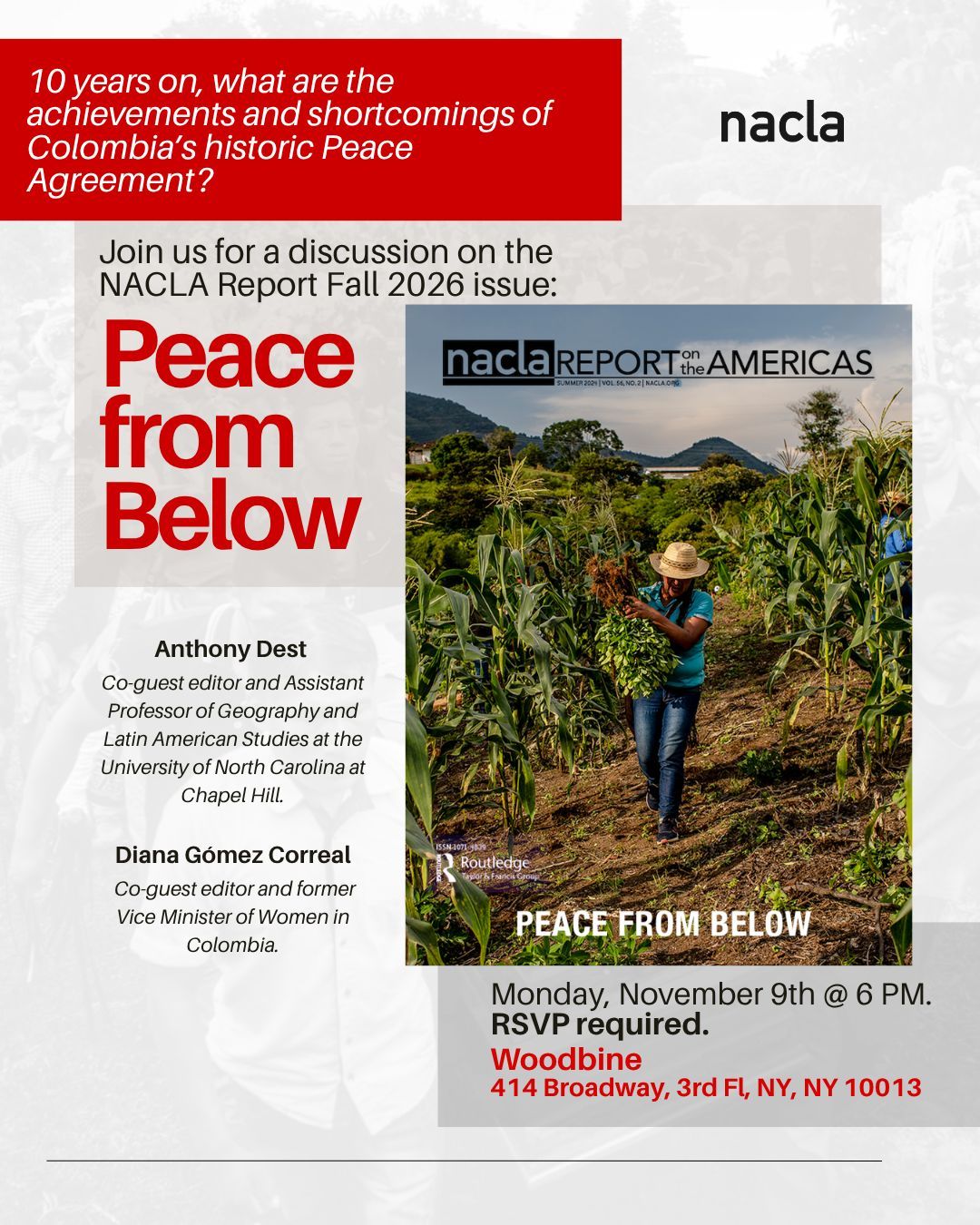
November 24, 2026, marks 10 years since the Colombian government and the Revolutionary Armed Forces of Colombia–People’s Army (FARC-EP) signed a historic agreement intended to end more than half a century of armed conflict. A decade later, the promise of peace remains unfulfilled.
This issue of the NACLA Report, “Peace from Below,” reflects on the promises, achievements, and shortcomings of the Peace Agreement by foregrounding the people and communities most affected by the armed conflict. Bringing together voices from across Colombia—including Peace Agreement signatories, victims’ organizations, campesinxs, Indigenous and Afro-descendant communities, and women’s and LGBTIQ+ organizations—the issue examines how communities continue to organize amid enduring violence and uncertainty.
Join us for a discussion with guest editors Anthony Dest and Diana Gómez Correal, where we will reflect on a decade since the Peace Agreement and the communities that have helped shape the country’s post-agreement landscape.
Don't miss the open access and Spanish language content from our Fall 2026 issue. / No se pierda el contenido de acceso abierto y en español de nuestro número de otoño de 2026
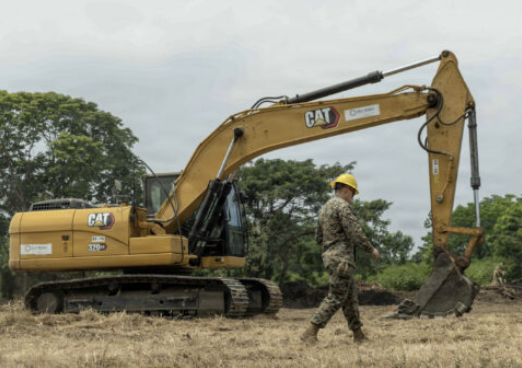
U.S. contracts, Pentagon photographs and an Ecuadorian commander’s memo show what the United States has bought, built, and flown at Taura since
IMAGE OF THE WEEK
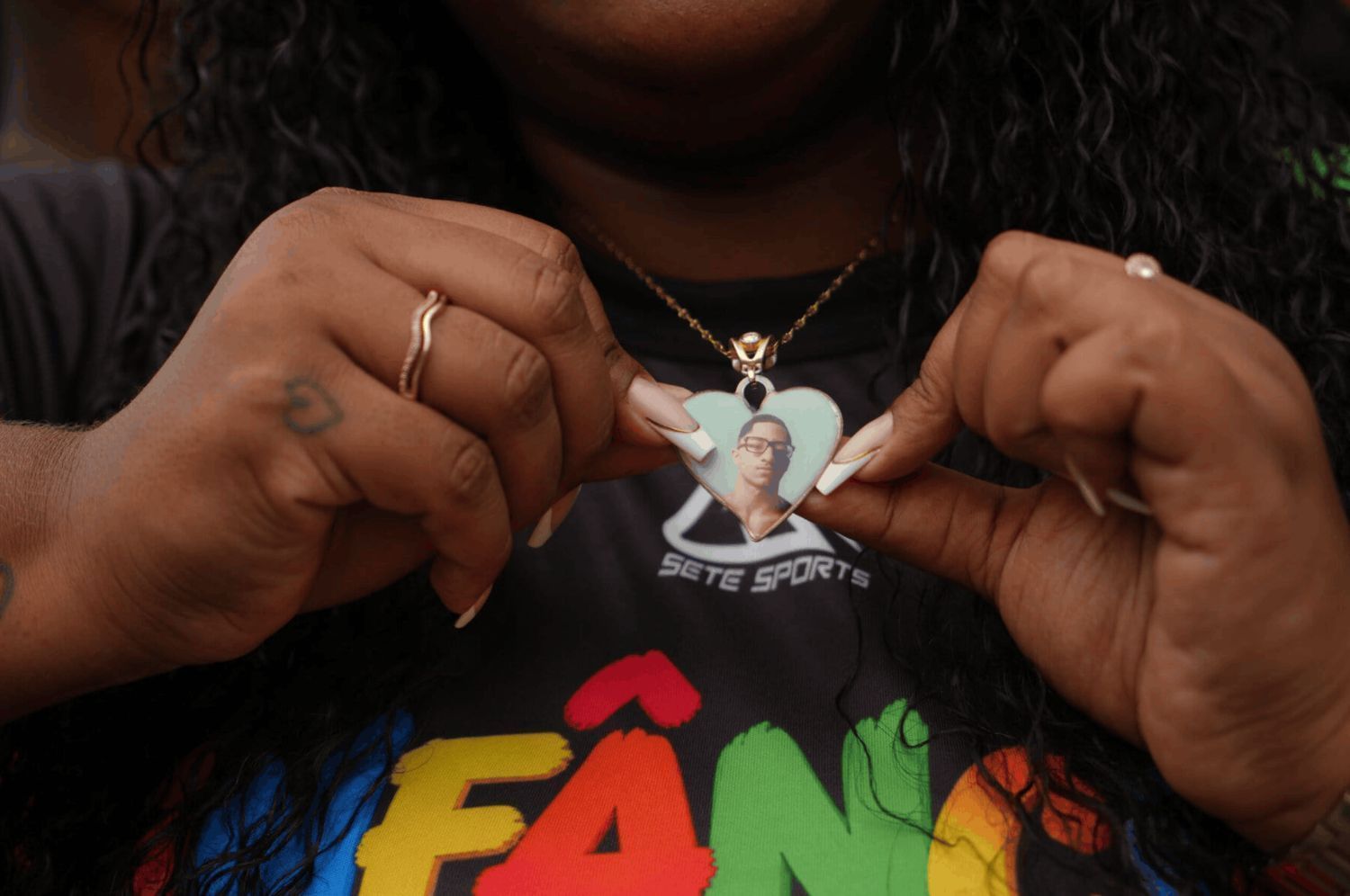
At Praça São Lucas, Tauã Brito shows the pendant with a photo of her son, Wellington, 20, who was killed during the police operation on October 28, 2025. Read more about Operation Containment and its role in Brazil's upcoming elections in Augusta Lunardi's article, "From Complexo da Penha to Washington: The War on 'Narcoterrorism' in Brazil’s Elections" (Photo: Augusta Lunardi)
AROUND THE REGION
GUATEMALAN ANTI-CORRUPTION ACTIVIST MURDERED—Juan Francisco Solórzano Foppa, a high-profile former prosecutor and anti-corruption lawyer, was assassinated at a sports complex in Guatemala City on Saturday. Solórzano was a leading anti-corruption figure in the country, having worked on the case that brought down former President Otto Pérez Molina in 2015, recovered millions of dollars for the state, and prosecuted corrupt business elites as head of the country’s tax agency. Solórzano, a former leading candidate for mayor of Guatemala City, is the latest member of his family to be assassinated: his grandmother, acclaimed feminist and poet Alaide Foppa, was disappeared during the country’s civil war in 1980; other family members also died in the civil war while fighting on the side of the revolutionary guerrillas. In 2025, he claimed that ties existed between gangs and the judicial system, as well as between the right-wing National Unity Party and the Barrio 18 gang. Guatemalan President Bernardo Arévalo, who attended the slain leader’s wake, condemned Solórzano’s “cowardly murder”; police arrested two men in connection with the killing
U.S.-CUBA TENSIONS: Tensions between the U.S. and Cuba continued to rise this week as the annual UN vote to lift the U.S. embargo neared. The non-binding resolution, which is expected to be voted on next week, has enjoyed widespread support since 1992, though last year there was an uptick in countries that either abstained or voted with the United States. On Wednesday, Cuba’s Foreign Minister, Bruno Rodríguez, accused the Trump administration of escalating pressure on countries to change their vote, including by threatening tariffs, visa restrictions, the suspension of cooperation programs, and supporting opposition parties. Rodríguez accused Marco Rubio and UN Ambassador Mike Waltz of leading the campaign; on Monday, at a separate event, Waltz acknowledged the U.S. was pressuring allies to change course. The same day, Cuban authorities announced that according to their initial investigation into the exile-led armed incursion in February, the U.S. is letting terrorists operate with impunity on their soil, citing the case of a prominent Cuban national living in Florida who they accuse of helping support the operation. Meanwhile, the state of Florida filed additional charges against former Cuban leader Raul Castro for his alleged role in the downing of two planes that violated Cuban airspace and were shot down; the charges are largely symbolic, given the federal case announced in May.
DEMOCRATS MISS THE POINT—Representative María Elvira Salazar, a Republican representative from Miami, is facing a tough re-election bid as voters in her immigrant-heavy district have grown concerned over ICE raids that have destroyed local communities and the economic downturn. Salazar pivoted from her previous support for ICE amid growing backlash over ICE raids in Miami. She released a campaign ad criticizing the raids, drawing Trump’s ire. Salazar has also touted the endorsements of three prominent Latin American leaders, including Venezuelan opposition leader Maria Corina Machado, Colombian President Abelardo de la Espriella, and Argentine President Javier Milei. In response to de la Espriella’s endorsement, the House Foreign Affairs Committee posted a statement from its highest-ranking member, Gregory Meeks, who said that a “foreign leader interfering in American elections is unacceptable”; after Milei’s endorsement, Meeks again railed against “foreign intrusion.” This line of attack by Meeks highlights a double standard in U.S. politics; earlier this year, Meeks went to great lengths to say in his denunciation of Trump’s January invasion of Venezuela that the country’s leader Nicolás Maduro was an “illegitimate leader.”