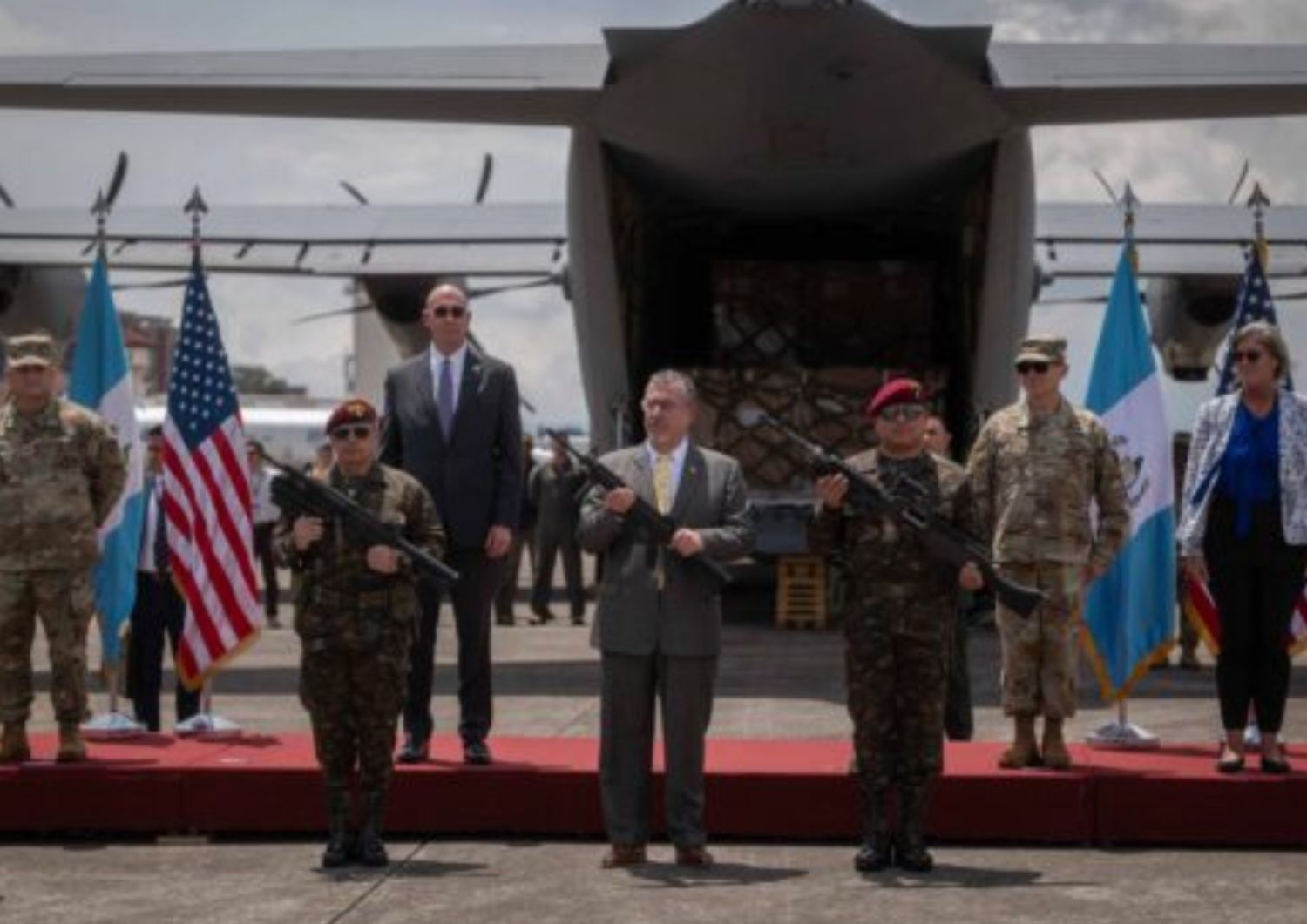
The Trump administration’s regional offensive against so-called “narcoterrorists” has taken another massive step forward. According to The New York Times, the United States is sending upwards of 600 soldiers to Latin America to train local forces. Troops from the 10th Mountain Division at Fort Drum, New York, have reportedly already begun deploying. They are expected to spend time in Panama training in the jungle before moving to Honduras and Colombia. The deployments are the latest escalation of Trump’s military offensive in the region. Over the past year it has pressured its allies to label criminal organizations as “terrorists” and, weeks ago, sent advanced drones to Colombia and Ecuador.
While initial reporting suggests that the mandate of U.S. forces would be limited to training local forces and advising militaries conducting raids against drug traffickers, there is reason to be concerned about mission creep. There is a long history of U.S. troops being sent to the region under the guise of the “war on drugs” but playing a much larger, destructive role, including in the two countries to which they will soon be deployed. In Colombia, the U.S. funded and trained paramilitaries that committed horrific war crimes; billions of dollars were sent to the country under “Plan Colombia” even in the face of massive human rights violations by the Armed Forces. Bloodshed has followed U.S. anti-drug operations in Honduras as well; over the course of 90 days in 2012, agents from the Drug Enforcement Agency (DEA) who were meant to serve an advisory role were directly involved in three fatal incidents. In the most infamous incident, U.S. agents and Honduran forces killed four Indigenous villagers—including two pregnant women and a 14-year-old boy—from a U.S.-owned helicopter; U.S. agents then repeatedly lied about their role to Congress.
Though U.S. involvement in the commission of human rights violations in Colombia and Honduras produced a massive backlash, the two countries have recently become some of the region’s leading proponents of direct collaboration with the U.S. military. Recently-elected right-wing leaders in both countries have gone so far as to authorize joint U.S.-military operations inside their borders, a level of collaboration that appears to have been matched only by the Ecuadorian government.
The Trump administration’s offensive against what it labels as the region's “cartels” has already left a wake of destruction. Its illegal strikes on alleged drug boats have killed more than 220 people by last count, devastating local communities and making fishermen give up their livelihood out of fear of disappearing. In March, a joint strike between the U.S. and Ecuadorian military on an alleged narco-lab decimated adairy farm instead.
The Trump administration has also wielded drug trafficking accusations against opponents. The kidnapping of Venezuelan President Nicolás Maduro was justified on the grounds that it was an anti-drug trafficking operation. At the same time, Trump pardoned Honduran ex-president Juan Orlando Hernández, who was convicted of drug trafficking in 2024.
NACLA needs to raise $25,000 before November 10th to continue producing our quarterly NACLA Report, our original web news articles and analyses, and our weekly newsletter. We are operating on less grant funding than in previous years and, while we are producing more web and print articles than ever, that pace is not sustainable without support from our community.
If NACLA has informed you, challenged you, or helped you better understand the region, please consider donating today. Whether you can give $5, $25, $100, or more, every contribution helps us continue publishing.
If you were waiting until the end of the year to make an annual gift, or if you’ve never donated to NACLA before and want to contribute, now is the time.
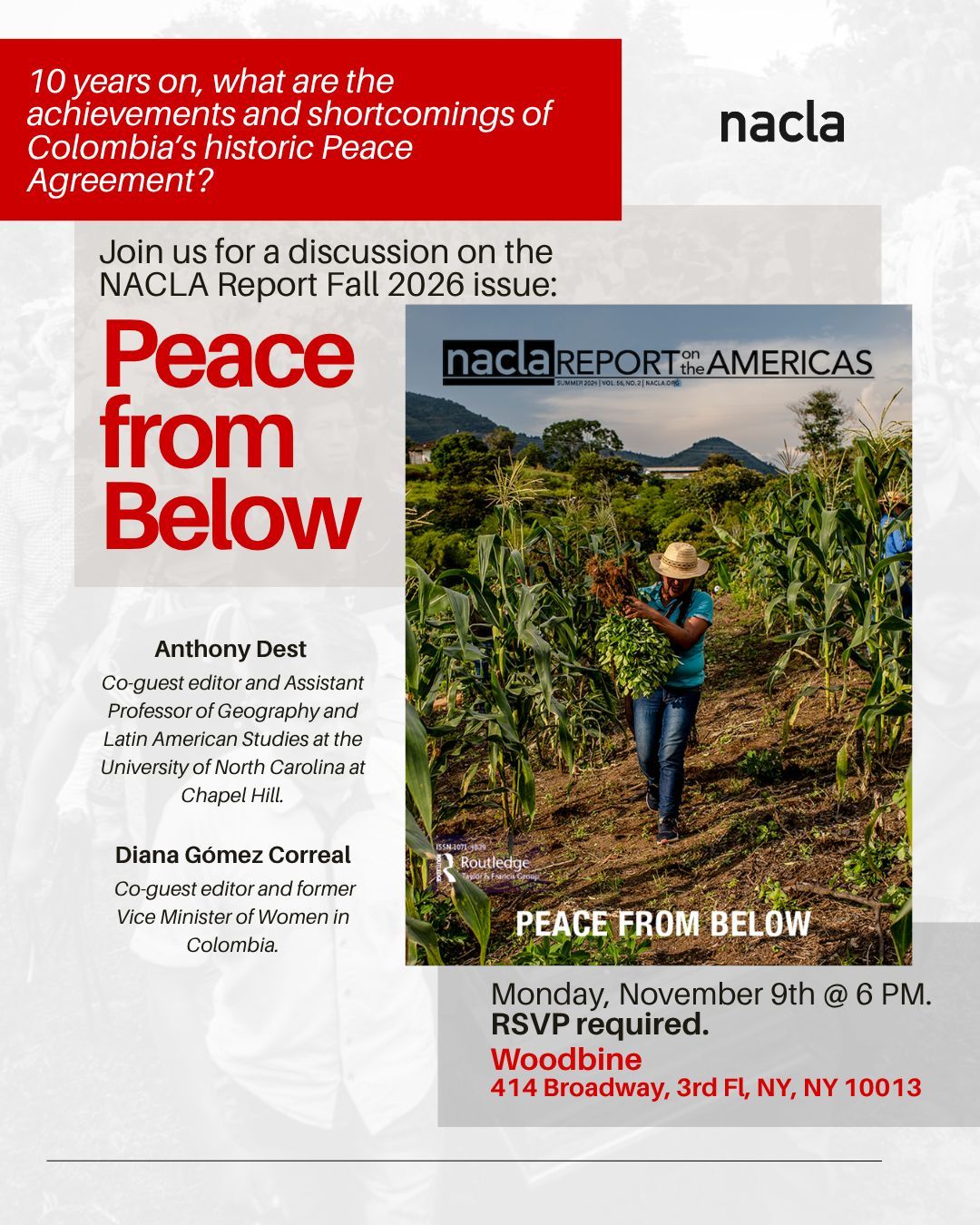
November 24, 2026, marks 10 years since the Colombian government and the Revolutionary Armed Forces of Colombia–People’s Army (FARC-EP) signed a historic agreement intended to end more than half a century of armed conflict. A decade later, the promise of peace remains unfulfilled.
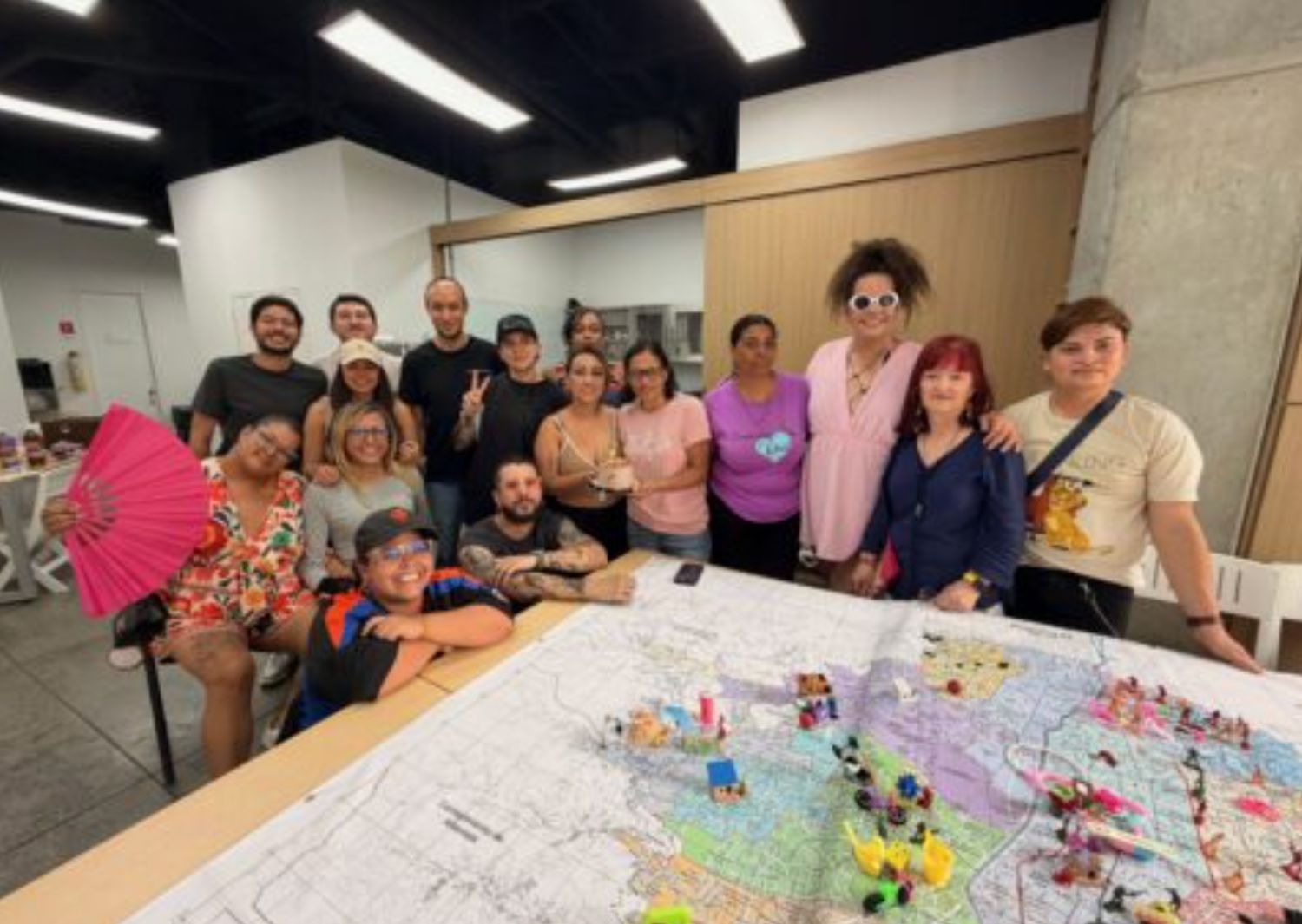
This issue of the NACLA Report, “Peace from Below,” reflects on the promises, achievements, and shortcomings of the Peace Agreement by foregrounding the people and communities most affected by the armed conflict. Bringing together voices from across Colombia—including Peace Agreement signatories, victims’ organizations, campesinxs, Indigenous and Afro-descendant communities, and women’s and LGBTIQ+ organizations—the issue examines how communities continue to organize amid enduring violence and uncertainty.
Join us for a discussion with guest editors Anthony Dest and Diana Gómez Correal, where we will reflect on a decade since the Peace Agreement and the communities that have helped shape the country’s post-agreement landscape.
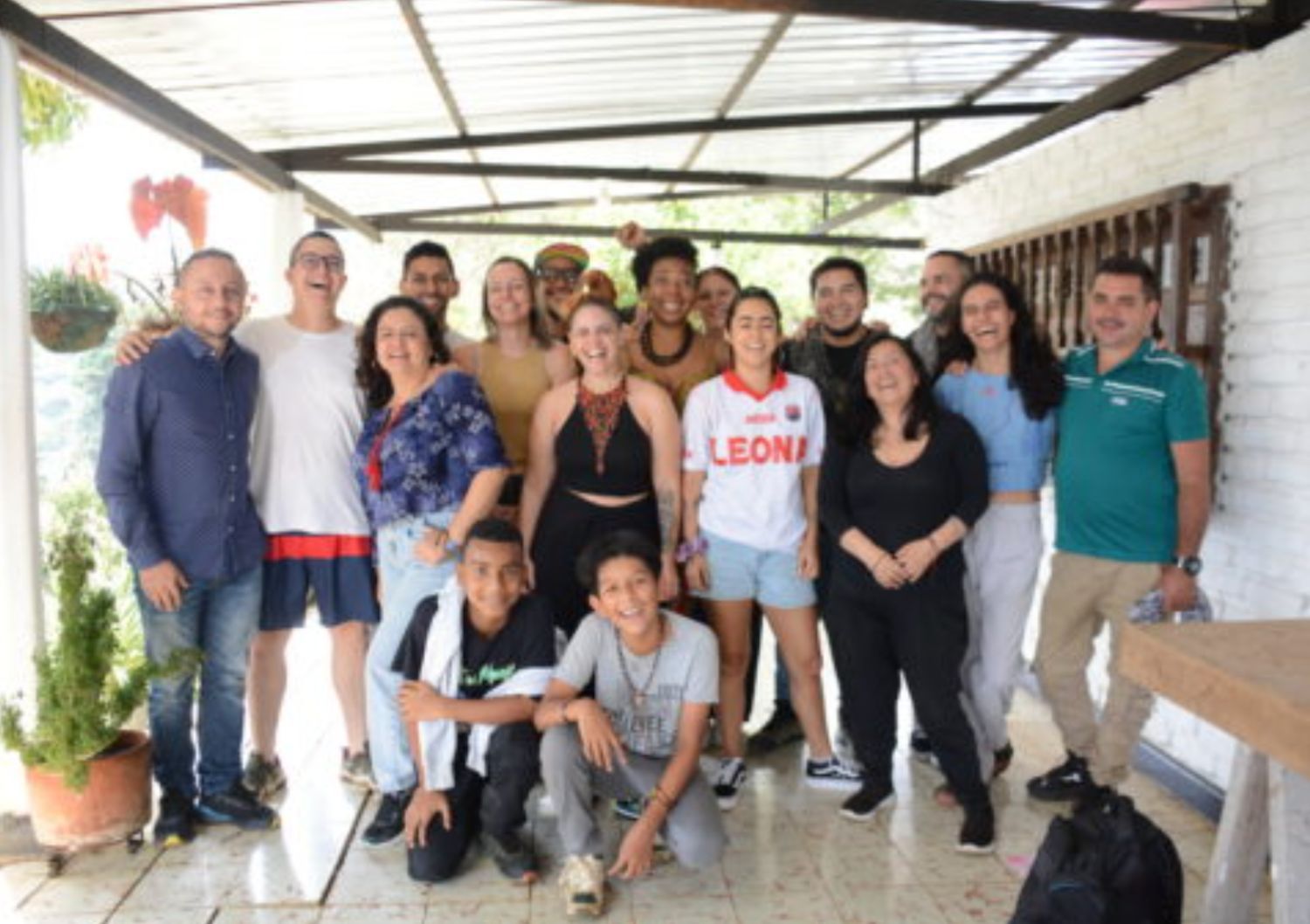
Frente a las lógicas del mercado, excombatientes de las FARC-EP construyen proyectos cooperativos que buscan hacer realidad una paz con justicia social.
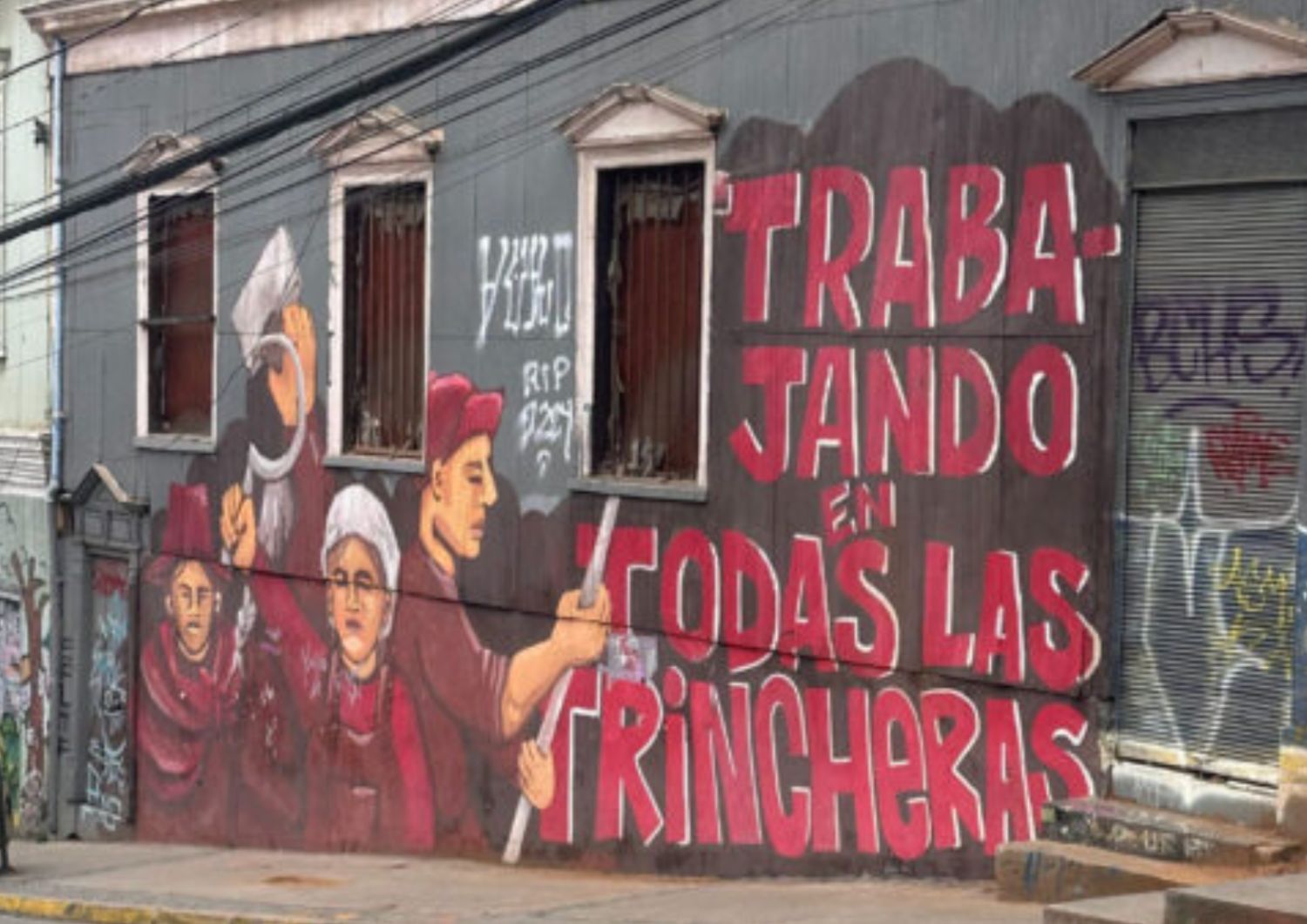
As Chile’s far-right government considers further cuts to the country’s education system, teachers and students are banding together and taking to the streets.
En la Colombia del posacuerdo, la Comunidad de Paz de San José de Apartadó reafirma su compromiso con la vida y el territorio frente a la persistencia de la violencia y la impunidad.
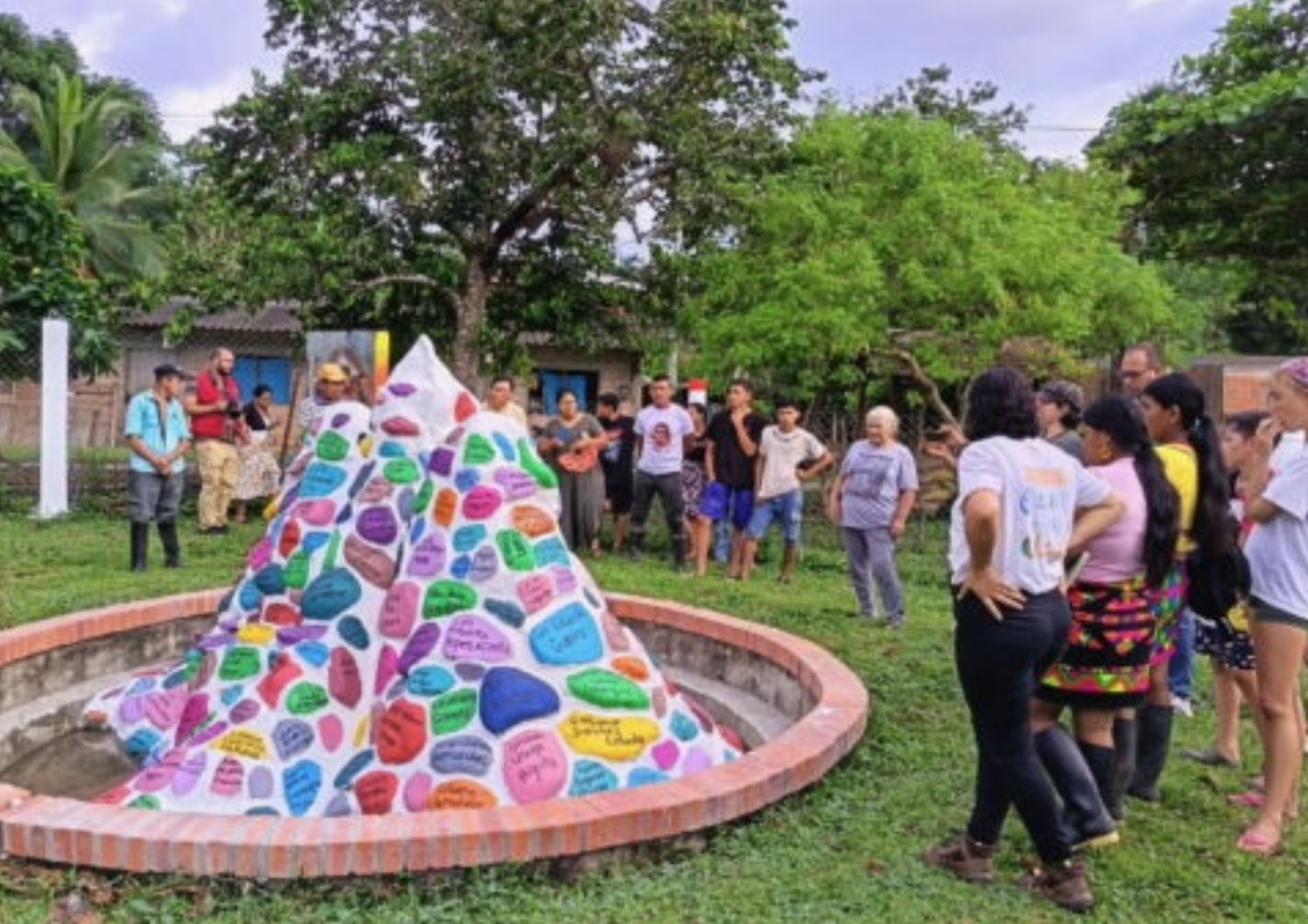
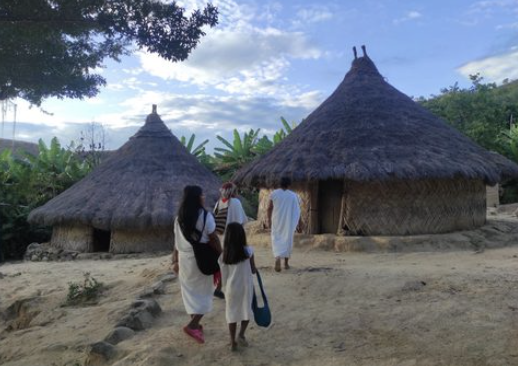
Desde el Caribe colombiano, mujeres indígenas y afrodescendientes reflexionan sobre la construcción de paz desde el cuidado, la autonomía y la vida colectiva.
IMAGE OF THE WEEK
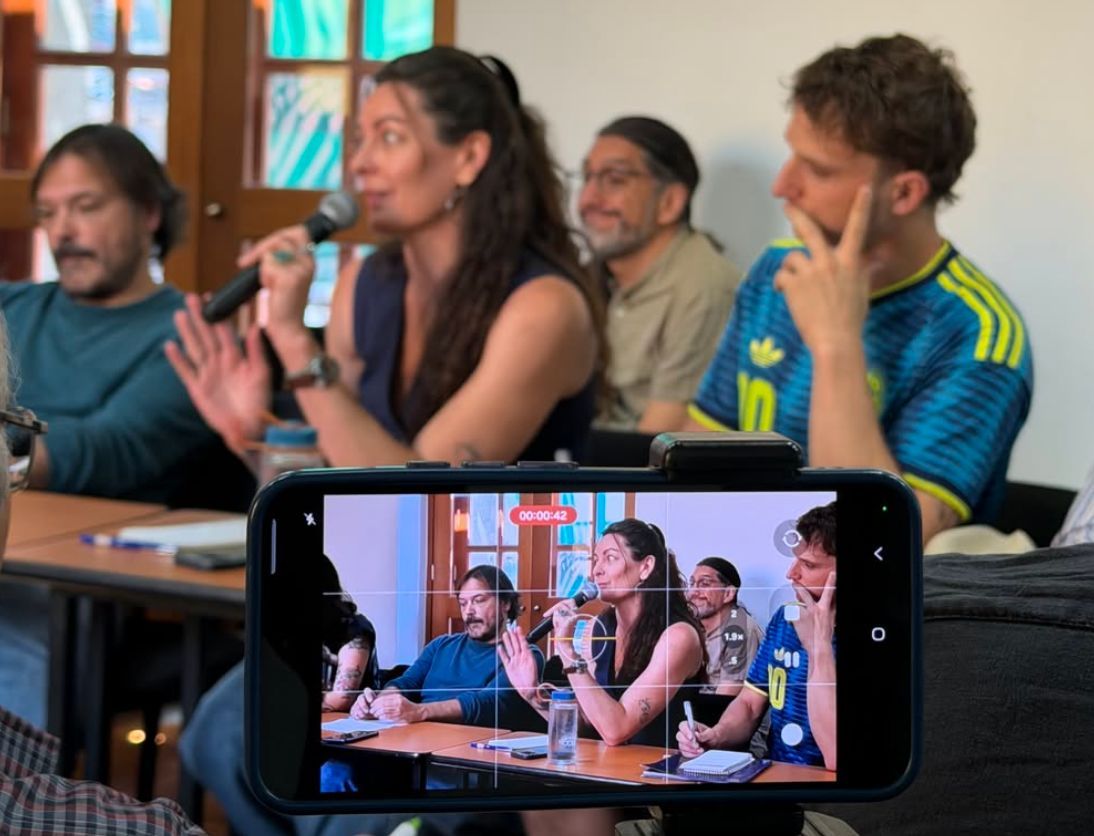
NACLA Managing Editor Julianne Chandler (speaking) and Web Editor Gabe Levine-Drizin (right) are participating in Esperanza Crítica, a regional gathering of leftist publications convened by Revista Común to discuss the challenges facing independent media and explore opportunities for solidarity and collaboration amid the rise of the far right and an increasingly precarious media landscape. (Photo Credit: Eswin Quiñónez / Plaza Pública)
AROUND THE REGION
COSTA RICA’S MEGA-PRISON: The High-Containment Center Against Organized Crime, Costa Rica’s new mega-prison, was officially inaugurated on Wednesday. The event was presided over by the country’s right-wing President Laura Fernández, who vowed that the prison would make the country a “global benchmark for prison security.” The facility, known by its Spanish initials CACCO, can hold upwards of 5,100 prisoners, or about 20 percent of the country’s prison population. CACCO is directly inspired by CECOT, the Salvadoran mega-prison constructed in 2023 under the leadership of President Nayib Bukele, whose draconian crackdown on the country’s gangs and civil society writ large has inspired far-right followers around the region. During Wednesday’s proceedings, Fernández directed her words to Bukele, saying that she was sending him a “big hug” and the “appreciation and respect of all the Costa Rican people.” But it did not stop there; she also announced that she would travel to El Salvador later this week to visit CECOT and speak with Bukele about his country’s carceral system. Mega-prisons are spreading like wildfire; since CECOT’s opening, 16 mega-prisons have been proposed in 10 different countries, with many now functioning.
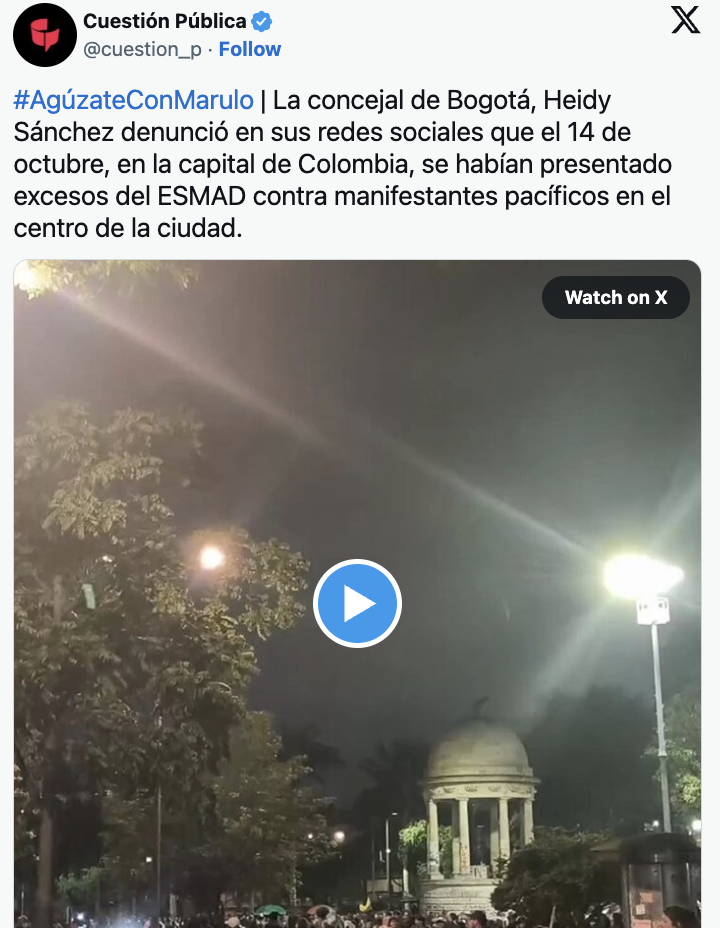
COLOMBIAN EMBASSY IN JERUSALEM—Colombia became the tenth country in the world to open an embassy in Jerusalem on Wednesday, a city that the Israeli state claims as its capital even in the face of decades of UN resolutions contesting Israeli sovereignty over large swathes of the land. The embassy’s opening, which was attended by Colombian Foreign Minister Omar Bula Escobar, was condemned by the Palestinian Authority as a violation of international law. Countries have historically placed their embassies in Tel Aviv in recognition of the city’s contested status. After the first Trump administration moved the U.S. embassy to Jerusalem in 2018, a growing number of nations began to follow suit. The move represented a dramatic shift for Colombia, whose previous leader Gustavo Petro was one of the world’s most outspoken critics of Israel’s genocide in Gaza; Petro severed diplomatic ties, expelled Israeli diplomats, banned the export of coal, and moved to abrogate a free trade agreement. These moves have been quickly reversed by far-right leader Abelardo de la Espriella, who campaigned on closer ties with Israel and has since delivered. But these moves are generating resistance; during Wednesday’s massive national strike—where Colombians took to the streets to protest the government's new restrictions around protesting and budget cuts affecting education and public jobs—the rapprochement with Israel was a key subject of critique and Palestinian flags abounded.
NACLA IN DF: This week, two members of NACLA’s staff had the privilege of traveling to Mexico City for Esperanza Crítica, a gathering of left-wing publications from across the region. The conference, hosted by the Mexican outlet Revista Común, provided a crucial space to discuss the future of independent, left-wing media across the Américas. We’re excited to share more about the conference with our readers in the coming weeks and begin to feature the work of our amazing colleagues.