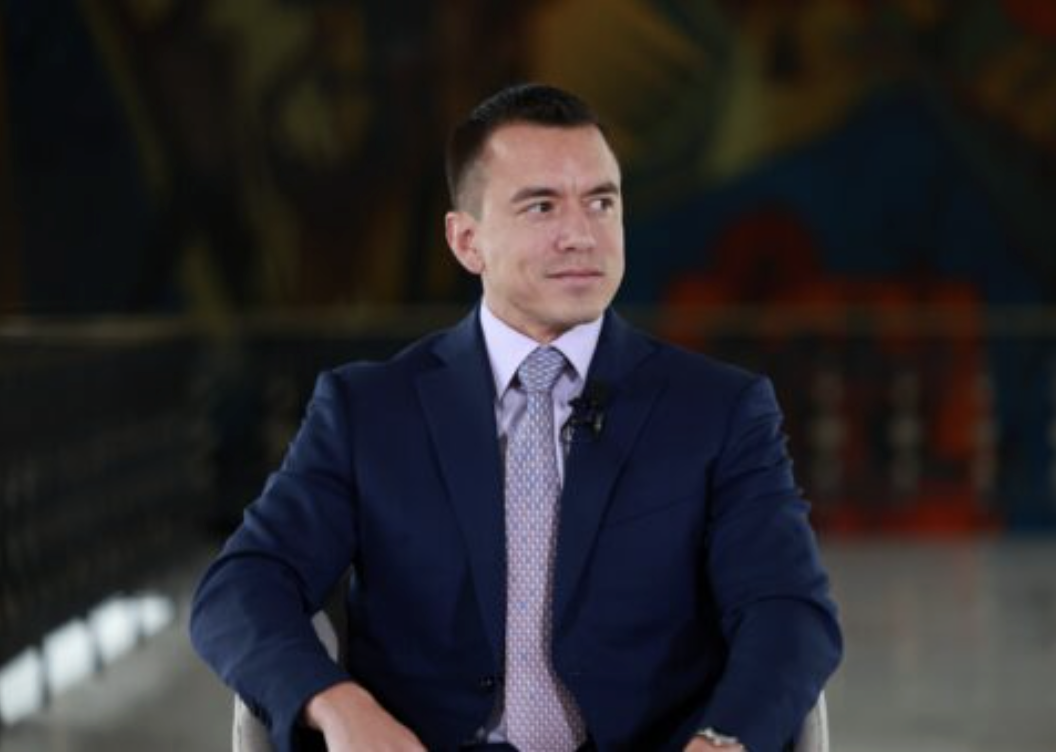
Ecuadorians went to the polls on Sunday to vote on a four-question referendum that President Daniel Noboa hoped would consolidate his grip on power. Instead, voters delivered a sweeping rejection of all four proposals. In the context of an escalating security crisis and militarized response that has failed to stem the violence, Marc Becker writes for NACLA that “voters’ rejection of his proposals is best read as a repudiation of a security strategy that has produced human rights violations, mounting casualties, and little reprieve for Ecuadorians facing deepening insecurity, militarization, and rising costs of living.”
The referendum followed months of extrajudicial maneuvers by the government. The questions sought to allow foreign military bases in Ecuador, reduce public financing for political parties, halve the number of lawmakers in the National Assembly, and—most consequentially—authorize the drafting of a new constitution. Despite an aggressive, well-funded campaign for a “yes” vote on all four questions, voters responded with a resounding “no.” The government outspent social movements and Indigenous communities organizing against these changes nearly 10-to-1.
The first question, which sought to lift Ecuador’s constitutional ban on foreign military bases, was strongly defeated. The government framed the measure as necessary to confront violent crime linked to drug trafficking, but nearly two-thirds of voters rejected what many understood as a pathway to re-establishing a U.S. military presence in the country—a clear goal of the Trump administration. As Becker traced in his article, Ecuador has hosted U.S. military bases twice before, including at the Manta airbase in the early 2000s, a site that became “notorious for human-rights abuses.” Former President Rafael Correa shuttered the base in 2009.
The proposals to slash party financing and shrink the National Assembly sought to harness widespread public anger with the political class under the banner of alleged administrative bloat. The former would have significantly reduced the representation of peripheral provinces and prevented smaller political parties without wealthy backers from running campaigns. The intensity of public frustration with the country’s ruling class was manifest in the result: these two questions were defeated by the narrowest margins, the latter by only about 6 points.
Most significant for Ecuador’s social movements was the fourth question, which would have opened the door to dismantling the country’s groundbreaking 2008 Constitution. Ratified by Correa, the existing charter “grants rights to nature, advances an economic model based on sumak kawsay (good living) that privileges collective wellbeing over corporate power, strengthens labor protections, and bans foreign military bases as part of declaring Ecuador a land of peace,” writes Becker. Ecuadorians protected those gains decisively, rejecting the measure by the largest margin of all. The outcome delivers a damning blow to the Noboa government, which failed to provide details on the new constitution it envisaged. Those paying attention, however, could see the neoliberal writing on the wall: various government spokespeople hinted that a new constitution would bring increased labor flexibility, the elimination of free college tuition, and attacks on Indigenous rights.
The extent of the victory cannot be understated. Noboa’s increasingly hardline government has launched a fierce crackdown on civil society and Indigenous movements while pursuing policies aligned with U.S. security interests. Yet a massively out-funded grassroots campaign—led by Indigenous groups, students, and everyday Ecuadorians—prevailed, demonstrating to the region and the world that shredding democratic norms and American military power cannot be the answer to complex security crises.
Whether Noboa will heed the message is unclear. Though he pledged to respect the results and announced a slate of cabinet changes, he departed for a surprise trip to the United States just two days after the vote, offering scarce details on the purpose of the visit.
The Summer 2026 issue of NACLA Report, guest edited by Ángeles Donoso Macaya and Laura Juliana Torres Rodríguez, invites original academic or creative essays; visual, sound, or performance works; and interviews that reflect on or activate desiring temporalities and forms of play and irreverence.
Please send a brief pitch (250 words) outlining the thrust and tone of your proposed piece and why you are well positioned to write it by December 1 to managing editor Julianne Chandler at jchandler@nacla.org. We will respond to pitches by mid-December. Drafts of accepted articles (2,500-3,000 words) will be due on February 16, 2026.
SUBSCRIBE TO GET OUR NEW ISSUE!
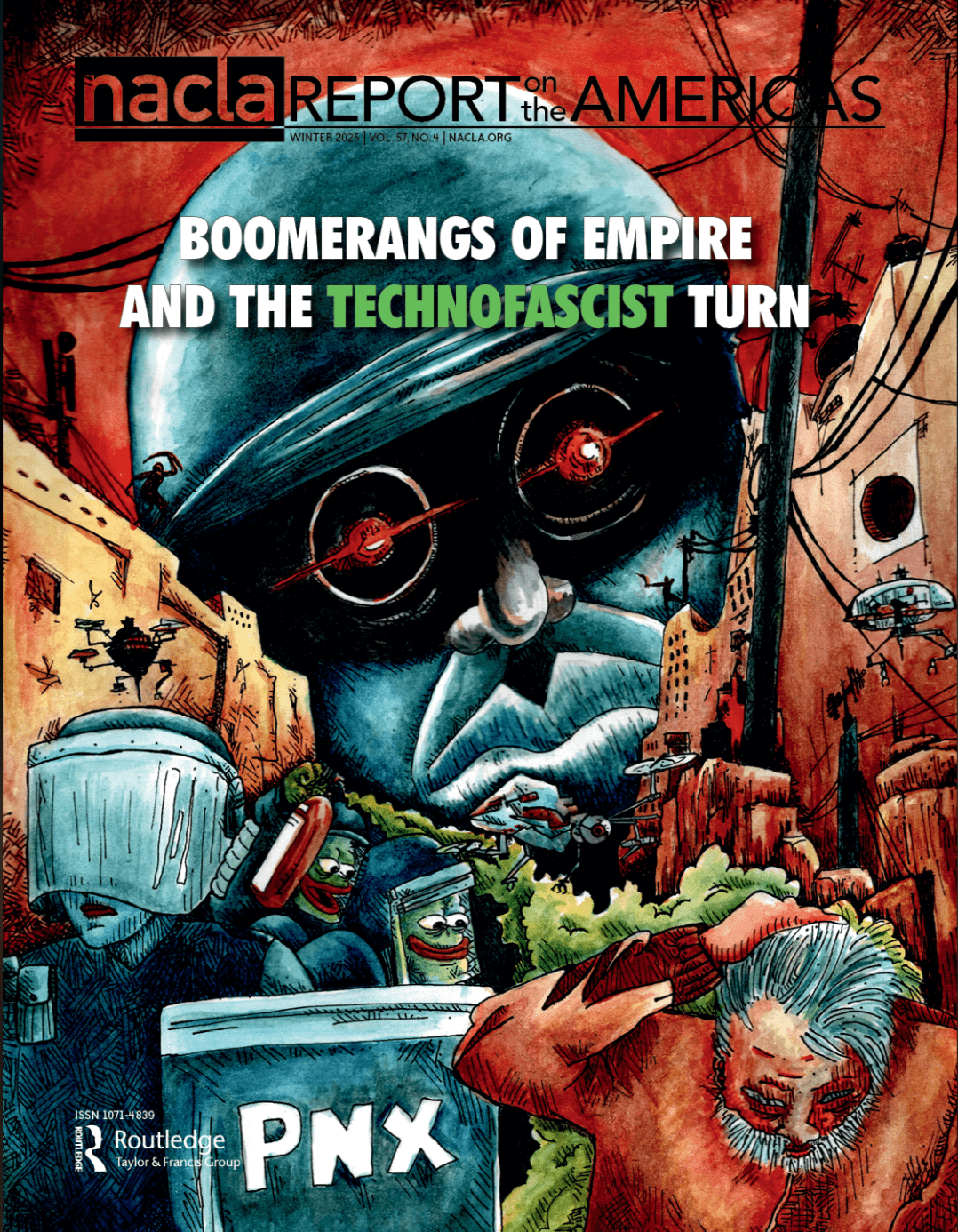
In 1950, Martinican author Aimé Césaire used the term "imperial boomerang" to describe a historical circuit, in which the tactics of imperial domination tested abroad return home, reshaping the very societies that invented them. Our winter issue, “Boomerangs of Empire and the Technofascist Turn,” takes Césaire’s insight not as metaphor but as method, tracing how this returning and disseminating violence is shaping the Americas today.
The deadline to subscribe to get our new issue has extended! If you are not already a current subscriber, subscribe by Wednesday, November 26to receive our Winter 2025 issuein the mail.
And, consider making a donation to support more work of this kind at a time of increased hardship and pressures for independent media.
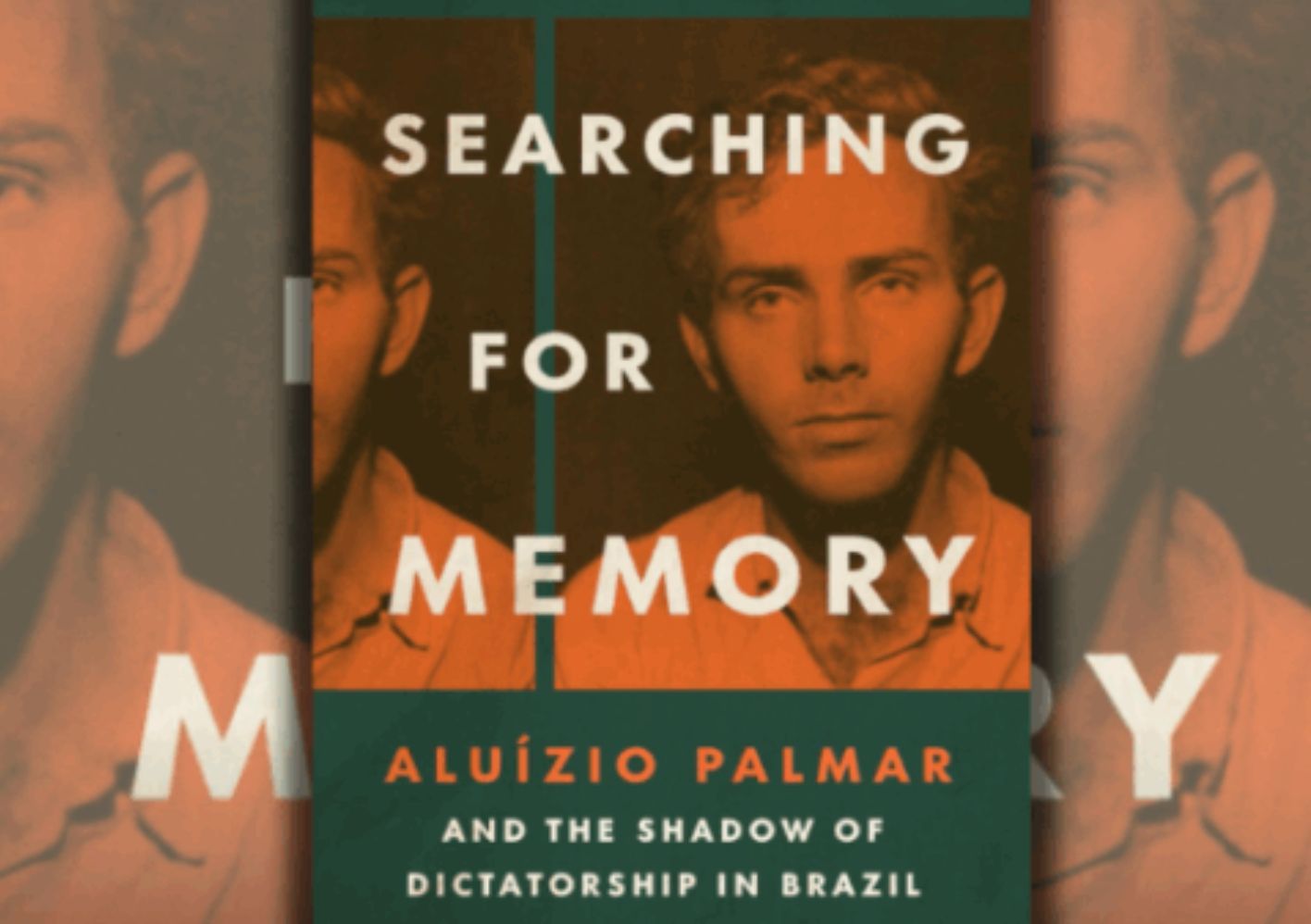
Jacob Blanc’s new book sheds light on the extraordinary life of a Brazilian hero while pushing forward our understanding of memory and the role of the historian.
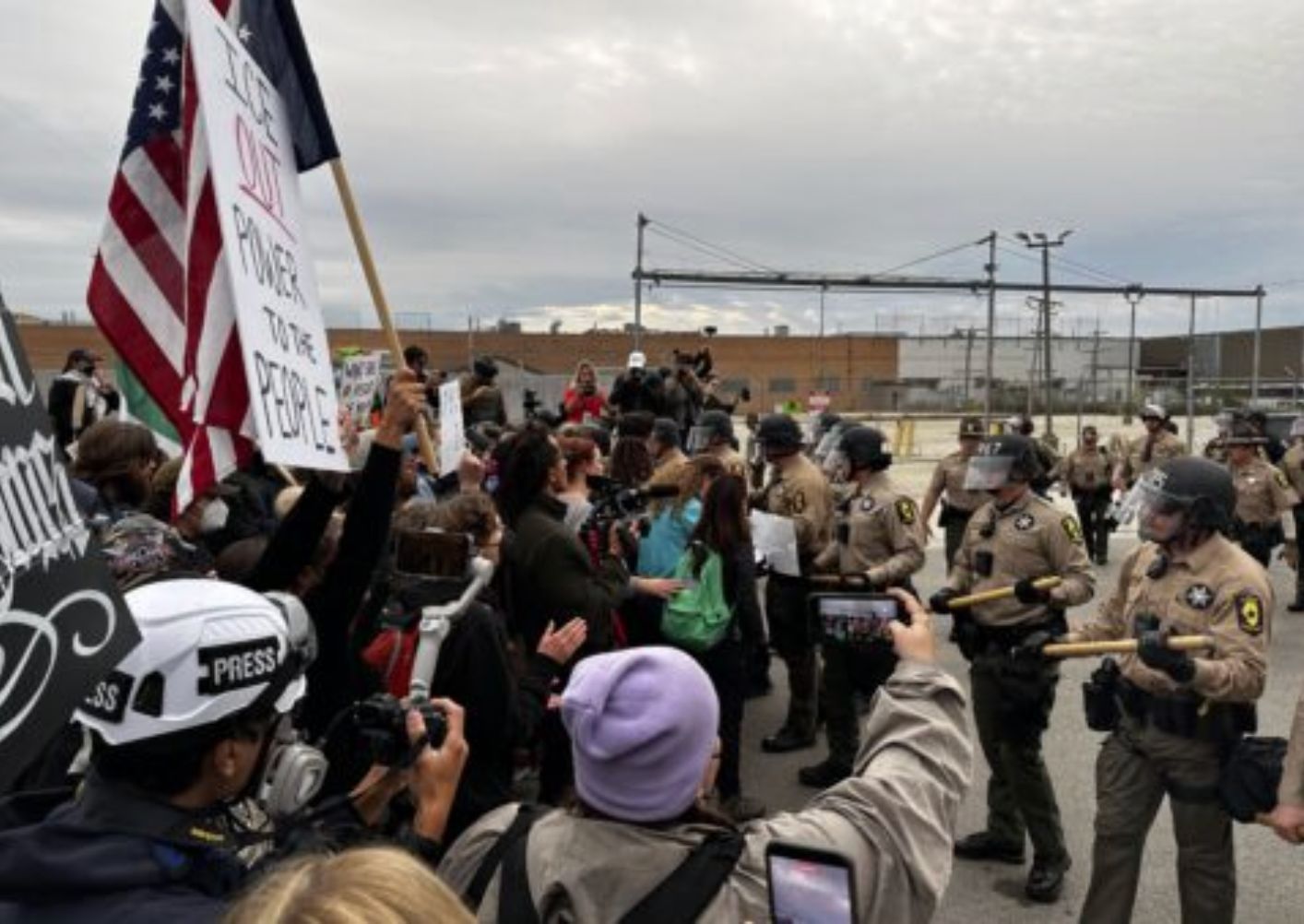
As the president pumps $45 billion into ICE over the next three years, activists and communities must balance rapid response with longer-term resistance.
IMAGE OF THE WEEK
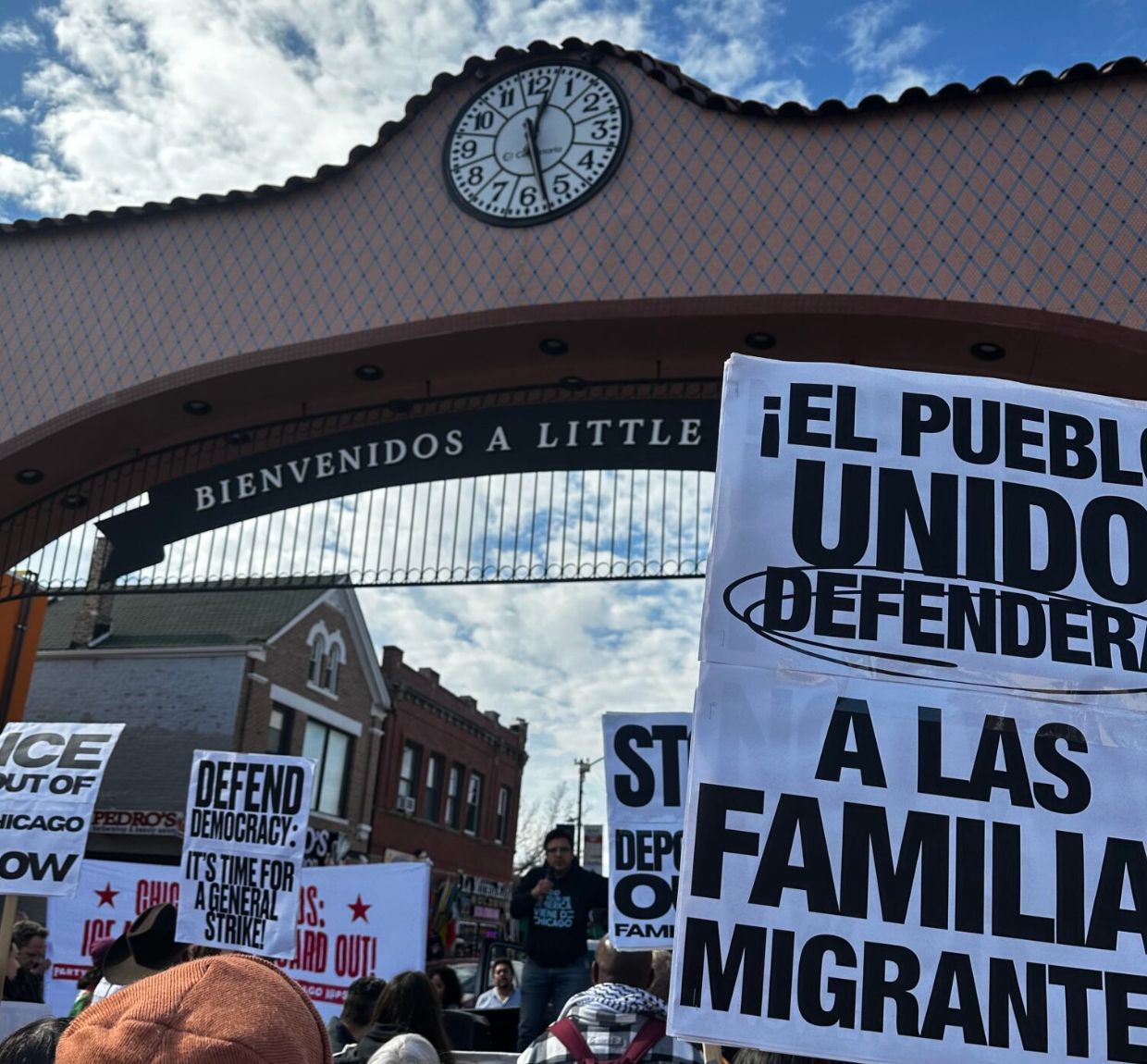
Alderman of Chicago’s 25th Ward, Byron Sigcho Lopez, speaks to a crowd of protestors underneath the terracotta arch in the heart of Little Village—a predominantly Mexican neighborhood under heavy attack by ICE. Read more about how communities in Chicago—and across the nation—are building a movement to resist ICE in Conner Martinez's piece for NACLA. (Conner Martinez)
AROUND THE REGION
CHILE ELECTION—As expected, Jeannette Jara, the Communist Party candidate heading a unified left coalition, won the first round of Chile’s presidential elections. While Jara’s victory represents a historic achievement for the country’s Communist Party, her 27 percent vote share marks a historically weak showing for the broader left, setting up a difficult path to the December 14 runoff. Far-right candidate José Antonio Kast finished close behind with nearly 24 percent and is widely expected to win in the second round. Johannes Kaiser, a radical Libertarian who garnered 14 percent, and Evelyn Matthei, a center-right candidate who won 13 percent, both endorsed Kast on election night. Franco Parisi—the political outsider who defied polls and jumped to third place—declined to support either candidate, but the odds are stacked heavily against Jara. The runoff is expected to hinge on concerns over crime, migration, and economic stagnation. A victory for Kast—a Pinochet defender and outspoken opponent of same-sex marriage and abortion—would mark a dramatic shift for a country whose current President, Gabriel Boric, came to power promising to tackle inequality and bury Chile’s dictatorship constitution once and for all, a goal he ultimately failed to achieve.
TRUMP’S VENEZUELA STRATEGY?—The Trump administration strategy of purposely sowing confusion over its plans vis-à-vis Venezuela continued this week, a tactic it has deployed since since ramping up pressure on President Nicolás Maduro. On the same day, reports surfaced that Trump had both approved CIA plans for covert operations inside Venezuela and reopened backchannel negotiations that his team had recently shut down. Confusion appears to be the point: despite the high-profile arrival of the USS Gerald Ford to the region last week—a notable escalation—the overall situation remains unchanged. Airstrikes could come at any moment, but Trump has not yet authorized ground combat forces. The planned designation of the Cartel de los Soles as a foreign terrorist organization is set to take effect next week, but it’s unclear what impact the move will have. Meanwhile, new details emerged about the nature of recent informal talks. Maduro has reportedly floated stepping down in a couple of years—an offer rejected by the White House—and has suggested granting the United States access to Venezuelan oil. Regardless of the outcome, NACLA reiterates its firm opposition to U.S. threats and interference in Venezuelan affairs—read our statement on the matter here.
PETRO’S REVERSAL ON STRIKES—Colombian President Gustavo Petro sparked controversy this week after defending the use of airstrikes against illegal armed groups even when minors—often forcibly recruited—are present. Petro argued on social media that stopping the bombings would enable drug traffickers to “recruit more children.” His comments came after the country’s human rights ombudsman publicly asked the president to suspend the strikes following revelations that a November 10 operation in the remote department of Guaviare had killed seven minors. The stance marks a stark reversal for Petro, who long condemned similar actions as “war crimes” and backed the 2019 resignation of President Ivan Duque’s defense minister after a strike in the Caquetá region killed 8 children. The latest incident is producing similar fallout: a no-confidence vote against Defense Minister Pedro Sánchez was filed by opposition lawmakers on Tuesday. The issue has divided Petro’s coalition: Ivan Cepeda, the Historic Pact’s presidential nominee, said the strikes are “clearly prohibited by international law,” a sentiment echoed by other prominent Petro allies. The uproar adds pressure to Petro’s stalled “Total Peace” agenda of negotiating with armed groups and advancing structural reforms, stymied in large part by the opposition’s intransigence and the ongoing violence of Colombia’s illegal groups.
MEXICO’S GEN-Z PROTESTS?— Mexico is grappling with the fallout from last weekend’s so-called “Generation Z” protests, which drew thousands into the streets in more than 50 cities to denounce crime, corruption, and impunity. The mobilization was widely seen as a response to the November 1 assassination of Carlos Manzo, a mayoral candidate from Michoacán. But questions quickly arose about who sponsored the demonstrations. Though organized by a group calling itself “Generation Z” and presented as non-partisan, prominent Gen Z influencers withdrew their support as several high-ranking opposition figures—including former President Vicente Fox and billionaire Ricardo Salinas—began championing the march. President Claudia Sheinbaum’s dismissed the protests as “inorganic,” a view that, while dismissive of genuine frustration with impunity, was echoed by many journalists who concluded that opposition actors likely played a central role. In Mexico City, a largely peaceful protest later veered out of control as hooded protesters clashed with police, tore down barricades around the National Palace, and fought back tear gas in a scene that left scores of protesters and police officers injured. Some participants openly called for Sheinbaum’s removal, while a small neo-Nazi group defaced a wall near the presidential palace with antisemitic graffiti. Sheinbaum maintains an approval rating of more than 70 percent.