Colombia’s far-right President Abelardo de la Espriella officially reached 100 days in office on Sunday, marking the occasion with a presidential address. He praised his government’s response to the devastating earthquake in August; bragged about his security accomplishments, showing pictures of the alleged “narcoterrorists” that his government has captured and killed; championed his austere economic agenda, especially the controversial tax reform that is currently being debated; and sought to blame the country’s problems on the administration of his predecessor, Gustavo Petro. The speech also highlighted the cultural aspects of his project, including his “war on woke,” championing of religious values, and theatrical delivery. On Thursday, Colombian trade unions and social movements launched a national strike to protest de la Espriella’s proposed tax reform and wider governance.
Like right-wing populists across the region, de la Espriella came to power in part on a promise to crack down on organized crime, though Colombia’s security challenges are unique given the lengthy armed conflict and the variety of armed and criminal actors. While de la Espriella cast himself as the ultimate outsider during the campaign, his militarist approach to security has in large part repeated the failures of past governments: his operations have successfully eliminated the leaders of criminal organizations but also provoked massive reprisals; he has escalated bombing campaigns even as civilians are caught in the crossfire; and allegations of civilians who are killed and then passed off as rebels, known as “false positives,” have emerged. By nearly all metrics, insecurity has risen in his first 100 days: homicides, acts of terrorism, kidnappings, attacks on security forces, and child recruitment by non-state actors are all on the rise.
The president has also approached the country’s economic difficulties through similar austerity measures that prompted massive backlash under previous right-wing administrations. The state’s fiscal crisis is real—though its causes are far more complicated than the conventional argument that blames the irresponsible spending of his predecessor, Petro—and, as NACLA contributor Abigail Kret noted in her article for the fall issue, cannot be solved through austerity. The government’s so-called “rescue law” has prompted immense backlash. The IMF-backed reform bill, which must pass Congress before December 16, proposes slashing spending, granting the executive new administrative powers, providing tax breaks to large corporations, and, most controversially, drastically raising taxes on basic goods. After popular pressure forced him to walk back tax raises on basic goods, a large government deficit is all but guaranteed.
According to polling, de la Espriella still has an approval rating of approximately 48 percent, though his trajectory is trending downwards as he continues to fail to deliver on his campaign promises. Preceding presidents Juan Manuel Santos and Petro had approval ratings of 73 and 62 percent respectively by this point in their tenures.
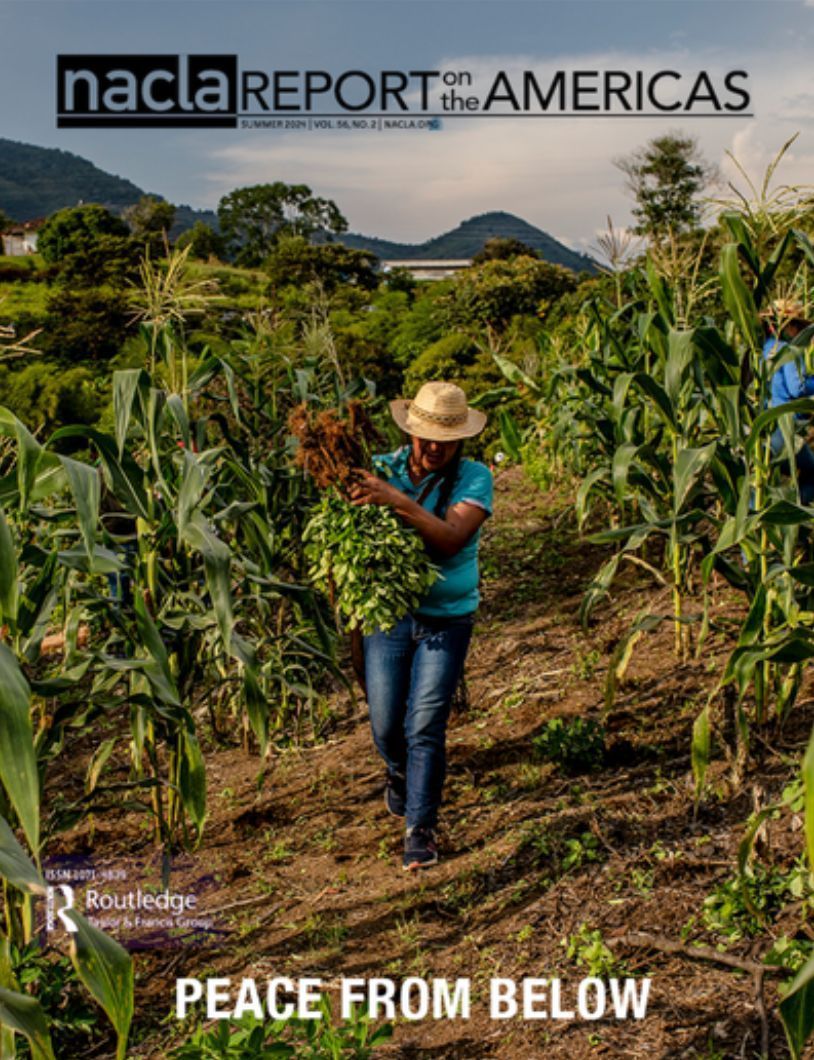
The Fall 2026 issue of the NACLA Report, “Peace from Below,” guest edited by Anthony Dest and Diana Gómez Correal, reflects on the promises, achievements, and shortcomings of Colombia's 2016 Peace Agreement, by foregrounding the people and communities most affected by the armed conflict. Bringing together voices from across Colombia—including Peace Agreement signatories, victims’ organizations, campesinxs, Indigenous and Afro-descendant communities, and women’s and LGBTIQ+ organizations—the issue examines how communities continue to organize amid enduring violence and uncertainty. At a critical political juncture, their experiences illuminate both the limits of institutional peacebuilding and the possibilities of building peace from below.
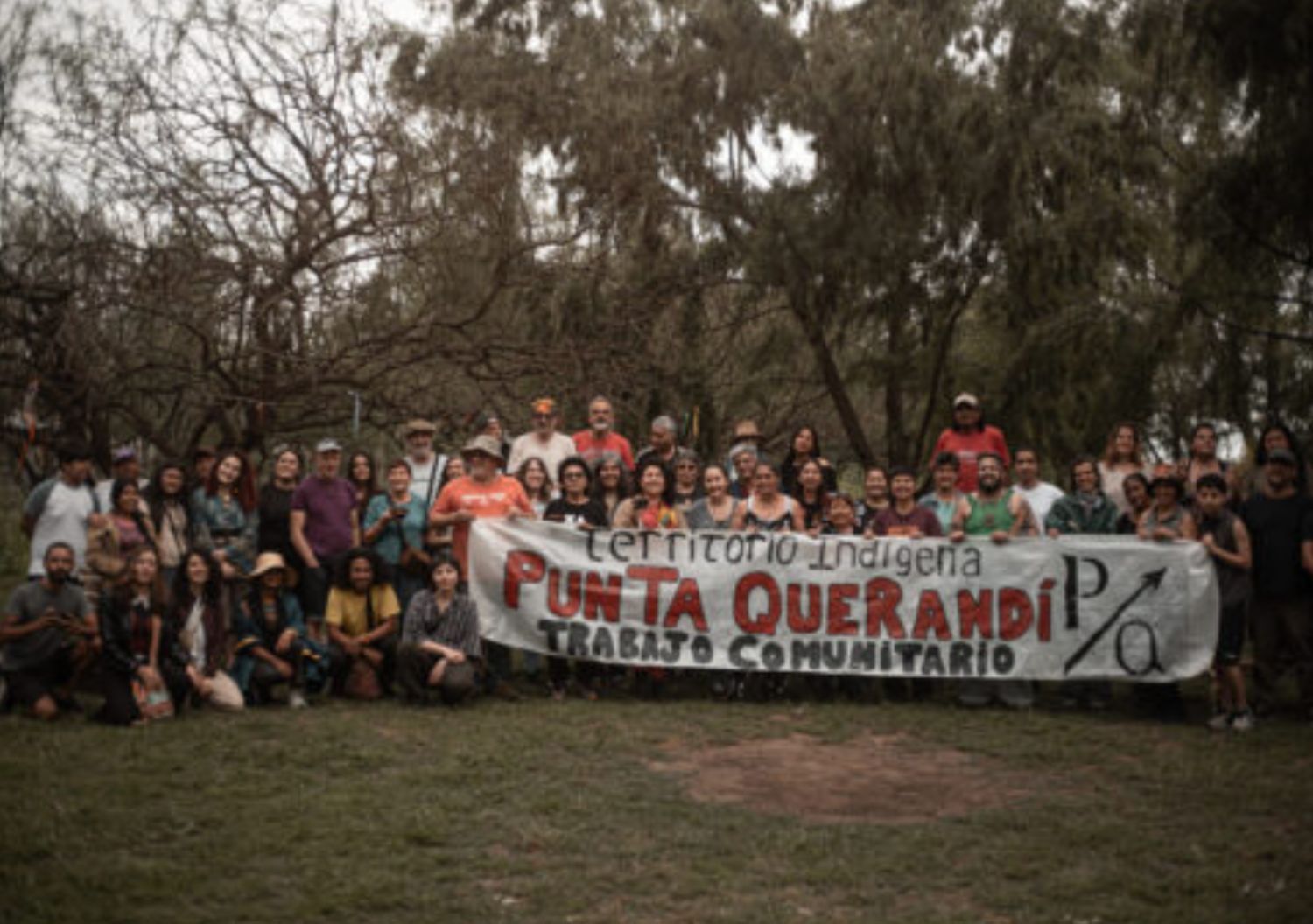
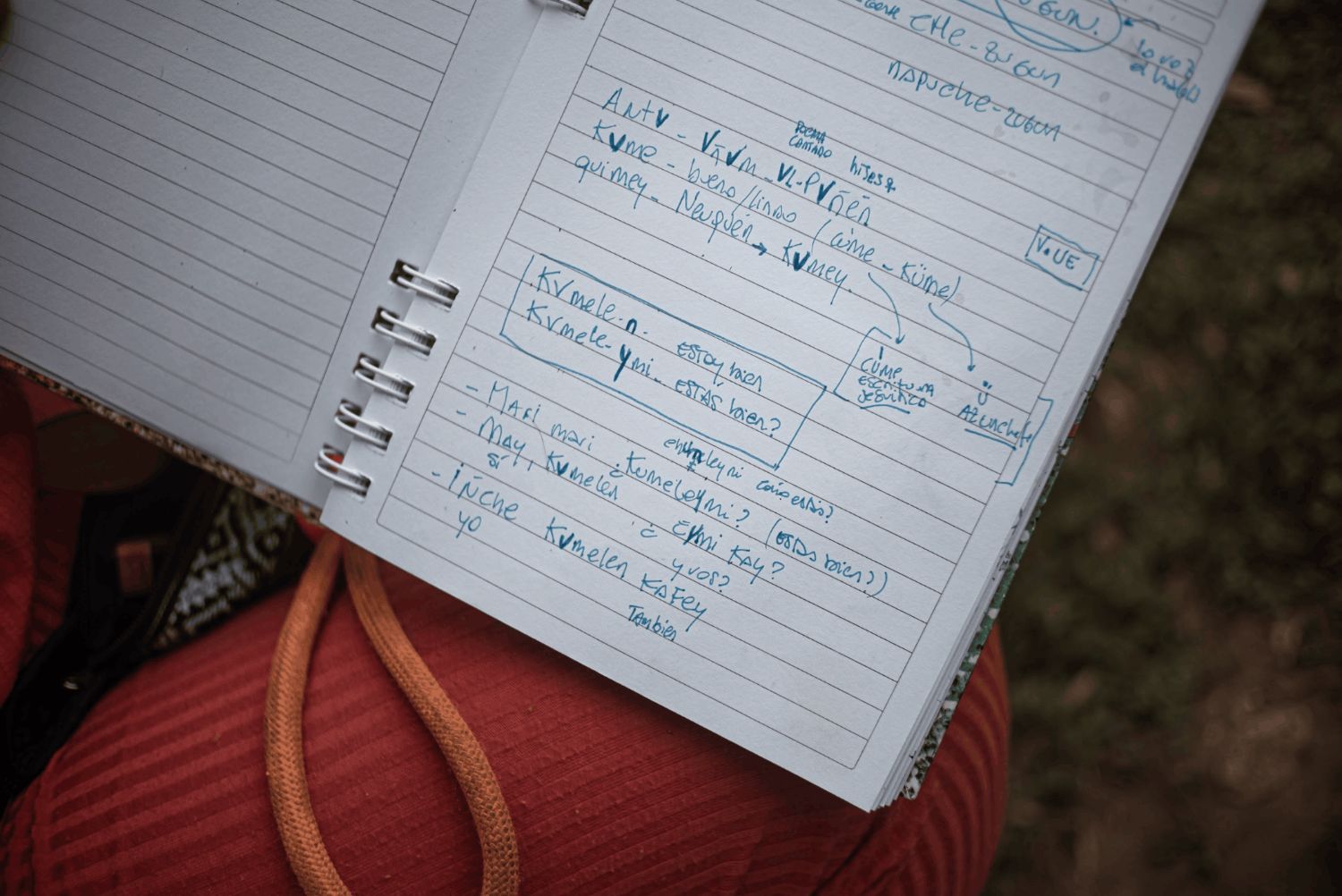
En Punta Querandí, las comunidades indígenas están ayudando a las personas a recuperar sus identidades, luchar contra el borrado cultural y abrir espacios para la resistencia indígena.
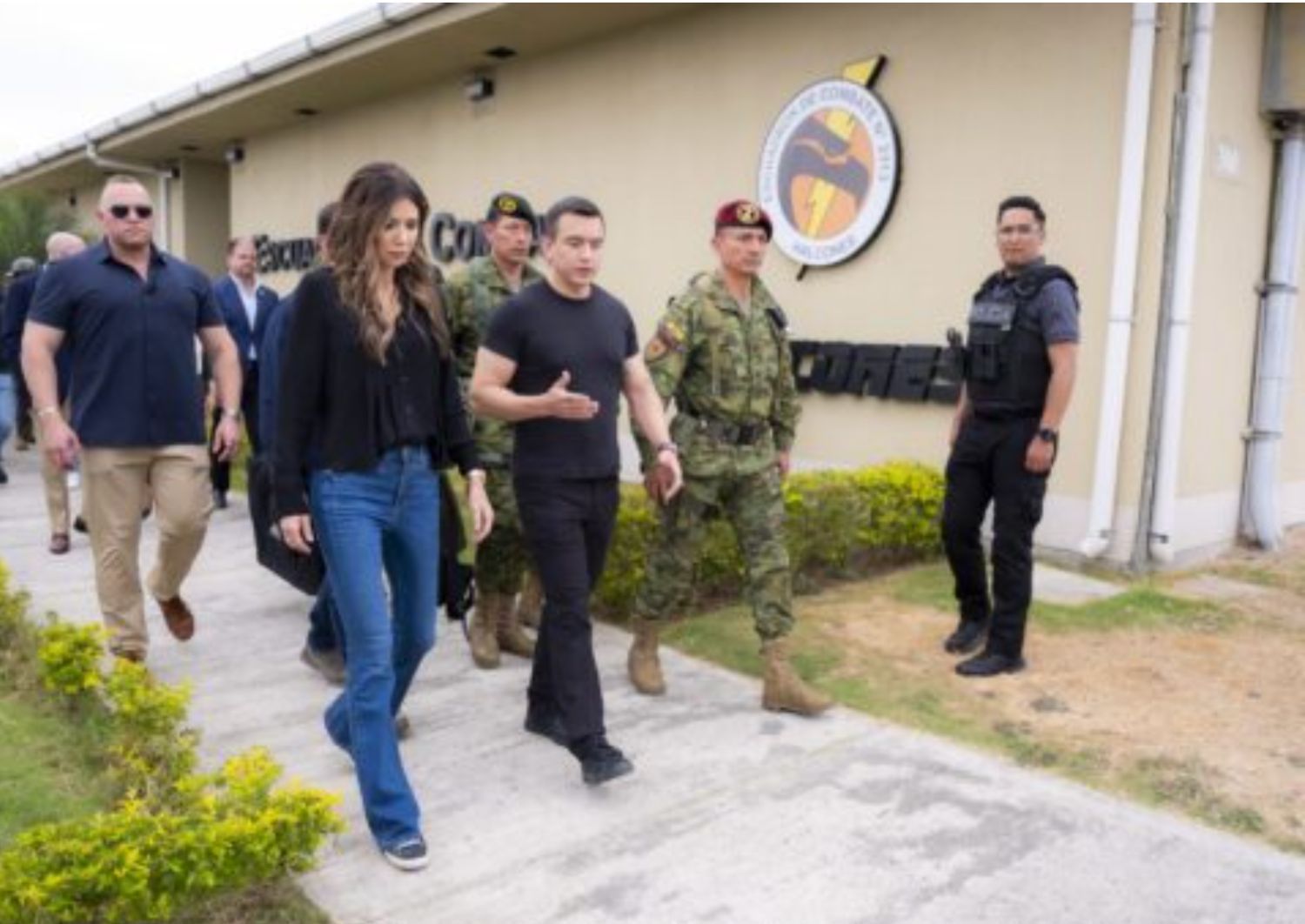
While the government has attempted to blame the violence on the closure of a U.S. base in 2009, the record—including the chronology laid out in a new U.S. indictment of its opponents—tells a different story.
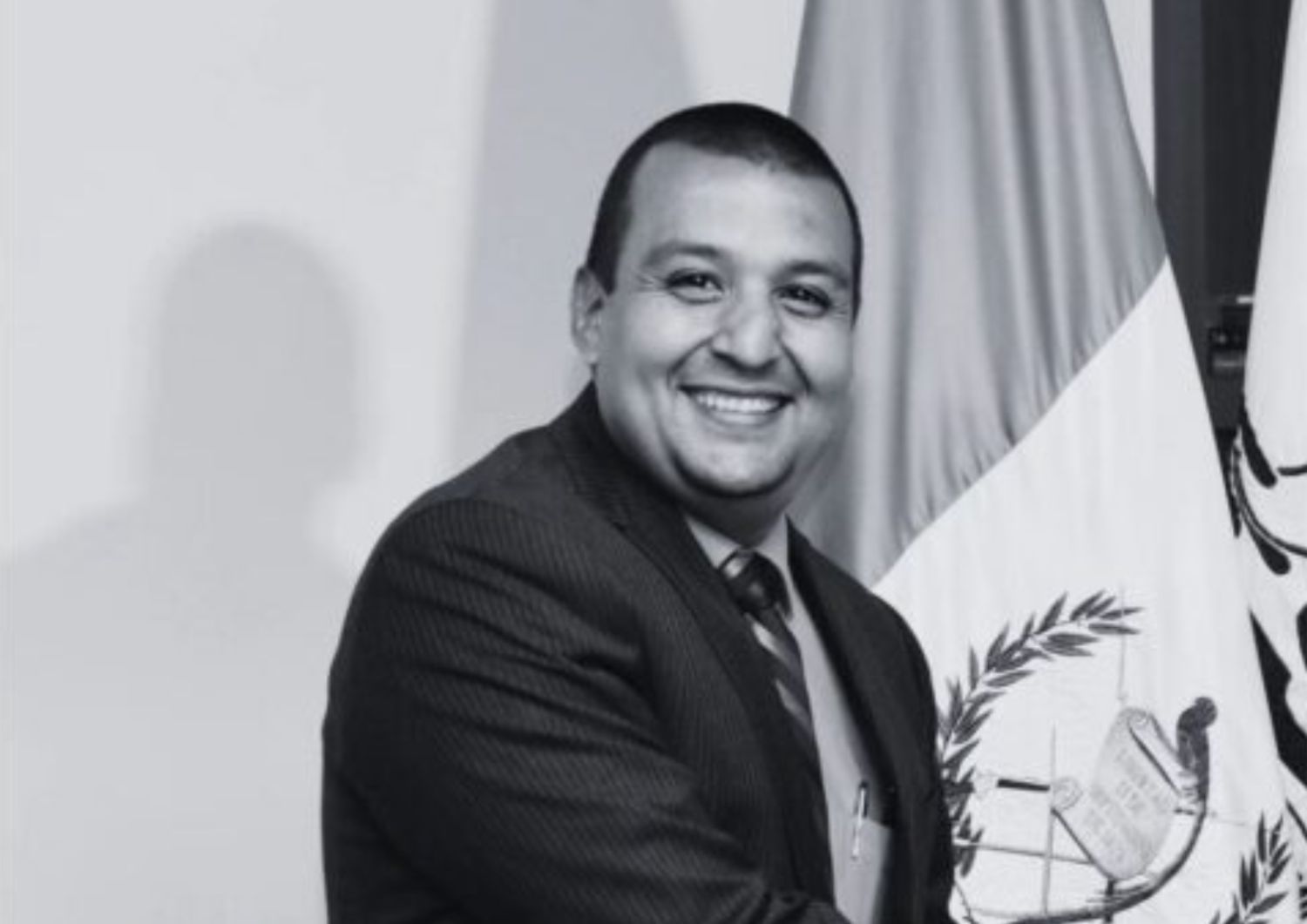
Anti-corruption activist and former prosecutor Juan Francisco Solórzano Foppa’s murder exposes the limits of the current government’s reforms and the growing anti-democratic threats in the lead-up to next year’s elections.
Indigenous communities in Punta Querandi, Argentina are helping people reclaim their identities and fight against erasure. Here is the notebook from a Mapuzugun student. Read the article, by Ella Fernández, in English and Spanish. (Ella Fernández).
AROUND THE REGION
HEGSETH IN LATIN AMERICA—On Wednesday, Pete Hegseth became the first U.S. Secretary of Defense to visit Venezuela in the twenty-first century, making an unannounced stop in Caracas and appearing next to interim leader Delcy Rodríguez. After meeting with Rodríguez at Miraflores Palace, Hegseth announced a new defense cooperation agreement, though little is known about the deal. Rodríguez, for her part, said that the agreement will make the region safer. Both officials commented on the remarkable turnaround in the bilateral relationship since the U.S. illegally invaded Venezuela and kidnapped former President Nicolás Maduro in January. Hegseth bragged about the operation and said that “one year ago, my presence here would have been deemed impossible,” while Rodríguez noted that they had turned “very harsh moments for our people…into an extraordinary space for cooperation." Hegseth also traveled briefly to Colombia to meet with defense officials. The visit was allegedly cut short after President Abelardo de la Espriella said he would not authorize U.S. forces to take part in joint military operations on Colombian soil, though he later rejected the reporting. Hegseth also traveled to Ecuador and Honduras, where he preached further military collaboration.
STATE OF EMERGENCY IN GUATEMALA—Following a series of deadly attacks in eastern Guatemala, on Saturday, President Bernardo Arévalo declared a 30-day state of siege in the departments of Zacapa and Izabal. Lawmakers approved the declaration in a slightly modified form on Tuesday, empowering the armed forces to detain suspects and enter homes without judicial authorization and suspending several constitutional rights, including freedom of movement, assembly, and the right to bear arms. On November 6, Guatemalan lawmakers and three police officers were killed during an armed attack in Zacapa; one week later, five more people were killed in another attack in the department, prompting the state’s firm response. The state has blamed the violence on three criminal organizations—Los Lorenzanas, Los Huistas, and Los Mendoza—that the Trump administration formally designated as terrorist groups on Friday. Arévalo’s declaration of a state of siege points to “narcotrafficking” carried out by "transnational criminal and terrorist organizations" as the driving force behind the violence. The deployment of the Armed Forces may not calm the nerves of local communities, especially given the potential role of the military in a slate of recent attacks on civilians—most notably in the September 27 killing of eight people in Huité, Zapaca, but also potentially in the October 17 killing of activist Juan Francisco Solórzano Foppa.
HAITIANS MARCH FOR BUKELE—Thousands of Haitians took to the streets in cities across the country on Tuesday to support Salvadoran President Nayib Bukele’s military campaign. Bukele sent troops to Haiti in mid-October after four Salvadorans disappeared in gang-controlled territory while serving with the UN-backed Gang Suppression Force (GSF). While he initially announced that Salvadoran troops were in Haiti specifically for a rescue mission, the mandate of troops has expanded, as has their number. Now, upwards of 2,500 Salvadorans, operating largely outside the confines of the GSF, have joined operations to retake the national soccer stadium and destroy the the houses of prominent gang leaders, including an attack carried out on Wednesday that Bukele said was a “gift” to honor the 1803 Battle of Vertières, where Haitian revolutionary troops defeated the French, helping secure the world’s first Black republic. The strike came a day after the Haitian government formally approved a security agreement with El Salvador, though the details will reportedly not be made public, despite demands from human rights organizations. Many Haitians on Tuesday noted it was the first time in years they had publicly taken to the streets; “strike them with drones” was a common chant. Bukele responded on social media to videos of the demonstrations, saying, "I love you too” and that “God will give us victory.”
NEW U.S. AMBASSADOR TO BOLIVIA—Kara Frederick, a counterterrorism expert and tech policy analyst with no formal diplomatic experience, is the Trump administration’s nominee to be U.S. Ambassador to Bolivia—a position that has not been filled for 18 years. In 2008, then-President Evo Morales expelled U.S. Ambassador Philip Goldberg after accusing him of supporting anti-government protests. The U.S. responded by expelling the Bolivian Ambassador, leaving the two countries with only charges d’affaires to communicate. Frederick’s background in security and intelligence—she worked at the Department of Defense as a counterterrorism analyst, deployed to Afghanistan three times, and served as a liaison to the National Security Agency—signaled to observers that the Trump administration intends to foreground “security” over dialogue in its approach to Bolivia, a country central to its designs in the region. Frederick’s past work for Meta leading the company’s Global Security Counterterrorism Analysis Program and the platform’s regional intelligence operations is also cause for concern. Meta’s recent intervention in Brazil’s elections have raised questions about its interests in Latin America. Bolivia announced that it would soon appoint its own ambassador to the United States.