Haiti’s security and political crisis have entered a dangerous new phase after El Salvador deployed over 2,000 troops in the past weeks. According to Salvadoran President Nayib Bukele, military personnel were sent to Haiti to rescue four Salvadoran soldiers who went missing while serving with the UN-backed Gang Suppression Force (GSF). In recent days, however, there are troubling signs of mission creep, raising questions about accountability, the legality of the operation, and Bukele’s wider motives.
On October 18, four Salvadoran soldiers went missing in gang-controlled territory in the capital, Port-au-Prince. Days later, Bukele threatened the gangs on social media and soon after deployed around 1000 soldiers and launched amilitary operation. This week, the number of deployed personnel grew to around 2,000. The Salvadorans have undertaken operations beyond the rescue of their captured countrymen. On Sunday, Salvadoran troops joined a Haitian police task force in an operation targeting a home used by Wilson Joseph, the head of the 400 Mazowo gang, who is better known as Lanmò San Jou. On Tuesday, Bukele posted a video on social media of at least three helicopters firing at a two-story home in Croix-des-Bouquets, a commune outside of Port-au-Prince. The attack came after a user on X posted a photo of the headquarters and asked Bukele to destroy it, to which he responded by asking for the exact address so he could “destroy it.” In the wake of the attack, which killed 20 people, Bukele took to social media to brag, claiming that his government had “fulfilled our promise.”
Bukele’s operation against the 400 Mazowo gang came at a sensitive time. Last week, the gang reportedly reached out to a Haitian government agency in charge of disarmament and reintegration and the United Nations to discuss potential peace talks. In a public statement sent to the Associated Press, Joseph linked civilian deaths to drone attacks and raised fears that Bukele’s intervention will lead to “an escalation of violence and a logic of reprisals.” Joseph, who is himself accused of kidnapping and extortion, heads one of the largest criminal organizations in the wider “Viv Ansanm” gang coalition, which now controls upwards of 90 percent of Port-au-Prince and other parts of the country. The motives behind Joseph’s desire to negotiate, however, were quickly called into question given the gangs’ lack of concern for civilian deaths in the areas they control.
The GSF has so far failed to stop the gangs, fueling popular anger and a sense of desperation. In this context, Bukele’s entry into the conflict has been greeted positively by many Haitians, including by the country’s Prime Minister Alix Didier Fils-Aimé, who praised the Sunday’s attack on Joseph and is set to visit El Salvador next week. Bukele’s deployment has nearly doubled the amount of soldiers operating in Haiti, a significant development given the UN task force has struggled to meet staffing goals.
Even still, there is growing concern about the role of the Salvadoran troops in Haiti, especially given that the majority are not operating within the confines of the GSF. The competing mandates of the various actors have also raised concern. There are currently five different security operators on the ground, including the Haitian National Police, the Armed Forces, the GSF, a drone force led by professional mercenary Erik Prince, and now the Salvadorans. On Sunday, Secretary of State Marco Rubio backed the GSF and the Salvadorans, who he clarified are in the country under a separate bilateral agreement. Nevertheless, he also stressed the need for a clear chain of command so that the groups do not end up “shooting at each other.”
Behind the scenes, Bukele’s deployment, which was approved by Trump, has stirred tensions within the U.S. State Department. Last week, U.S. Chargés d’Affairs in Haiti, David Howell, reportedly complained to the Haitian Prime Minister about the Salvadorans’ lack of coordination with the GSF and asked him to order a temporary halt to the group’s operations; “they nearly killed GSF troops,” he texted Fils-Aimé. After the U.S. Embassy in San Salvador sent a formal complaint to the Salvadoran government, the Bukele administration responded by accusing him of spreading misinformation.
Thanks to an incredible outpouring of support from our community, largely in the form of small donations, we’re only a few hundred dollars away from our $25K goal.
Can you chip in $10, $25, or $50 to help us continue publishing NACLA into 2027?
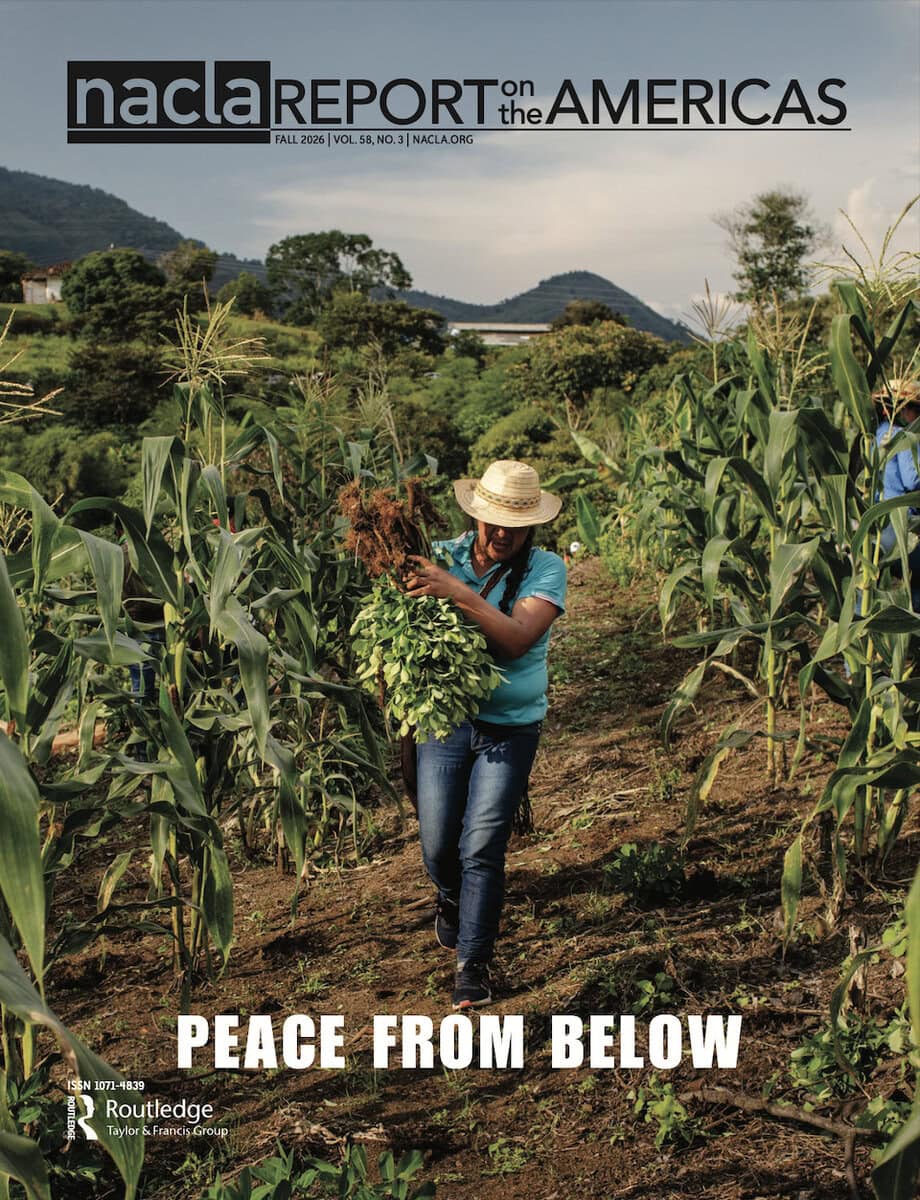
The Fall 2026 issue of the NACLA Report, “Peace from Below,” guest edited by Anthony Dest and Diana Gómez Correal, reflects on the promises, achievements, and shortcomings of Colombia's 2016 Peace Agreement, by foregrounding the people and communities most affected by the armed conflict. Bringing together voices from across Colombia—including Peace Agreement signatories, victims’ organizations, campesinxs, Indigenous and Afro-descendant communities, and women’s and LGBTIQ+ organizations—the issue examines how communities continue to organize amid enduring violence and uncertainty. At a critical political juncture, their experiences illuminate both the limits of institutional peacebuilding and the possibilities of building peace from below.
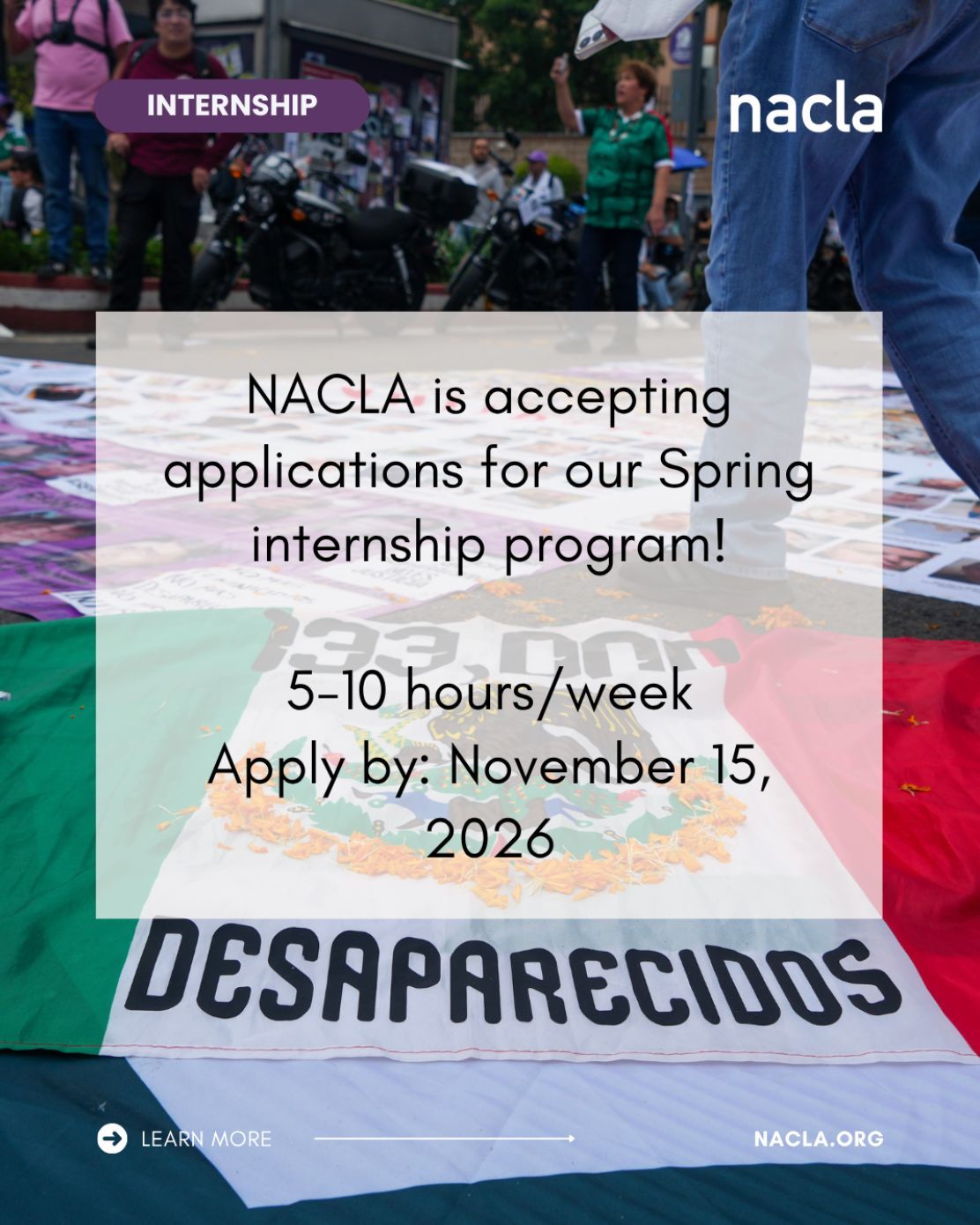
Are you an undergrad interested in and knowledgeable about Latin America, social justice movements, politics, and history?
NACLA offers a 5-10 hour/week internship opportunity for students who will receive course credit and/or funding from their educational institution for the internship as part of their studies. This opportunity is ideal for undergraduate students with an interest in alternative media, non-profit operation, and left politics and history in Latin America and the Caribbean. Candidates seeking in-person (based in NYC), hybrid, or remote work will be considered. Internship positions are unpaid. NACLA encourages interns to seek applicable funding from their institutions of study to support their work placement.
Apply for NACLA's spring internship by November 15!
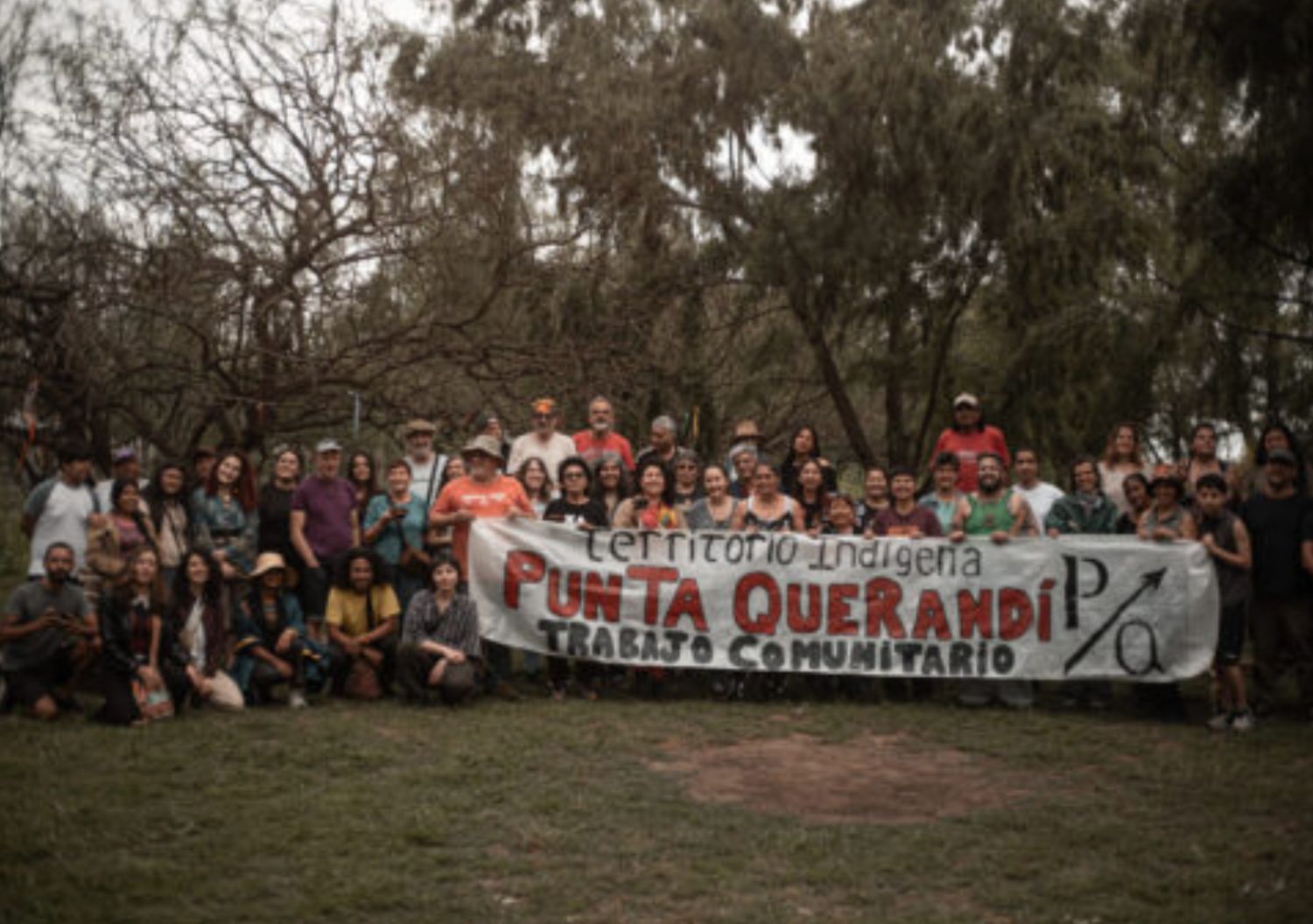
In Punta Querandí, Indigenous communities are helping people reclaim their identities, fight against erasure, and open spaces for Indigenous resistance.
IMAGE OF THE WEEK
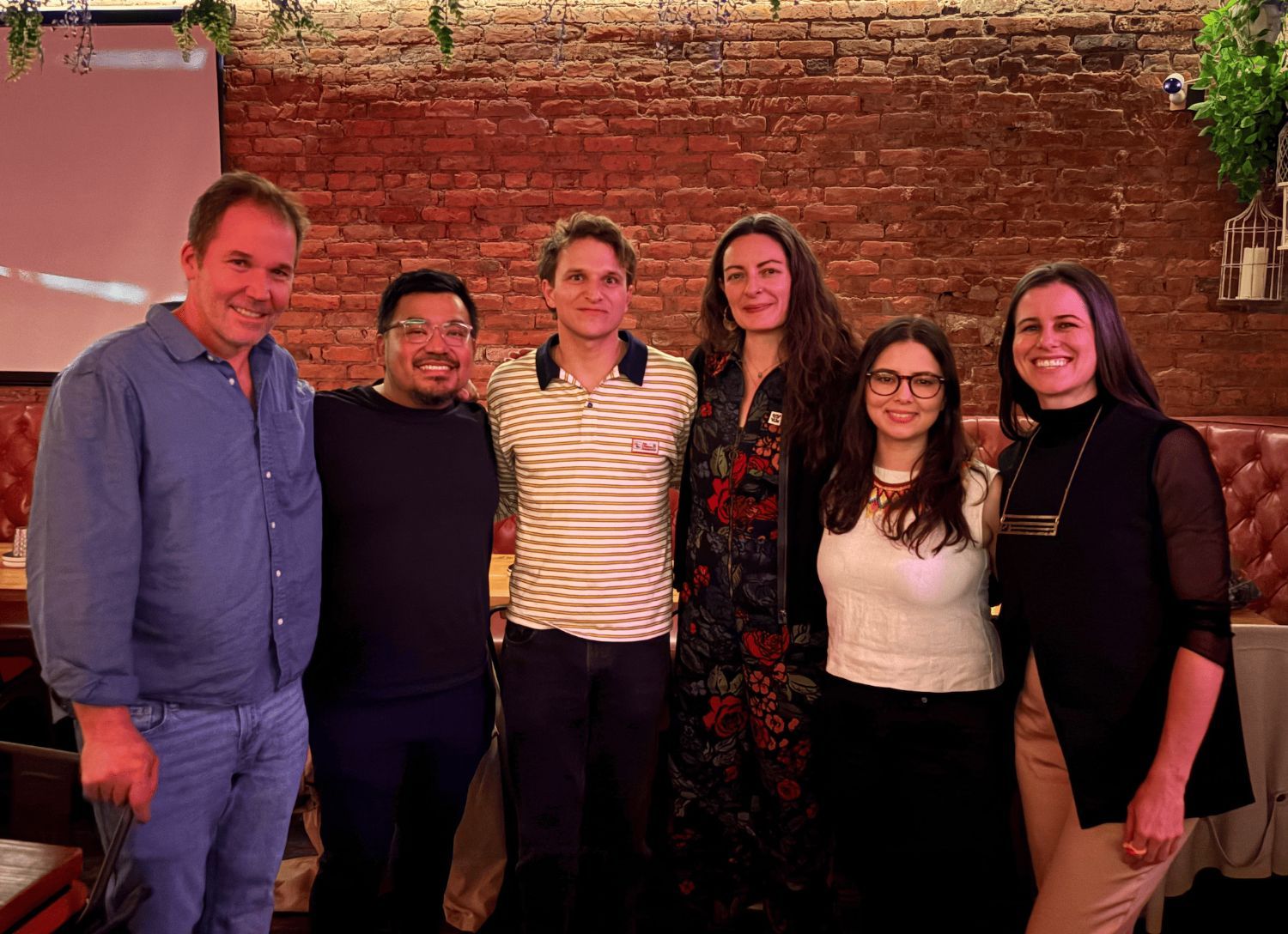
The NACLA team, gathered in New York City after our public launch event for the fall issue. From left-to-right, Bret Gustafson (co-executive editor), Jorge Cuéllar (co-executive editor), Gabe Levine-Drizin (web editor), Julianne Chandler (departing managing editor), Lara Loaiza (associate editor), Amy Richards (development associate).
AROUND THE REGION
PARAGUAY’S CRISIS—Paraguay’s ex-president, Santiago Peña, was formally charged with breach of trust and administration for personal gain on Saturday for his role in a massive banking scandal that has thrown the country into crisis. After being formally impeached and replaced by his former Vice President, Pedro Alliana, Peña was put under house arrest and then quickly moved to a military unit on Friday, where he is set to be held until his trial. Protesters throwing eggs and hurling insults at the convoy transferring Peña were met with rubber bullets. The banking scandal that brought down Peña has fallen incredibly hard on the Paraguayan people: 40 percent ofthe country—nearly 3 million people—have been locked out of their savings accounts. On Monday, public schoolteachers went on strike across the country, demanding that the state backstop over $60 million in pension funds deposited in Ueno, the digital bank with ties to Peña that collapsed and was seized by Paraguayan regulators weeks ago.
PROTESTS IN CHILE—Striking transport workers are blocking roads and highways across Chile to demand the government of far-right President José Antonio Kast do more to help address the surging prices of diesel, driven up by the Iran War. The protests, which are being organized by a leading trade union of lorry drivers, have been joined by a large civic movement known as “No + TAG,” which seeks to change the country’s tolling systems and has echoed the truckers’ calls for eliminating of the fuel tax and reinstating a state fund that helped subsidize rising fuel costs. Talks with the Kast administration failed on Wednesday; the movement’s representatives vowed to keep the roadblocks in place. For its part, the government said it would continue discussions but may soon have to “clear the highways.” Protests have also spread to Santiago, where residents are banging pots and pans—a practice known as a cacerolazo—to protest rising prices and wider economic stagnation. Kast’s approval rating has dipped drastically as a result of economic concerns and the decision of his justice minister to reduce the sentences of 56 sex offenders.
ABELARDO PLAYS DRESS-UP—Colombia’s far-right President Abelardo de la Espriella released another highly-produced “tough on crime” propaganda video on Monday, this time of a military operation in the city of Cúcuta. In the four-minute video, de la Espriella—dressed in camouflage, wearing a military beret, and carrying a weapon—heckles captured members of a FARC dissident group. He asks the men “what they thought of the bomb he sent them,” a reference to his recent signature and writing of his frequent slogan, “welcome to the nation of miracles,” on a bomb. Later in the video, the camera also focuses on four white body bags, a heavily criticized practice the president has done routinely after security operations. For all his theatrics, de la Espriella’s hard-line approach has failed to deliver any tangible increase in public security. Writing for his outlet Pirate Wire Services, frequent NACLA contributor Joshua Collins notes that violence has risen “by almost every metric”, including “extortion, homicides, acts of ‘terrorism,’ kidnappings, and attacks on security forces,” since he took office.
PROTESTERS AND U.S. LAWMAKERS DENOUNCE NOBOA—Thousands of Ecuadorians took to the streets in major cities across the country on Saturday to protest the government of right-wing President Daniel Noboa. In Quito, Guayaquil, and Cuenca, protesters railed against rising violence, steep cuts to higher education funding, and a drastic decline in the country’s healthcare system. In Quito, labor unions, social movements, kidney patients, and university students battled the rain and threats of police violence. Banging pots and pans and taking over the streets, they called for Noboa’s resignation and the release of opposition leader Luisa González, who was arrested weeks ago on trumped-up charges. A group of thirteen Democratic lawmakers in Washington bolstered their accusation that Noboa has become increasingly authoritarian last week, publicly calling on the Trump administration to suspend security assistance and military cooperation with Ecuador. In a letter addressed to Secretary of State Marco Rubio, the lawmakers cited NACLA’s own recent reporting on the imprisonment of González as evidence of “surging authoritarianism” in the country.