| |  | | After months of factional infighting, disqualifications, and frequent protests, Bolivia’s presidential campaign officially kicked off this week. The electoral tribunal announced early this week that it had accepted the registration of 9 candidates for the August 17 elections. Notably absent from the list of candidates was Andrónico Rodríguez, the popular leader of the Senate whose candidacy was suspended until the court rules on a challenge to the legality of his political alliance. Also absent is former President Evo Morales, who was barred from running after a Constitutional Tribunal ruled he had exceeded constitutional term limits. The tumult surrounding Bolivia’s presidential elections intensified last week after current President Luis Arce announced that he would not seek re-election. Confronted with low polling and locked in a bitter feud with former ally Morales over control of the Movement for Socialism (MAS) party, Arce called for the left to rally behind one candidate so as to not divide the country’s popular forces. In his place, Arce nominated his minister Eduardo del Castillo, a stern-faced lawyer who oversaw violent crackdowns on activists during protests last year. The middle-class mestizo politician from conservative Santa Cruz does not garner the popular support of other MAS leaders like Morales and Rodríguez. On the same day Arce announced he would not seek re-election, a Constitutional Tribunal confirmed that Morales could not run for re-election. Morales served three terms between 2006 and 2019, overseeing a period of unprecedented economic growth and political transformation. He was forced to resign in 2019 while seeking an unconstitutional fourth term. In response to the court’s ruling, Morales organized a massive caravan of supporters who marched through the city of La Paz on Thursday to pressure the Electoral Tribunal to register his candidacy. The protesters, who hailed from across the country, were met with tear-gas and repression at the hands of state forces. While his popularity has fallen since the height of his leadership, Morales still retains a solid base of support among much of Bolivia’s Indigenous and campesino populations, who remember fondly his groundbreaking stewardship as the country’s first Indigenous president. More surprising than Morales’ disqualification was the suspension of the candidacy of Rodríguez, Evo’s protegeé who formally broke with the former leader in announcing his candidacy earlier this week. Rodríguez, who is 36 and like Morales comes from a coca union background, is leading many polls and widely seen as the best option for renewal of the MAS party. The suspension of his candidacy pending a hearing on the legality of his political alliance with the Movimiento Tercer Sistema party led some to conclude that Rodríguez is being sidelined from the democratic process. If he is officially barred from running, the predominantly Indigenous country will be left without any Indigenous candidate. In another unexpected turn for Bolivia’s left, former MAS senator and current mayor of El Alto Eva Copa announced her candidacy last week. Copa is running with the MORENA party alongside Jorge Richter, Luis Arce’s former spokesperson and a well-known news pundit. With Copa, del Castillo, and potentially Rodríguez set to run, Bolivia’s divided left has greater representation than expected a mere few months ago. Progressive forces have been bolstered by the disorganized state of the country’s right-wing movements. In early April, the country’s opposition coalition known as the “unity bloc” was broken apart after ex-president Jorge Quiroga (2001-2002) refused to honor the right’s pact to select one candidate when internal polling showed he would lose. Samuel Doria Medina, a businessman and leader of the dying remains of the “bloc,” is also running, as is Manfred Reyes Villa, the business-friendly mayor of Cochabamba and former military officer. The country’s deepening economic crisis will be front of mind for Bolivia’s 7 million voters. On Wednesday, protestors took to the streets of the capital to denounce fuel shortages and rampant inflation. Declining profits from natural gas, high public debt, and dollar deficits have made life increasingly difficult for Bolivians and pushed the Arce administration to double down on the exploitation of the country’s resources. This has heightened tensions between the country’s Indigenous and popular movements and the MAS government they helped elect. |
| |
|
|
|
| | | | | | | JOIN US TO CELEBRATE THE NEW ISSUE! |
|
|
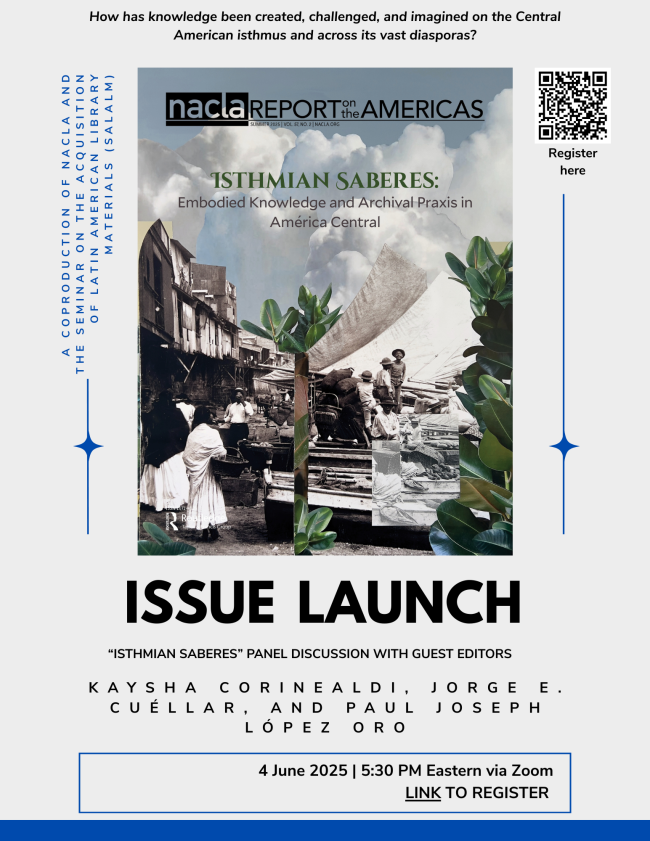
| NACLA and the Seminar on the Acquisition of Latin American Library Materials (SALALM) invite you to celebrate the launch of the Summer 2025 issue of the NACLA Report, Isthmian Saberes: Embodied Knowledge and Archival Praxis in América Central. Guest editors Kaysha Corinealdi, Jorge E. Cuéllar, and Paul Joseph López Oro will discuss the preparation of this issue and the myriad forms by which Central Americans produce the region and its knowledge systems, centering ongoing contestations over memory, history, and self-description in the pursuit of belonging and the articulation of collective futures. Together the guest editors ask: Who decides what counts as knowledge in and of Central America? How has knowledge been created, challenged, and imagined on the Central American isthmus and across its vast diasporas? If you haven't already, subscribe by June 1st to get your copy in the mail. Please also consider making a donation to help sustain this work. |
| |
|
| APPLY TO BE OUR FALL INTERN! |
| |
|
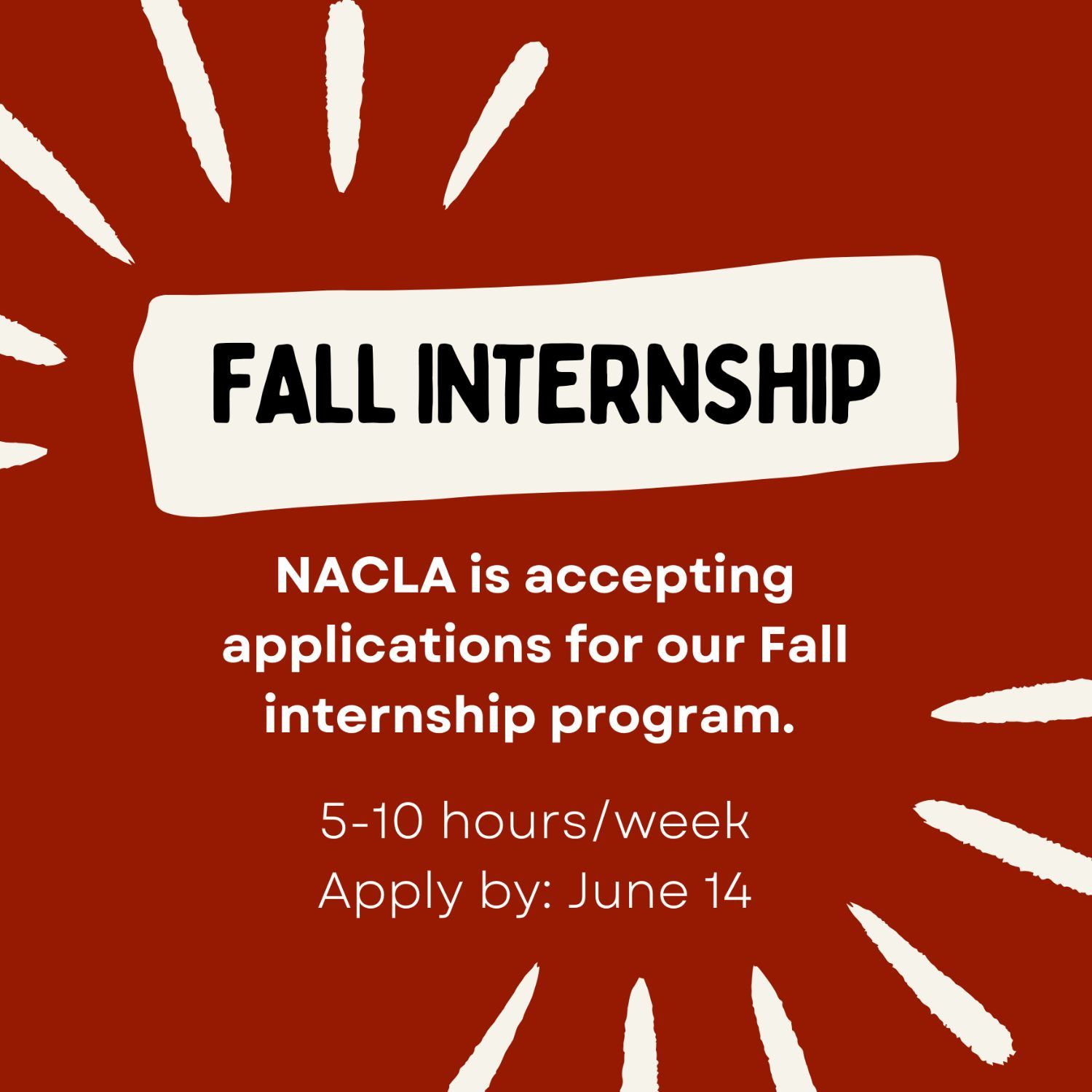
| NACLA offers a 5-10 hour/week internship opportunity for students who will receive course credit and/or funding from their educational institution for the internship as part of their studies. This opportunity is ideal for undergraduate students with an interest in alternative media, non-profit operation, and left politics and history in Latin America and the Caribbean. Candidates seeking in-person (based in NYC), hybrid, or remote work will be considered. Internship positions are unpaid. NACLA encourages interns to seek applicable funding from their institutions of study to support their work placement. For more details on the internship, read here. To apply, please email [email protected] with a resume and a brief summary of why you are interested in working with NACLA by June 14. |
|
|
| | | | | | | | | 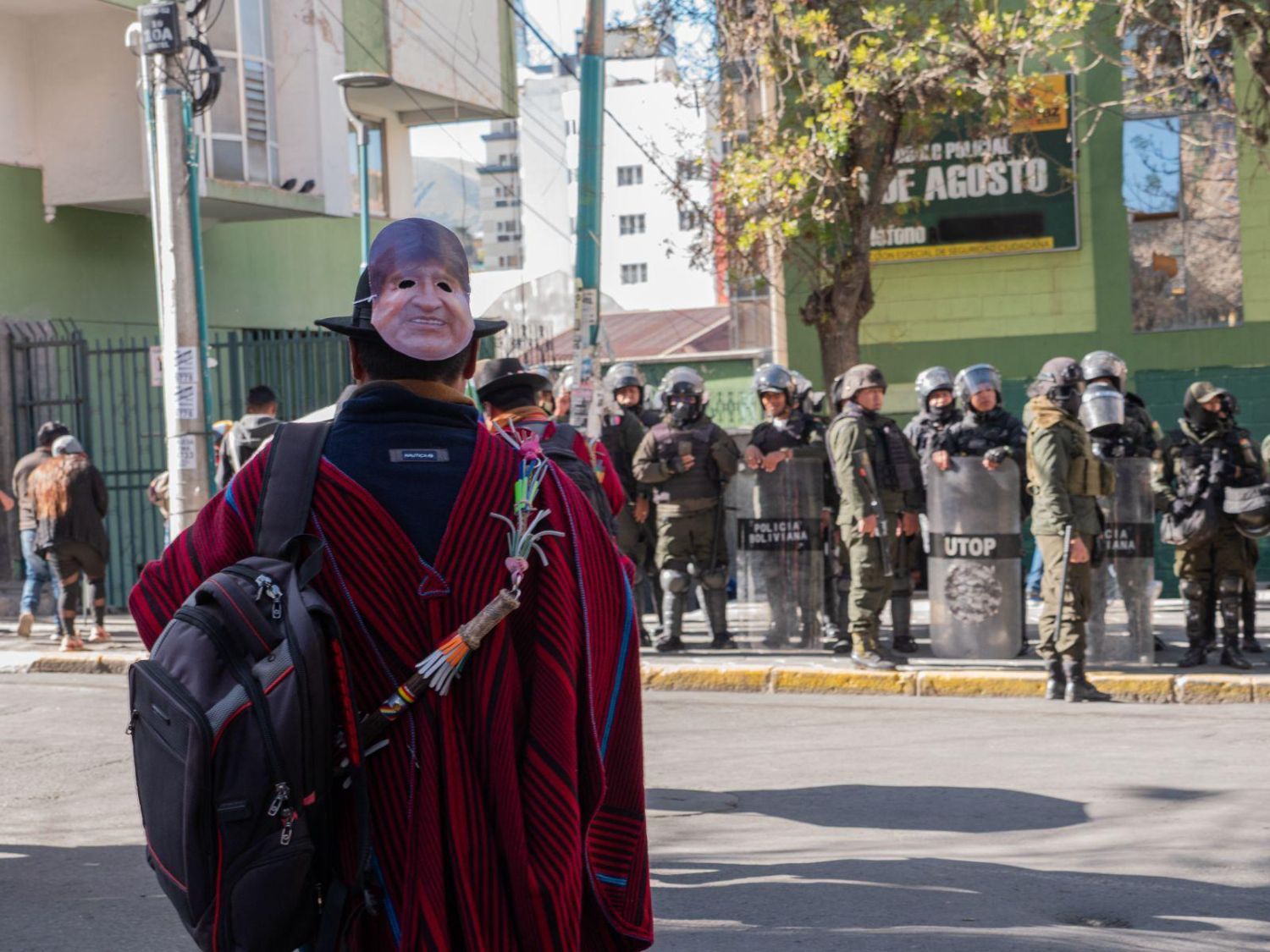 | A protester stands across from police during a massive march in La Paz, Bolivia in support of former President Evo Morales. The man dons a mask of Morales. (Benjamin Swift). |
|
|
| | | -
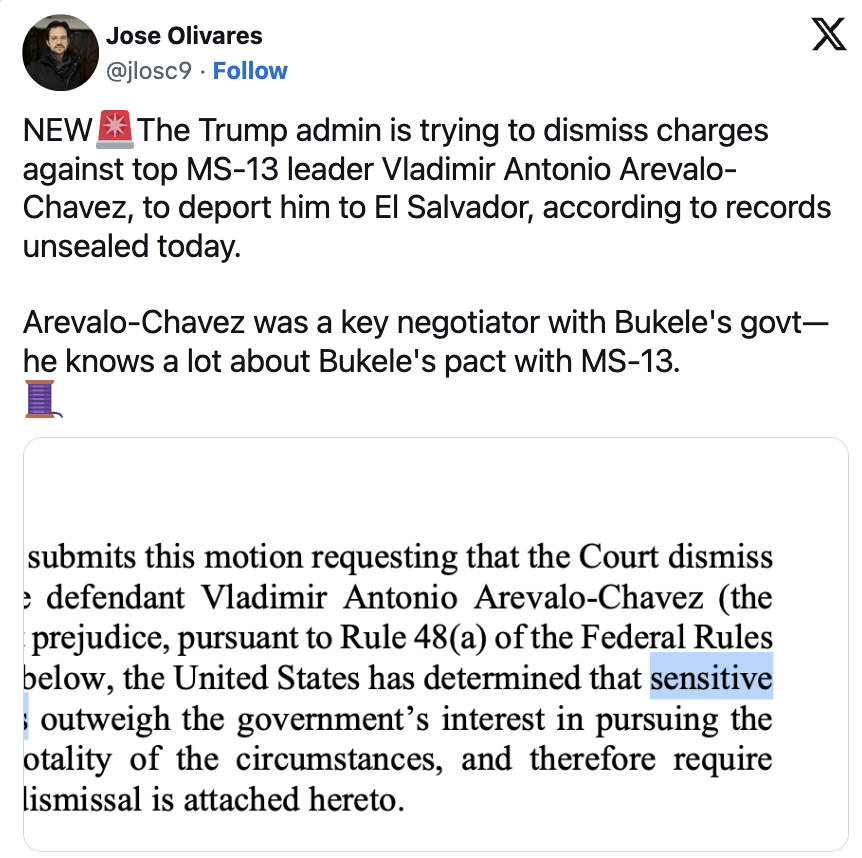
SALVADORAN RIGHTS LAWYER ARRESTED — Human rights lawyer Ruth López was arrested by Salvadoran authorities on Sunday after being accused of embezzling state funds during her time in public office nearly a decade ago. López, the head of the Anti-Corruption and Justice Unit at the human rights organization Cristosal, has been an outspoken critic of President Nayib Bukele for years. She and her team have filed legal cases detailing government corruption, denounced the government’s sidestepping of due process in its state of emergency that has incarcerated more than 80,000 people, and represented migrants detained in the country’s mega-prison known as CECOT. Her arrest late Sunday night and the dubious nature of the charges against her—linked to her work as an adviser to the president of the country’s Supreme Electoral Tribunal—were immediately denounced by scores of international human rights organizations. As she was being arrested, López told the officers to “have some decency; one day this will all end.” In the last few weeks, the Salvadoran government has issued arrest warrants for journalists critical of its regime—leading many to flee, brutalized protesters, detained activists like lawyer Alejandro Henríquez, and targeted foreign human rights NGOs. -
LABOR STRUGGLE IN COLOMBIA — Less than a week after Colombian President Gustavo Petro’s labor reform referendum was voted down in the Senate, Petro presented a new referendum proposal to Congress and called on social movements to mobilize pressure to assure its passing. Petro’s new attempt at a popular referendum on labor reforms, which includes all the aspects of the previous reforms with an added focus on the healthcare sector, came after his last attempt fell two votes short in a process the president and his allies characterized as “fraudulent.” In the last week, social movements have mobilized massively in favor of the reforms. At the local level, Colombians have gathered in local participatory bodies known as “cabildos” to defend the reforms and debate how best to respond to the legislation’s defeat. At the national level, Colombia’s labor unions announced this week that they will lead a 48-hour national strike in late-May to pressure the Senate to approve the referendum. Petro has ordered the country’s security forces not to intervene in the protests. If the Senate vote passes, it will trigger a national referendum on a set of “yes” or “no” policy reform questions. If the referendum clears a voter participation threshold and is approved by a majority, they will become law. |
|
|
| -
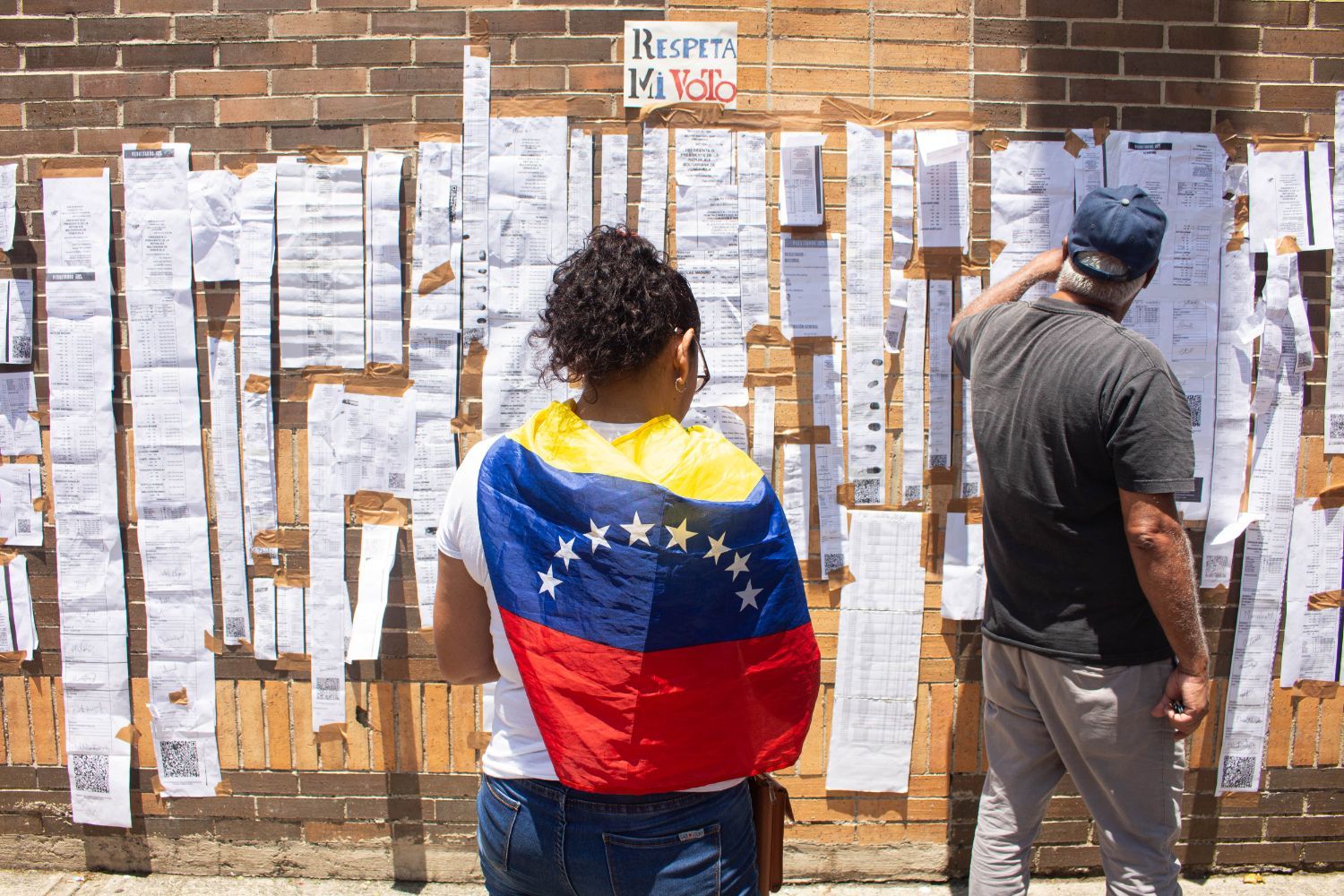
US-VENEZUELA RELATIONS — Relations between the Trump administration and the Venezuelan government continued to oscillate this week between conflict and collaboration. The Supreme Court ruled on Monday that the Trump administration could, for now, remove protections for nearly 350,000 Venezuelan migrants living in the United States under a program known as Temporary Protected Status (TPS), paving the way for their potential deportation. The next day, the Venezuelan government announced that it had released Joseph St. Clair, a U.S. Air Force veteran who had been detained in the country since November. St. Clair was released into the custody of Richard Grenell, Trump’s presidential envoy who previously met with Venezuelan President Nicolás Maduro to secure the release of six other American prisoners. The release came a week before Chevron’s waiver to extract Venezuelan oil without fear of sanctions is set to expire. According to reporting by The Miami Herald, the Trump administration has been secretly negotiating a deal with the Maduro administration to let Venezuela sell more oil if it agrees to accept the thousands of deportees who will soon lose their protected status. -
THE U.S. DEPORTATION MACHINE CONTINUES — On Friday, the Supreme Court blocked, for now, the Trump administration from resuming its deportations of Venezuelan migrants under the 1798 Alien Enemies Act. The same day, however, the administration began a new tactic that it hopes will become a key tool in its playbook: “voluntary deportations” in which migrants are paid to return to their countries. On Monday, 68 migrants from Honduras and Colombia were sent back to their home countries after accepting the offer of a $1,000 debit card and the chance to one day apply for legal re-entry into the United States. The government also ramped up its attempts to deport migrants to “third countries,” an often illegal maneuver in which individuals are removed to countries other than their nation of origin. On Thursday, the Trump administration confirmed that it was attempting to deport eight migrants from countries including Cuba and Mexico to South Sudan, a war-torn nation so dangerous that the migrants have been held in the African nation of Djibouti pending legal challenges to their removal. |
|
|
|
|
|
|
| | | North American Congress on Latin America
53 Washington Sq South, Fl. 4W | New York, New York 10012
(212) 992-6965 | [email protected] |
| |
|
| |
|
|