The Trump administration drastically escalated its pressure campaign on the Cuban government on Wednesday by moving a U.S. aircraft carrier to the Southern Caribbean and announcing the indictment of Raul Castro on charges of murder and conspiracy to kill U.S. citizens. The charges, which indicted five others, stem from the 1996 deaths of three U.S. citizens and one U.S. resident who were killed after the Cuban military shot down two planes used by the anti-Castro exile group Brothers to the Rescue, which carried out intentionally provocative “humanitarian flights.” The indictment marked the sharpest escalation in a weeks-long pressure campaign that has included new sanctions, ongoing threats of intervention, and increasingly aggressive military flights and drone activity off the Cuban coast. Analysts immediately drew parallels between the campaign against Cuba and the January kidnapping of Venezuelan President Nicolás Maduro, which similarly relied on a U.S. indictment as a flimsy legal pretext.
The unique setting of the indictment’s unsealing underscored the charges’ theatrical nature. Though returned nearly a month ago, they were unveiled on May 20, a date recognized by many Cuban exiles as “Independence Day.” The press conference took place at Miami’s “Freedom Tower,” at a former reception center for Cubans fleeing the Revolution, before an audience of hundreds of dignitaries, Cuban exiles, and local politicians. Announced by Acting Attorney General Todd Blanche, the event resembled a political rally more than a somber legal proceeding: attendees greeted Blanche with a standing ovation as he entered and cheered him on again after the charges were announced. Framed as a defense of innocent U.S. citizen lives, the charges—which carry a maximum punishment of death or life imprisonment—were justified by Blance with the declaration that “Nations and their leaders cannot be permitted to target Americans, kill them, and not face accountability.”
Yet Blanche’s account of the events of February 24, 1996, was deeply misleading. While he described the victims as “unarmed civilians flying humanitarian missions,” the reality is far more complicated. Brothers to the Rescue (BTTR) initially formed as a volunteer effort to alert the U.S. Coast Guard to Cuban migrants in distress at sea. But over time, the group shifted toward openly provocative political actions, including repeatedly violating Cuban airspace, dropping anti-government propaganda, and deliberately antagonizing the Cuban government, then led by Fidel Castro with his brother Raúl serving as head of defense. Declassified Federal Aviation Administration (FAA) documents show that Cuban officials spent months urging the United States to stop the flights, even offering to free political prisoners in exchange. High-level Clinton officials pressed the FAA to ground the flights, and FAA officials met directly with BTTR president José Basulto to warn him to cease what they called his “provacations.” The night before the fatal flight, the White House official in charge of Cuba policy reportedly urged the FAA to block the planes from taking off, warning that Cuba might “attempt to shoot down” the aircraft, despite its previous “restraint.” The FAA refused to do so. Of the three planes that departed, two were shot down, killing four people; the third, with Basulto on board, escaped.
The indictment against Castro, coupled with the arrival of a U.S. aircraft carrier to the southern Caribbean the same day, immediately raised concerns that the Trump administration may be preparing for military action against Cuba, which is already struggling under the weight of a crushing oil blockade. A slew of recent moves have pointed in that direction: CIA head John Ratcliffe’s visit to the island, military flights off Cuba’s coast, fearmongering about alleged Chinese and Russian surveillance bases on the island, and media leaks about the threat posed by Iranian drones allegedly purchased by Cuba. The outlet that broke the story, Axios, has increasingly functioned as a vehicle for anonymous national security leaks aligned with U.S. military objectives, including in the run-up to the invasion of Venezuela. Cuba’s Foreign Minister denounced the allegations as part of a "fraudulent case” for intervention and criticized the role of media outlets that “promote slander and leak insinuations” originating from the U.S. government. Secretary of State Marco Rubio would later invoke similar rhetoric to defend the invasion of Venezuela, citing Maduro’s indictment and describing the country as a “primary spot of operation” for Iran, Russia, and China.
In response to the indictment, Cuban President Miguel Diáz-Canel highlighted the hypocrisy of the Trump administration. Defending Castro, he accused the BTTR of ties to narcotrafficking and condemned what he called the real violation of international law: the United States’ ongoing "extrajudicial executions of civilian boats in the Caribbean and Pacific.” Days earlier, he insisted that Cuba “poses no threat” to the United States, while warning that any U.S. attack on the island would trigger a “bloodbath with incalculable consequences.”
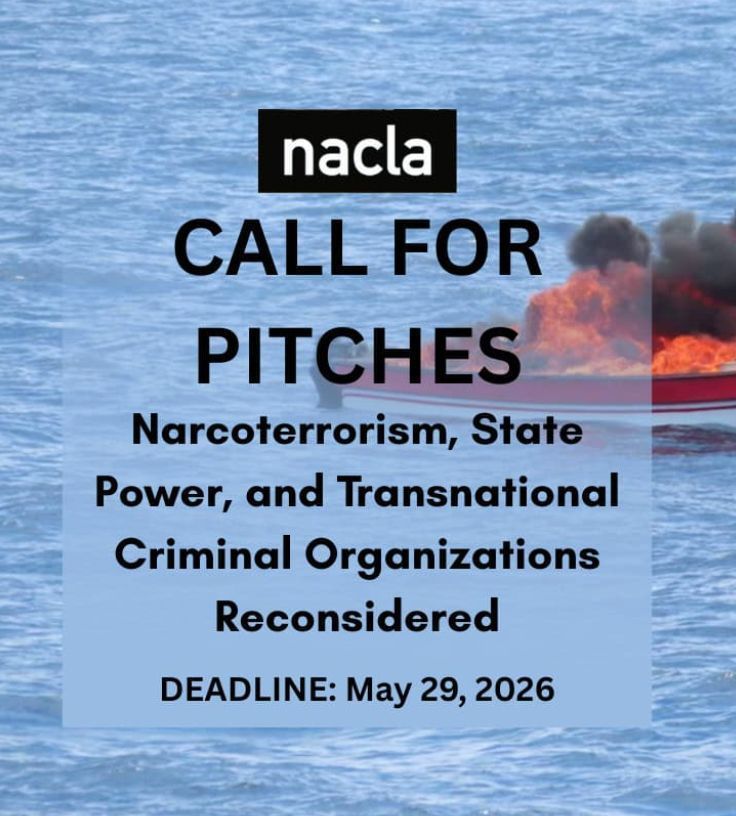
NACLA solicits original contributions on the topic of narcoterrorism, state power, and transnational criminal organizations—broadly defined—for our Winter 2026 issue. Guest edited by K. Sebastian León, Simon Granovksky-Larsen, and Anthony Fontes, this collection will explore critical perspectives that analyze the role of the state in (re)producing violence and insecurity, and which trouble popular understandings of “criminal groups.” Scholars, writers, journalists, and artists working at the nexus of state repression and formally targeted organizations (e.g., gangs, armed groups, transnational criminal organizations) are especially encouraged to share their work.
Please send a brief pitch (250 words) outlining the central argument, approach, and tone of your proposed contribution and why you are well positioned to write it by Friday, May 29 to managing editor Julianne Chandler at [email protected].
Since its founding in 1967, NACLA has worked to expose and oppose U.S. intervention in Latin America. In the face of lies and propaganda generated by the U.S. government, and a mainstream media often complicit in legitimizing U.S. actions, NACLA has sought to be a source of reliable information about the facts on the ground.
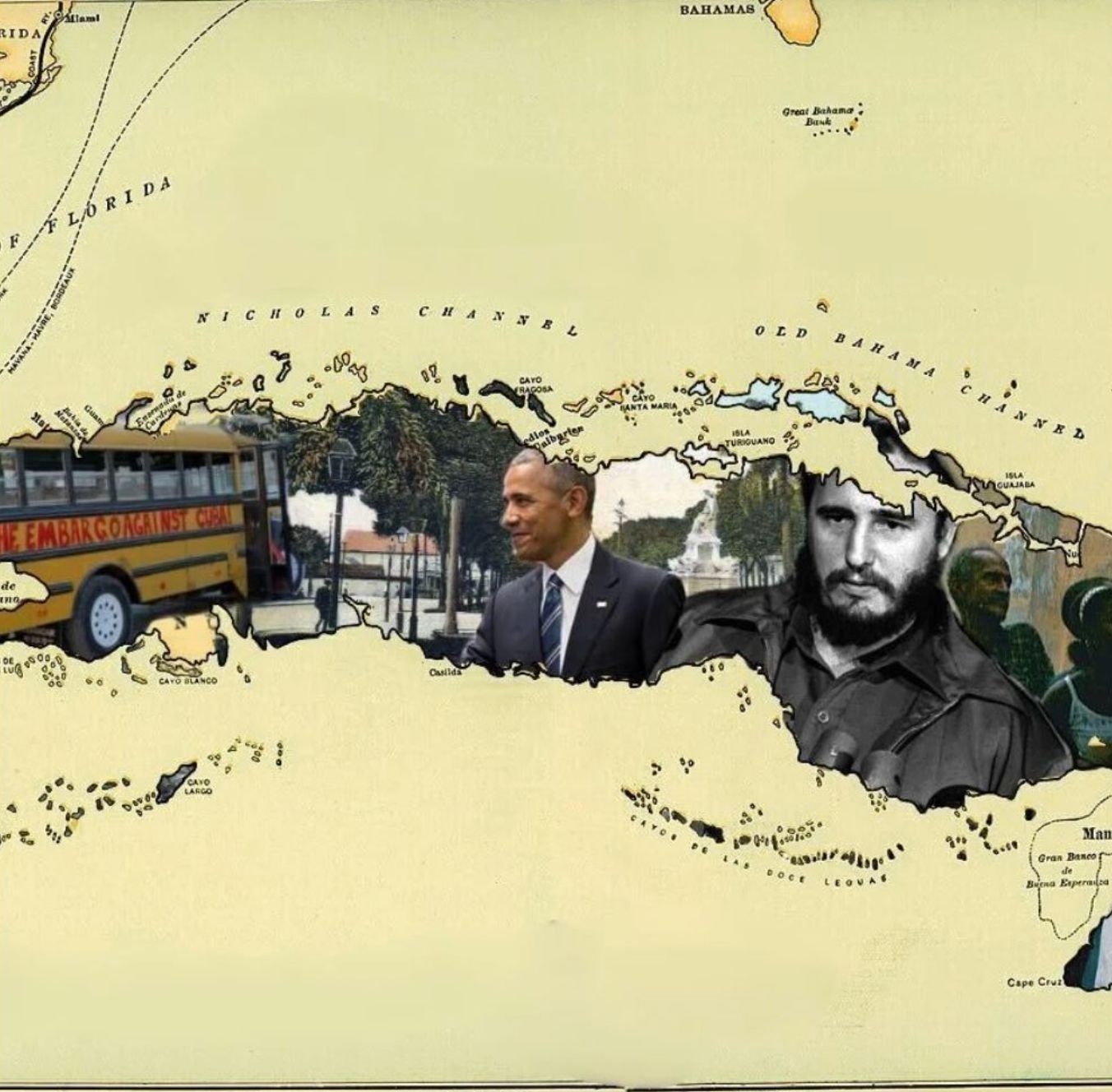
In this dossier of more than 30 articles, special print issues, and exclusive web series, NACLA's editors have curated a guide that touches on some of the most salient issues in recent Cuban history, including six decades of U.S.-led war, Cuba's role on the global stage, the Obama ‘thaw," the July 11 Protests, the role of the diaspora, and more.
NEW ISSUE COMING SOON!
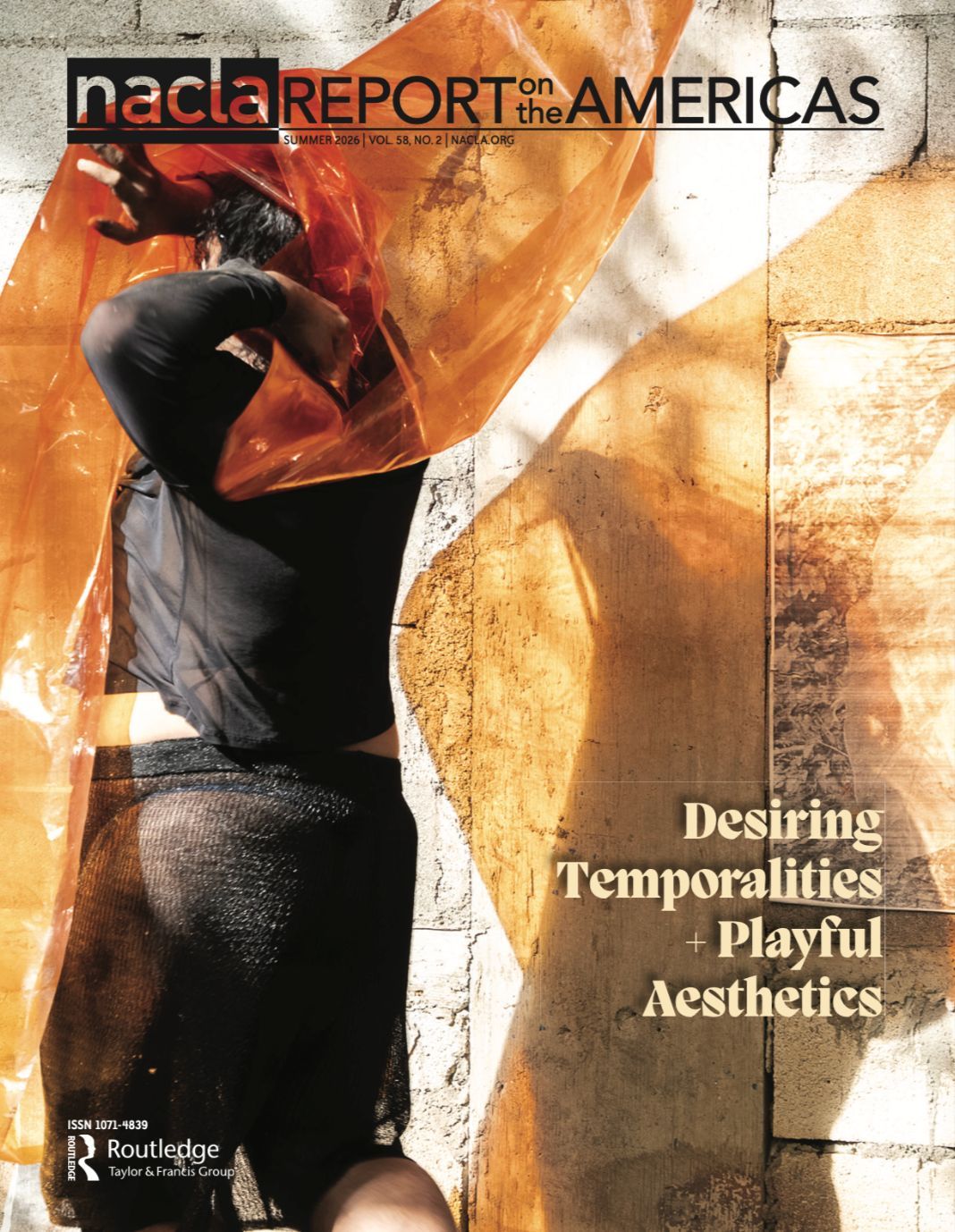
Subscribe NOW to get your copy of NACLA's Summer issue, "Desiring Temporalities + Playful Aesthetics."
Guest edited by Ángeles Donosy Macaya and Laura Juliana Torres Rodríguez, the summer issue explores artistic practices of creation and research that experiment with ways of inhabiting, (re)writing history, activating memory, engaging the archive, and stirring the senses in and from conditions of present dispossession.
If you haven't already, subscribe by May 29 to get your copy in the mail. And donate nowto support our work in the future.
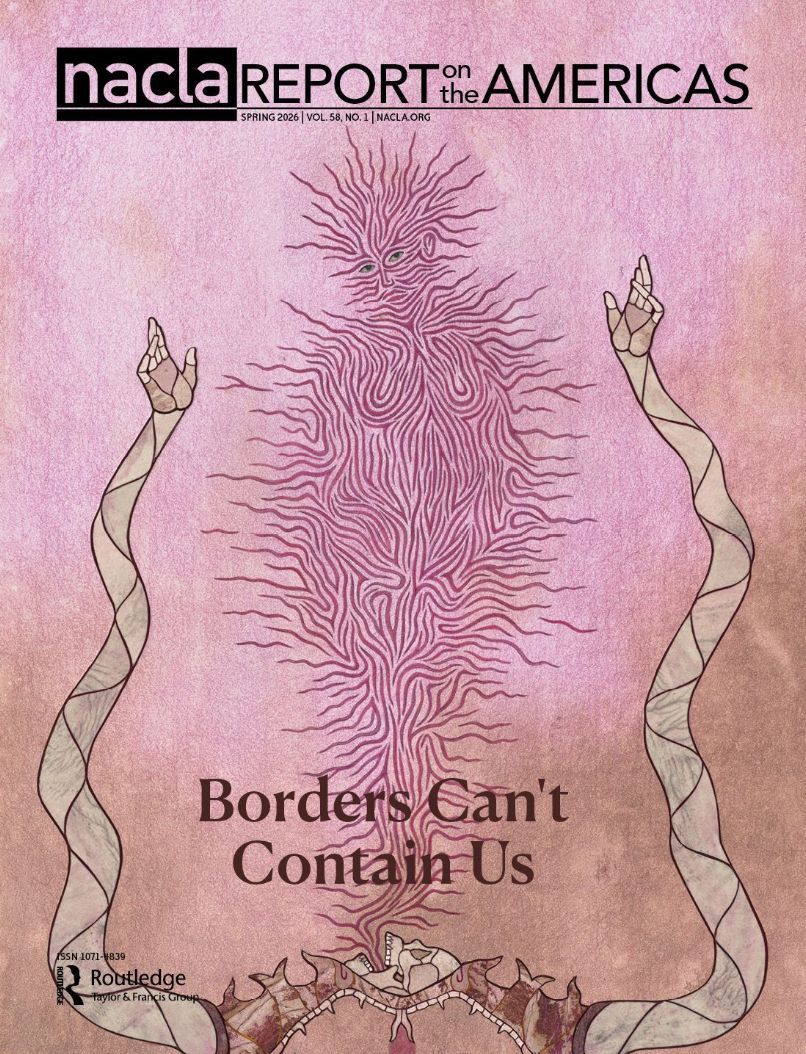
PURCHASE OUR SPRING ISSUE!
This issue of the NACLA Report examines the consolidation of a hemispheric bordering regime whose violence now extends far beyond any single boundary line. Across the Americas, border enforcement operates through infrastructure projects, detention systems, policing practices, and migration controls that reshape everyday life within and across national territories.
Take advantage of this special offer to purchase an individual issue of "Borders Can't Contain Us."
Offer valid for U.S.-based addresses only and while supplies last. Readers outside the United States may contact us at [email protected] to inquire about international shipping options.
NACLA offers a 5-10 hour/week internship opportunity for students who will receive course credit and/or funding from their educational institution for the internship as part of their studies. This opportunity is ideal for undergraduate students with an interest in alternative media, non-profit operation, and left politics and history in Latin America and the Caribbean.
To apply, please email [email protected] with a resume and a brief summary of why you are interested in working with NACLA.
NACLA HAPPY HOUR (IN PARIS!)
Join NACLA in Paris as we kick of the Latin American Studies Association (LASA) Conference.
We will be celebrating the launch of our 2026 Spring Issue and gathering to be in community!
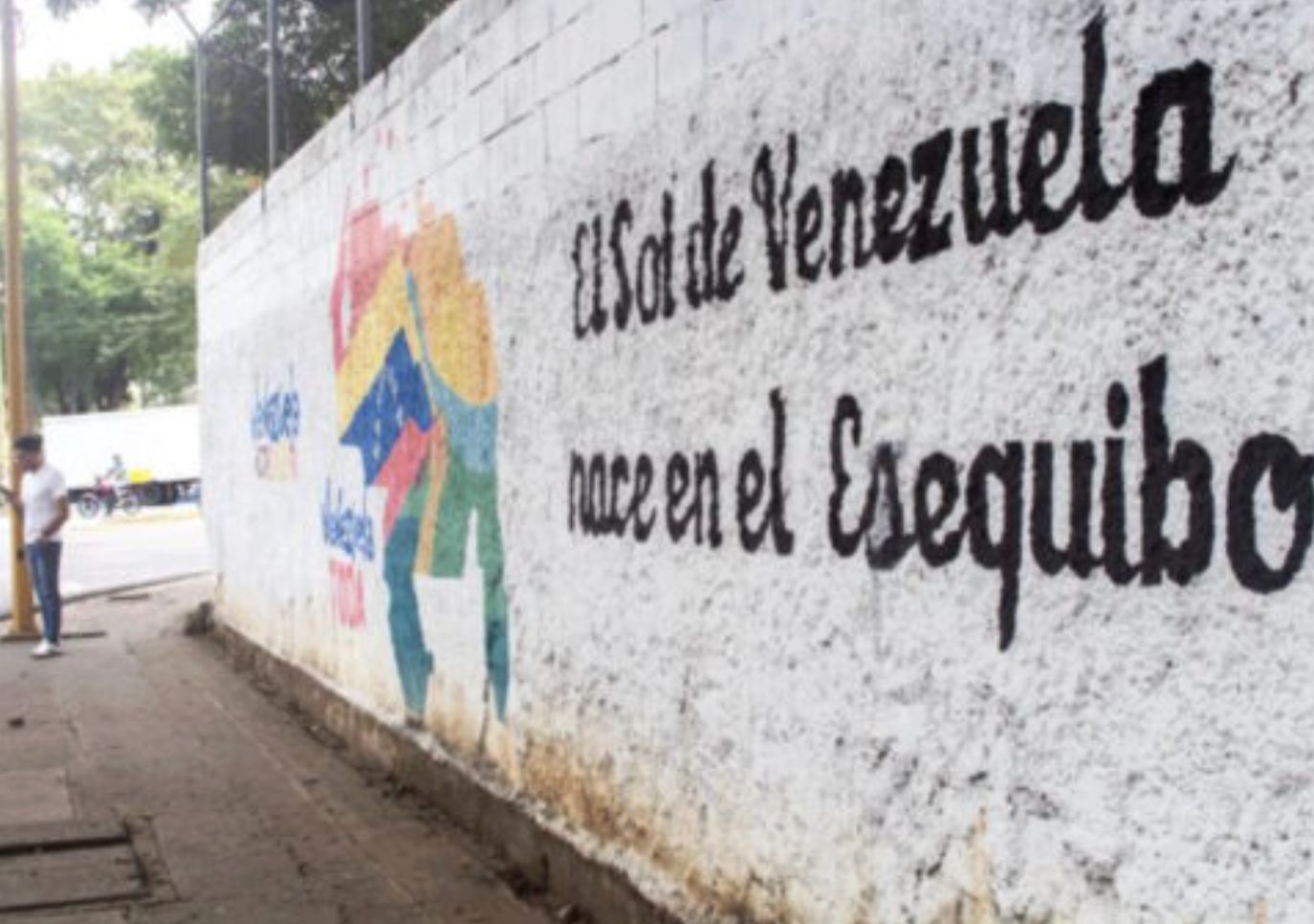
A 185-year-old territorial dispute between Venezuela and Guyana reveals the enduring contradictions of U.S. foreign policy in the Caribbean, with the “Donroe Doctrine” introducing fresh diplomatic risks.
These articles offer new ways of thinking about Haiti and a powerful vision and approach rooted in the country’s culture and history that can build a different future.
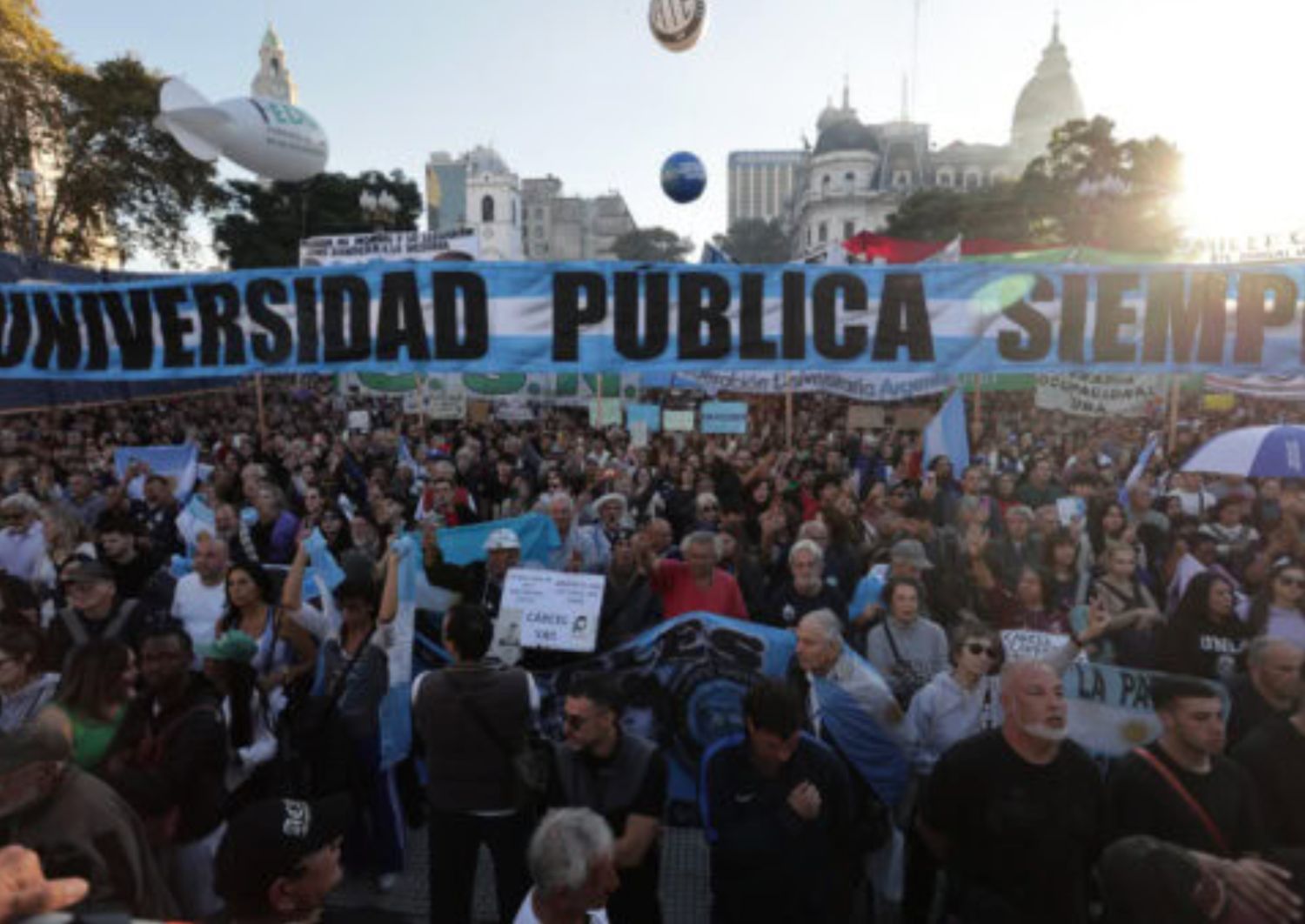
Los ataques del gobierno de extrema derecha contra las instituciones públicas y el conocimiento que producen han debilitado a los trabajadores, la economía, y la democracia de Argentina.
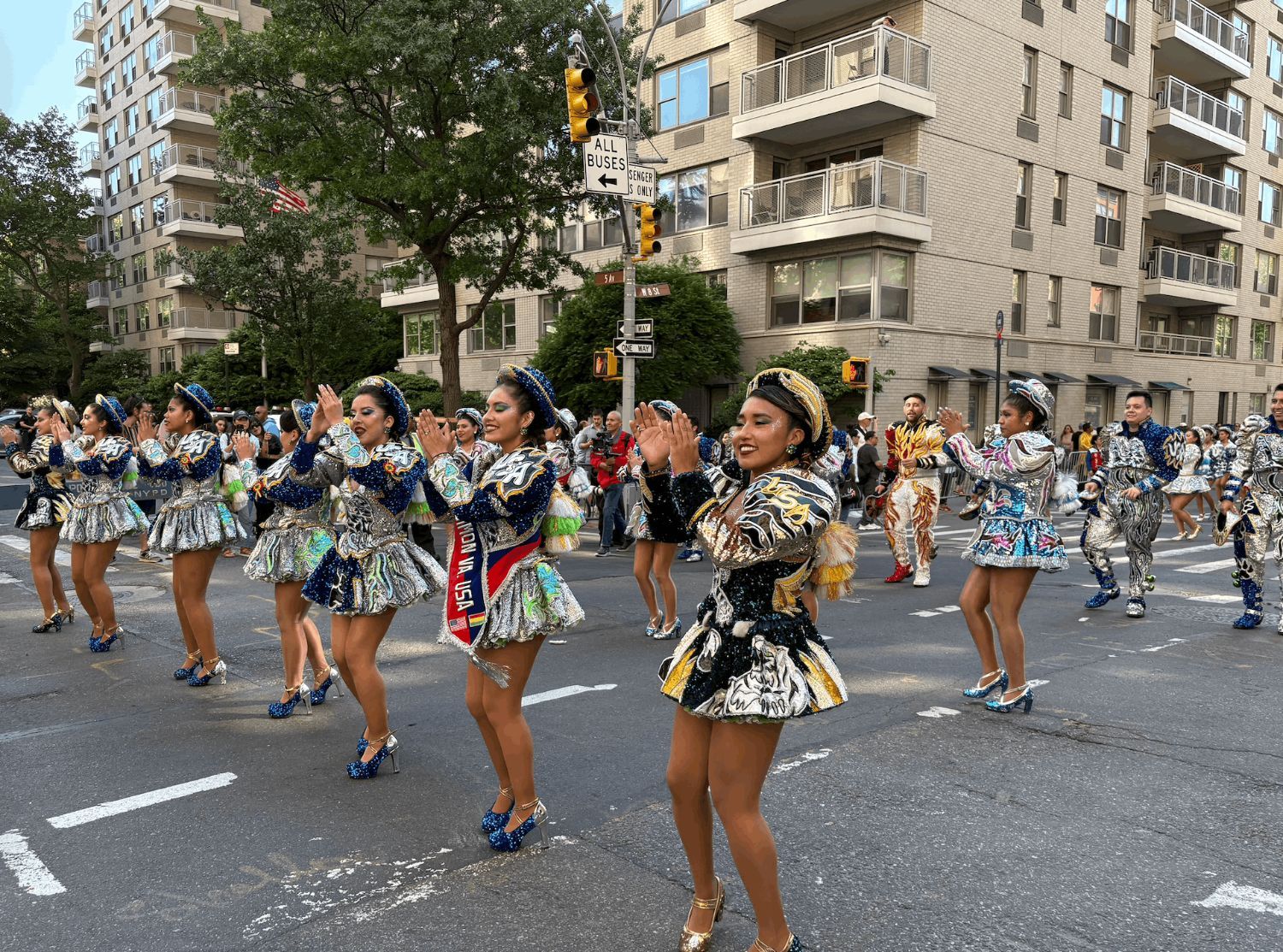
Hundreds of San Simon and Incallajta NY chapter dancers perform the Bolivian Caporales dance at the annual NYC Dance Parade, May 16, 2026 (Photo: Amy Richards)
AROUND THE REGION
BOLIVIAN PROTESTS—Weeks of anti-government protests have escalated in Bolivia, pushing the government of center-right President Rodrigo Paz onto its backfoot. Paz’s policies since taking office six months ago have angered a broad coalition of Indigenous groups and unions, which in recent weeks have marched to La Paz, blockaded the roads leading into the city—leaving food shelves bare—and confronted police repression in the streets. On Monday, supporters of ex-President Evo Morales arrived in La Paz, bringing new recruits to the wider protest movement and clashing with police as they tried to enter a central plaza. The demonstrations have only grown since Indigenous protesters from the Amazon concluded a 27-day march to protest a controversial land law in the capital several weeks ago. Though the mobilization succeeded in forcing the law’s appeal, protesters soon linked up with striking transport workers angered by a rise in fuel prices and declining fuel quality as well as other trade unionists, effectively bringing the city to a halt. While Paz announced conciliatory gestures on Wednesday, including the shuffling of his cabinet, he has cast the protests as a "destabilization" campaign led by Morales. His government also expelled the Colombian ambassador after President Gustavo Petro expressed support for protesters. The Trump administration has backed Paz, with Secretary of State Marco Rubio accusing protesters of being “criminals and drug traffickers.”
PERU’S PRESIDENTIAL RUN-OFF—More than one month after Peruvians cast their ballot for president, conservative Keiko Fujimori and leftist Roberto Sánchez have officially been declared the two candidates that will advance to the June 7 run-off. Sunday’s announcement by electoral authorities finally brought to a close a chaotic first round characterized by logistical failures and delays that fueled unsubstantiated accusations of fraud and led to the resignation of the country’s election chief. While it was clear early on that Fujimori would advance to the run-off, Sánchez’s surge to second place came as a surprise, overtaking far-right former Lima mayor Rafael López Aliaga, long considered a near-certain finalist. Fujimori—the daughter of disgraced former President Alberto Fujimori (1990-2000)—has previously reached presidential run-offs only to lose by a narrow margin in2011, 2016, and 2021. Early polling suggests she is the favorite, though she had expected to face López Aliaga, a match-up that may have been more favorable. Sánchez, meanwhile, is currently facing a dubious legal case over the alleged financial mismanagement of his party’s resources from 2018 to 2020, though polling indicates the race is tight. The two are running on starkly different platforms, with Fujimori promising an aggressive crackdown on crime while Sánchez is calling for a new constitution and the nationalization of key resources.
RIGHT-WING SCANDAL SHAKES UP BRAZILIAN RACE—Flávio Bolsónaro, the Brazilian right’s leading candidate, was caught on tape soliciting funds from a corrupt banker for a film about his father, former President Jair. The scandal has upended the country’s presidential race ahead of October’s elections. The recordings, published last week by Intercept Brazil, have severely damaged Flávio’s campaign. While recent polling indicated a tight contest between Flávio and Luiz Inácio “Lula” da Silva—who, at 80 is seeking a fourth presidential term—in a potential second round run-off, the first poll released since the scandal broke showed a large swing toward Lula. The revelations have proven especially damaging because Flávio allegedly solicited nearly $27 million from Daniel Vorcaro, a disgraced banker now imprisoned for his role in one of the largestcorruption and banking fraud schemes in Brazilian history. Though Vorcaro had not yet been jailed at the time of the calls and text messages, the accusations against him were already widely known. In response to the news, prominent right-wing allies have called for Flávio’s replacement.
“INVESTIGATING” THE BOAT STRIKES—Watchdogs within the U.S. Defense Department are set to review the Trump administration’s strikes on alleged drug boats, though any inquiry into the legality of the attacks remains firmly off the table. Instead, the self-initiated review will focus narrowly on whether the strikes have followed standard military procedure, known as the Joint Targeting Cycle—and the Pentagon has refused to provide even a tentative timeline for the release of the report. Despite headlines suggesting heightened scrutiny, the review changes nothing, continuing a pattern in which much of the media takes the administration’s rationale for killing nearly 200 people at face value, even though claims that the victims were “narcoterorists” have never been substantiated and many experts agree that the strikes are clearly illegal. From the outset, the drone campaign has appeared less about stopping the flow of drugs—something the strikes are ineffective at doing—and more about pressuring the region’s governments to fall in line under the threat of U.S. military force. The “narcoterrorist” label underpinning the campaign has been stretched to absurd lengths by the Trump administration and its allies, even as regional partners with well-documented ties to the drug trade have been spared or celebrated.