| |  | | Former Uruguayan President José “Pepe” Mujica, a one time guerrilla fighter and leftist regional leader died from esophageal cancer on Tuesday at the age of 89. His death, which came months after he announced he would forgo further medical treatment, was announced by current left-wing president Yamandú Orsi, a protegée of Mujica’s who thanked the “president, activist, guide and leader” for “everything you gave us.” Progressive leaders from around the world swiftly paid tribute to a man whose remarkable journey, humility, and austere lifestyle made him, in the words of Mexican President Claudia Sheinbaum, an “example for Latin America and the entire world.” Mujica led a remarkable life. Born in 1935 on the outskirts of Montevideo to a humble family, he never finished high school or attended university. He first became involved in politics as a young flower farmer when he joined the progressive wing of the country’s conservative National Party. After the Cuban Revolution inspired revolutionary movements across the continent, Mujica joined the Tupamaros, an urban guerilla group active in the 1960s and 70s. Against a backdrop of economic crisis, creeping authoritarianism, and the spread of U.S.-backed military regimes across Latin America, the Tupamaros sought to build a revolutionary state through armed struggle. Mujica was involved in daring heists and targeted attacks led by the Tupamaros. In 1970, he was shot six times and arrested during an encounter with police. In 1971, he was part of a legendary mass prison escape in which 111 Tupamaros fled through a 40-foot tunnel dug under their prison cell by comrades. By the time the military coup arrived on June 27, 1973, Mujica and many other top commanders had already been captured by police. “Pepe,” as he was known, was imprisoned, tortured, and often placed in solitary confinement over the course of more than a decade under the country’s brutal military dictatorship. Trapped in a hole in the ground, he befriended rats and a small frog to keep from going insane. As part of Uruguay’s transition back to democracy in 1985, Mujica was pardoned and released at the age of 49. He entered politics upon his return to civilian life, joining with other former rebels and activists to found the Movement for Popular Participation (MPP), a party that would grow to become the largest faction of the progressive political coalition known as the Frente Amplio. In 1994, Mujica became one of the first former rebels to be elected to parliament. Five years later, he was elected senator. Mujica’s charisma and the MPP’s rising popularity were key to the 2005 election of Tabaré Vazquez, which shattered nearly two centuries of bipartisan rule and ushered in more than a decade of left-wing rule. Under Vazquez, Uruguay’s left began to deliver for those left behind by neoliberalism— a project that would deepen under Mujica. After serving for five years as an agricultural minister, he was elected president in 2009 at the age of 74. During his five-year term, Uruguay experienced consistent economic growth, massive wealth redistribution, dramatic wage increases, and historically low levels of unemployment and poverty. Mujica’s record on progressive social reform was equally stunning. Uruguay became the first country in the world to legalize recreational marijuana use and the second in the region to legalize same-sex marriage. He supported the legalization of abortion and signed legislation that, though limited, marked a crucial step forward for reproductive rights. He spoke endlessly about the perils of climate change, denounced the consumerism driving global warming, and took concrete steps to advance Uruguay’s transition to cleaner energy. He attacked consolidated corporate power, most notably in his years-long battle against the tobacco industry, and consistently preached regional collaboration, peace, and demilitarization. In a notable gesture, he accepted six Guantánamo detainees to help expedite the closure of a facility he called a “disgrace.” Through it all, Mujica’s refusal to buy into the pomp of the presidency, his witty philosophical musings, and his brutal honesty won him fans around the world. He famously refused to live in the country’s presidential residence, preferring instead to commute to work from a humble apartment in his beloved 1987 blue Volkgswagen beetle. He donated around 90 percent of his salary to charity but consistently rejected the common refrain that he was the world’s “poorest president.” Quoting the Roman philosopher Seneca, he responded: "It's not the man who has too little, but the man who craves more, that is poor.” Ever the philosopher, Mujica has been open about nearing death for months. In an interview last year, he said he would die content. “Not happy to be dying, but because I set the bar high” he said. “I didn’t spend my life just consuming things. I spent it dreaming, fighting, struggling.” He is survived by his wife, Tupamaro comrade and former Uruguayan Vice President Lucía Topolansky. Chau, viejo. |
| |
|
|
|
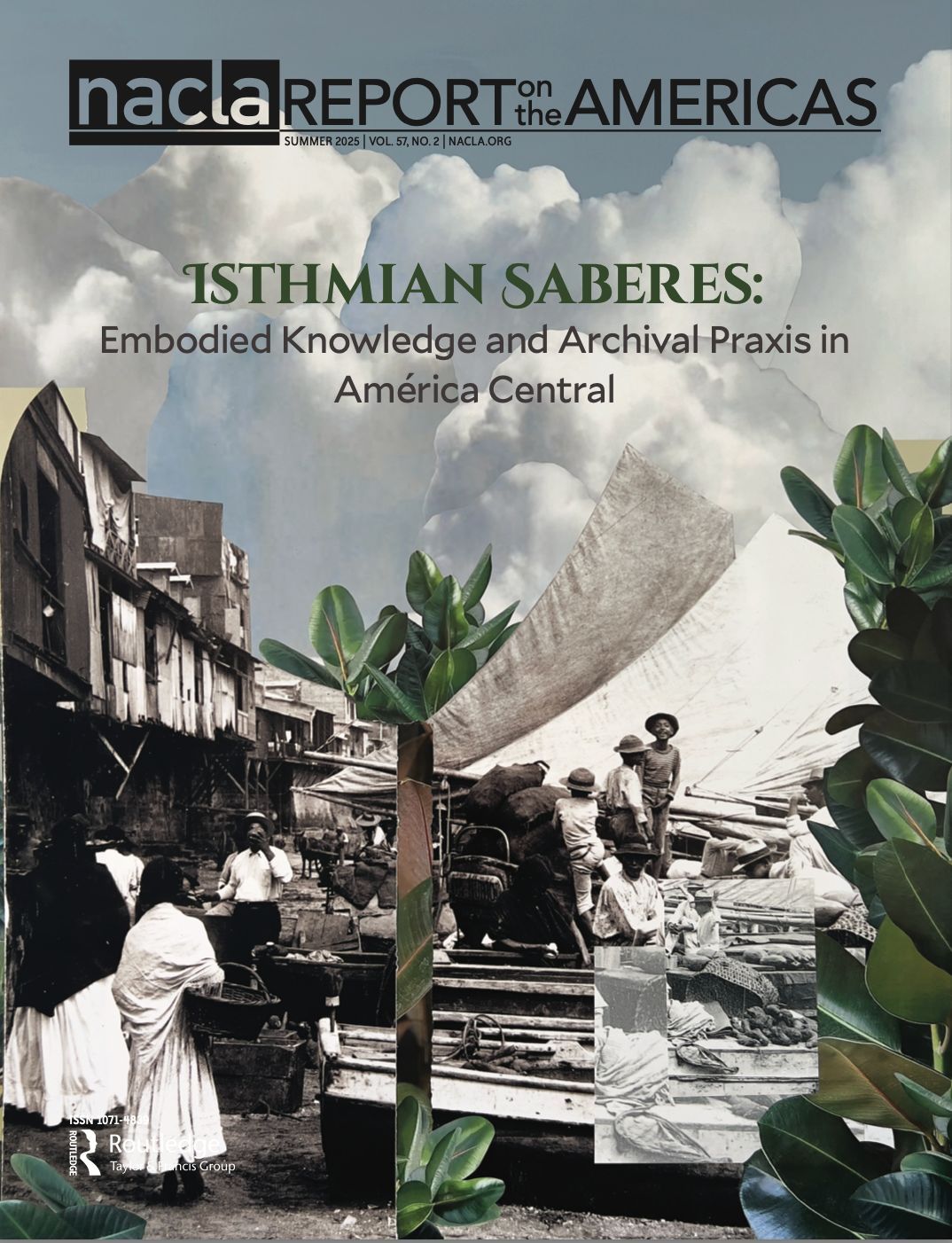
| | | | | | Isthmian Saberes: Embodied Knowledge and Archival Praxis in América Central The Summer 2025 issue of the NACLA Report will be out soon! Guest edited by Kaysha Corinealdi, Jorge E. Cuéllar, and Paul Joseph López Oro, this issue explores the myriad forms by which Central Americans produce the region and its knowledge systems, centering ongoing contestations over memory, history, and self-description in the pursuit of belonging and the articulation of collective futures. Together the guest editors ask: Who decides what counts as knowledge in and of Central America? How has knowledge been created, challenged, and imagined on the Central American isthmus and across its vast diasporas? If you haven't already, subscribe today to get your copy in the mail. Please also consider making a donation to help sustain this work. |
| | |
|
| | | | | | | | | | | -
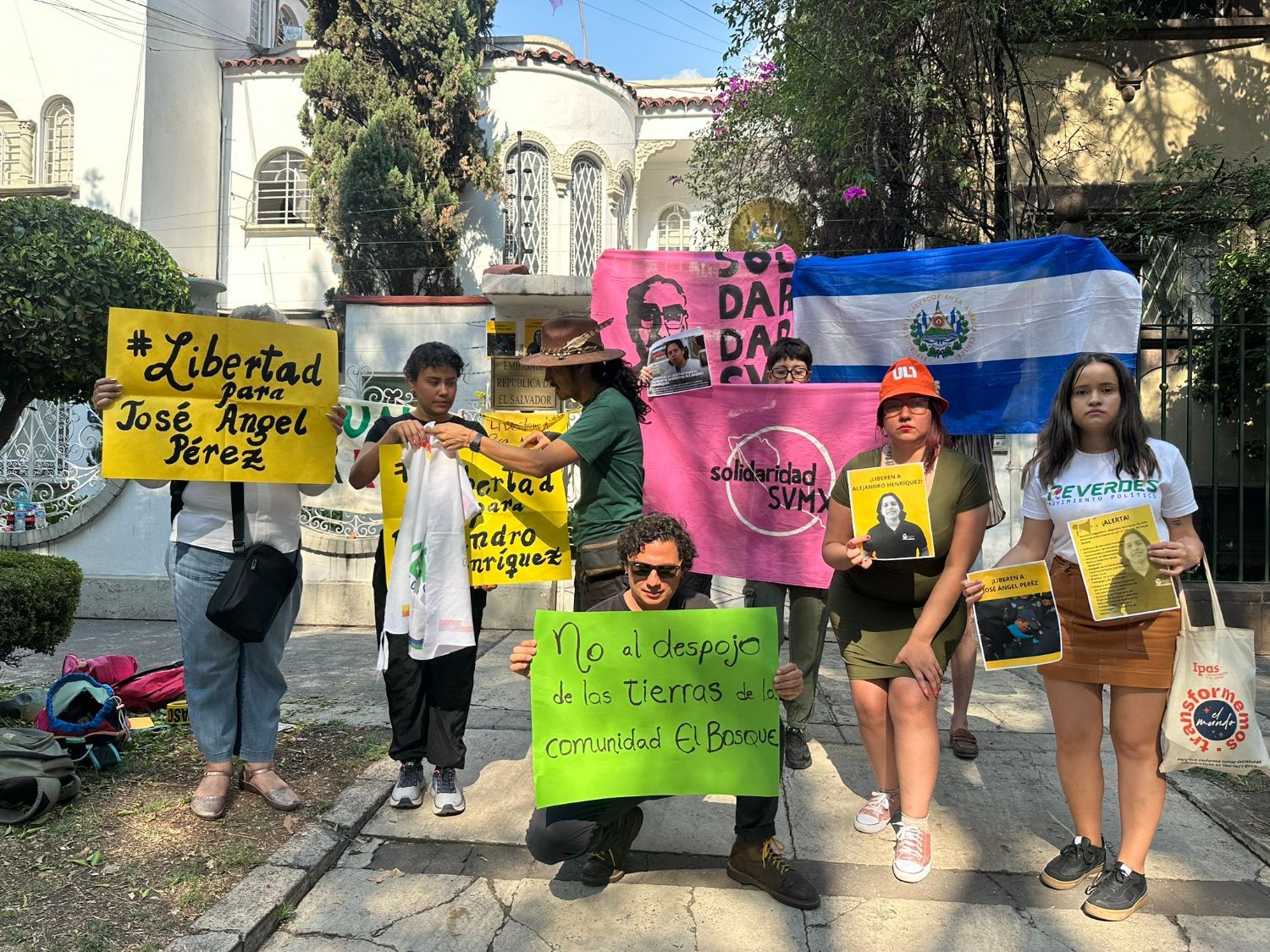
BUKELE PROPOSES NGO TAX — Salvadoran President Nayib Bukele has proposed a tax on foreign NGOs after blaming them for a protest by more than 300 families near his home earlier this week. On Monday, riot police were deployed to arrest community leaders and brutalize families protesting a recent court order that will dispossess them of lands they have owned for decades. The demonstrators had hoped Bukele would intervene to stop the evictions. Instead, he posted on X the next day that “humble people” had been “manipulated” by leftist groups and “globalist NGOs whose only real objective is to attack the government.” He announced plans to introduce a Foreign Agents Law that would impose a 30 percent tax on donations received by NGOs, claiming the funds should instead go toward finding “a real solution” to issues like those faced by the families. The bill, expected to be approved in the next few days by Congress, echoes legislation passed by Nicolás Maduro in Venezuela and Daniel Ortega in Nicaragua that target NGOs by restricting their finances. In Nicaragua alone, more than 5,600 civil society groups have been banned since 2018. -
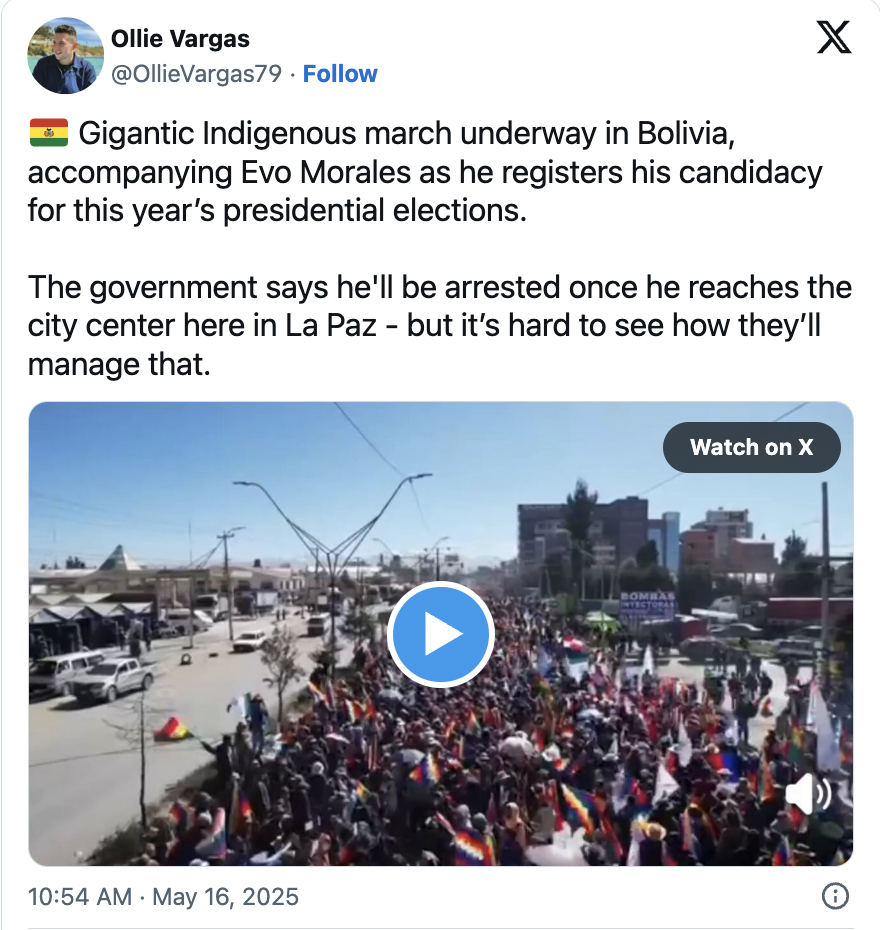
ARCE DROPS OUT OF RACE — During a televised speech on Tuesday, Bolivian President Luis Arce announced that he would not seek reelection in the country’s upcoming August elections. Facing growing discontent over inflation and fuel shortages that have deepened the country’s economic crisis, Arce declared that he would not “not be a factor in dividing the popular vote.” His administration has been paralyzed by a bitter feud with his erstwhile ally and former President Evo Morales over control of the ruling Movement for Socialism (MAS), Bolivia’s dominant political party. Morales, who led the country through more than a decade of economic growth and massive poverty reduction, is increasingly unpopular, facing criminal charges linked to a sexual relationship with a 15-year old girl and constitutionally barred from running for president. Despite this, Morales has declined to renounce his candidacy. In his speech, Arce urged Morales “not to insist on running,” warning that “dispersion and fragmentation of the vote would favor the right.” The best chance for left unity now seems to lie with the 36-year-old Senate President Andronico Rodríguez, a MAS member, former Morales loyalist, and current front-runner. Rodríguez announced his candidacy in early May but has yet to confirm which party will back his candidacy. |
|
|
| -
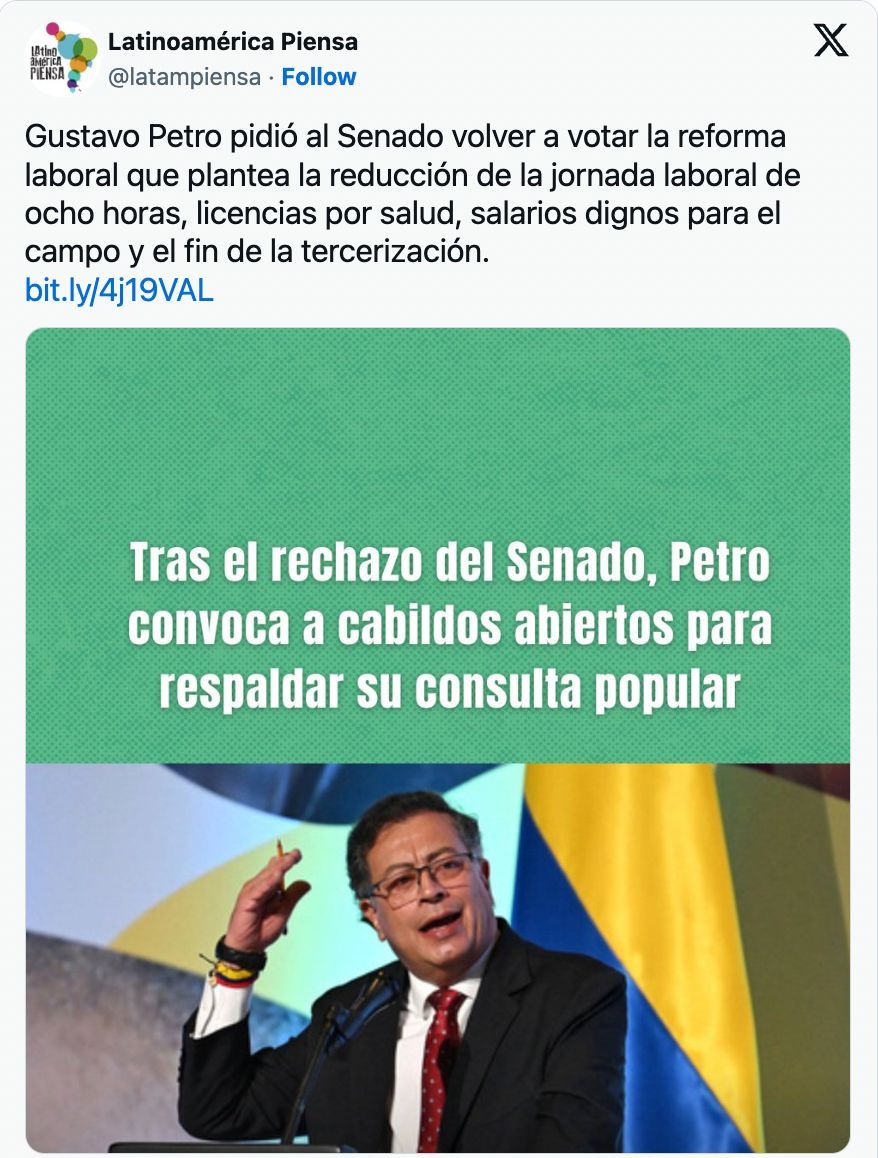
CHINA-CELAC FORUM — China’s hosting of officials from the Community of Latin American and Caribbean States (CELAC) bore immediate fruit this week, with the global superpower promising the region up to $9.18 billion in credit, fresh infrastructure investment, and security cooperation. Though the region was spared the harshest of the Trump administration’s tariffs, the global trade war unleashed by the United States formed the backdrop of meetings that drew big-name leaders like Brazilian President Luiz Inácio “Lula” da Silva, Chilean President Gabriel Boric, and Colombian President Gustavo Petro. In his opening remarks, Chinese President Xi Jinping cast China as a stable trade ally and promised to support Latin America in “safeguarding its national sovereignty and independence.” In addition to promises of increased cooperation with the region, the Chinese government also made deals with individual countries. Lula secured upwards of $4.7 billion in new investments, and Petro announced Colombia’s formal entry into the Belt and Road Initiative, China’s trillion-dollar global infrastructure project. -
PERU’S PM RESIGNS — Peruvian Prime Minister Gustavo Adrianzén resigned on Tuesday, just before Congress was set to debate a motion to censure him for his alleged inaction following the recent killing of 13 mine workers—a vote he was set to lose. Adrianzen’s resignation will only deepen the profound political crisis that has gripped Peru since current President Dina Boluarte came to power in 2022 after left-wing leader Pedro Castillo was impeached and imprisoned. Although Boluarte reshuffled her cabinet just hours before Adrianzén—her third prime minister in three years—announced his resignation, the Peruvian Constitution requires that all government ministers step down alongside the prime minister. Peru’s political crisis is compounded by the government's inability—and sometimes outright refusal—to tackle organized crime. Homicides and extortion rates are surging, and repeated states of emergency across the country have been ineffective. In recent months, Peruvians have taken to the streets in coordinated protests to demand an end to the violence. Meanwhile, Boluarte, mired in corruption scandals and criticized for flaunting expensive jewelry, has an approval rating of around 2 percent. |
|
|
|
|
|
|
| | | North American Congress on Latin America
53 Washington Sq South, Fl. 4W | New York, New York 10012
(212) 992-6965 | [email protected] |
| |
|
| |
|
|