“Hondurasgate,” a bizarre alleged plot involving Israel, the United States, and former Honduran President Juan Orlando Hernández (JOH) to destabilize Latin America’s progressive governments through disinformation, has thrust the region’s ties to Israel back into the spotlight. The scandal emerged ahead of a diplomatic visit by Israeli President Isaac Herzog to Central America as part of a push to consolidate alliances with the region’s right-wing leaders. Though outrage over Israel’s ongoing genocide in Gaza persists—the apartheid state has killed more than 850 Palestinians since a fragile “ceasefire” took hold last October—international efforts to hold the Israeli state accountable have weakened amid escalating global crises, regional political shifts to the right, and fear of direct U.S. military intervention in Latin America.
The “Hondurasgate” scandal centers on leaked audio recordings obtained by the outlet Diario Red, which allegedly capture conversations between JOH, current Honduran President Nasry Asfura, and Vice President María Antionieta Mejía discussing a plan to undermine progressive governments in the region through a media disinformation network. According to the recordings, Israel played a direct role in the imperialist scheme. JOH—who had been sentenced to 45 years in prison on drug trafficking charges before being pardoned by Trump in late November in a move widely interpreted as intervention in Honduras’s elections—allegedly claimed that Israeli Prime Minister Benjamin Netanyahu helped secure his release as part of a broader right-wing arrangement. The scheme reportedly sought to create a JOH-led media channel to spread fake news against left-wing leaders in the region while opening up Honduran land to foreign investment. Argentina’s far-right President Javier Milei, who has described himself as “the most Zionist president in the world,” was also allegedly involved.
The scandal unfolded just as Herzog embarked on a highly successful diplomatic tour of Central America. After stopping in Panama, Herzog attended last week’s inauguration of Costa Rican President Laura Fernández, whose right-wing government appears poised to deepen ties to Israel. Fernández held the first official meeting of her presidency with Herzog and pledged to move Costa Rica’s embassy to Jerusalem, crossing a long-standing diplomatic red-line given that much of the city remains occupied territory and is not internationally recognized as Israel’s capital. Herzog also met with Chilean President José Antonio Kast, who vowed to restore diplomatic ties with Israel after his predecessor Gabriel Boric recalled Chile’s ambassador in protest of the war in Gaza. In Costa Rica, Herzog likewise met with Asfura, an ardent Zionist of Palestinian descent who has already visited Israel and affirmed his intention to strengthen diplomatic ties with Israel.
The trip underscored a broader regional shift. In the immediate aftermath of Israel’s genocidal response to the October 7 attacks, Latin America’s progressive governments emerged as some of the strongest international critics of the Israeli state. Leaders from Brazil, Colombia, Bolivia, Honduras, and Chile either withdrew their ambassadors from Israel or suspended diplomatic ties entirely. But many of the region’s new right-wing governments are now reversing those measures, weakening what had been a significant international front of opposition to Israel’s war.
At the same time, Israel’s violence continues to reverberate directly in the region. Brazilian activist Thiago Ávila, one of the leaders of the Global Sumud Flotilla, was detained by Israeli forces after participating in a humanitarian aid mission bound for Gaza. The flotilla set sail from Spain weeks ago, but after 22 boats were stopped near Crete on April 30, Israeli forces transferred 168 activists to Greece while taking Ávila and the Spanish activist Saif Abu Keshek to Israel for further interrogation. Both men were released last week after investigations into alleged ties with terrorist organizations collapsed, but they claim they were tortured during their detention—and described the far worse conditions faced by Palestinian prisoners. Israel’s treatment of Ávila reignited calls within Brazil for President Luiz Inácio “Lula” da Silva to move beyond critical rhetoric to a fully sever ties with Israel. As Israel deepens relations with Latin America’s ascendant right wing, accountability for the ongoing destruction in Gaza appears increasingly out of reach.
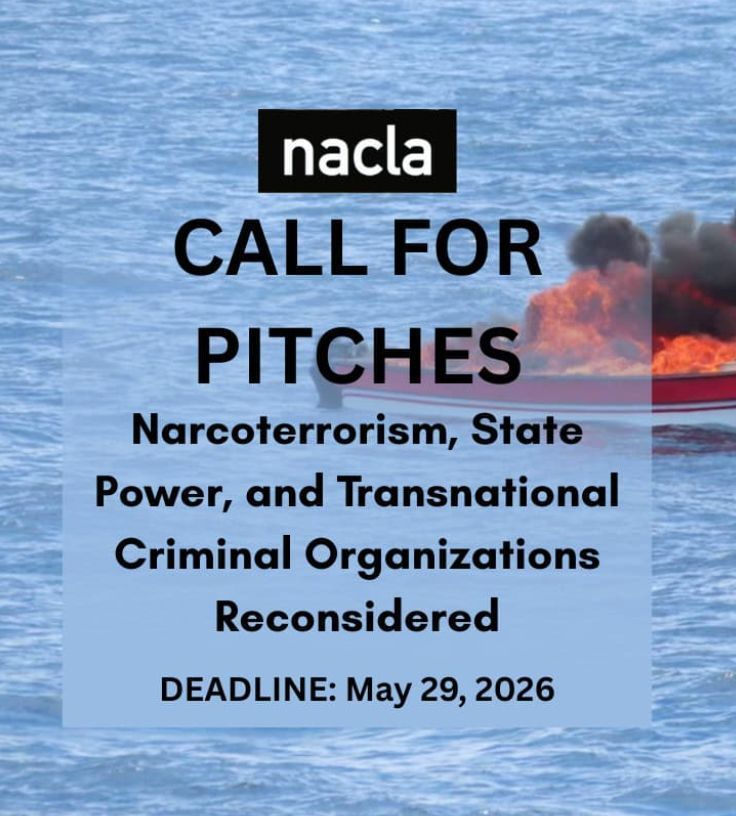
NACLA solicits original contributions on the topic of narcoterrorism, state power, and transnational criminal organizations—broadly defined—for our Winter 2026 issue. Guest edited by K. Sebastian León, Simon Granovksky-Larsen, and Anthony Fontes, this collection will explore critical perspectives that analyze the role of the state in (re)producing violence and insecurity, and which trouble popular understandings of “criminal groups.” Scholars, writers, journalists, and artists working at the nexus of state repression and formally targeted organizations (e.g., gangs, armed groups, transnational criminal organizations) are especially encouraged to share their work.
Please send a brief pitch (250 words) outlining the central argument, approach, and tone of your proposed contribution and why you are well positioned to write it by Friday, May 29 to managing editor Julianne Chandler at [email protected].
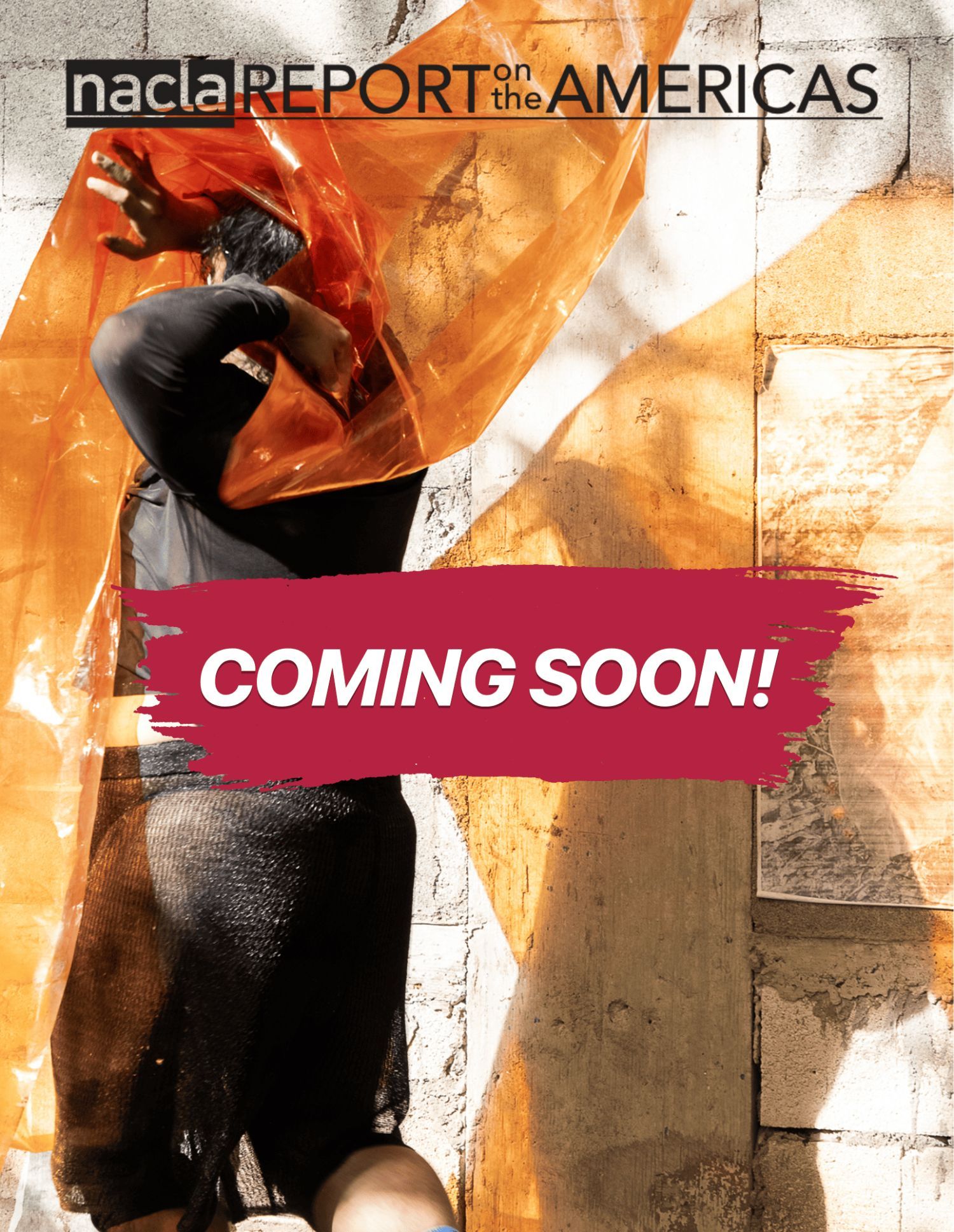
Subscribe NOW to get your copy of NACLA's Summer issue, "Desiring Temporalities + Playful Aesthetics."
Guest edited by Ángeles Donosy Macaya and Laura Juliana Torres Rodríguez, the summer issue explores artistic practices of creation and research that experiment with ways of inhabiting, (re)writing history, activating memory, engaging the archive, and stirring the senses in and from conditions of present dispossession. The collection centers creative methodologies oriented by desire, collective praxis, and play, exploring diverse mediums from performance art and experimental poetry to digital archives, jazzoetry, music, and forms of listening attuned to crisis in the past and present.
If you haven't already, subscribe by May 22 to get your copy in the mail. And donate nowto support our work in the future.
John Avina’s comics, set in Chicago’s Pilsen neighborhood, re-imagine Mexican American life beyond conquest narratives, deportation regimes, and generational loss.
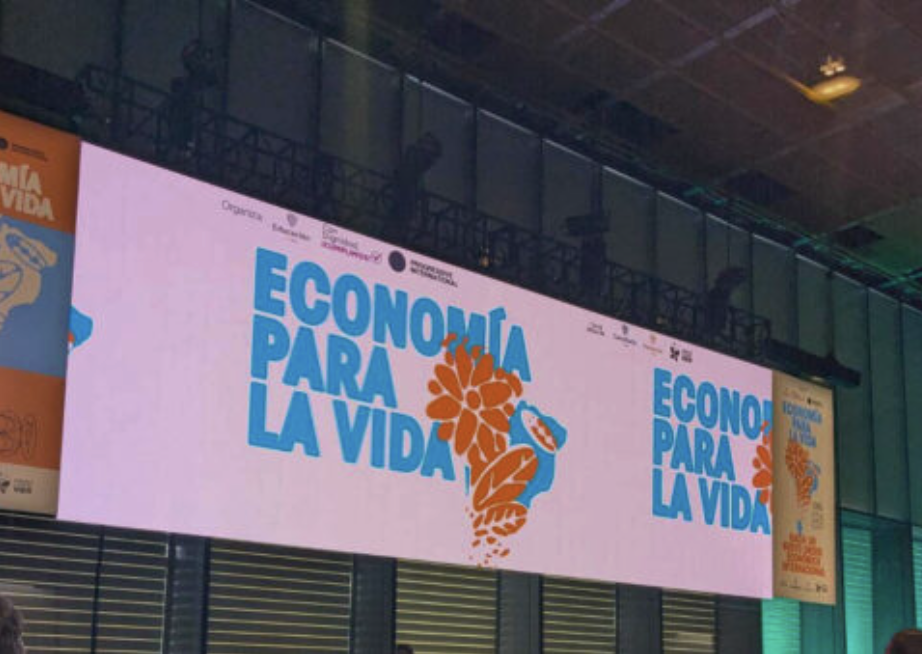
At a historic conference in Bogotá, heterodox thinkers and politicians gathered to debate the construction of a new international economic order oriented around human life and dignity.
TROUBLE FOR PERU’S LEFTIST CANDIDATE?—One month after the initial vote, Peruvian electoral authorities announced that with 99.76 percent of the ballots counted, leftist Roberto Sanchez appeared on track to advance to a second round face-off with conservative Keiko Fujimori, the front-runner. Sánchez, a congressman and ally of former President Pedro Castillo, defied polls to surge past Rafael López Aliaga, Lima’s former right-wing mayor who seemed destined for the run-off. Hours after the release of new vote tallies on Tuesday, Peru’s public prosecutor’s office unsealed charges against him for alleged financial crimes related to past campaigns. Prosecutors alleged that between 2018 and 2020, while he was head of his current Juntos por el Perú party—a role he retains—he and his brother received funds that they did not disclose. His defense has argued that the party’s treasurer, not president, was responsible for reporting the funds. Peru’s judiciary will rule on whether the case can move forward on May 27, though Sánchez can continue campaigning and would be granted immunity if he wins.
MORE CIA IN MEXICO?— CNN reported on Tuesday that the explosion of a pickup truck in March on the outskirts of Mexico City, which killed alleged drug trafficker Francisco Beltrán and his driver, was actually a targeted assassination involving the CIA. The report came less than a month after two CIA agents were killed in a car crash after an unsanctioned anti-narcotics operation. The report claimed that Beltrán’s killing was part of a wider CIA campaign to dismantle cartels in Mexico. While Sheinbaum has acknowledged the sharing of intelligence with the United States, she has forcefully rejected the possibility of U.S. troops operating on Mexican soil, as she did again Wednesday when she denied the reports that the CIA had helped Mexican officials in this operation, as did the CIA itself. CNN has stuck by its reporting and the New York Times has also tied the explosion to the CIA, though it reported they were not on the ground. It is not entirely clear, however, whether the Mexican government is trying to save face, or if the Trump administration is trying to force Sheinbaum into an uncomfortable position.
CUBA’S ENERGY CRISIS—Cuba’s Energy Minister warned on Wednesday that the country’s energy crisis was soon to worsen as scarce oil supplies from a Russian donation in late March had dried up. The next day, large sections of Eastern Cuba were plunged into darkness due to power cuts, the latest blow in a string of blackouts that have affected the country’s beleaguered power grid. Cuban authorities blamed the U.S. oil blockade of the island for the blackouts, which sparked protests around the capital. President Miguel Diaz-Canel slammed what he called a “genocidal energy blockade,” which has drastically disrupted the medical system, the supply of food and clean water, and caused a surge in mortality rates. Though the Cuban government has so far held on to power—much to the frustration of Trump—the situation is becoming increasingly unbearable. Out of desperation, the government has reportedly begun to consider a $100 million humanitarian aid package from the Trump administration—to be handled by the Catholic Church—though it rejected the U.S. claim that it had previously turned down a similar offer.
U.S.-DOMINICAN REPUBLIC DEAL(S)—The government of right-wing Dominican President Luis Abinader announced Tuesday that it had agreed to receive “third-country” deportees from the United States. Though the details of the agreement are not yet clear, the move represents a stark reversal for Abinader, who said last February that his country “would not accept [deportees] from other countries, only Dominicans.” The announcement was made all the more surprising given that Abinader is currently overseeing one of the region’s most violent deportation regimes, deporting upwards of 10,000 Haitians per week and nearly 380,000 in 2025. The Dominican Republic is but the latest government to have made deals with the Trump administration to accept deportees from other countries—including Belize, Costa Rica, Panama, El Salvador, Guatemala, Ecuador, Honduras and Paraguay—often in exchange for millions of dollars. The government also announced that it was granting an extension to a November deal that enabled U.S. military forces to operate from restricted Dominican territory in an effort to aid the Trump administration's alleged fight against drug trafficking.