The U.S. military carried out two more lethal strikes on alleged drug boats this week, killing two men in the Caribbean Monday and another three in the Eastern Pacific Tuesday. As it has throughout this murderous campaign, the Trump administration refused to provide any evidence that those targeted in the strikes were the “narco-terrorists” it claimed them to be, releasing instead grainy video footage of exploding boats. Yet beyond the profound moral questions raised by the strikes, reporting from The Intercept this week made clear that the campaign has also failed to achieve the administration’s stated goals, ludicrous though they have always been known to be. Even so, Trump’s new counterterrorism strategy, unveiled on Wednesday, suggests the attacks will only intensify: the elimination of “narcoterrorists” and “transnational gangs” is now officially the administration’s highest security priority.
Including this week’s attacks, more than 190 people have been killed in over 55 strikes launched since September, when the administration began targeting alleged “drug boats” as part of what became known as "Operation Southern Spear.” Early on, the U.S. claimed that extraordinary measures were necessary to stop the flow of drugs into the United States; conventional interdiction efforts by the Coast Guard and Navy, Secretary of State Marco Rubio argued at the time, were insufficient. In order to gin up legal and political support for the bombings, the administration radically inflated the number of overdose deaths attributable to fentanyl, blamed cartels for the crisis, and designated them as “terrorist organizations” engaged in armed conflict with the United States. Every strike on drug boats, Trump claimed early in the campaign, saves 25,000 American lives.
Reporting this week from The Intercept confirmed that the campaign has failed on nearly every level: legal, moral, and even at the level of policy. Government officials interviewed by the outlet said that members of the Trump administration privately acknowledged that the targeted boats were not transporting fentanyl, despite Trump’s October claim that “the boats get hit and you see that fentanyl all over the ocean.” When it comes to cocaine, Trump asserted that the strikes had stopped 97 percent of the maritime trade, yet the administration’s own figures contradicted that claim. In March, the Assistant Secretary of War told lawmakers that drug transport had declined 20 percent in the Caribbean and 25 percent in the Eastern Pacific. Perhaps most strikingly, cocaine seizures at the U.S. border have actually increased since the boat strikes began. The broader drug market appears largely unaffected; experts interviewed by The Intercept pointed to the continued stability of cocaine prices as evidence of its widespread availability.
What, then, are we to make of a policy meant to “stop the flow” of drugs into the United States that has achieved no measurable results? The White House’s new counterterrorism strategy once again points us to the importance of understanding the “Donroe Doctrine’s” hybridization of the “War on Drugs” and “War on Terror.” In the document, “narcoterrorists and transnational gangs,” “islamic terrorists,” and “violent left-wing extremists” are identified as the three main threats to U.S. national security. Read closely, the strategy also suggests that new interventions may already be taking shape.
Operation Southern Spear offers a revealing example of how fearmongering around migrants, drugs, gangs, and terrorists can be mobilized to justify regime change. Trump claimed that a Colorado city had been “invaded” by Venezuelan gangs, tied those alleged gang members to a cartel supposedly controlled by Nicolás Maduro, deployed military forces to the region to target cartels likened to Al-Qaeda, and launched an operation to kidnap Maduro in early January.
Given that Trump has already threatened direct military intervention against alleged cartels in Colombia and Mexico—both countries led by progressive governments—the strategy’s explicit mandate to counter left-wing extremism is chilling. The recent revelation of “Hondurasgate”—a wild disinformation scheme allegedly involving former Honduran President Juan Orlando Hernández, Trump, Israeli Prime Minister Benjamin Netanyahu, and Argentina’s Javier Milei—further suggests that destabilization of the region’s left-wing governments is a clear objective. The administration’s new counterterrorism doctrine, together with the ongoing strikes, makes that objective increasingly explicit.
Subscribe NOW to get your copy of NACLA's Summer issue, "Desiring Temporalities + Playful Aesthetics."
Guest edited by Ángeles Donosy Macaya and Laura Juliana Torres Rodríguez, the summer issue explores artistic practices of creation and research that experiment with ways of inhabiting, (re)writing history, activating memory, engaging the archive, and stirring the senses in and from conditions of present dispossession. The collection centers creative methodologies oriented by desire, collective praxis, and play, exploring diverse mediums from performance art and experimental poetry to digital archives, jazzoetry, music, and forms of listening attuned to crisis in the past and present.
If you haven't already, subscribe by May 22 to get your copy on the mail. And donate nowto support our work in the future.
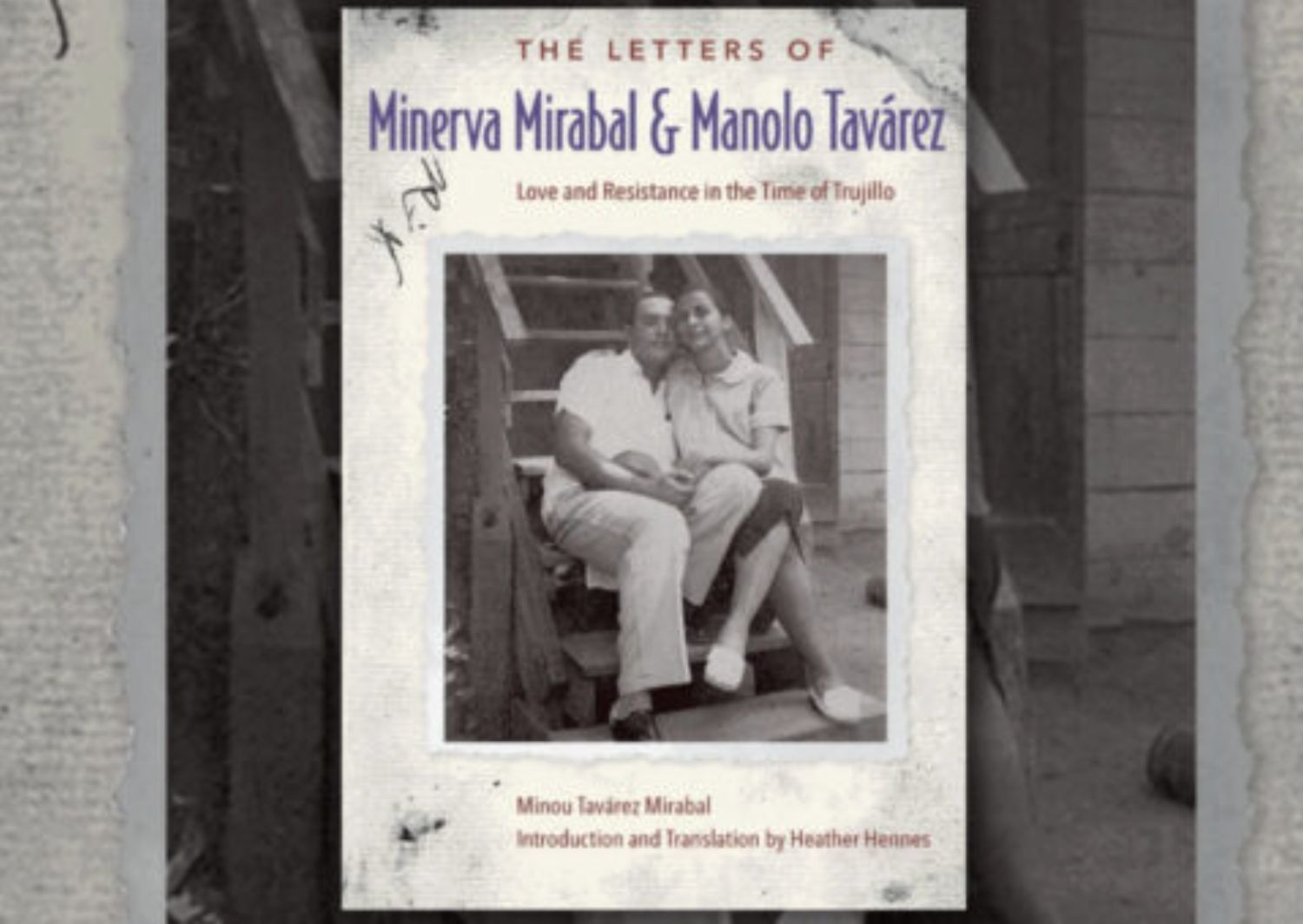
Minou Tavárez Mirabal’s 2022 book sheds light on the complex lives of her parents, two Dominican revolutionaries who were assassinated for their political activism.
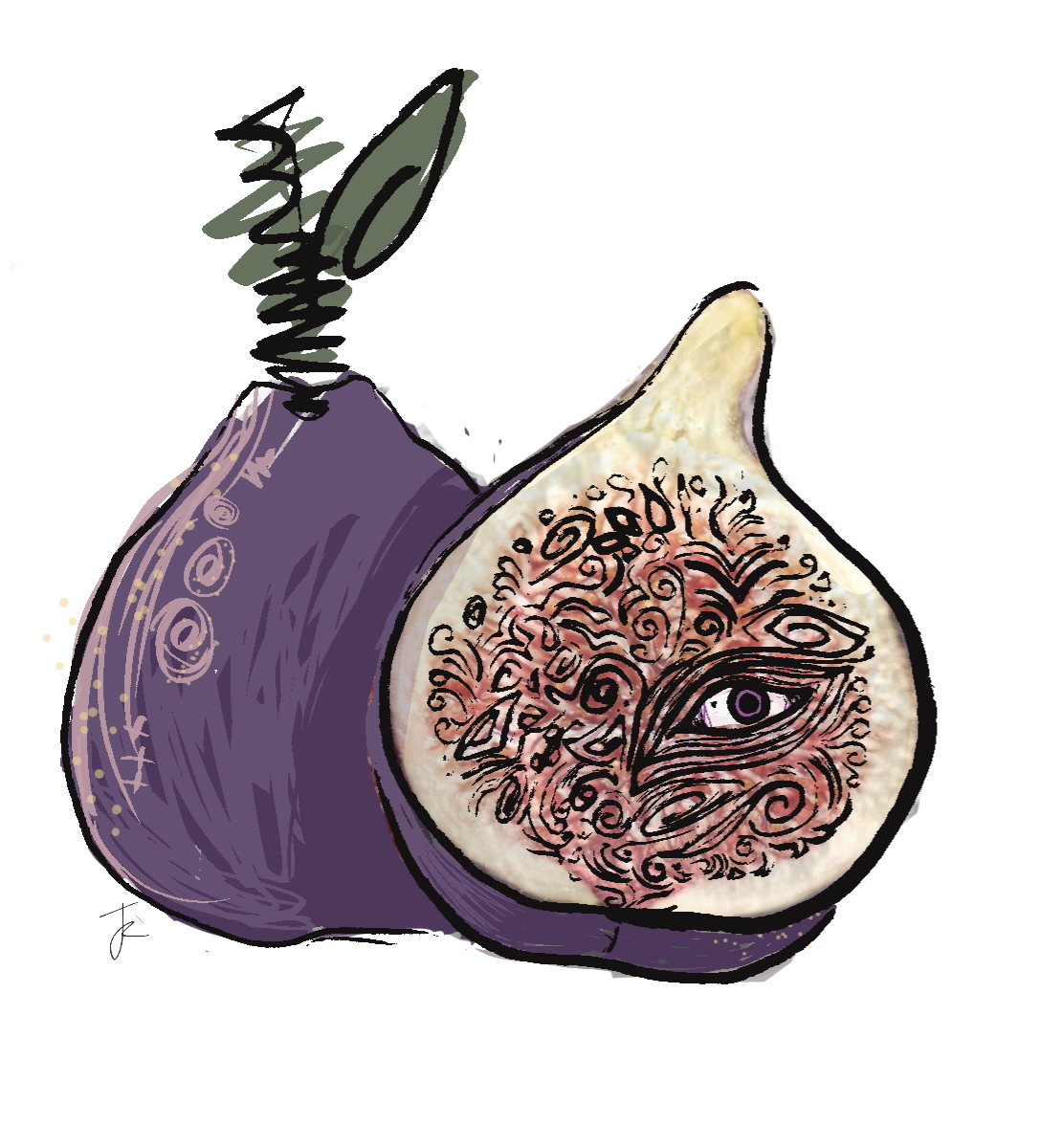
IMAGE OF THE WEEK
Sneak peak from our forthcoming summer issue, "Desiring Temporalities + Playful Aesthetics". Original illustration by Jess Rizkallah, 2026. (@ jessriz.art)
AROUND THE REGION
LULA AT THE WHITE HOUSE—Brazilian President Luiz Inácio “Lula” da Silva traveled to Washington on Thursday to meet with Donald Trump, a leader with whom he has frequently sparred. The meeting marked a sharp turnaround in U.S.-Brazil relations, coming nearly a year after Trump imposed a 50 percent tariff on most Brazilian imports in retaliation for Brazil’s attempted coup trial of former far-right President Jair Bolsonaro, which Trump denounced as a “witch-hunt.” On the same day the tariffs were announced, the Trump administration also sanctioned Supreme Court justice Alexandre de Moraes, who oversaw the trial that eventually sentenced Bolsonaro to 27 years in prison—though Congress may soon reduce the sentence. The tide began to change, however, after Trump and Lula briefly ran into each other backstage at the UN General Assembly in September, when Trump remarked that the two had "excellent chemistry.” According to an unusually brief post by Trump, the leaders discussed trade and tariffs during Thursday’s meeting, which he said “went very well.” A planned joint press appearance, however, did not occur.
COSTA RICAN RIGHT—Costa Rica’s outgoing president Rodrigo Chaves has secured a top position in the incoming administration of Laura Fernández, a Chaves acolyte who was elected in February on a promise to deepen her predecessor’s policies. Just three days before she is set to take office, Fernández announced Tuesday that Chaves would serve as both minister of the presidency and of finance, a move that guarantees him a prominent role in policymaking as well as continued legal immunity from investigations into alleged illegal campaign financing and corruption. Under Chaves, whose popular political project known as rodriguismo capitalized on fears of mounting insecurity and frustration with state institutions, Costa Rica’s foreign policy pivoted sharply toward alignment with the Trump administration. In March, Chaves agreed to accept up to 25 deportees per week from the United States, including “third-country nationals” with no ties to Costa Rica. The first group of 25 deportees arrived in early April, followed shortly after by a second group of 30. The country’s ties to the Trump administration have benefitted the ruling right-wing; on Saturday, the U.S. State Department revoked the visas of several board members of La Nación, a leading Costa Rican newspaper that has published critical coverage of Chaves.
GUATEMALA’S NEW ATTORNEY GENERAL—Gabriel Estuardo Luna, a 49-year old former judge and professor, will become Guatemala’s new Attorney General after being selected by President Bernardo Arévalo’s on Tuesday. Though the office formally operates independently from the presidency, the appointment is likely to strengthen Arévalo’s reform agenda, which has long been obstructed by outgoing Attorney General María Consuelo Porras. Since taking office in 2018, Porras has used her position to roll back anti-corruption efforts, prosecute political opponents, and attempt to prevent Arévalo’sascent to power—actions that ultimately led to sanctions against her by 42 countries, including the United States. Even so, Porras sought another term, aided in part by her powerful allies; after she was left off the final shortlist of six candidates, the Constitutional Court briefly froze the selection process in a ruling denounced by Arévalo, who had lobbied heavily against her candidacy. Luna, whose four-year term officially begins May 17, was hailed by Arévalo as the start of a “new chapter” and an opportunity to move beyond the use of the judicial system as a “tool of revenge.”
ARGENTINE CORRUPTION—Corruption scandals continue to plague the administration of far-right President Javier Milei, Argentina’s firebrand libertarian leader elected in November 2023 on promises to do away with politics as usual. This time, allegations of illicit activities have engulfed Manuel Adorni, Milei’s embattled Cabinet Chief who was grilled by lawmakers last week over claims that he purchased undeclared properties and engaged in repeated luxury travel out of step with his declared income. On Monday, Adorni appeared before the press to deny wrongdoing. Minutes after the press conference—the first since Milei’s government restored press access to the Casa Rosada after banning accredited reporters last month—a contractor alleged that he had been paid $245,000 in cash to renovate one of Adorni’s properties. The revelation intensified pressure on Adorni and led some lawmakers to call for his arrest. The scandal comes less than a year after Milei’s sister, Karina, became the subject of a massive scandal involving bribes linked to the purchases of medicines for disabled people. Mounting corruption allegations and economic turmoil have led to a steady fall in Milei’s approval ratings, a potential boon for the Argentine left. Even so, during a speech in New York in March, Milei declared that “corrupt Argentina is over.”