Trouble viewing this email? View it in your web browser.


Honduras held presidential primaries for the country’s main political parties on Sunday, against a backdrop of rising concerns about corruption, violence, and the country’s relationship with the United States. The chaotic nature of the primaries did nothing to assuage those fears: many voting centers across the country did not receive ballot boxes until late into Sunday evening, prompting some voters to burn tires in protest. 

The leading candidate of the governing Liberty and Refoundation (LIBRE) party’s primary was Defense Minister Rixi Moncada. Moncada, who received the support of current President Xiomara Castro, received well over 90 percent of the progressive party’s votes. Moncada’s victory comes at a difficult time for the LIBRE party. Founded in 2011 by a leftist coalition of organizations opposed to the U.S-backed 2009 coup against then President Manuel Zelaya, enthusiasm for the democratic socialist party has taken a hit under the current leadership of Castro, the wife of Zelaya and the country’s first female president.

Castro’s 2021 election was heralded by progressives at the time as a blow to neoliberalism, the country’s oligarchy, and the United States. Castro emerged victorious after an election cycle marred by violence targeting opponents of the then president, “narco-dictator,” and current U.S. prisoner Juan Orlando Hernández. She campaigned on drafting a new constitution, ending state corruption, and bolstering the welfare state. Even as her coalition fractured shortly after taking power in 2022, Castro managed to pass massive fuel and electricity subsidies for the poor and repeal laws authorizing the creation of Employment and Economic Development Zones (ZEDEs), the highly unpopular special economic zones that enabled private corporations to establish their own courts, laws, tax systems, and police forces. 

Nevertheless, within her first 100 days in office, activists immediately lamented Castro’s retreat on key promises related to agricultural development, the environment, and violence against women. The shift in her stance was sharpest, however, when it came to issues related to criminal justice and security. After campaigning on crafting a community-oriented approach to public safety, Castro made a hard turn in late 2022 when she decreed a “state of exception” that severely curtailed civil liberties and empowered the very military police that she had promised to gradually disband. While the number of arrests does not compare to El Salvador’s gang crackdown, Castro’s “war on extortion” has echoed its rhetoric, media strategies, and reliance upon mass incarceration. As in El Salvador, the Honduran government's ongoing crackdown on gangs, while bringing real declines in the murder rates, has relied on arbitrary arrests, extrajudicial executions, and enforced disappearances.

Castro’s reputation as a crusading anti-corruption activist has also taken a hit. While she has not been accused of any formal wrongdoing, Castro’s brother-in-law and a member of LIBRE’s leadership team, Carlos Zelaya, admitted to meeting with a prominent drug dealer in 2013 who had offered to finance the party’s campaign. Days earlier, Castro’s foreign minister had announced that the country was ending its extradition treaty with the United States. While done in response to a spat with an American diplomat, critics argued that the extradition treaty was targeted to protect members of Castro’s own family. While Castro ultimately reversed course and extended the treaty agreement, allegations of nepotism have remained. 

The leading and likely future presidential candidate from the Liberal Party is Salvador Nasralla, Castro’s former vice president and the LIBRE party’s 2013 presidential candidate. Nasralla, who secured 60 percent of the vote, left the administration in 2024 to run for president. Nasry Asfura, the former mayor of Tegucigalpa, secured 76 percent of the conservative National Party’s vote. Asfura soundly defeated the party’s other leading candidate, Ana García, the wife of former president Juan Orlando Hernández. 

Looming large over the electoral campaign is the country’s relationship with the United States. While Castro was originally outspoken in her resistance to the Trump administration’s proposed mass deportations, threatening to end cooperation with the U.S. military, Honduras has agreed to receive deportation flights. Nevertheless, the relationship remains chilly: when Secretary of State Marco Rubio visited the region in February, he skipped out on Honduras. 


THIS WEEK FROM NACLA

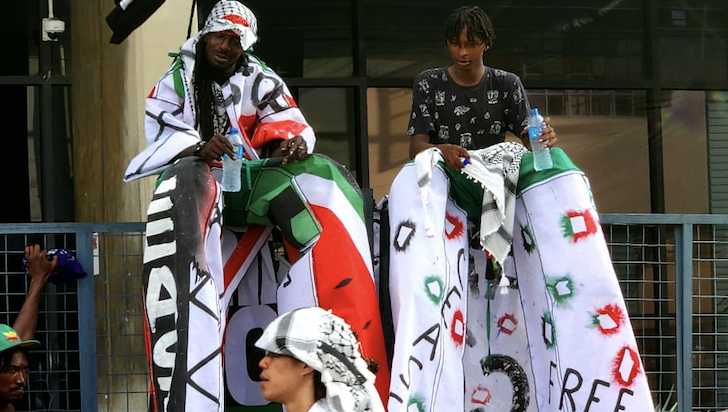
“Carnival is Always Political”: Keeping Protest Alive in Trinidad

Khalea Robertson | March 14, 2025

Designer Robert Young discusses the political activism woven into the costumes of his band, Vulgar Fraction, which participates annually in Trinidad and Tobago’s Carnival celebrations.

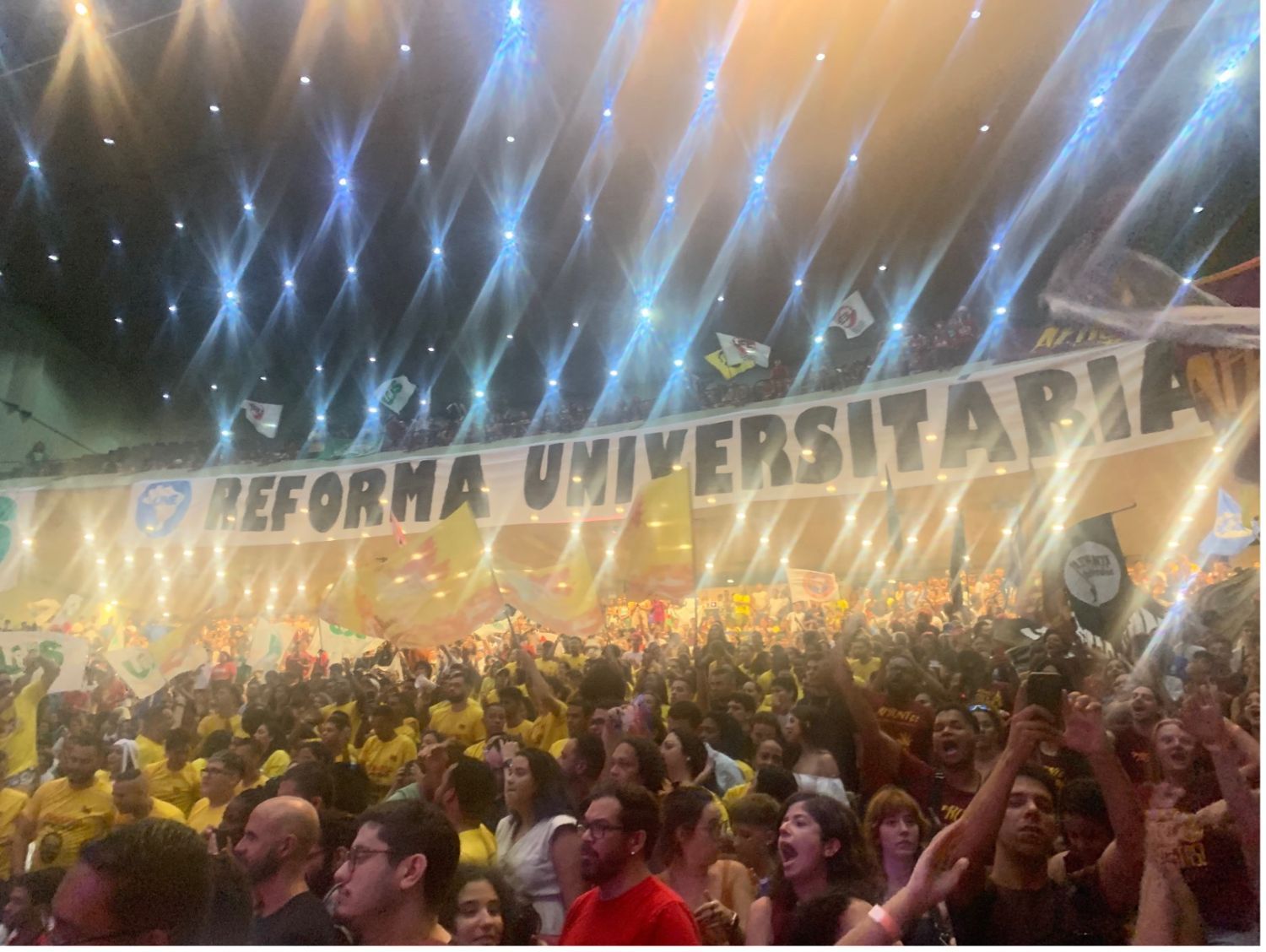
Brazil’s Student Movement Resists the Far Right, at Home and Abroad

Alice Taylor | March 13, 2025

In the days after the Trump inauguration, Brazilian students gathered at the largest student congress in Latin America to debate the future of left resistance.

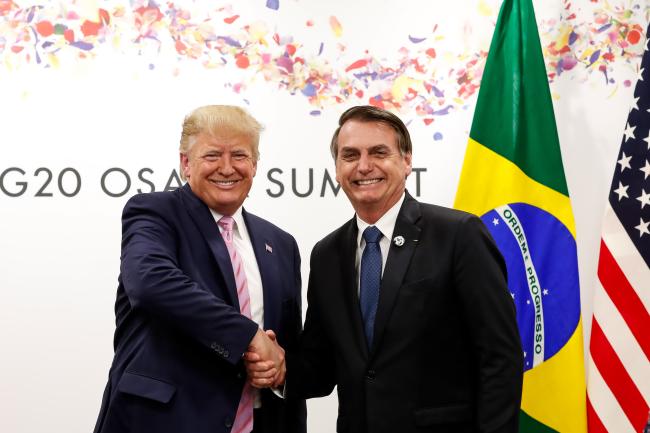
Trump’s Latin America Policy: Inconsistencies and Vacillations

Steve Ellner | March 12, 2025

The Trump administration’s volatility on foreign policy reveals internal divisions within Trumpism. But when threats and populism lose their momentum, the anti-communist hawks may get their way.

IMAGE OF THE WEEK

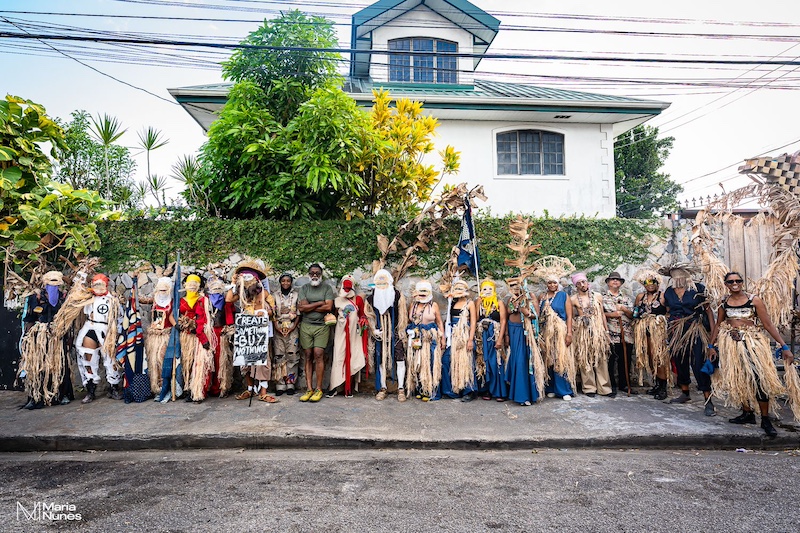
Masqueraders of Vulgar Fraction's "Kongo Déy” gather in Port of Spain, Trinidad on Carnival Tuesday (March 4), with lead designer Robert Young, center-left, in all green. (Courtesy of Maria Nunes)


AROUND THE REGION

  • CUBA RELEASES POLITICAL PRISONERS — On Monday, Cuba’s highest judicial authority announced that the last of 553 prisoners that it had promised to release as part of a deal with the Biden administration have been set free. In the waning days of the Biden administration, the two governments came to an agreement in which Cuba would release political prisoners swept up in the government’s crackdown on the massive 2021 protests in exchange for its removal from the U.S. State Sponsor of Terrorism (SST) list. The Cuban government went forward with the deal even as the United States broke its key promise: almost immediately upon taking office, President Trump moved to reclassify Cuba as a State Sponsor of Terrorism. Independent human rights experts blasted the decision in February, arguing that Cuba’s SST status had a “devastating impact on vulnerable groups, including women, children, older persons, and persons with disabilities.”

  • NEW SALVADORAN AIRPORT — In late February, Salvadoran officials broke ground on the Airport of the Pacific, a massive project in the country’s eastern city of La Unión that the government has promised will bring 50,000 jobs and boost national GDP. The airport is part of the government’s $1.4 billion push to develop the country’s eastern departments, a goal linked to reigniting international interest in the construction of Bitcoin City, a tax-free “smart city” promoted by Salvadoran President Nayib Bukele. The project was immediately criticized by conservation groups who worried that it would intensify the ongoing destruction of the region’s mangroves, a vital part of the ecosystem that captures carbon, prevents soil erosion, protects local water supplies, and provides sustenance to local communities. Reporting this week by The Guardian revealed that hundreds of families in the region have been displaced after years of “predatory negotiations” that forced them to sell their land and houses for “inadequate compensation.” In the face of dwindling animal populations and contaminated water supplies, another community member lamented that the government had “turned [their] home into a cemetery.”

 
  • CALLS TO RECLASSIFY COCA LEAF — The Colombian government again urged the United Nations to remove the coca leaf from its list of harmful substances. On Monday, Colombian Foreign Minister Laura Sarabia gave an address to the UN’s commission on narcotics drugs in Vienna in which she insisted that the coca leaf is “not harmful to health.” The main ingredient in cocaine, coca has also been used for centuries in the region as a mild stimulant, cure for altitude sickness, and cultural and spiritual symbol. In her speech on Monday, Sarabia argued that removing coca from the 1961 UN list of “harmful narcotics” would enable the plant to be used “to its full potential in industrial applications such as fertilizers and beverages.” Coca’s decriminalization could also curtail much of the country’s drug-fueled violence, a need brought into stark relief by the recent upsurge in coca-driven conflict in the Catatumbo region. As President Gustavo Petro has done in numerous speeches before the UN, Sarabia highlighted the failures of the U.S.-led “War on Drugs” and argued that legalization is the only way to reduce the monopolization of the plant by drug traffickers. 

  • VENEZUELAN DEPORTEES — On Thursday morning, the U.S. envoy for special missions Richard Grenell announced that deportation flights between the United States and Venezuela would resume on Friday. The announcement came just days after the Venezuelan government said that it would stop accepting its own deportees in response to the Trump administration’s recent revoking of oil giant Chevron’s license to export Venezuelan oil without fear of sanctions. The targeting of Venezuela’s oil sector, covered extensively in a recent edition of this newsletter, came after weeks in which relations between the two countries seemed to be warming. Writing for NACLA this week, Steve Ellner addressed these vacillations, arguing that the Trump administration’s volatile foreign policy is the result of internal divisions within Trumpism between a “conventional far right” foreign policy establishment that sees Maduro as an “[enemy] of humanity,” and a right-wing populist base that cares more about limiting immigration and cutting off foreign aid.


North American Congress on Latin America
53 Washington Sq South, Fl. 4W  | New York, New York 10012
(212) 992-6965 | [email protected]

Unsubscribe or Manage Your Preferences