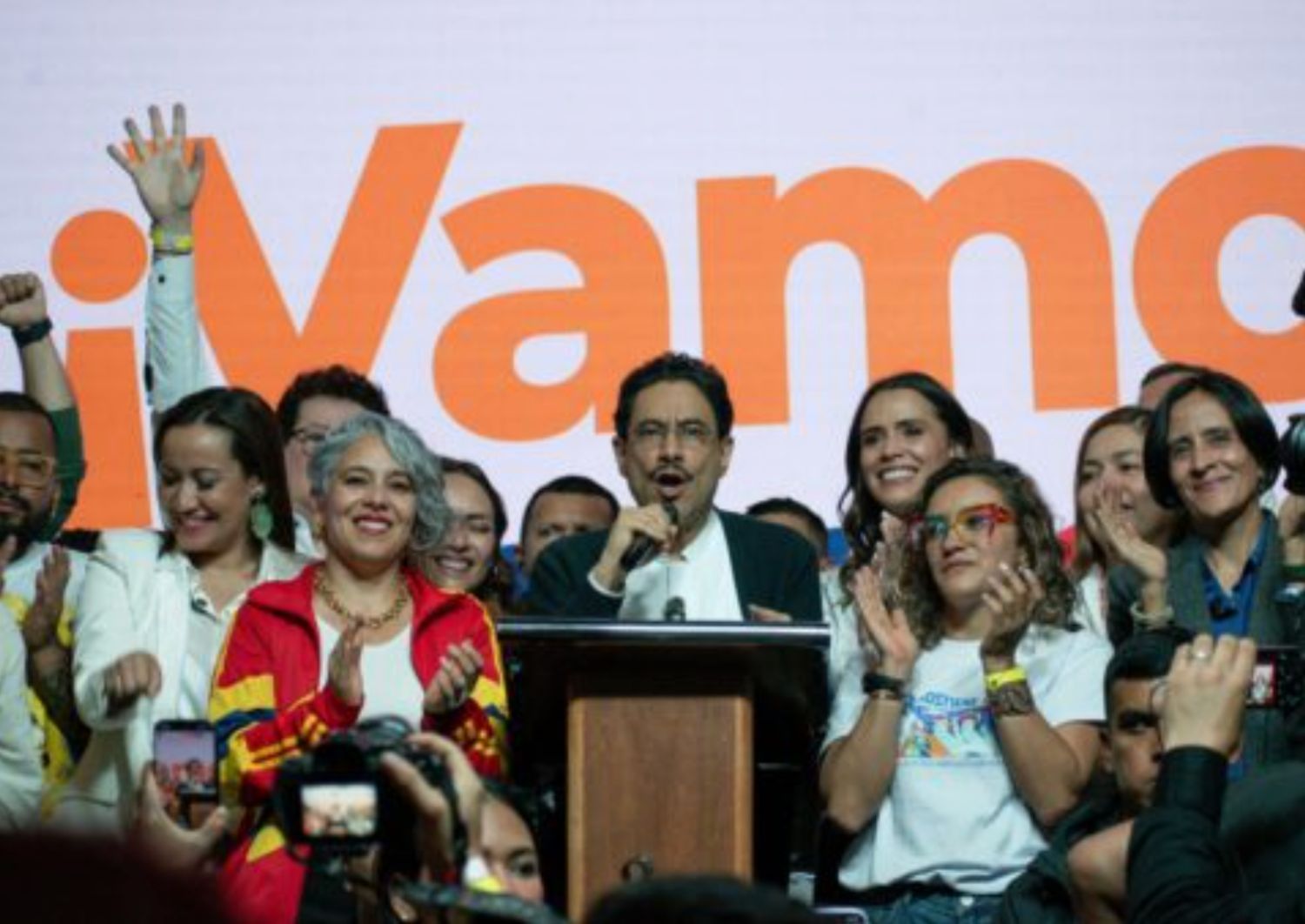
More than 19 million Colombians took to the polls on Sunday to elect congressional representatives and vote in intra-party primaries. The Colombian left, represented by the coalition-turned-formal political party known as the Pacto Histórico, successfully resisted the regional trend of a right-wing backlash. Though the right remains a potent threat ahead of presidential elections in May, the ruling party of President Gustavo Petro will be the biggest political force in Colombia’s Congress.
The Pacto’s success on Sunday was far from guaranteed. Moving from a loose coalition of left and center-left movements to a formal political party was an arduous process. From the moment it formally moved to merge in June of last year until its final structure took shape last week, party officials routinely clashed with Colombia’s National Electoral Council (CNE). Electoral authorities excluded parties from joining the coalition, imposed conditions on its internal primaries, mandated changes to the party’s regional lists, and threatened to disqualify its Senate candidates. The CNE’s most consequential ruling, however, directly affected Sunday’s vote: it barred Iván Cepeda, the Pacto’s presidential candidate from participating in the internal left-wing primary, depriving the party of an opportunity to further consolidate support and gauge its electoral strength.
Even so, the results pointed to a revitalized Colombian left. The Pacto significantly expanded its voter base compared to its 2022 performance and gained congressional seats. It won the largest share of Senate votes in 12 departments, and positioned itself to build a working majority to pass its agenda if Cepeda wins the presidency. Though Cepeda himself was not on the ballot, the results were a strong enough vindication of the Pacto’s strength to enable him to choose an ally of the government, Aida Quilqué, as his pick for vice presidential running mate.
While Monday's VP announcement took many by surprise, Quilqué is a highly qualified choice. One of the first Indigenous women ever elected to Congress, she is a dedicated defender of the Nasa community in her home department of Cauca and a prominent human rights activist. She understands all too well the consequences of Colombia’s armed conflict: in 2008, her husband was murdered by the military, and in February of this year she was kidnapped and then shortly after released by a dissident faction of the FARC.
Quilqué’s background contrasts sharply with that of one of the election day’s other main winners, right-wing senator Paloma Valencia. Though Valencia is also from Cauca, the far-right politician who won the conservative parties’ primary could not be more different. A senator, granddaughter of a former president, and chosen pick of former far-right leader Álvaro Uribe, Valencia bested a large field of right and center-right candidates. She secured more than three million votes and placed far-right independent presidential candidate Abelardo de la Espriella—until now considered a shoo-in to challenge Cepeda—on notice. Her victory also demonstrated that Uribe’s project, known as uribismo, remains a powerful force even after the former president was briefly sentenced to prison in August before his conviction was overturned. Though Uribe himself ran for Senate unsuccessfully, the more traditional far-right movement he helped build appears to be regaining momentum ahead of May’s presidential elections.
The day produced several other surprises, including the success of younger candidates and political influencers. Yet as Cruz Bonlarron Martínez argued in a piece for NACLA, the overall picture is clear: “The country remains polarized between the left, represented by the Pacto, and a far-right largely split amongst the Centro Democrático and De la Espriella.” With Petro’s approval rating on the rise and Cepeda leading early polls, it is quite possible that the left may secure a second chance at governing Colombia—a prospect tentatively suggested by Sunday’s results. (Read more about Colombia’s elections here).
Since its founding in 1967, NACLA has worked to expose and oppose U.S. intervention in Latin America. In the face of lies and propaganda generated by the U.S. government, and a mainstream media often complicit in legitimizing U.S. actions, NACLA has sought to be a source of reliable information about the facts on the ground.
In this dossier of more than 30 articles, special print issues, and exclusive web series, NACLA's editors have curated a guide that touches on some of the most salient issues in recent Cuban history, including six decades of U.S.-led war, Cuba's role on the global stage, the Obama ‘thaw," the July 11 Protests, the role of the diaspora, and more.
Amid a regional right-wing turn, the country’s left consolidated its political project, positioning itself well for the upcoming presidential elections.
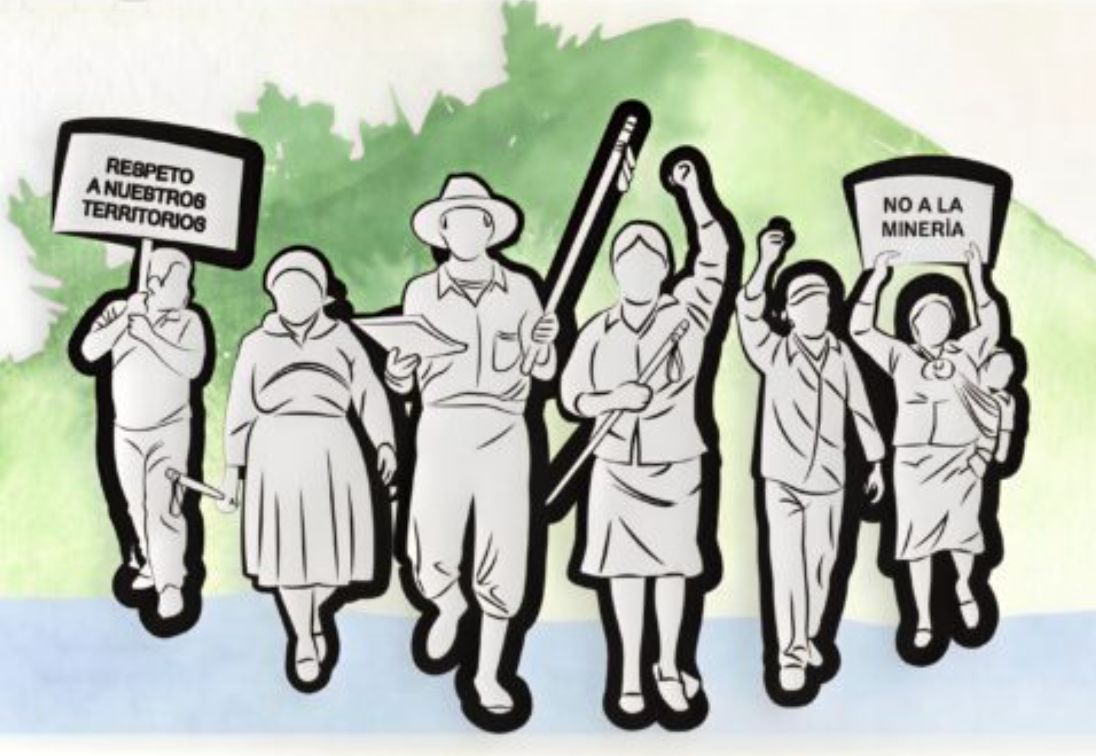
Tras dos muertes y acusaciones legales fraudulentas, el pueblo Ch’orti’ sigue luchando para expulsar un proyecto minero que ha contaminado sus tierras.
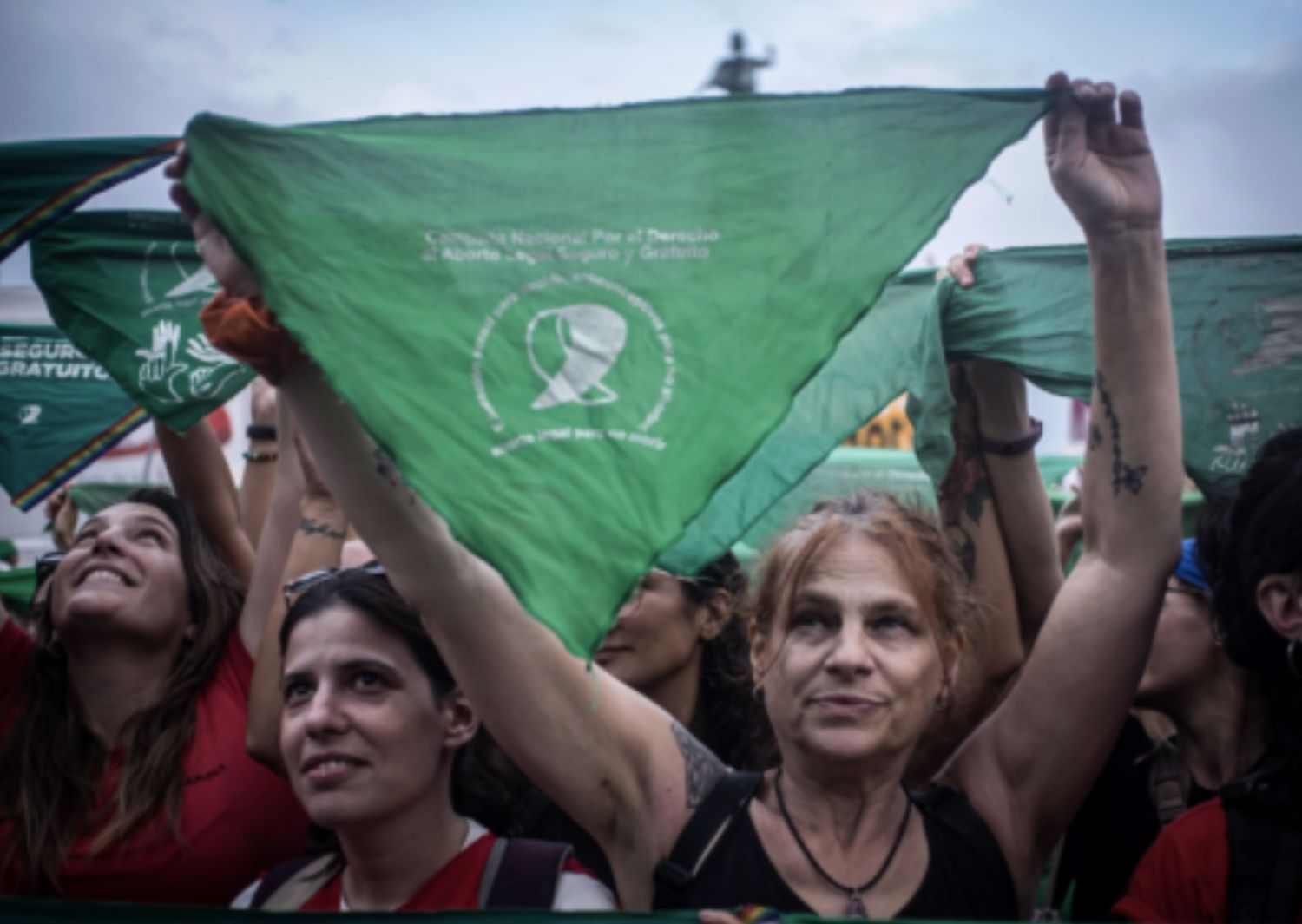
A demonstrator at the 2025 International Women’s Day march holds a green bandana reading “es ley” (“It’s law”). Read more about the fight to defend abortion rights in Argentina in "Faith and Body: New Battle Over Abortion in Argentina," an article published this week by Ella Fernández. (Photo: Ella Fernández)
AROUND THE REGION
KAST’S INAUGURATION—José Antonio Kast, a far-right politician elected president in December, formally took office on Wednesday. Kast’s rise to power marked a dramatic reversal for a country that four years ago elected Gabriel Boric, a young left-wing leader who came to power promising bold changes and a new constitution yet left office as Chile’s least popular leader in decades. Kast’s vision of the country could not be more different than that of Boric: he has called for the mass deportation of migrants and the construction of a border wall, a total ban on abortion, a radical restructuring of the economy, and deeper ties with the Trump administration—a promise made manifest by his attendance at last weekend’s “Shield of the Americas” summit in Florida. Many right-wing regional allies attended his inauguration, including the presidents of Argentina, Ecuador, Panama, and Venezuelan opposition leader María Corina Machado.
ECUADOR’S CRACKDOWN(S)—An electoral judge in Ecuador has ordered a nine-month suspension of the Citizens’ Revolution (CR), the country’s largest opposition party, potentially preventing it from participating in upcoming local elections. The ruling came in response to a request from a government-aligned prosecutor general whose own appointment has been challenged as illegal. The suspension stems from a case known as “caja chica,” which alleges the party received illegal Venezuelan funds during the 2023 elections. But scant evidence, questions surrounding a key witness, and a broader campaign against the opposition have led critics—including former President Rafael Correa—to denounce the case as political persecution. The move reflects a worrying trend of creeping authoritarianism under far-right President Daniel Noboa, who has relied on a likely illegal declaration of an “internal armed conflict” against gangs to crack down on social movements and loosen restrictions on the Armed Forces. So far, Noboa’s extraordinary measures have failed spectacularly to curb violence. Despite the lack of results, last week, Ecuadorian and U.S. forces struck what officials alleged were “narco-terrorist networks” in the country’s north, likely the first land strikes in the Trump administration’s ongoingbombing campaign against criminal groups. That collaboration may soon deepen: the government has promised a massive military operation against the "criminal economy” this weekend, following the imposition of a curfew in four provinces.
HAITI’S CRISIS: Nearlyfive years after the assasination of President Juvenel Moïse, the trial of four men who allegedly plotted his killing began on Tuesday in a Miami courthouse. U.S. prosecutors alleged that members of a Miami-based security firm hatched the plan in order to overthrow the president in hopes of achieving lucrative contracts from his replacement, a man they hoped would be Christian Sanon, a Haitian-American pastor who will stand trial later. The trial began nearly three years after a 2023 indictment accused 11 people of conspiring to assassinate Moïse. So far, five have pleaded guilty and were sentenced to life in prison, while another received nine years. Moïse’s 2021 killing, largely at the hands of Colombian mercenaries, plunged Haiti into a deep crisis as politicians fought for power and the gangs to which they have historically been tied eventually united. Since 2024, the gangs have waged a massive offensive, controlling large swaths of territory, terrorizing local communities, and bringing down a prime minister. Haitian security forces and its international backers, however, have been unable to contain these groups. As a new report by Human Rights Watch documented this week, they have also largely depended upon likely illegal drone strikes that have killed scores of non-combatants, including 17 children.
“SHIELD OF THE AMERICAS”—The Trump administration hosted leaders from around the region on Saturday, summoning right-wing allies to Florida to participate in the “Shield of the Americas” summit. The event, which came days after Trump administration officials lectured Latin American leaders on the need to use more force in the battle against criminal groups at the “Americas Counter Cartels Conference,” followed the same tone. In front of 12 regional leaders, Trump reaffirmed the key tenets of the “Donroe Doctrine." He called for the formation of a "coalition to eradicate the cartels,” likening it to the “coalition to eradicate ISIS”, vowed not to allow a “hostile foreign influence to gain a foothold in the hemisphere” in a nod to China, and boasted that “change will soon be coming to Cuba.” Trump also singled out Mexico, blaming it for being the “epicenter of cartel violence.” The absences of Mexican President Claudia Sheinbaum, Brazilian President Luíz Inácio “Lula" da Silva, and Colombian President Gustavo Petro attested to the fact that the Trump administration’s grip on the region may not be as strong as it looks: these three countries account for more than half of the region’s GDP, as well as a significant chunk of its population.