Trouble viewing this email? View it in your web browser.


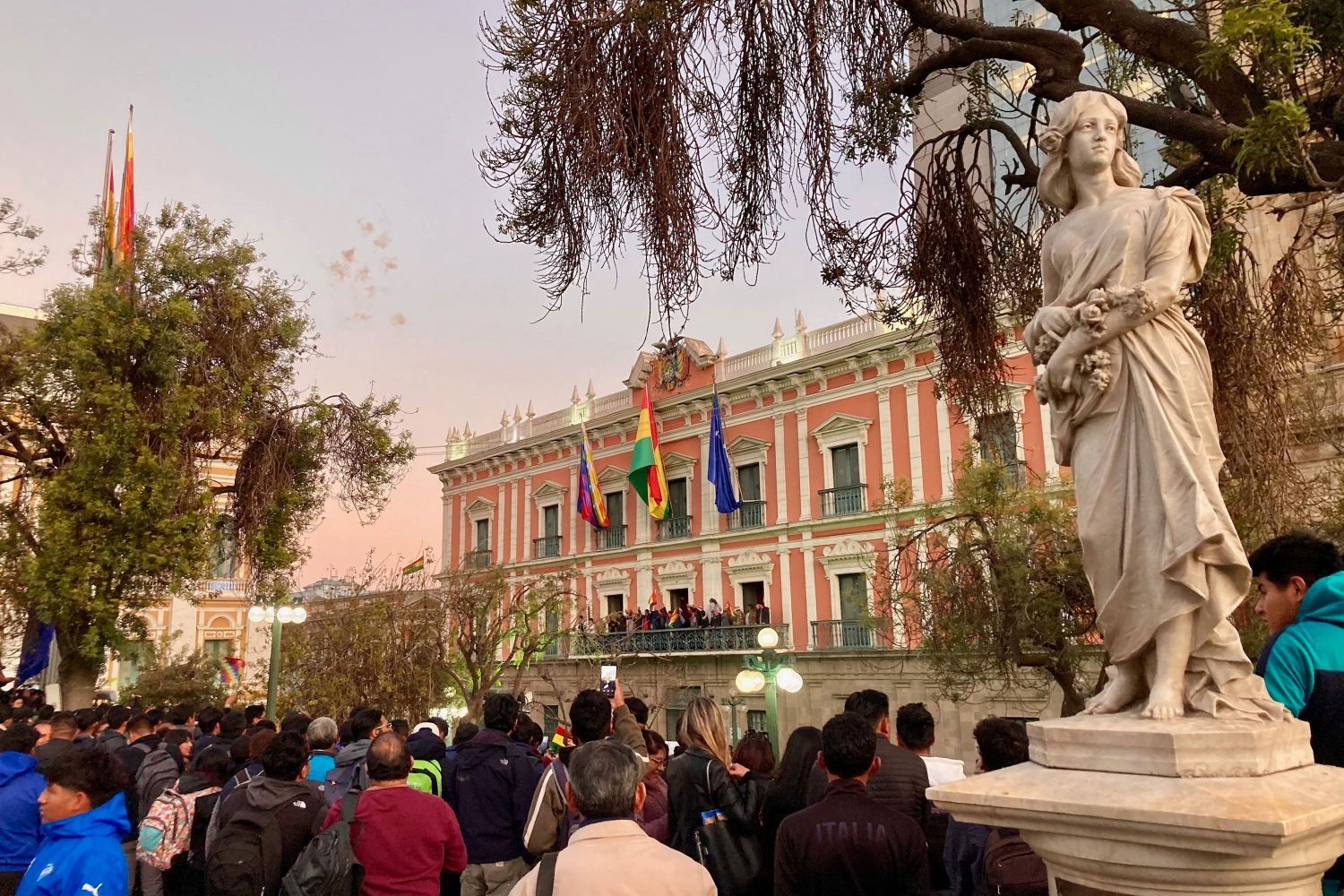
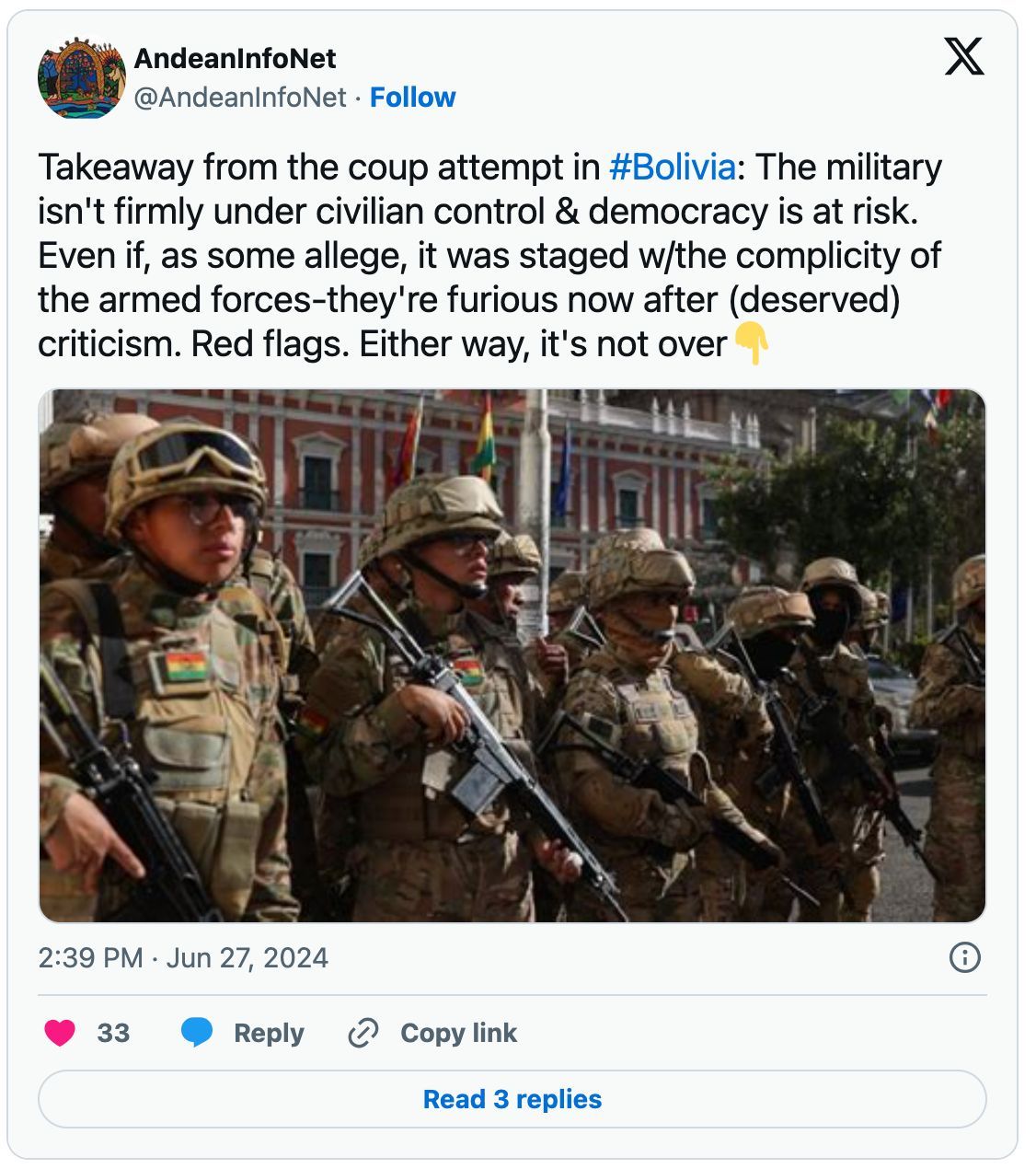
In a scene reminiscent of 20th century South American coup d'etats, a military contingent occupied the Plaza Murillo in La Paz on Wednesday afternoon and rammed a tank through the doors of the presidential palace. The apparent coup attempt was led by Army commander Juan José Zúñiga, who had been dismissed from his post on Tuesday night after making antidemocratic comments in a TV interview. Zúñiga refused to accept the dismissal, and stormed the emblematic plaza and seat of government vowing to “restore democracy.” 

After a tense exchange, in which Zúñiga confronted President Luis Arce Catacora at the entrance to the Palacio Quemado, Arce named a new Army commander, and Zúñiga retreated with his forces. He was later detained and taken into custody along with several others. 

As a line of military vehicles retreated to their barracks in La Paz on Wednesday evening, Arce supporters rushed to the plaza waving Bolivian flags and singing the national anthem. “Long live the Bolivian people! Long live democracy!” shouted Arce in a televised address. 

Minister of Defense Edmundo Novillo called the attempt a “disgrace” for the country’s Armed Forces, referring to those involved as “some bad military men.” In a press conference, he called for calm and reassured that Arce has “absolute and total control” over the Armed Forces. “What happened is a dark stain, a nefarious passage,” he said. 

While contained for the time being, the alarming episode poses more questions than answers. While embattled President Arce has seen a surge of support in response to the coup attempt, his government has been beset by bitter infighting within the Movement Toward Socialism (MAS) ruling party over who will carry the party’s nomination in the upcoming 2025 presidential elections. Furthermore, a growing economic crisis—driven by a shortage of fuel and dollars and, more broadly, by the inability of the MAS apparatus to move beyond an unsustainable extractive economic model—threatens to destabilize the subsidies and social programs that once defined the party’s “Democratic and Cultural Revolution.” 

As the tension subsided, local media in Bolivia debated whether to call the attempt a “coup,” “mutiny,” or “berrinche” (tantrum) on the part of a disgruntled general, suggesting that Zúñiga had acted impulsively after being removed from his post. In a twist, Zúñiga declared upon his arrest that he had been acting in collusion with Arce himself, who had allegedly called on the commander to instigate an autogolpe, or self-coup, to enhance the president’s popularity. 

As theories circulate online about the motivations behind the episode, Wednesday’s events seem to carry echoes of a kind of political and military performance—a chauvinistic and potentially dangerous charade in which the Bolivian people are held captive to an increasing erosion of institutionality as the Arce-Evo dispute drags on. 

“How difficult it is to explain to people that we were the collective victims of a great manipulation,” said Bolivian feminist-anarchist María Galindo in a video posted on X. “How difficult it is to explain that we live in a kind of continuous sabotage,” she added, referring to the entrenched culture of machismo that has long shaped the Bolivian political landscape. 

What is clear, says Radio San Miguel FM director Santos Colque Quelca from El Alto, is that Zúñiga “did not have the necessary backing to stage this coup d'état. He did not have the support of the forces themselves, the Navy, the Air Force, etc.” He also did not have the support of the people. On Thursday, the Arce-aligned mayor of El Alto, Eva Copa, called for a 24-hour blockade of El Alto in a show of support for the government. The call fell on unlistening ears. “The people don’t want any more blockades,” says Colque Quelca. “The people want to work. They want to reactivate their economy because Bolivia is experiencing symptoms of an economic crisis.”

As this incident suggests, unrest has also been festering within the Armed Forces since the acute political crisis of 2019, indicating that this week’s events could be a harbinger of darker days to come if the MAS party does not find a way out of its infighting. “As a journalist reading the reality before me, I am afraid this unrest within the Armed Forces will continue to germinate,” says Colque Quelca. “And not this year, but perhaps in future administrations, another kind of coup may become viable, one with greater consequences.”

Katherine Ledebur, director of the Andean Information Network, agrees that the incident is tied to the legacy of 2019. “Arce hasn’t made good strategic decisions about the military,” she says. “He has not put the house back in order after the 2019 coup and he’s stopped talking about it. The trials for the 2019 massacres have not started. And if you don’t put things in order, it’s going to come back and bite you.” Ledebur suggests that the divisions in the MAS and the Armed Forces could lead to a Milei-type candidate emerging in 2025. 

Galindo, for her part, takes a stronger stance, calling for Bolivian society to move beyond the ideological currents headed by a roster of usual suspects who have struggled over power in recent years—Morales, Arce, Luis Camacho, Carlos Mesa, among others—and instead build something new. “Que se vayan a su casa todos, todos juntos.” May they all go home, all of them, together.” 

We will be taking next week off from the newsletter. The NACLA newsletter will return to your inbox on July 12.
 

NEW PODCAST EPISODES

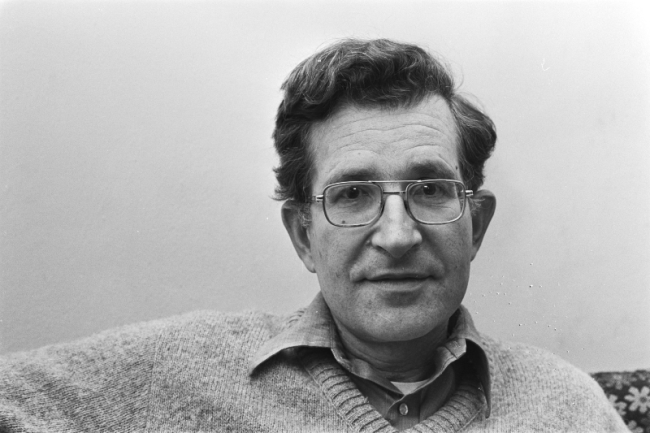
CHOMSKY ON U.S. INTERVENTION

This week, Under the Shadow looks back on Chomsky’s 1983 lecture at the University of Colorado, as some of the worst aspects of the Reagan administration’s Cold War-era foreign policy ravaged Central America.

In 2012, NACLA awarded Chomsky the Latin America Peace and Justice Award for his ongoing commitment to social justice in the Americas. 

If you haven't yet, check out our other recent episodes on Nicaragua. And as always, please consider making a donation to further support our work!


THIS WEEK FROM NACLA

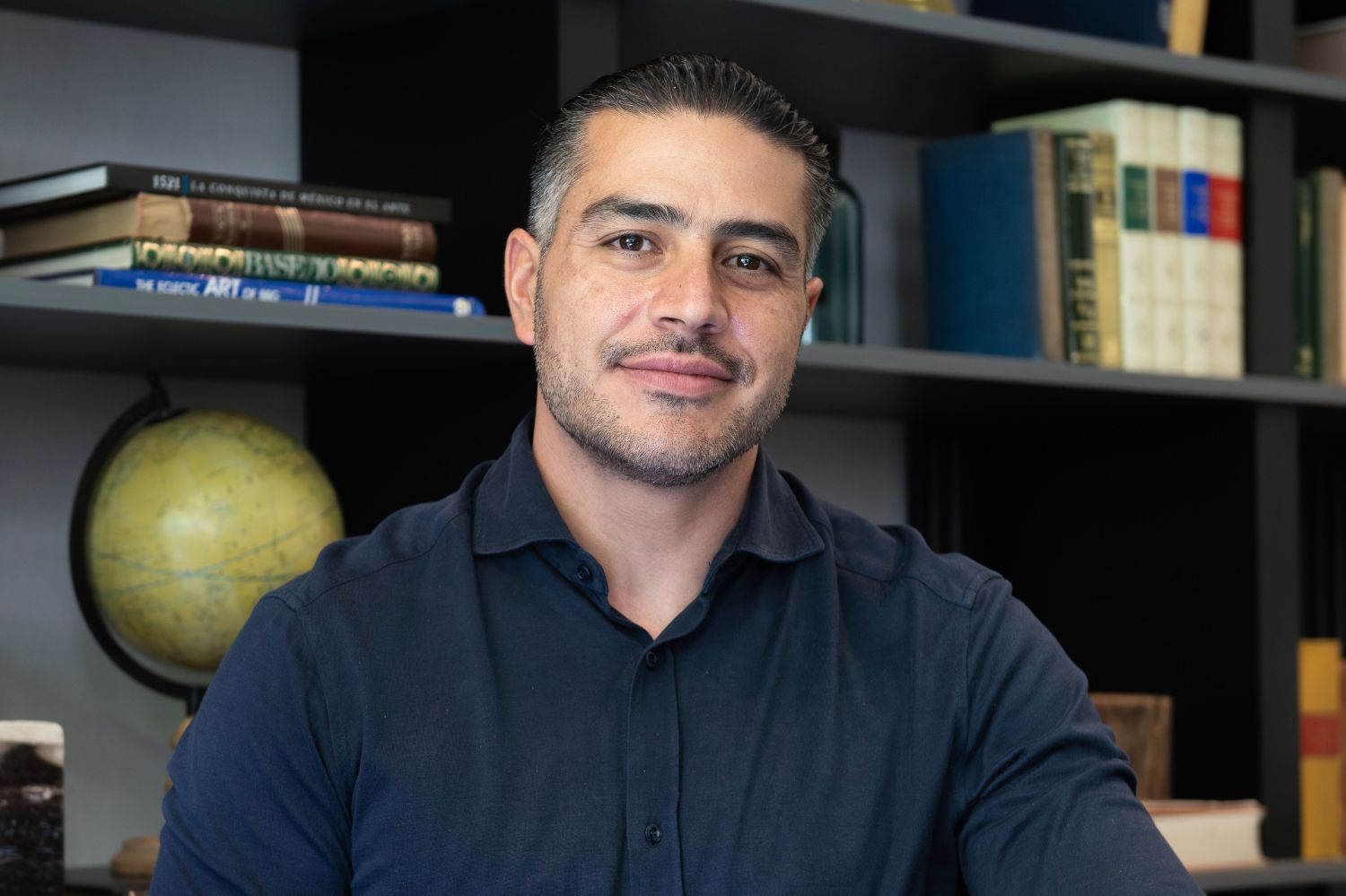
The Rebirth of Omar García Harfuch

Suhail Gharaibeh | June 28, 2024

Mexico City’s former chief of police is believed to have participated in the forced disappearance of the 43 Ayotzinapa students in 2014. A decade later, president-elect Claudia Sheinbaum is poised to make him Mexico’s most powerful policeman.

Spectacles of Crisis and Political Power Plays in Bolivia

Angus McNelly | June 28, 2024

A general and his troops stormed the seat of government in an apparent coup attempt. Three theories have emerged in a context of economic turmoil and political infighting within the ruling party.

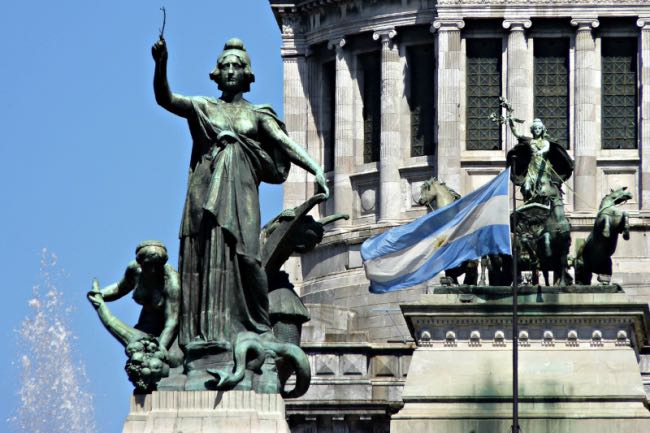
The New Colonialism of Milei’s Investment Plan

Daniel Cholakian | June 27, 2024

Approved amid harsh repression of protesters, the economic scheme at the heart of the Argentine government’s flagship legislation hands big perks to multinationals at the expense of territories, peoples, and the environment.

También disponible en español. 

PHOTO OF THE WEEK

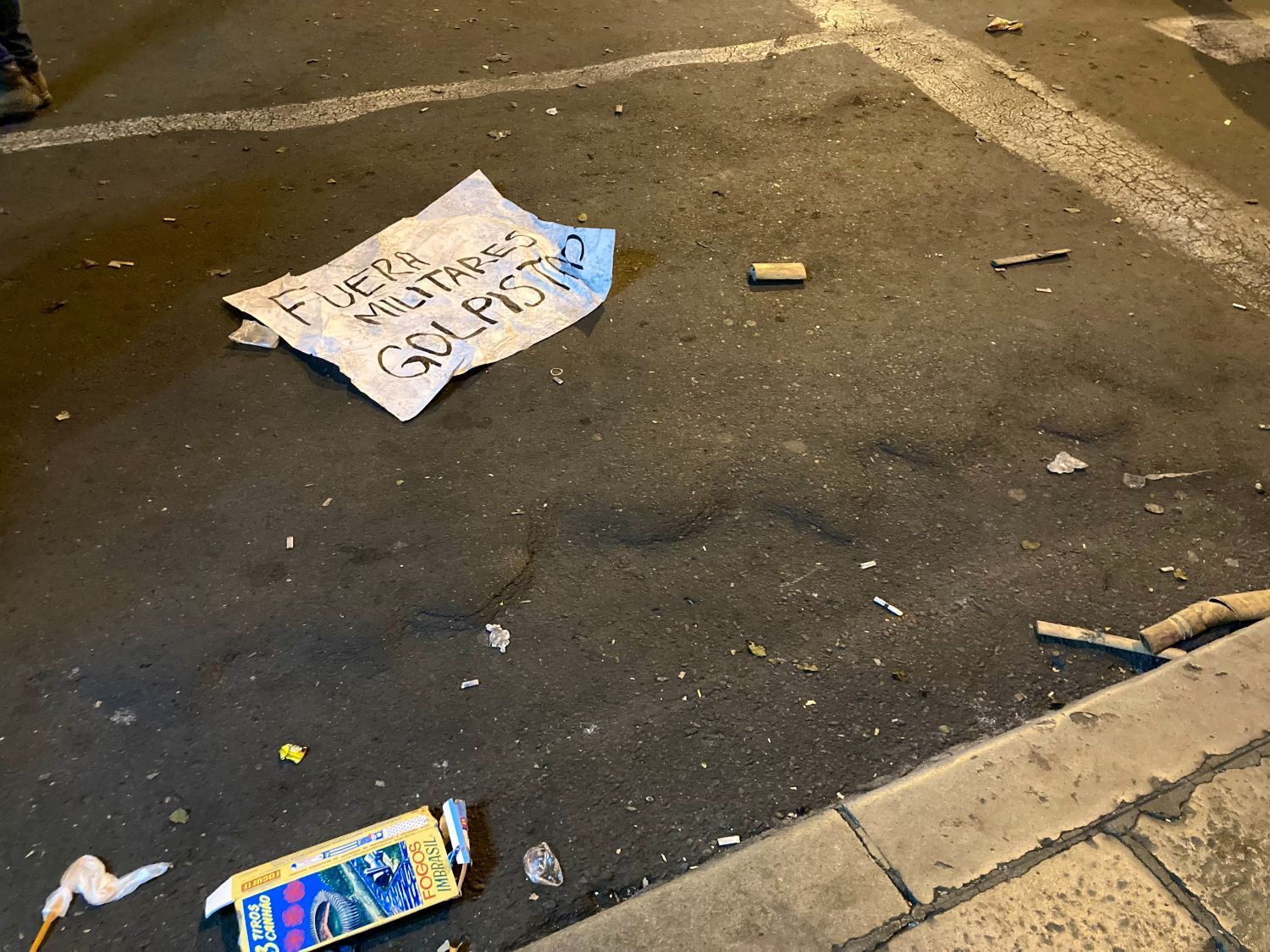
 A sign reading "get out military coup plotters" on the ground near Plaza Murillo in La Paz, Bolivia on Wednesday, in the aftermath of a failed coup attempt. While the dust has settled—for now—the events point to further political turmoil on the horizon. Read more from Angus McNelly writing for NACLA on what happened and the possible motivations behind the attempted coup. Image: Benjamin Swift


AROUND THE REGION

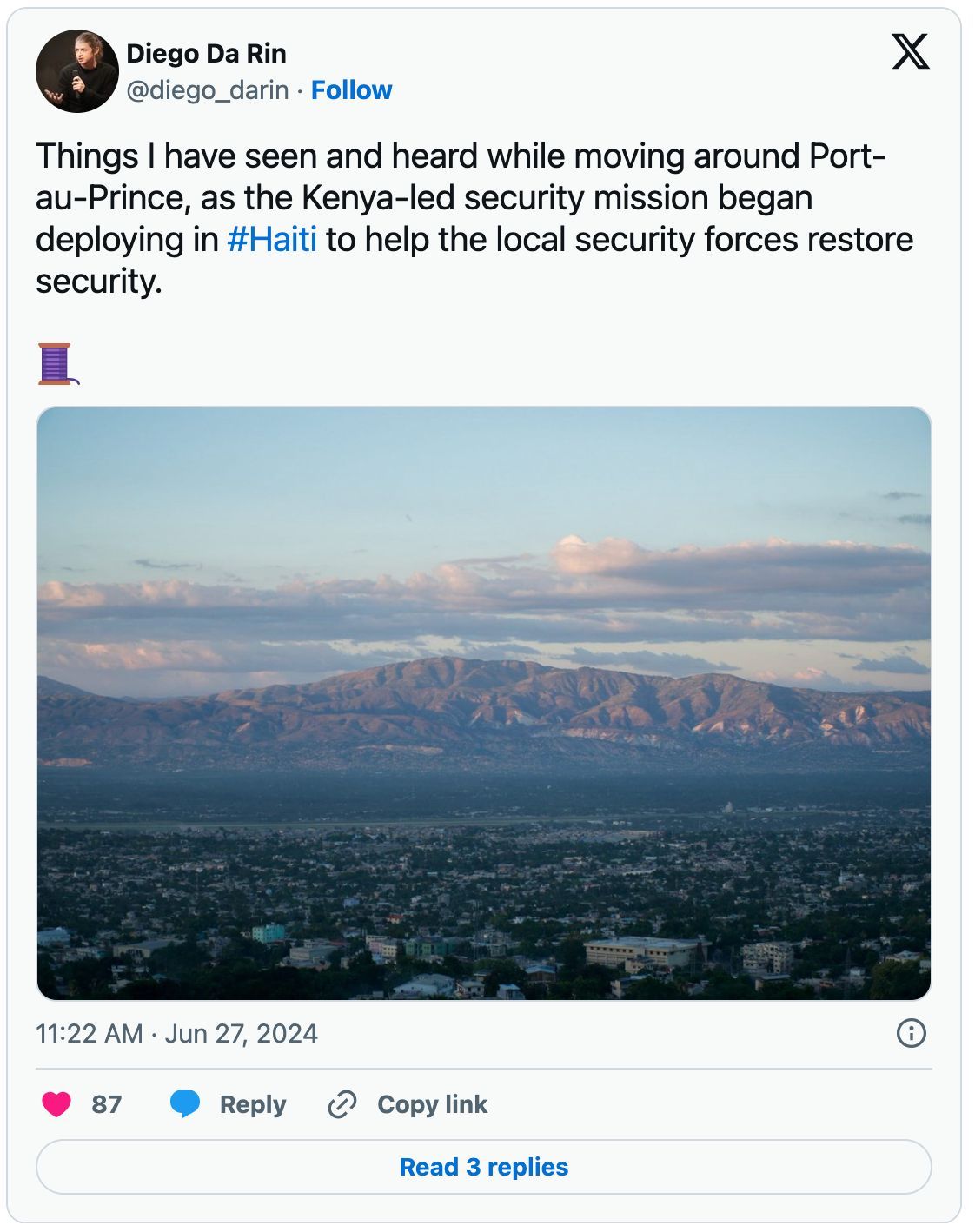
  • KENYAN POLICE ON THE GROUND IN HAITI — A first contingent of 400 Kenyan police officers arrived in Haiti on Tuesday, a year and a half after former prime minister Ariel Henry asked the international community to send a security force to quell gang violence. According to the Washington Post, the force will be “static” at first, working to protect key infrastructure, and then will become more “dynamic,” going house by house to secure neighborhoods alongside the Haitian police.The mission will eventually involve a force of 2,500 police officers and soldiers from the Bahamas, Bangladesh, Barbados, Benin, Chad, and Jamaica. Despite the violence and lack of governance that has gripped the nation in recent months (and years), many Haitians are wary of another foreign-backed mission in their territory. In recent weeks, the U.S. military has flown more than 90 flights and 2,600 tons of supplies to prepare for the mission. The deployment coincided with a violent day of protests in Kenya, in which clashes between police and protesters over an unpopular tax bill left 23 fatalities. Kenyan President William Ruto withdrew the bill on Wednesday. On X, the International Crisis Group’s Diego Da Rin shares images and reflections from Port-au-Prince.
  • MARIJUANA DECRIMINALIZATION BRAZIL — Brazil’s Supreme Court voted Tuesday to decriminalize marijuana possession for personal use. The ruling will allow people to carry up to 40 grams of cannabis without facing penalties, going into effect within days and standing for a period of 18 months. The decision is expected to reduce the country’s massive prison population, with drug convictions in Brazil disproportionately impacting Black men. Selling marijuana will remain illegal. Medicinal use of cannabis has been permitted since 2019, under tight restrictions. Brazil is the largest nation in the world to decriminalize marijuana use, although it is one of the last to do so in the region. It is unclear how the decision will impact those already serving sentences for marijuana possession. According to a March survey by Datafolha, a Brazilian pollster, less than a third of Brazilians say they approve of the decriminalization of marijuana.
 
  • MILEI’S POLITICAL PROJECT — In a major win for President Javier Milei, Argentina’s Lower House has given final approval to the government’s flagship legislation, known as Ley Bases. The package will bring an economic free-for-all of deregulation, privatizations, and a labor reform that includes doubling worker probation to six months and criminalizing protest by making “blockages”—actions that disrupt a company’s normal business operations—a fireable offense. In NACLA this week, Argentine journalist Daniel Cholakian explains a key plank of the legislation: a radical foreign investment scheme that hands corporations expanded rights at the expense of people and the environment. 
  • JUAN ORLANDO HERNÁNDEZ SENTENCED — Former Honduran president Juan Orlando Hernández was sentenced in New York on Wednesday to 45 years in prison for aiding drug traffickers in smuggling cocaine to the United States. He also received a fine of $8 million. Hernández, who served two terms as president, was arrested shortly after leaving office in 2022 and extradited to the United States in April of that year. He is believed to have accepted millions of dollars in bribes from drug traffickers beginning as far back as 2004, and was convicted in a Manhattan federal court in March. He has maintained his innocence, despite the evidence against him, and claims he is being persecuted by politicians and drug traffickers. Hernández delivered a lengthy statement at his sentencing hearing, portraying himself as a hero who assisted U.S. authorities in anti-trafficking efforts. From Honduras, Hernández’s wife Ana García, who plans to run for president next year, called the sentencing a “judicial lynching” and said they would seek an appeal. His brother, Juan Antonio “Tony” Hernández, was sentenced in 2021 to life in prison on drug trafficking charges. 
  • GUATEMALA PRESS FREEDOM — A Guatemalan court of appeals has revoked a judge’s order to grant house arrest to journalist José Rúben Zamora, who has been imprisoned for two years. Zamora is the founder of El Periódico, a now defunct newspaper known for reporting on government corruption. Last June he was sentenced to six years in prison for money laundering, although the sentence was suspended due to procedural irregularities. Zamora has denied the accusations, and press freedom groups have called the detention and charges political persecution. The appeals court overturned the house arrest order, granted in May, on a formality, citing a lack of information on the order. José Zamora Marroquín, the journalist’s son, called the decision “harassment” and part of a “psychological war by the prosecution and the plaintiffs against my father.”


North American Congress on Latin America
53 Washington Sq South, Fl. 4W  | New York, New York 10012
(212) 992-6965 | [email protected]

Unsubscribe or Manage Your Preferences