| |  | | U.S. Secretary of Homeland Security Kristi Noem carried out a three-day tour of Central America this week in order to advance Washington’s immigration agenda and obtain agreements on security collaboration. Visiting Panama, Costa Rica, Honduras, and Guatemala in succession, Noem arrived in the region at a moment of intense concern over the Trump administration’s mass deportations and ongoing threats to Latin American sovereignty. The former governor of South Dakota, who goes to great lengths to cultivate a “tough” image, made sure at each stop to pose with law enforcement and observe the arrival of deported migrants arriving from the United States. Noem began her trip Tuesday in Panama, amid a months-long national strike against privatization, mining, and U.S. imperialism. Immigration was the the trip’s main priority: she extended an agreement with the Panamanian government to help “curb illegal immigration” and fund its deportation flights. She observed one of these deportation flights in person and in a meeting with President José Rául Mulino also brought up the issue of the Panama Canal. Noem reiterated the demand that U.S. warships and auxiliary vessels retain free transit through the waterway—a key component of a recent security agreement signed between the two countries that also enabled the deployment of U.S. troops to Panama. Protesters and opposition leaders have denounced the deal as a "camouflaged invasion.” The next day, Noem visited Costa Rica, another country shaken by the Trump administration’s deportation policies. The day before her arrival, a Costa Rican court ordered the release of 28 migrants who remained at a temporary center established under a February agreement with the United States. The facility—a former pencil factory—had housed around 200 migrants from countries including China, Russia, Iran, and Afghanistan, who were initally barred from leaving without police escort. Most left the camp voluntarily or sought asylum in Costa Rica, but the court ruled that authorities must resolve the immigration status of the remaining detainees within 15 days, process their release, and provide them with necessary social assistance. It also barred future agreements of this kind. Meanwhile, the U.S. Supreme Court ruled this week that the Trump administration could continue deporting migrants to third countries. Noem’s visit avoided this thorny ruling. As with her visit to Panama, she focused on deepening cooperation on issues related to migration, security, and travel. She toured a different detention center, met with President Rodrigo Chaves, and posed with U.S. Customs and Border Protection agents who work in the country. She also announced an agreement to share biometric data and explore the easing of requirements for Costa Ricans to travel to the United States by way of their inclusion in the Global Entry program. Later that day, Noem became the first cabinet member of the current administration to visit Honduras, where she met with President Xiomara Castro to discuss migration, border security, and biometric data sharing. Castro reportedly asked for an extension of Temporary Protected Status for the 50,000 Hondurans in the United States, set to expire on July 5. In January, Castro had threatened to end cooperation with the U.S. military if mass deportations proceeded. The U.S. military maintains a significant presence at the Soto Cano Air Base outside the capital. Noem concluded her trip in Guatemala on Thursday, signing similar agreements pertaining to security and biometric data. The Guatemalan government, led by center-left President Bernardo Arévalo, has so far avoided confrontation with the United States over immigration policy. |
| |
|
|
|
| | | | | | | PURCHASE YOUR COPY OF "ISTHMIAN SABERES" |
|
|
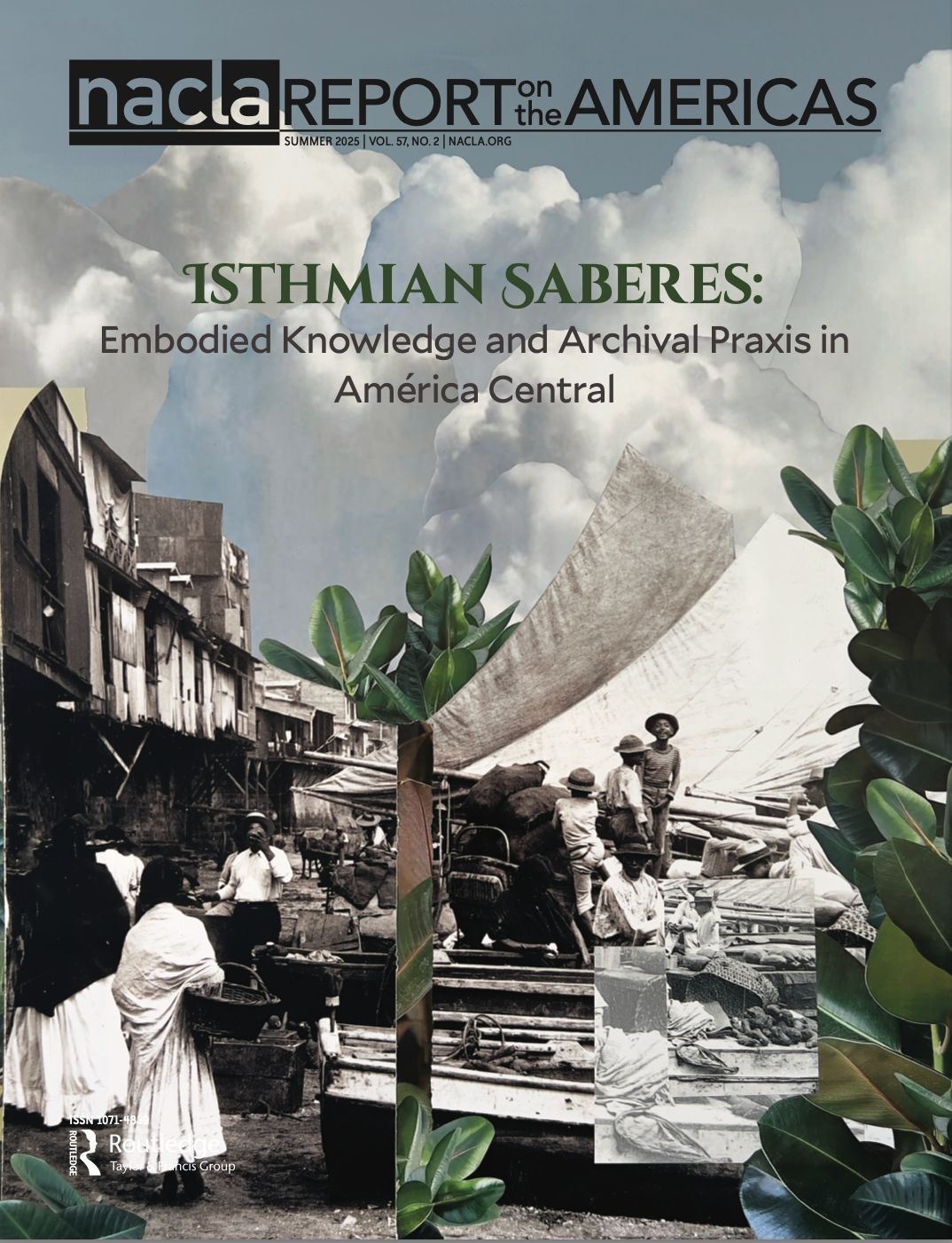
| The Summer 2025 issue of the NACLA Report is out! Guest edited by Kaysha Corinealdi, Jorge E. Cuéllar, and Paul Joseph López Oro, this issue explores the myriad forms by which Central Americans produce the region and its knowledge systems, centering ongoing contestations over memory, history, and self-description in the pursuit of belonging and the articulation of collective futures. The deadline to become and annual subscriber and receive this issue has passed, but you can order an individual copy for $18 using this form. Please also consider making a donation to help sustain this work. |
| | |
|
| | | | | | | | | | 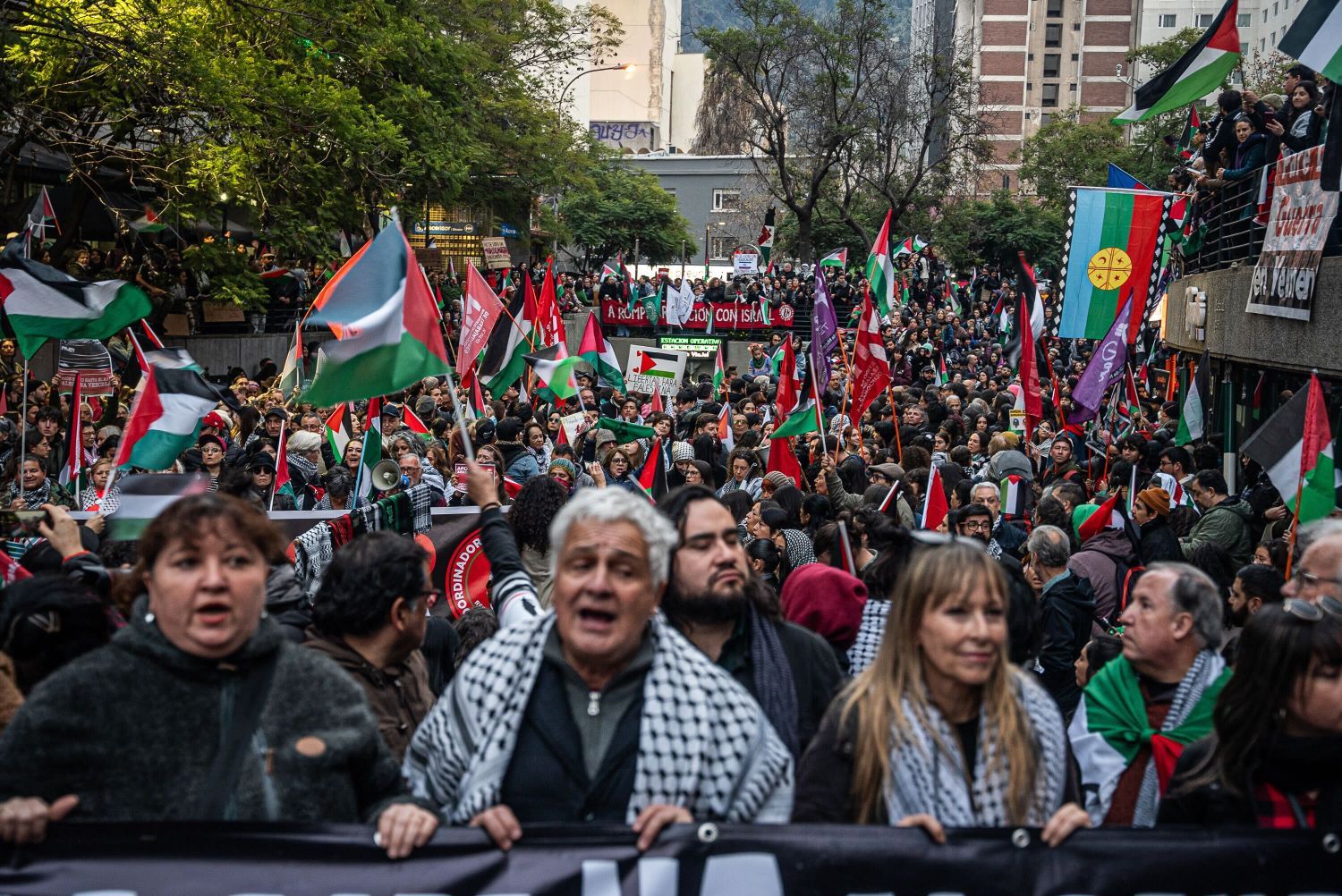 | On June 14, upwards of 15,000 Chileans gathered in Santiago as part of the "Global March to Gaza." Protesters demanded the Chilean government do more to cut ties with Israel and denounced the ongoing genocide in Gaza. (Nicole Kramm) |
|
|
| | | -
CHILEAN LEFT TO VOTE IN PRIMARY— On Sunday, Chile’s progressive coalition, the Unity for Chile Pact, will hold a primary to choose its candidate for the country’s November presidential election. The two frontrunners—Social Democrat Carolina Tohá and Communist Party member Jeanette Jara—are both former ministers in President Gabriel Boric’s administration. They are joined by two lawmakers in Chile’s lower house: Gonzalo Winter, a staunch Boric defender, and Jaime Mulet. Tohá, a former student activist who helped usher in Chile’s return to democracy, served as Interior Minister until March and has long been seen as the favorite. But Jara, the former Minister of Labor credited with advancing wage increases and shortening the workday, has recently narrowed the gap. Regardless of the outcome, the left will face an uphill battle against a resurgent Chilean Right. Currently, Evelyn Matthei, a center-right mayor, and José Antonio Kast, a far-right populist lawyer, are leading the polls. -
A NEW CONSTITUTION IN COLOMBIA?—Colombian President Gustavo Petro announced last week that a referendum on convening a Constituent Assembly to rewrite the country’s constitution would be on the ballot for next year’s legislative elections. The move, immediately denounced by critics as “authoritarian,” came in the same tweet celebrating the passage of his flagship labor reform. While Petro said he would withdraw an earlier decree calling for a popular referendum on his reforms, he upped the ante in his tweet by proposing a new constitution. Drawing on the legacy of the “séptima papeleta” (seventh ballot), the student-led initiative that helped secure the rewriting of Colombia’s constitution in 1991, the government has framed this as the “octava papeleta.” But the proposal faces serious roadblocks: the same Congress that has so far blocked much of Petro’s agenda would have to approve the constituent assembly. While the administration has argued there are other legal means through which to convene an assembly, analysts have speculated the announcement may be more about generating popular support ahead of the 2026 elections. Hasty denunciations of “castro-chavismo” aside, any new constitution would take effect only after Petro leaves office. |
|
|
| -
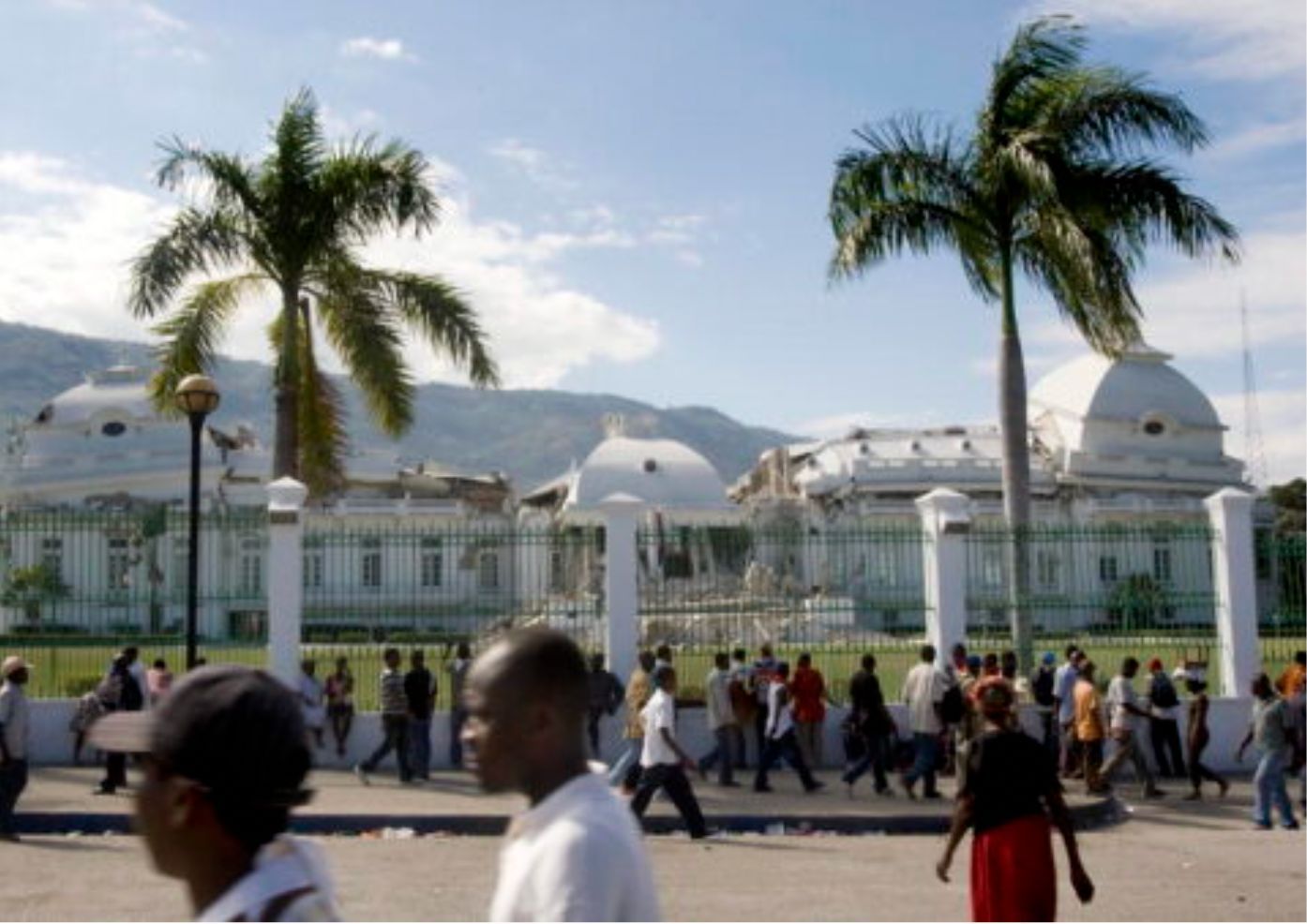
MERCENARIES IN HAITI—The head of Haiti’s Transitional Presidential Council acknowledged for the first time last Friday that his government is relying upon foreign military contractors to fight the country’s gangs. In an interview with local journalists, Fritz Alphonse Jean confirmed the arrangement but provided few details. Local human rights groups have long demanded transparency, especially after it came to light that Erik Prince, the founder of the private security company Blackwater, was involved in a secret task force that deployed drones to kill gang members.The use of drones, which alerted citizens to the probable role of mercenaries, is ineffective, costly, and most likely illegal. The government’s admission comes at a time of extreme fragility: the transitional council is wracked by infighting, gangs control up to 90 percent of the capital Port-au-Prince, and the fate of the Kenyan-led Multinational Security Support mission is uncertain as the United States debates cutting its funding. -
EL SALVADOR’S CRACKDOWN—A Salvadoran judge ruled Tuesday that Enrique Anaya, a lawyer and prominent critic of President Nayib Bukele, must remain in jail as his trial for alleged money laundering proceeds. Anaya was detained by police days after calling Bukele a “dictator” on live television. A different judge issued a similar ruling weeks earlier in the case of human rights lawyer Ruth López, who is currently in jail awaiting trial on charges of illegal enrichment. While the government targets its critics, it turns a blind to the corruption within its own ranks. Two weeks ago, Propublica released a bombshell investigation alleging that Bukele interfered with U.S.-led efforts to prosecute MS-13 gang members in order to conceal his own secret negotiations with the gang. He then offered U.S. authorities access to his high-security prison, CECOT, in exchange for the return of prominent gang leaders, including “El Greñas,” who is currently detained there. According to El Faro, the Trump administration is now attempting to drop charges against other MS-13 leaders—captured through its own task force—to facilitate their swift deportation. In related news, a federal appeals court ruled this week that the Trump administration must facilitate the return of Jordin Melgar-Salmeron, a Salvadoran man whose deportation had previously been blocked. |
|
|
|
|
|
|
| | | North American Congress on Latin America
53 Washington Sq South, Fl. 4W | New York, New York 10012
(212) 992-6965 | [email protected] |
| |
|
| |
|
|