Colombia, Latin America’s third-biggest country by population and home to one of its few remaining progressive governments, heads to the polls Sunday for a presidential runoff. The contest pits far-right lawyer and businessman Abelardo de la Espriella—the surprise winner of the first round—against leftist senator and human rights activist Iván Cepeda. If polling is to be believed, De la Espriella is the clear favorite, a result that would mark a major setback for the region’s progressive project. Voting is already underway.
De la Espriella has steadilygained groundin recent months through an aggressive campaign centered on security and his self-promotion as an “outsider.” In many ways, he represents the arrival in Colombia of an extremely online, anti-woke, MAGA-aligned global far right that departs from the country’s traditional conservatism. His promises to drastically slash the state budget echo Argentina’s Javier Milei; his military patriotism and appropriation of the national soccer jersey channel Brazil’s Jair Bolsonaro; and, most visibly, his aesthetic and pledge to construct mega-prisons mirror the political style of Salvadoran strongman Nayib Bukele, to whom he is frequently compared. Like many of these leaders, he has also run a brash campaign rooted in open misogyny—he comments frequently on the size of his testicles—a defense of "traditional values,” railing against abortion, LGBTQIA+ rights, and “gender ideology,” and attacks on the press and his political rivals, at one point, vowing to “disembowel” the Left.
Yet while the bluntness of his rhetoric is novel, De la Espriella's roots are deeply Colombian, and there is less distance between him and “traditional” conservatives like former President Álvaro Uribe than has often been suggested. His hypermasculine, militaristic, and business-friendly politics are less a departure than an extension of a Colombian Right that has long occupied the region’sfar-right edge. This continuity matters not only because, like Uribe, the “populist” label fits him awkwardly, but because it offers a glimpse of what a far-right victory could mean for Colombia. Indeed, De la Espriella considers Uribe a longtime friend, a fact made less surprising given that he first gained prominence—and wealth—by representing the same narco-trafficking and paramilitary elites that formed a crucial pillar of Uribe’s coalition.
Cepeda, by contrast, rose to prominence as an activist and human rights defender opposing those very criminal networks. The son of a politician who was assassinated by state-backed paramilitaries, Cepeda has proposed addressing Colombia’s armed conflict through structural reforms to reduce inequality and negotiations with criminal groups, a continuation of President Gustavo Petro’s “Total Peace” strategy, which Cepeda in large part designed but has so far failed to achieve its objectives. While his campaign emphasizes agrarian reform, equitable development, environmental protection, and social welfare, since narrowly losing the first round he has moderated some proposals in hopes of attracting centrist voters—a vanishingly small portion of the electorate whose leading figures have largely responded to the imminent threat of rising fascism by criticizing the Left and attaching conditions to their support.
Though the Trump administration has intervened less directly than in other regional elections—only endorsing De la Espriella after the first round and making fewer explicit threats against left-wing voters, the specter of the U.S. involvement looms large. In recent weeks, it has escalated its interventions, even targeting left-wing Colombians living in the United States for deportation, as in the case of Beto Coral, whom De la Espriella supporters had targeted online. In response, a group of Democratic lawmakers sent a letter on Wednesday denouncing the Trump administration’s “brazen interference” in Colombian affairs and calling for an investigation into De la Espriella and his close ties to paramilitary groups. As with other regional adherents to the “Donroe Doctrine,” however, his open praise for Trump and promise to ramp up attacks on drug trafficking organizations will likely shield him from scrutiny. If the far-right wins, analysts expect the United States to play a much larger role in Colombia’s security policy.
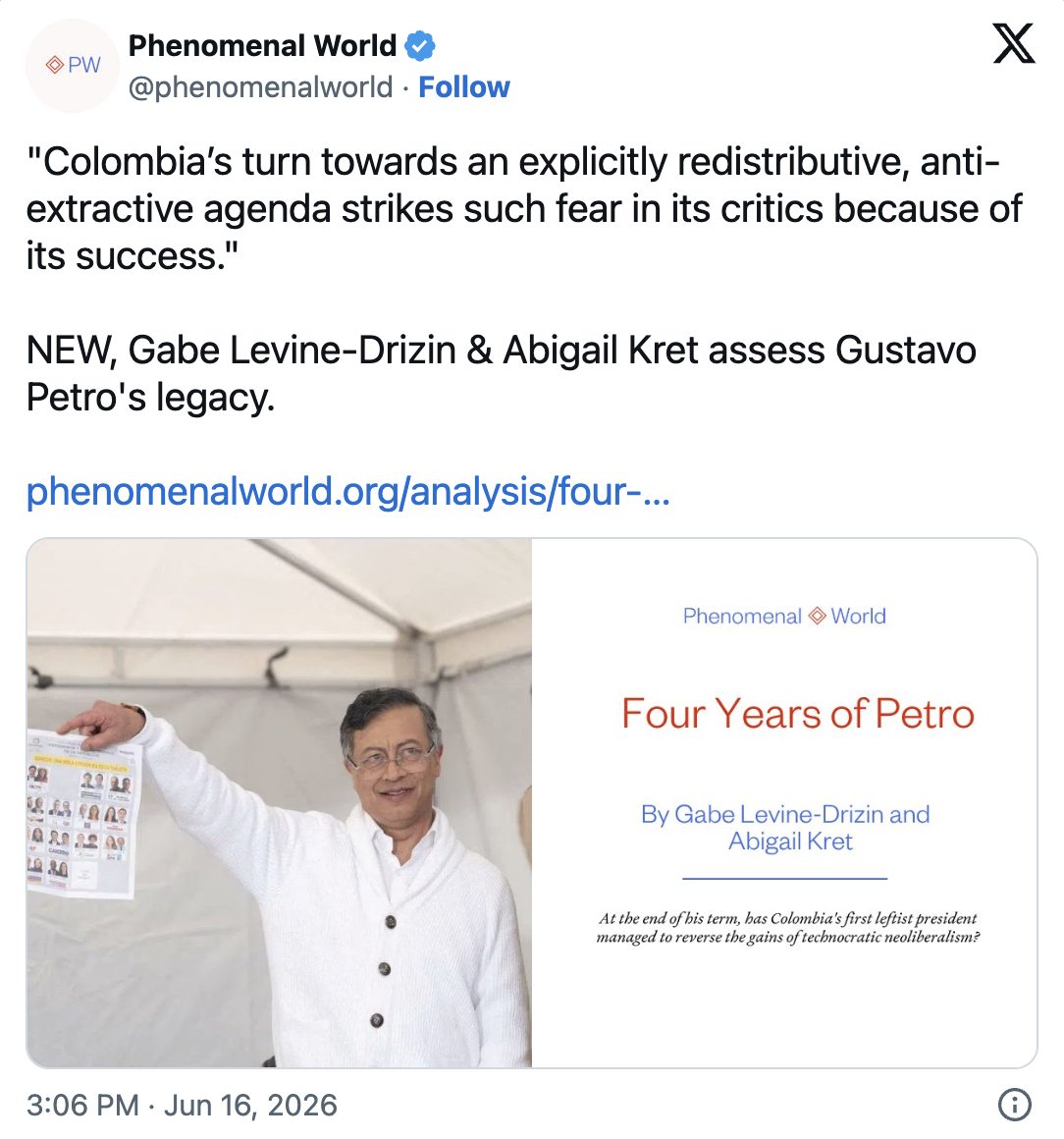
Security, though a leading factor, is not the only concern; the economy, too, is on voters’ minds. Here, however, the left should have an advantage. Despite right-wing warnings of imminent economic collapse if Cepeda wins, four years of progressive governance have left Colombia with a stable economy, declining poverty, and rising wages. Just this week, a coalition of international economists praised Petro’s stewardship of an “economy of life,” an approach Cepeda has largely promised to continue ina more moderate form.
The stakes of Sunday’s election are massive for Colombia and the region writ large. Will the country vote for a return to the days of “Plan Colombia” and the militarization of society, or can the left persuade enough people that it can deepen the structural changes already underway while offering new solutions to an armed conflict that it has yet to resolve?
Since its founding in 1967, NACLA has worked to expose and oppose U.S. intervention in Latin America. In the face of lies and propaganda generated by the U.S. government, and a mainstream media often complicit in legitimizing U.S. actions, NACLA has sought to be a source of reliable information about the facts on the ground.
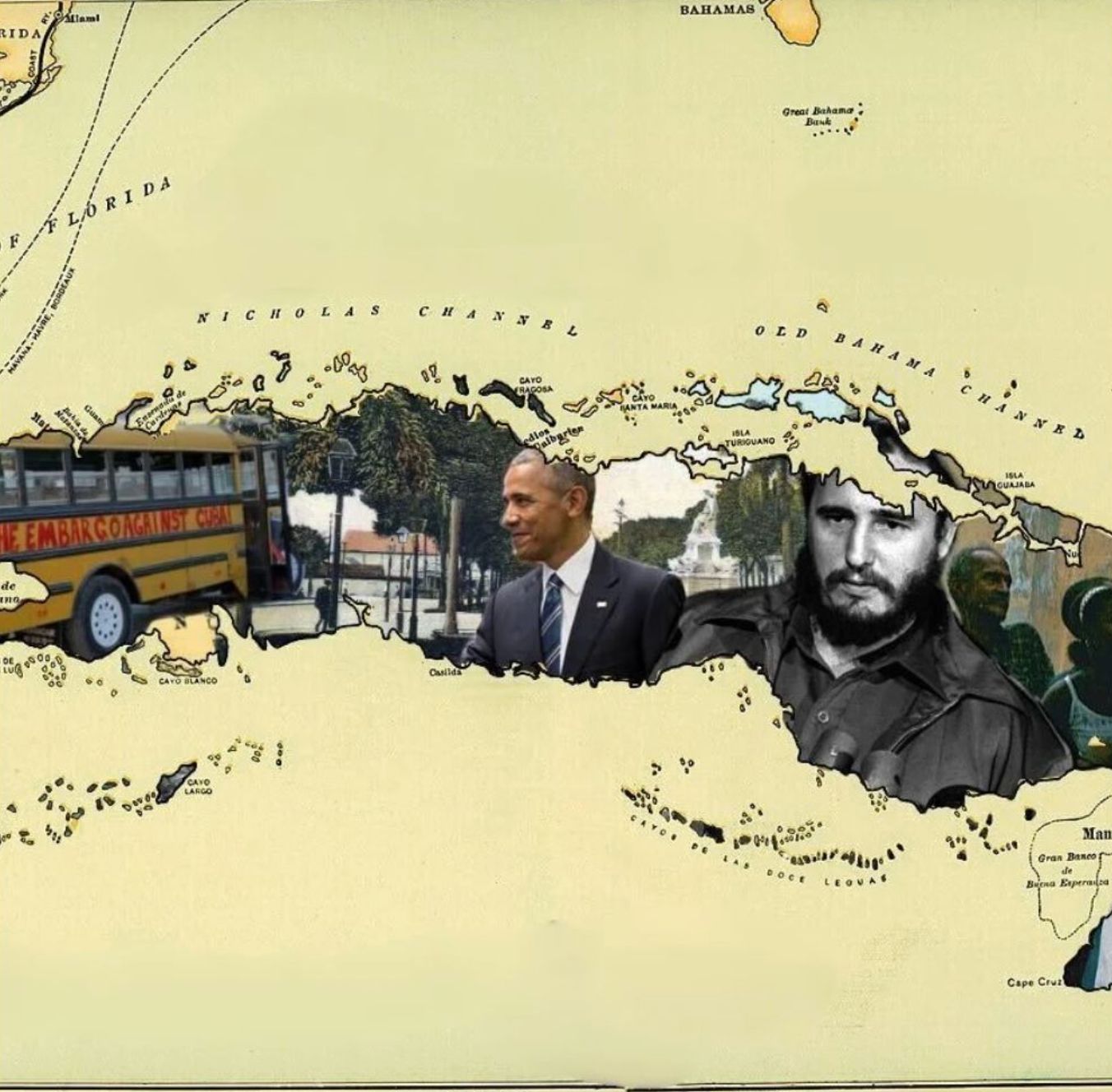
In this dossier of more than 30 articles, special print issues, and exclusive web series, NACLA's editors have curated a guide that touches on some of the most salient issues in recent Cuban history, including six decades of U.S.-led war, Cuba's role on the global stage, the Obama ‘thaw," the July 11 Protests, the role of the diaspora, and more.
HELP US WITH OUR ARCHIVES
NACLA seeks a NYC-based undergraduate or graduate student to support an archival and public history project. As the NACLA Report on the Americas approaches its 60th anniversary, we are activating our rich archives to reach new audiences, develop educational resources, and celebrate six decades of left political analysis, reporting, and cultural criticism on Latin America and the Caribbean.
The digital archiving intern will work in collaboration with NACLA’s development associate and editorial team to help organize, digitize, and activate NACLA’s physical archive. Responsibilities will include cataloguing political primers from the 1960s and 70s, creating a digital archive of NACLA cover artwork, and conducting archival research to identify articles, photographs, illustrations, and ephemera for use in our 2027 anniversary programming.
This is an in-person internship, based at NACLA’s office at New York University, requiring approximately 5–10 hours per week (July or September start). We encourage students to seek course credit and/or funding from their educational institution for the internship as part of their studies.
To apply, please email [email protected] with a resume and a brief summary by June 21 describing your interest in archival research, movement history, and/or Latin America and the Caribbean.
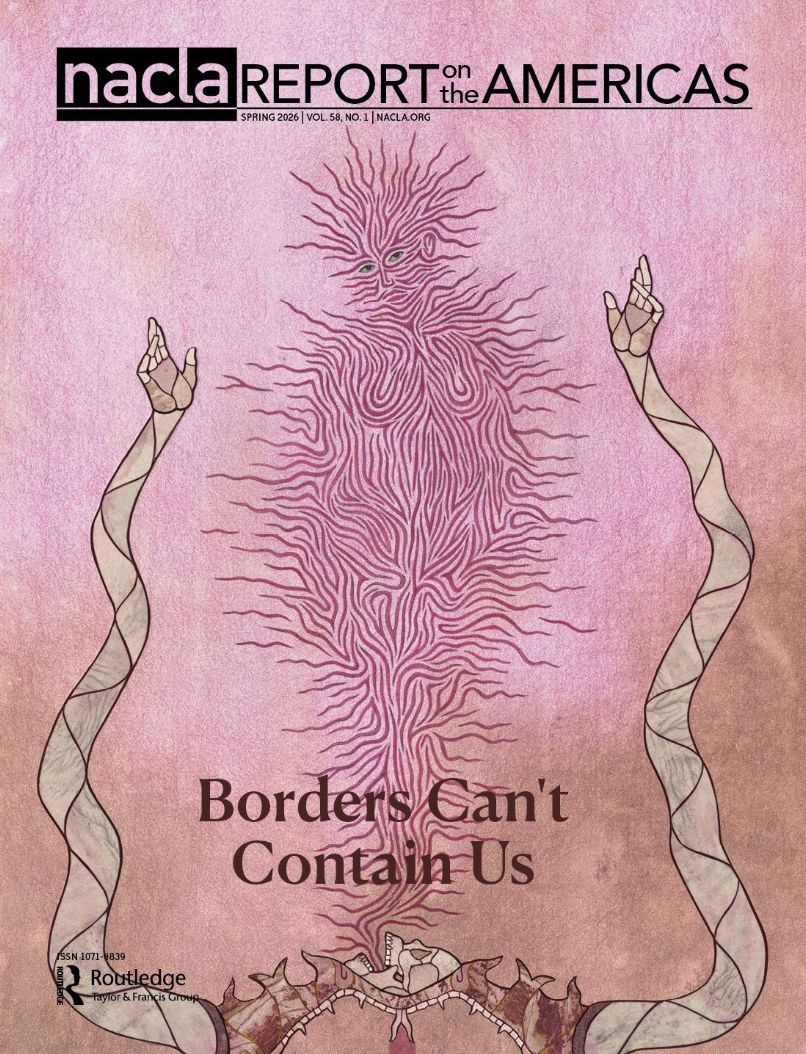
PURCHASE OUR SPRING ISSUE!
This issue of the NACLA Report examines the consolidation of a hemispheric bordering regime whose violence now extends far beyond any single boundary line. Across the Americas, border enforcement operates through infrastructure projects, detention systems, policing practices, and migration controls that reshape everyday life within and across national territories.
Take advantage of this special offer to purchase an individual issue of "Borders Can't Contain Us."
Offer valid for U.S.-based addresses only and while supplies last. Readers outside the United States may contact us at [email protected] to inquire about international shipping options.
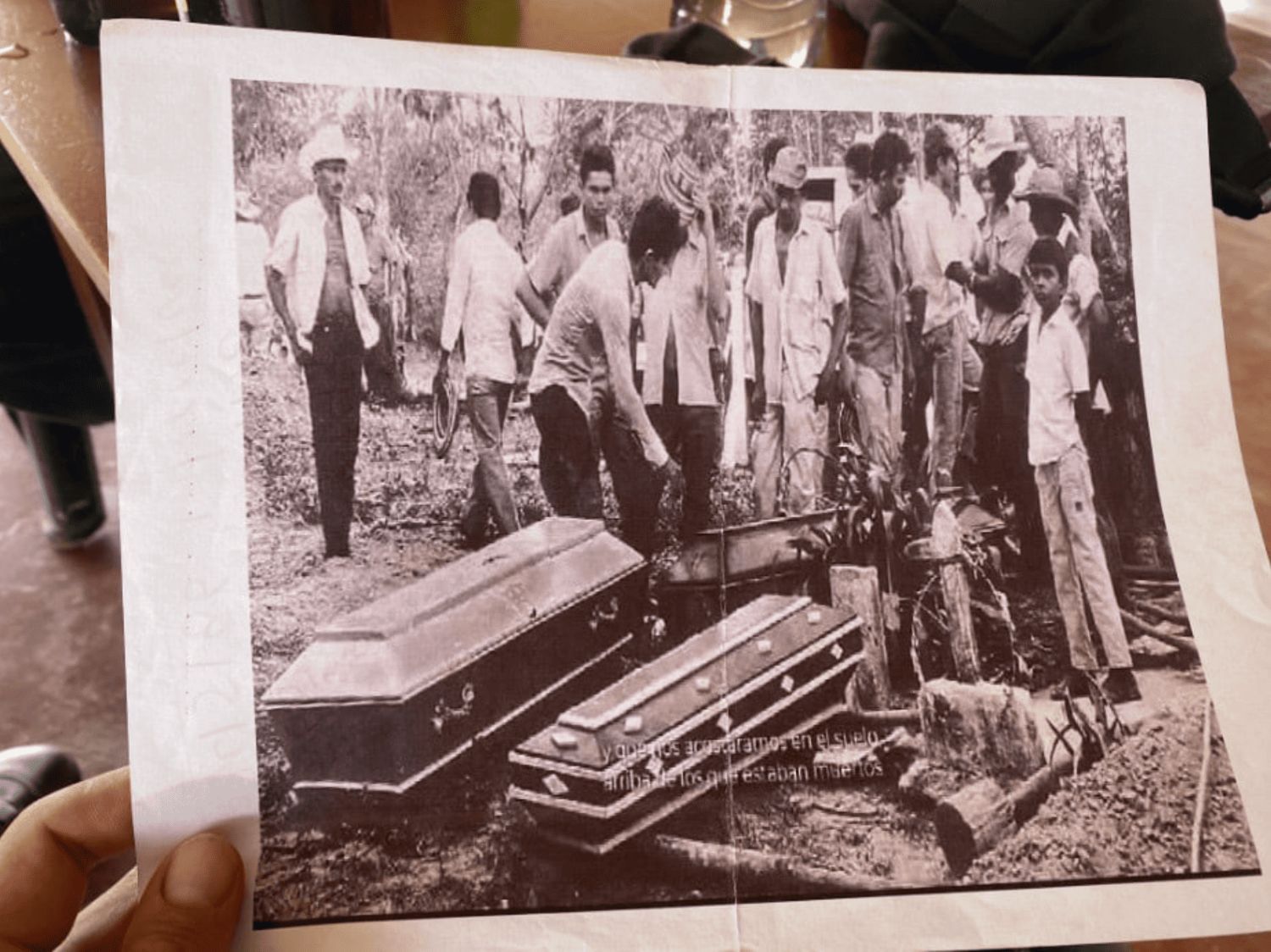
A far-right victory in upcoming elections could reverse hard-fought gains for victims of the armed conflict, including survivors of one of Colombia’s most notorious paramilitary massacres ...
IMAGE OF THE WEEK
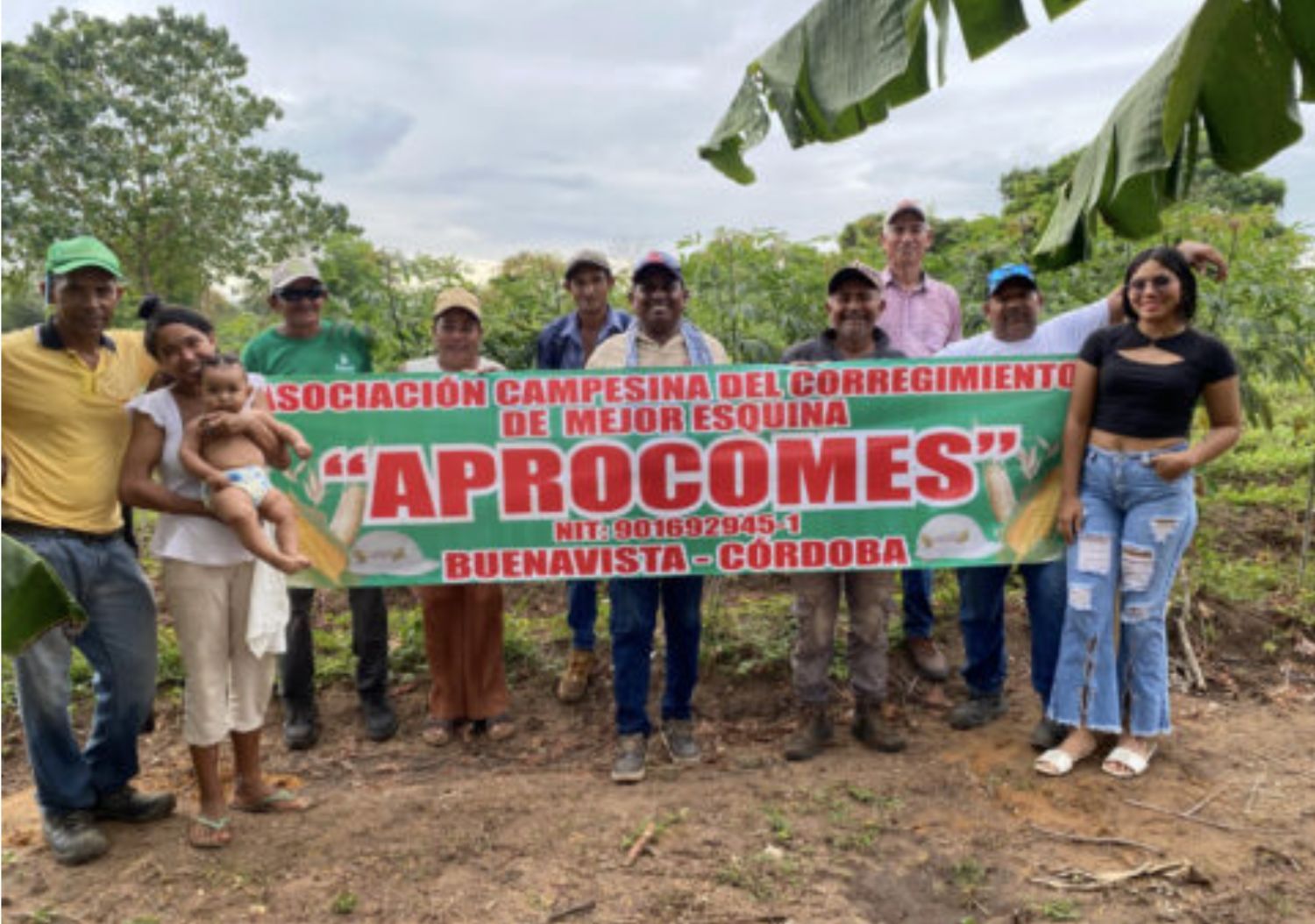
A picture from the funeral of the victims of the La Mejor Esquina massacre in Colombia. Read more about it, and the stakes of the country's upcoming election, in Pior Wojciak Pleyn's recent article, "Colombia’s Land Reform is At Stake." (Pior Wojciak Pleyn)
AROUND THE REGION
CUBA’S REFORMS—An emergency economic planapproved by Cuba’s powerful Communist Party earlier this week was officially presented to lawmakers on Thursday, where it was unanimously approved. The reform package, which includes more than 175 measures that expand the role of private enterprise and reduce that of the state, marks the most significant overhaul of Cuba’s socialist model since the 1959 Revolution. While presented by Prime Minister Manuel Marrero as faithful to socialist principles and merely aimed at improving quality of life, his assertion that the market can serve as an “instrument for the efficient allocation of resources” signals a major ideological concession. The shift reflects mounting pressure from the Trump administration, whose crushing oil blockade has starved the island and its people of crucial resources, leading to shortages of medicine and food, skyrocketing mortality rates, and cancelled surgeries. At the same time, constant threats of U.S. military intervention have left Cubans on edge, while Trump and his allies have explicitly demanded changes to Cuba’s economic model as a condition for lifting the blockade.
ANOTHER BOLSONARO CONVICTED—Eduardo Bolsonaro, a former lawmaker and son of Brazil’s former far-right President Jair Bolsonaro, has been sentenced to four years and two months in prison by the country’s Supreme Court, though he currently lives in the United States and is unlikely to return anytime soon. He was convicted on charges of coercion stemming from his attempts to lobby the Trump administration to interfere in his father's trial over his failed 2022 coup attempt, which ended with Jair Bolsonaro receiving a sentence of more than 27 years in prison. The justices—including Alexandre de Moraes, who the Trump administration once sanctioned for overseeing the case—ruled unanimously that Eduardo’s lobbying was illegal and far exceeded his role as a legislator. The effort nevertheless had consequences: the United States imposed a 50 percent tariff on many Brazilian goods, and Trump denounced that trial as a “witch hunt.” Flávio Bolsonaro, Eduardo’s brother, is currently the Brazilian right’s leading presidential candidate, though he is trailing President Luiz Inácio “Lula” da Silva, who is seeking an unprecedented fourth term. On Wednesday, Lula warned the Trump administration not to meddle in the country’s October elections.
PERU’S NEW PRESIDENT?—Though Peru’s electoral authorities are still reviewing disputed ballots, most analysts and many prominent outlets now view far-right candidate Keiko Fujimori as the country’s next president. Left-wing candidate Roberto Sánchez briefly appeared destined for victory after the June 7 runoff vote on June 7, but Fujimori steadily gained ground as overseas ballots—where she performed overwhelmingly well—were counted. With the remaining contested votes coming largely from conservative strongholds, Sánchez is unlikely to overcome the current gap of around 37,000 votes. The unusually slow vote count has fueled accusations of fraud. Sánchez and his supporters have twice taken to the streets to “defend the vote,” and another major march is planned for Friday. Analysts, however, have pointed out a distinction between raising legitimate concerns about the electoral process—like Sánchez’s challenge to the handling of foreign ballots—and alleging widespread fraud, a claim he has so far stopped short of making. Fujimori, by contrast, argued her 2021 loss to left-wing President Pedro Castillo was fraudulent, relying in part on racist characterizations of his supporters to further her claims.
ECUADOR’S ONGOING “STATE OF EMERGENCY”—Ecuador’s far-right president Daniel Noboa declared a new 60-day state of emergency on Tuesday covering three municipalities and 10 of the country’s 24 provinces. The decree suspends key constitutional rights, including protections against warrantless searches, and grants police and the Armed Forces expanded powers in the name of combating rising crime. Ecuador has now spent nearly 900 days under some form of emergency rule, despite Noboa’s promise to international observers in May that he would not renew the state of emergency. Beyond tearing away at the fabric of Ecuador’s increasingly fragile democracy, these decrees have failed miserably to curb drug-related violence. More than 9,000 people were murdered in 2025, a 32 percent jump from 2024 and by far the deadliest year in Ecuador’s history. Noboa’s other hardline tactics, including joint strikes with the U.S. military and the construction of mega-prisons, have likewise failed to stem the violence while contributing to human rights abuses and attacks on civilians. Even so—or perhaps because of his punitive approach— Noboa’s “war” on crime is seen as a model by the Trump administration, which once again played host to the Ecuadorian leader at the Pentagon this week.