| |  | | Last Friday, federal immigration officials launched coordinated workplace raids at four businesses in Los Angeles, arresting more than 40 immigrant workers. In response to the arrests, crowds attempted to block the armored vans from leaving with the detainees and later encircled a federal building downtown where they were being held. The violent police crackdown that ensued, and President Trump’s subsequent call for the National Guard to intervene, set the stage for an escalation of tensions—fueling mass protests in Los Angeles and beyond and putting active duty troops on U.S. streets. Among those swept up in the initial raid at Ambiance Apparel was a tight-knit community of workers from a Mexican indigenous community, as well as labor union leader David Huerta who was beaten and charged with a felony for attempting to obstruct ICE officials. Many family members of those detained still have no information as to the whereabouts of their loved ones; others only learned days later that their loved ones had already been deported. The raids reflect a concerted shift in the Trump administration’s immigration enforcement tactics: targeting workplaces and law-abiding residents rather than the “hardened criminals” and international students the government had claimed were its priority (although a large percentage of deportees have never been accused of any crime other than crossing the border). The escalation has triggered fierce backlash from communities rooted in migrant labor. In Los Angeles, protesters erected barriers to block ICE vehicles, clashed with police, and damaged law enforcement vehicles as they confronted tear gas, stun grenades, rubber bullets, and aggressive officers on horseback. At least 20 journalists have been injured, including at least five that required medical attention. The actions have continued, although the imposition of a curfew and mass mobilization of troops have brought fewer people to the streets. Taking inspiration from Los Angeles, demonstrations have spread to cities across the country, including New York, Austin, Philadelphia, Seattle, San Francisco, and Chicago, with thousands of protesters demanding an end to the raids and the abolition of ICE. A major nationwide “No Kings” rally is planned for Saturday. Amid calls for “non-violence,” opportunistic politicians have fixated on the preponderance of Mexican and Central American flags at the protests. While this is nothing new, especially in heavily Latino cities like LA, the symbolism has ignited diplomatic tensions. The Mexican flag, especially, has become a potent symbol of the resistance. On Tuesday, Kristi Noem, head of the Department of Homeland Security, accused Mexican President Claudia Sheinbaum of “encouraging violent protests.” Sheinbaum called the charges "absolutely false.” As protesters resist in the streets, a quasi-constitutional crisis is playing out in the courts. California Governor Gavin Newsom sued to block the Trump administration’s deployment of federal troops and their direct role in immigration raids—actions far beyond their original justification to “protect property.” While a federal judge ruled Thursday that the government had illegally seized control of California’s troops and ordered their control returned to the state, an Appeals Court immediately agreed to stay the ruling as it deliberates the federal government’s appeal, leaving the guard under federal command for now. The Marines, meanwhile, remain untouched by the ruling. ICE raids have continued nationwide, with agents arresting migrants at churches, hospitals, workplaces, and immigration courtrooms. Additional states, like Texas, have also deployed National Guard troops to quell protests. Meanwhile, the NACLA office received an ominous voicemail this week: a recording of the 1990 Vanilla Ice song "Ice Ice Baby" from an anonymous caller. |
| |
|
|
|
| | | | | | | PURCHASE YOUR COPY OF "ISTHMIAN SABERES" |
|
|
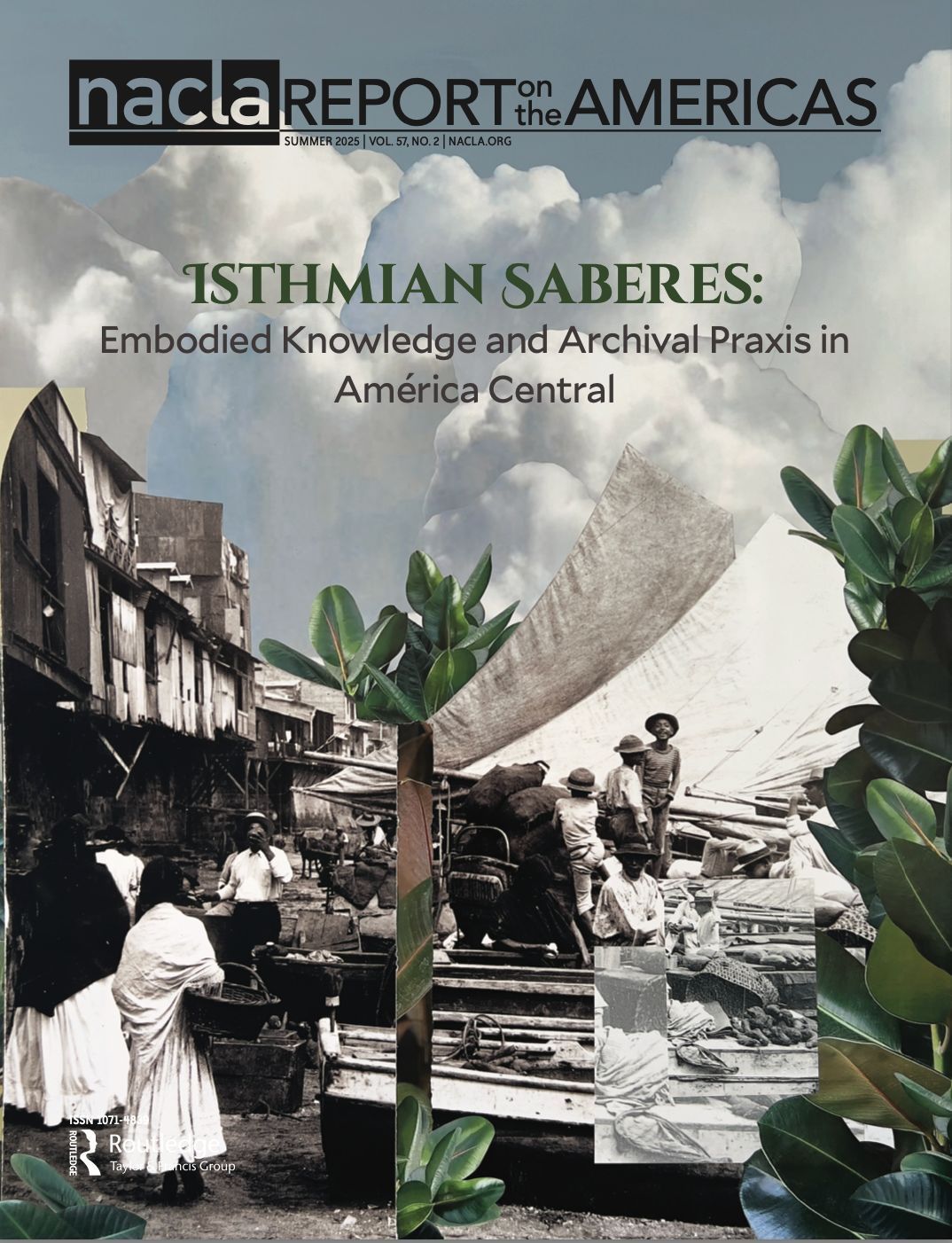
| The Summer 2025 issue of the NACLA Report is out! Guest edited by Kaysha Corinealdi, Jorge E. Cuéllar, and Paul Joseph López Oro, this issue explores the myriad forms by which Central Americans produce the region and its knowledge systems, centering ongoing contestations over memory, history, and self-description in the pursuit of belonging and the articulation of collective futures. The deadline to become and annual subscriber and receive this issue has passed, but you can order an individual copy for $18 using this form. Please also consider making a donation to help sustain this work. |
| | |
|
| APPLY TO BE OUR FALL INTERN! |
| |
|
| NACLA offers a 5-10 hour/week internship opportunity for students who will receive course credit and/or funding from their educational institution for the internship. This opportunity is ideal for undergraduate students with an interest in alternative media, non-profit operation, and left politics and history in Latin America and the Caribbean. For more details on the internship, read here. To apply, please email [email protected] with a resume and a brief summary of why you are interested in working with NACLA by June 14. |
|
|
| | THIS WEEK: SPANISH PIECES FROM THE PRINT MAGAZINE |
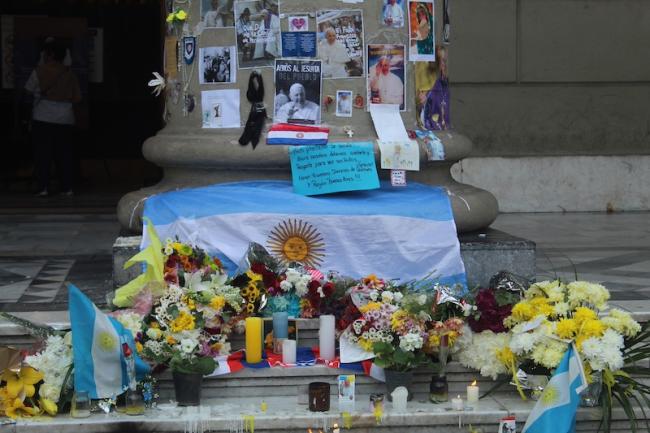
| | | | | El Legado del Papa Francisco Daniel Cholakian | June 9, 2025 El primer Papa latinoamericano desafió la tradición y el poder católico con una doctrina de humildad e inclusión, volviendo a centrarse radicalmente en los pobres y marginados. |
|
|
| | | | 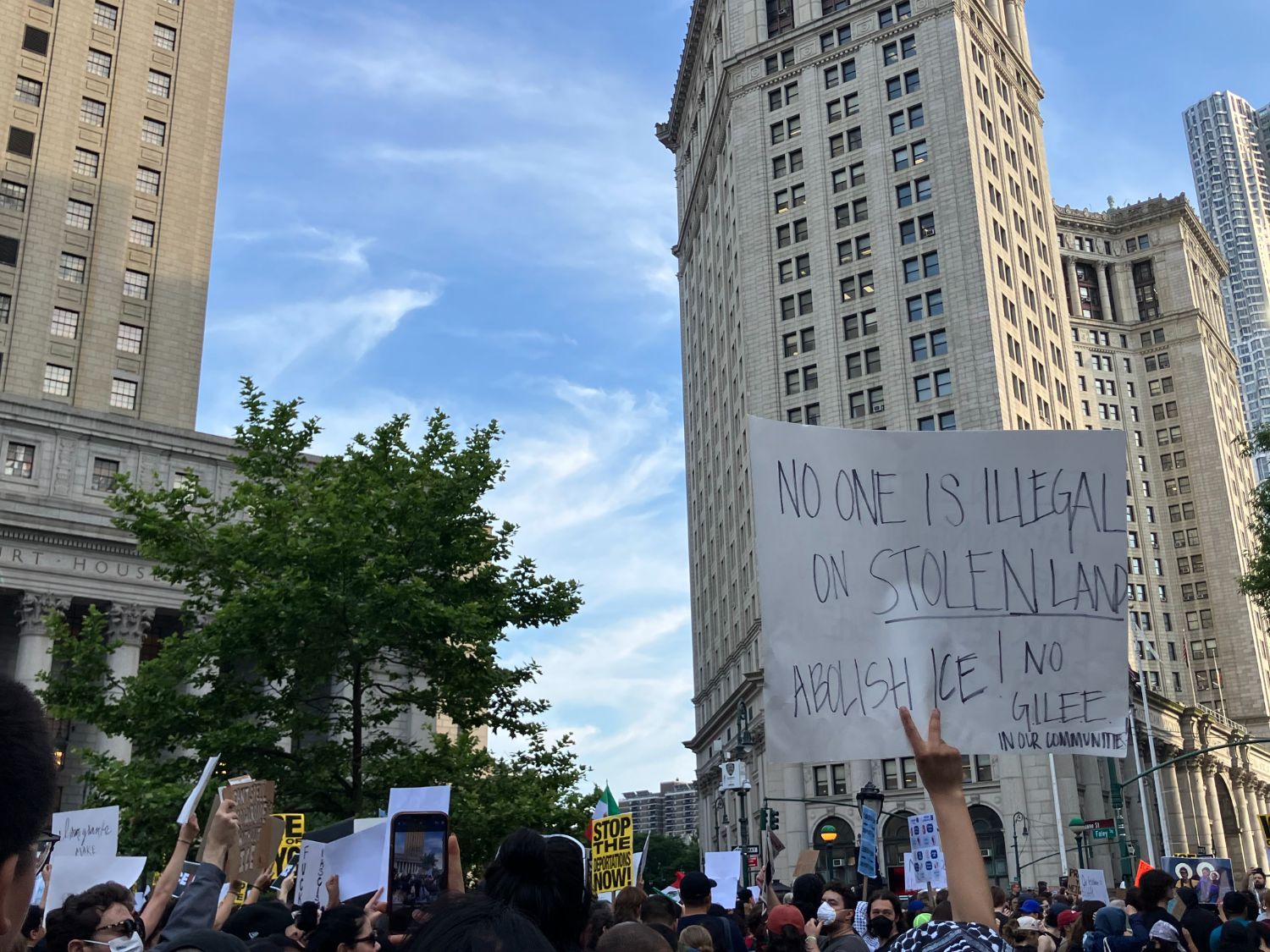 | On Tuesday, thousands of New Yorkers took to Foley Square in Lower Manhattan to protest President Trump's escalating immigration crackdown. After the initial march, protesters rallied outside a nearby federal building and attempted to prevent ICE vans from departing with deportees. The police responded by cracking down on protesters, arresting more than 80 people, and firing smoke bombs. (Gabe Levine-Drizin) |
|
|
| | | -
KIRCHNER SENTENCED TO JAIL — On Tuesday, Argentina’s Supreme Court upheld former President Cristina Fernández de Kirchner’s corruption conviction, sentencing her to six years in prison and barring her from holding political office for life. The ruling triggered massive protests across the country and came just a week after Kirchner announced her candidacy for a seat in the Buenos Aires legislature—a relatively minor position that would have granted her some legal protection. A mainstay of 21st century Argentine politics, Kirchner served as first lady from 2003 to 2007, president from 2007 to 2015, and vice president from 2019 to 2023. She oversaw large reductions in poverty and inequality and left office with an approval rating well over 50 percent. Yet, worsening economic conditions, relentless media attacks, and scores of criminal accusations—widely seen as baseless—created a political atmosphere so polarized that in 2022 she was the target of a failed assassination attempt. That same year, she was convicted of allegedly directing public works projects to a friend, the basis for Tuesday’s ruling. Kirchner, who is expected to serve her sentence under house arrest, criticized the rulings as politically motivated. President Javier Milei, currently on a trip to Israel, tweeted: “Justicia.” -
PROTESTS IN BOLIVIA TURN DEADLY — On Thursday, the Bolivian government announced that three police officers and one civilian were killed in clashes between state forces and supporters of former President Evo Morales. The protests, which began in early June, are largely centered on frustrations over the country’s economic crisis and Morales’s disqualification from the country's upcoming August elections. Chanting “Without Evo, there are no elections,” protestors have disrupted major supply routes and brought sectors of the economy to a standstill—most recently in the mining municipality of Llallagua, where this week’s deadly confrontation occurred. According to the government and local reporting, riot police sent to lift the blockade were attacked with stones, handmade explosives, and even sniper fire. Following the violence, the government alleged that the protests had been infiltrated by “narcotraffickers” and “paramilitary groups.” Morales, meanwhile, denounced the government for "criminalizing" protests that he described as “just and legitimate.” |
|
|
| -
POLITICAL VIOLENCE IN COLOMBIA — A wave of political violence in Colombia this week has prompted fears over the country’s potential return to the large-scale conflicts of previous decades. On Saturday, right-wing presidential candidate Miguel Uribe Turbay was shot multiple times at a campaign event in Bogotá by a 14-year old boy. Uribe, who is an outspoken critic of President Gustavo Petro, comes from an esteemed family, including a former president and murdered journalist. He survived but remains in critical condition. Days later, coordinated bomb and gun attacks in Cali and surrounding towns killed seven and wounded more than 50. Analysts blamed a dissident faction of the Revolutionary Armed Forces of Colombia (FARC) known as the FARC-EMC, with whom the government had earlier initiated, then broke peace talks. Opponents of Petro, including U.S. Secretary of State Marco Rubio, were quick to blame the President for the unrest. While the spike in violence is troubling, declarations that Colombia is descending into full-blown conflict are premature—often relying on selective readings of history that obscure the right’s long standing role in fomenting violence and obstructing the structural reforms needed to address its root causes. Speaking in Cali, Petro made this connection explicit when he formally signed a decree to establish a popular referendum on his reforms and labelled them a necessary antidote to violence. -
LULA’S RETREAT ON THE CLIMATE — Months before Brazil is set to host U.N. climate talks in the Amazon, the government is backtracking on key environmental commitments. President Luiz Inácio “Lula” da Silva, who was elected on promises to curb deforestation and restore Brazil’s global climate leadership, has been criticized for pressuring the state’s environmental protection agency (IBAMA) to approve a controversial oil drilling project off the Amazonian coast. Now, his government has gone further. In late May, IBAMA approved a controversial rock-blasting operation to enable year-long river navigation—despite serious ecological concerns, a lack of consultation with Indigenous communities, and opposition from a federal ministry. Government officials nonetheless praised the project. Meanwhile, Brazilian legislators approved sweeping reforms that would severely limit the licensing powers of federal environmental agencies and complicate the demarcation of Indigenous lands. Although members of Lula’s party and cabinet have denounced the bills, he is expected to approve them with only minor adjustments. Adding to the alarm, new data shows Amazon deforestation during the month of May surged 92 percent compared to last year. |
|
|
|
|
|
|
| | | North American Congress on Latin America
53 Washington Sq South, Fl. 4W | New York, New York 10012
(212) 992-6965 | [email protected] |
| |
|
| |
|
|