Keiko Fujimori has reclaimed a razor-thin lead in Peru’s presidential runoff, edging leftist Roberto Sánchez by fewer than 1,000 votes as the painstaking vote count continues. Yet, Peruvians will likely have to wait until mid-July for an official result, when electoral authorities finish reviewing thousands of contested ballots. Whatever the final outcome, the next president will preside over an extremely polarized country and a political system that has proved incapable of producing stable governance.
The uncertainty surrounding Sunday’s runoff is in many ways a reflection of Peru’s broader institutional crisis. The first round of voting in April was characterized by massive delays and allegations of fraud, leading key electoral officials to resign. While it was immediately clear that Keiko Fujimori would advance to the second round, it took more than a month for authorities to confirm that Roberto Sánchez had narrowly secured second place, leapfrogging more established contenders such as former Lima mayor Rafael López Aliaga.
Sunday’s vote, though historically close, followed a familiar pattern in Peru, where elections have increasingly been decided by razor thin margins between polarized left- and right-wing factions. In 2021 leftist Pedro Castillo—a close ally of Sánchez—defeated Fujimori by fewer than 50,000 votes, or around 0.25 percentage points. Castillo’s victory, however, was relatively short-lived: unable to advance his redistributive agenda, he launched a failed self-coup that led to his impeachment and incarceration.
The daughter of former dictator Alberto Fujimori, Keiko entered Sunday’s election having lost three consecutive presidential runoffs, earning her a reputation as Peru’s “biggest political loser.” This time around, however, her coalition has achieved its best performance since 2016. Although Sánchez briefly took the lead this week as votes from remote regions were counted, Fujimori has since gained ground due to her strong performance among Peruvians voting abroad, with her advantage potentially widening as the slow count continues.
Peru’s National Jury of Elections is expected to take weeks to review the large number of contested ballots before issuing a final ruling. For now, both candidates have preached patience, though Sánchez has begun to harden his tone, insisting that “democracy must be defended” and requesting meetings with international observers. Those observers have so far dismissed allegations of fraud and urged Peruvians to await the official results.
Whatever the outcome, Peru’s political crisis is likely to continue. Together, Fujimori and Sánchez garnered less than 30 percent of the first-round vote, meaning the vast majority of Peruvians initially rejected both candidates. Furthermore, nearly 7 million people—roughly a quarter of the electorate—abstained from voting, a figure larger than either candidate’s first-round tally. The new president will also face a new political configuration: for the first time since its abolition by Alberto Fujimori in 1992, Peru will once again have a bicameral legislature, with the return of the Senate adding an institutional check on executive power.
Since its founding in 1967, NACLA has worked to expose and oppose U.S. intervention in Latin America. In the face of lies and propaganda generated by the U.S. government, and a mainstream media often complicit in legitimizing U.S. actions, NACLA has sought to be a source of reliable information about the facts on the ground.
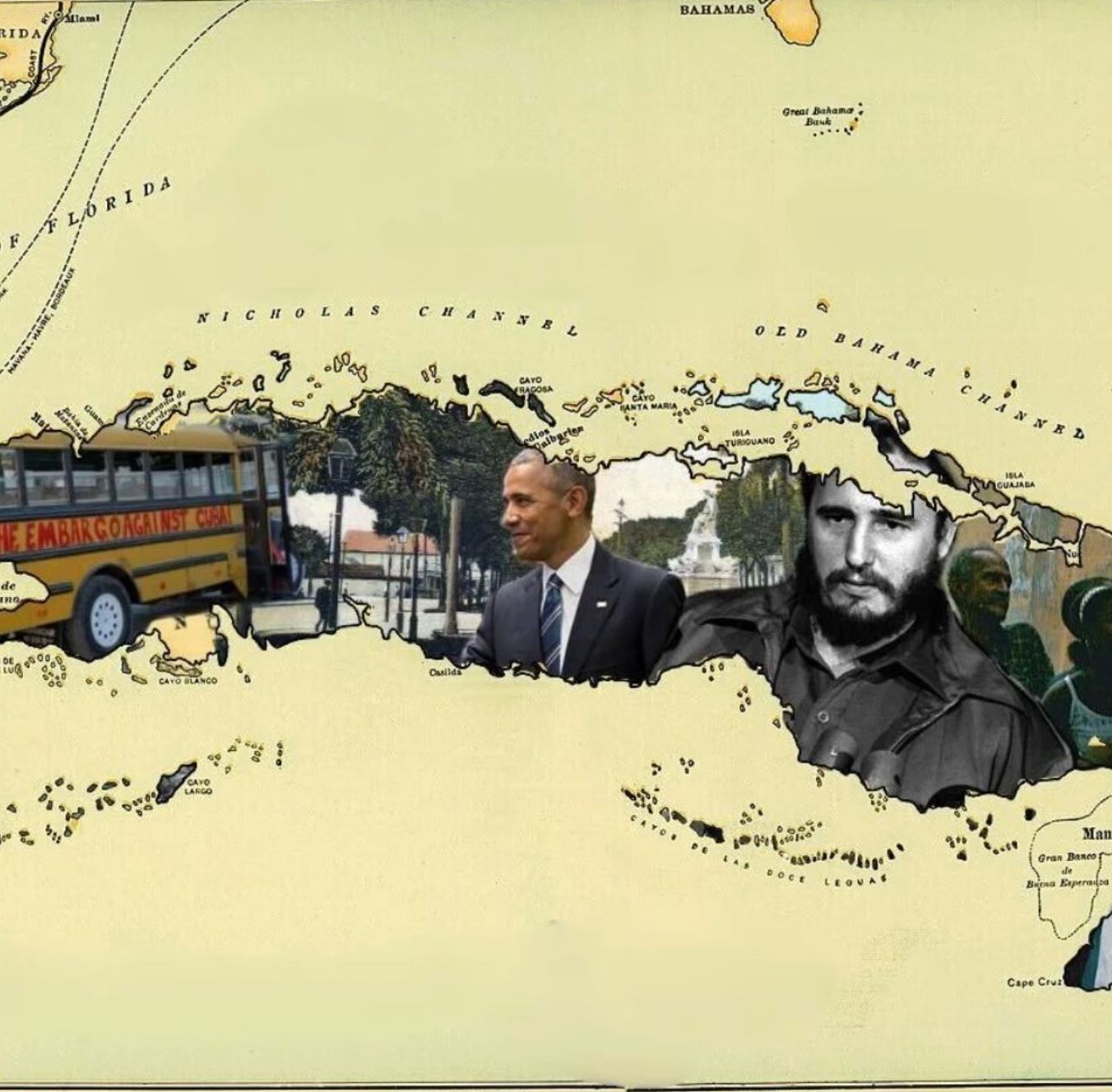
In this dossier of more than 30 articles, special print issues, and exclusive web series, NACLA's editors have curated a guide that touches on some of the most salient issues in recent Cuban history, including six decades of U.S.-led war, Cuba's role on the global stage, the Obama ‘thaw," the July 11 Protests, the role of the diaspora, and more.
HELP US WITH OUR ARCHIVES
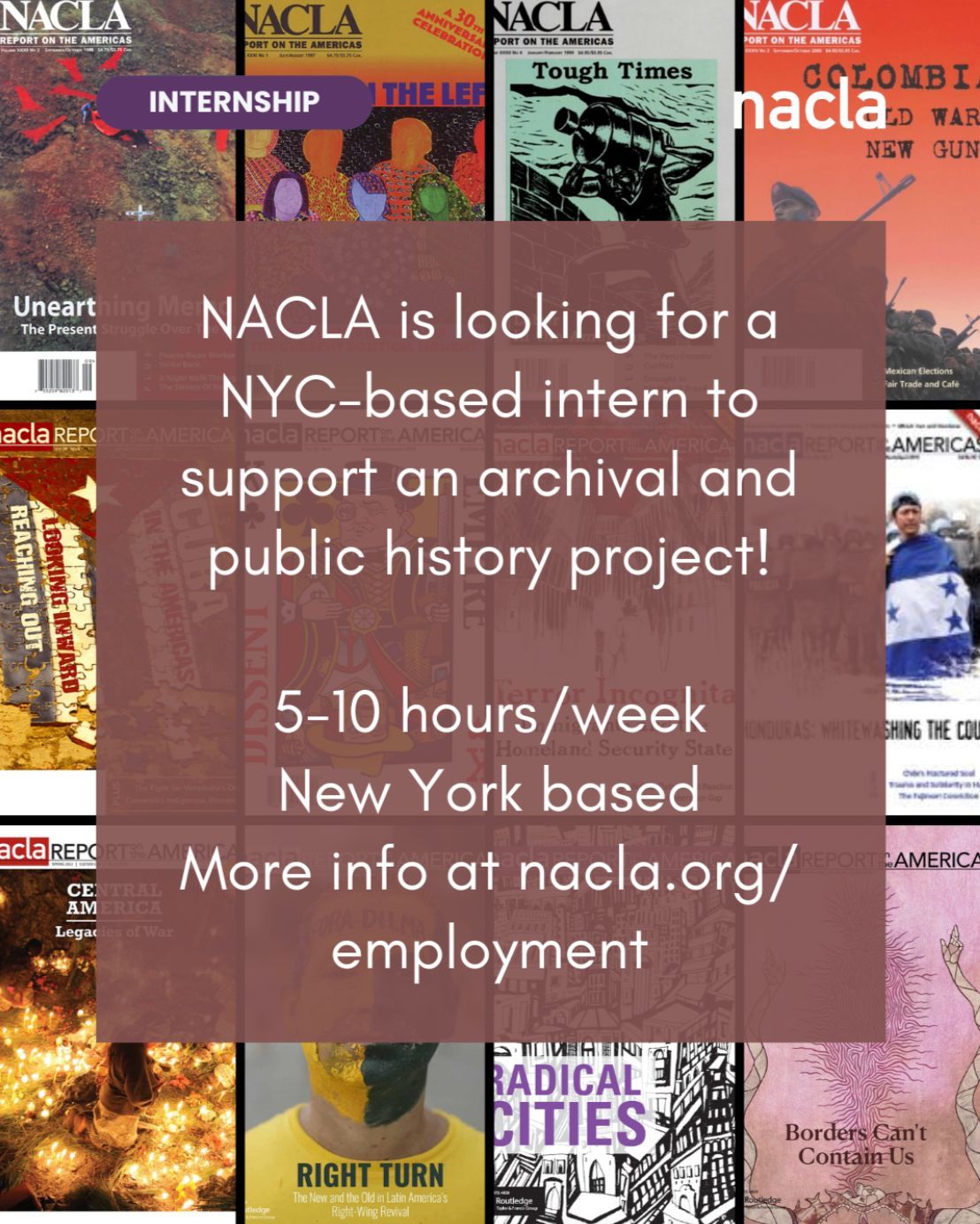
NACLA seeks a NYC-based undergraduate or graduate student to support an archival and public history project. As the NACLA Report on the Americas approaches its 60th anniversary, we are activating our rich archives to reach new audiences, develop educational resources, and celebrate six decades of left political analysis, reporting, and cultural criticism on Latin America and the Caribbean.
The digital archiving intern will work in collaboration with NACLA’s development associate and editorial team to help organize, digitize, and activate NACLA’s physical archive. Responsibilities will include cataloguing political primers from the 1960s and 70s, creating a digital archive of NACLA cover artwork, and conducting archival research to identify articles, photographs, illustrations, and ephemera for use in our 2027 anniversary programming.
This is an in-person internship, based at NACLA’s office at New York University, requiring approximately 5–10 hours per week (July or September start). We encourage students to seek course credit and/or funding from their educational institution for the internship as part of their studies.
To apply, please email [email protected] with a resume and a brief summary describing your interest in archival research, movement history, and/or Latin America and the Caribbean.
PURCHASE OUR SPRING ISSUE!
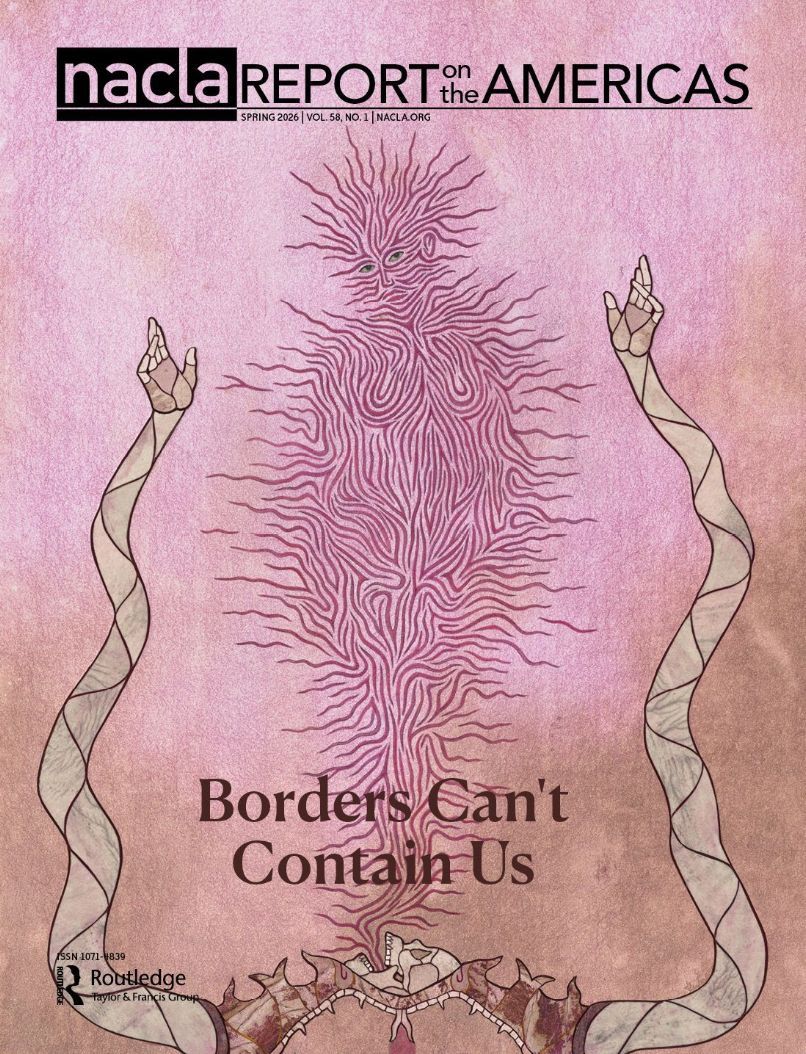
This issue of the NACLA Report examines the consolidation of a hemispheric bordering regime whose violence now extends far beyond any single boundary line. Across the Americas, border enforcement operates through infrastructure projects, detention systems, policing practices, and migration controls that reshape everyday life within and across national territories.
Take advantage of this special offer to purchase an individual issue of "Borders Can't Contain Us."
Offer valid for U.S.-based addresses only and while supplies last. Readers outside the United States may contact us at [email protected] to inquire about international shipping options.
NACLA offers a 5-10 hour/week internship opportunity for students who will receive course credit and/or funding from their educational institution for the internship as part of their studies. This opportunity is ideal for undergraduate students with an interest in alternative media, non-profit operation, and left politics and history in Latin America and the Caribbean.
To apply, please email [email protected] with a resume and a brief summary of why you are interested in working with NACLA.
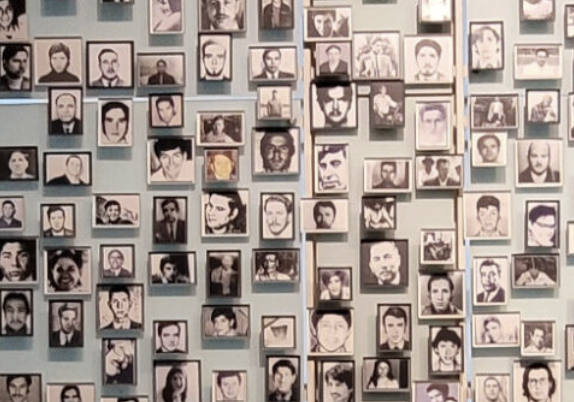
New charges against one of the Pinochet dictatorship’s most prominent human rights abusers come as the country shifts markedly to the right, casting historical memory in doubt.
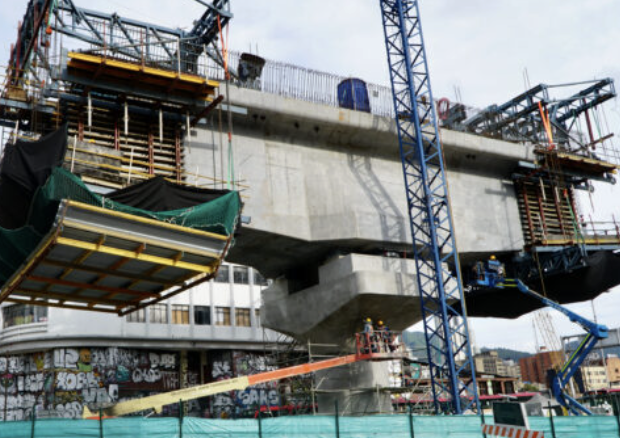
La presencia de China en Colombia dejó de ser un debate geopolítico abstracto y se ha convertido en una realidad que se vive día a día a través de las obras de construcción, el comercio, las clases de idiomas y las relaciones personales.
IMAGE OF THE WEEK
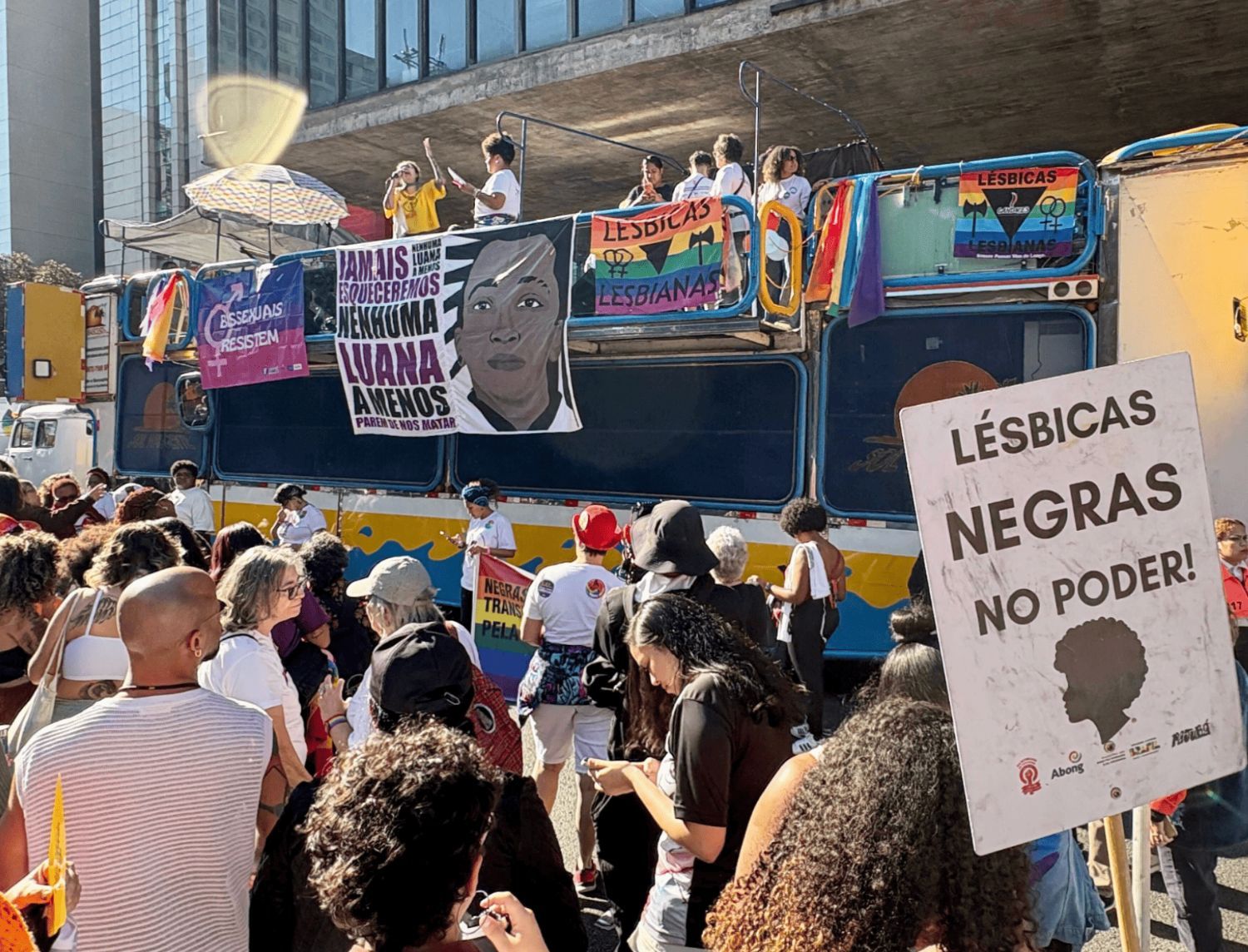
The Caminhada lésbica e bisexual in São Paulo, Brazil, on Saturday honored the life of Luana Barbosa, a black, lesbian mother, who died in 2016 after being brutally beaten by the police. Attendees included Luana’s son and mother, and called for justice in Luana’s case, in which no officer has been convicted for her murder. São Paulo’s PRIDE parade is the largest in the world. Check out NACLA’s web exclusive, Cuerpos Furiosos: Travesti-Trans Politics in Revolt, from our Spring 2025 issue celebrating LGBTQ+ resistance across the region. (Amy Richards)
AROUND THE REGION
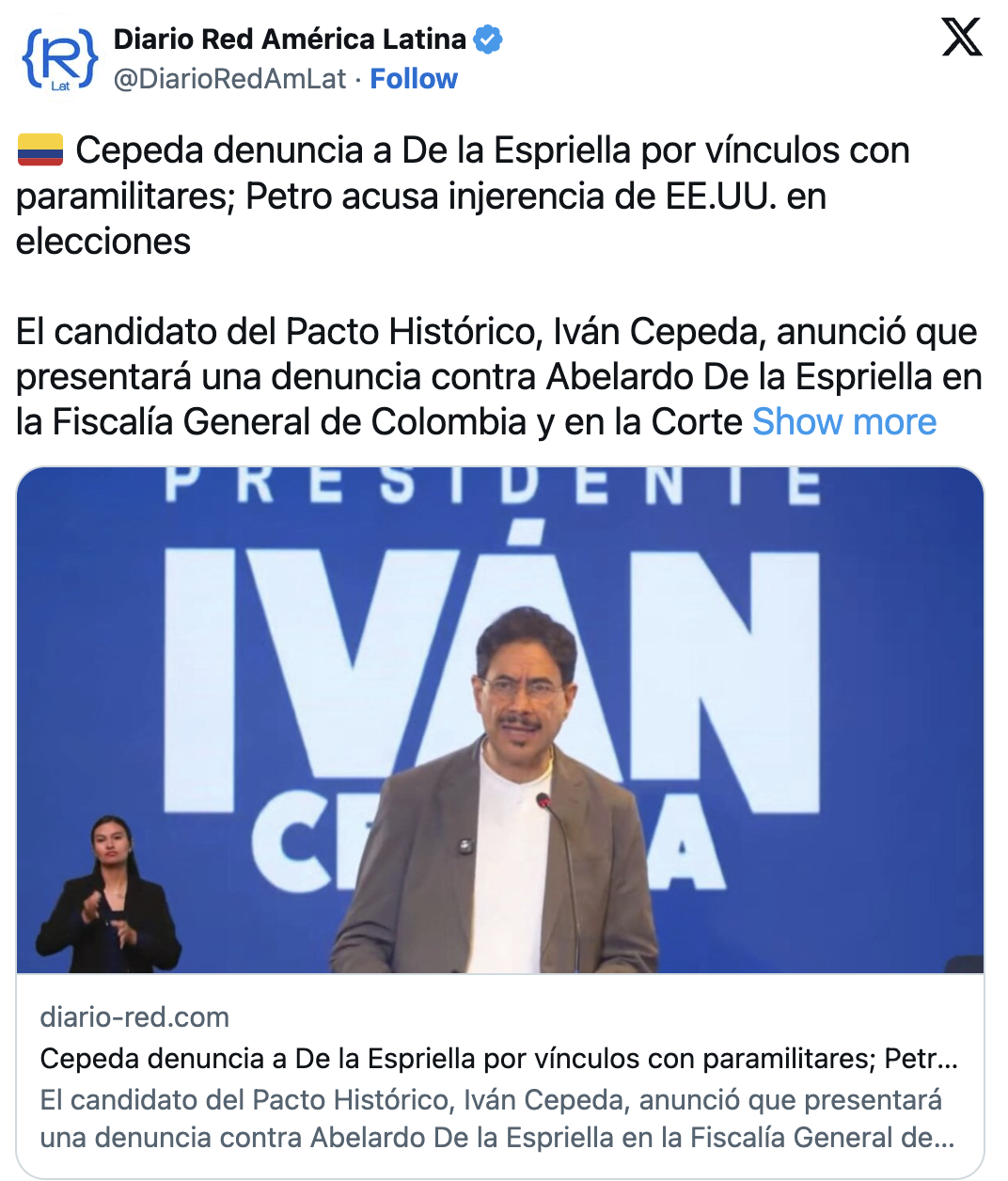
TENSIONS AHEAD OF COLOMBIA’S VOTE—Tensions are rising as Colombia prepares for a presidential run-off between far-right populist lawyer Abelardo de la Espriella and left-wing Senator Iván Cepeda on June 21. More than a week after his surprise second-place finish, Cepeda dropped his claims of fraud and accepted the results, though he warned that popular protests would follow the vote if it was not transparent. He also announced that he was seeking criminal charges against de la Espriella for his ties to right-wing paramilitaries. For his part, President Gustavo Petro has not dropped his fraud claim and continued to decry the foreign interference of the U.S. in the elections. In addition to endorsing de la Espriella, the Trump administration also has sought to zap the left of political energy, even going so far as to forbid Petro and his team from meeting with New York City’s mayor, Zohran Mamdani. De la Espriella, who is the favorite to win the election, also raised his own fraud claims, alleging that armed groups had coerced citizens into voting for the ruling party.
SANCTIONS ON CUBA—Volker Turk, the UN High Commissioner for Human Rights, decried U.S. sanctions against Cuba as “unacceptable” on Monday, calling for them to be "lifted immediately.” He also claimed that they violated “basic principles of international human rights law” and argued that “children are dying” as a direct result. Decades of sanctions combined with the imposition of a crushing fuel blockade in January have intensified a long-running crisis, driving Cubans to the point of despair. An increasing number have responded to the crisis by leaving the island, though U.S. restrictions have made other countries more desirable, including Brazil, where officials have recently encountered a rise in both formal asylum applications and irregular migration. Cuba’s crisis shows no signs of letting up. Tons of humanitarian aid from countries like Mexico and Belize are barely making a dent. Cuba’s economic crises have been exacerbated by the ongoing threat of U.S. military intervention—Secretary of Defense Pete Hegseth travelled to Guántanamo Bay Wednesday to repeat these threats.
BOLIVIA’S CRISIS—On Monday, Bolivian President Rodrigo Paz signed legislation to make it easier for his government to declare a state of emergency and empower the military to clear blockades that have paralyzed large swaths of the country for over a month. In addition, Paz smeared the protesters as “narcoterrorists,” an accusation aired weeks ago by members of the Trump administration. Paz escalated a crisis that shows no signs of abating, though he has yet to declare a state of emergency and repeated his calls for “dialogue.” Undeterred, the social movements leading the protests—which beganas a response to center-right President Rodrigo Paz’s failure to deal with rising inflation, a fuel crisis, and political exclusion—continued to demand his resignation. On Monday, protesters in Cochabamba lobbed firecrackers and stones at police, who responded with teargas. According to a report released last weekend, 10 people have died as a result of the protests; the government claims seven have died directly as a result of the blockade.
NEW SANCTIONS ON NICARAGUA—On May 31, Brooklyn Rivera, a 73-year-old Indigenous leader in Nicaragua who had been detained by the Nicaraguan government since 2023, died while in state custody. In response, the Trump administration announced visa restrictions on over 100 Nicaraguan officials and their family members earlier this week. Rivera, a leader of the Afro-Indigenous Miskito people, had long clashed with President Daniel Ortega and the Sandinista movement which he continues to claim to represent; Rivera fought alongside the U.S.-backed Contras in the 1980s and, after a brief period of alliance between his Indigenous Yatama party and the government, denounced Ortega’s increasingly authoritarian government. In the months prior to his detention in 2023, Rivera had been barred from returning to Nicaragua after criticizing Ortega at a UN forum, though he smuggled himself back into the country, only to be promptly arrested on terrorism-related charges. In the days before his death, the Nicaraguan government had released photos of him in the hospital receiving care, prompting outcry from human rights organizations, advocacy institutions, and the U.S. government. Many of these same organizations have now called for an independent investigation.