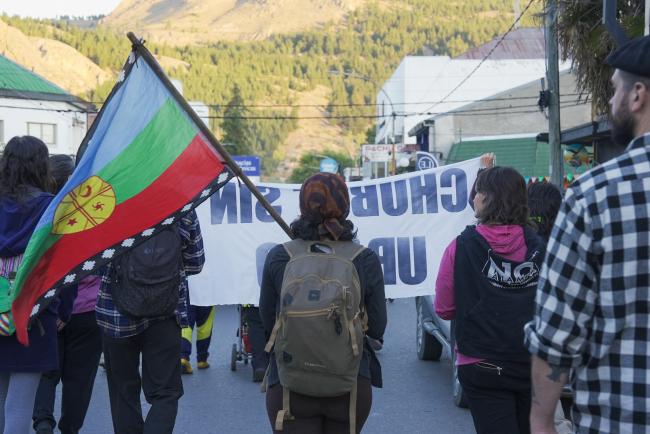
| |  | | On Sunday, Chilean President Gabriel Boric spoke for nearly three hours during his fourth and final Cuenta Pública, Chile’s annual State of the Union address to lawmakers. While he touched on a variety of topics, from plans for an accelerated decarbonization bill to boost investment in clean energy to the gains his administration has made for workers, his remarks on Israel’s “genocide and ethnic cleansing” in Gaza drew the most attention. These remarks, coupled with recent moves by his government—including the withdrawal of Chile’s military attaches from Tel Aviv, an announced ban on imports from the occupied Palestinian territories, and steps to reduce military dependence on Israel— sparked a backlash from the United States, which has gone so far as to threaten sanctions. While Boric has long criticized Israel’s genocidal response to the October 7th attacks, activists in Chile—home to the largest Palestinian diaspora outside the Middle East—have continually pressed the government to do more. Even after Chile recalled its ambassador and joined South Africa’s genocide case against Israel at the International Court of Justice, demands persisted that the Boric government take action to cut military and commercial ties, often grounded in parallels with Chile’s own history of state violence against its Indigenous Mapuche population. Ahead of his address, Boric finally took some concrete steps to sever ties between Israel and Chile. On May 28, his government announced the withdrawal of military, defense, and air force attachés from the Chilean embassy in Tel Aviv, citing Israel’s "disproportionate and indiscriminate military operation” and its obstruction of humanitarian aid to Palestinians. In his speech on Sunday, Boric deepened his stance: he instructed his defense minister to diversify the country's defense relations away from Israel, publicly backed the Spanish government’s call for an arms embargo, and pledged to swiftly pass a bill to ban imports from the occupied territories. “My principles,” he declared, “force me to speak up loudly against Israel’s genocide and ethnic cleansing of the Palestinian people.” Boric’s stand immediately drew the ire of the United States. While U.S. legislators have previously accused progressive governments of antisemitism and threatened punishment, this episode marked a sharp escalation. After Boric announced the attaché withdrawal, U.S. Secretary of State Marco Rubio called the president directly to air his concerns. Boric reportedly declined the call, arguing that “presidents talk to presidents.” The mini scandal has been dubbed the “telefonazo fallido,” prompting critiques from the Chilean right and retorts from the president’s allies that Chile does not take orders from Washington. While the political flashpoint has been amusing, there remains the larger threat of U.S. sanctions. The Trump administration is reportedly reviewing a range of retaliatory measures, including increasing tariffs, suspending student visa interviews, closing the U.S. Consulate in Santiago, and even revoking Chile’s access to the Visa Waiver Program, which allows Chileans to travel to the United States without a traditional visa—the only Latin American country with such a privilege. On Wednesday, technical issues disrupted the online system that processes Chilean travel authorizations, leaving dozens of Chileans stranded at airports across the United States. While the crash was likely a glitch, the timing has fueled fears that a wider crackdown on Chilean migration is underfoot. |
| |
|
|
|
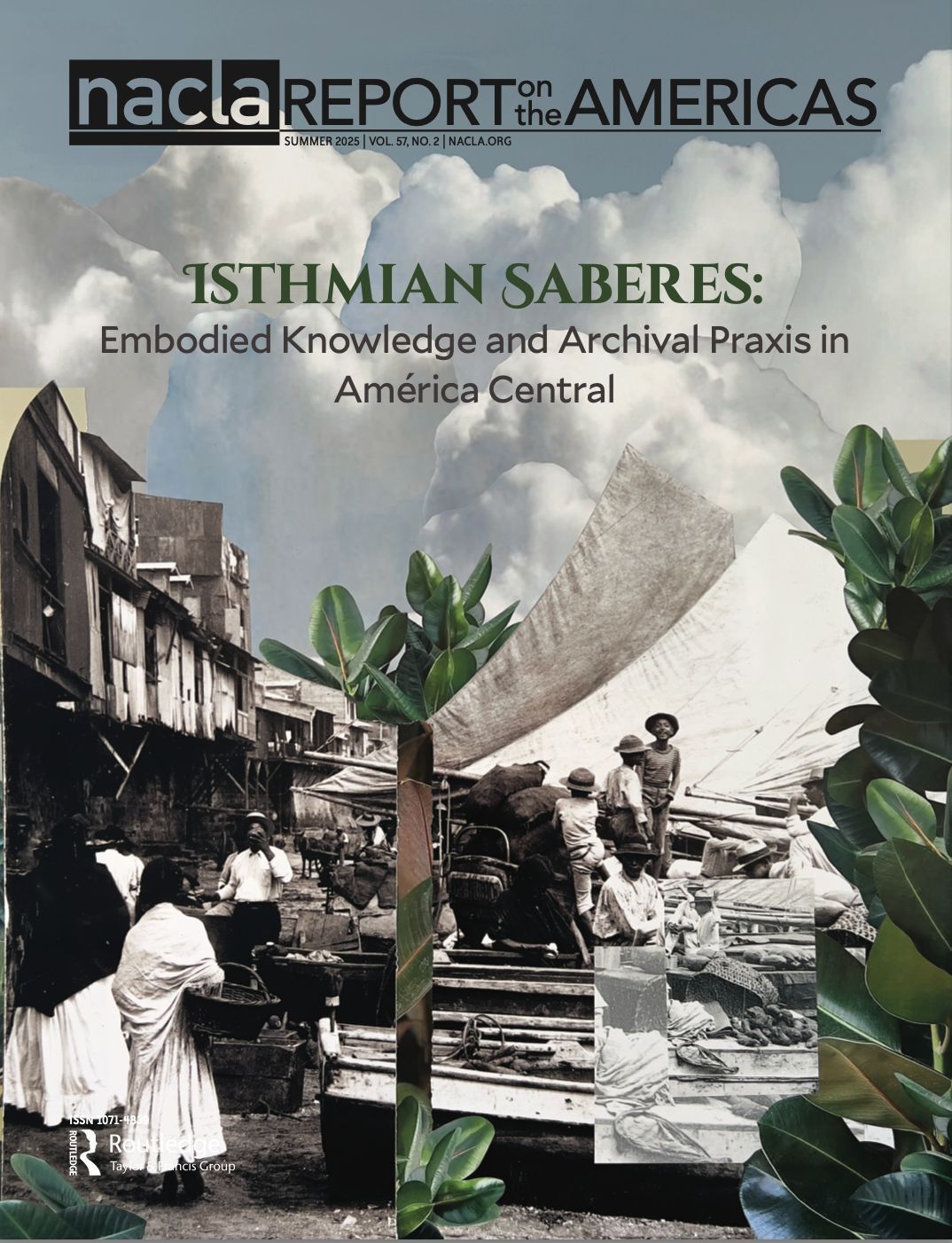
| | | | | | | | The Summer 2025 issue of the NACLA Report is out! Guest edited by Kaysha Corinealdi, Jorge E. Cuéllar, and Paul Joseph López Oro, this issue explores the myriad forms by which Central Americans produce the region and its knowledge systems, centering ongoing contestations over memory, history, and self-description in the pursuit of belonging and the articulation of collective futures. Check out the WEB EXCLUSIVES from the issue, published this week. The deadline to become an annual subscriber and receive this issue has passed, but contact us if you'd like to order an individual copy at [email protected]. Please also consider making a donation to help sustain this work. |
| |
|
| APPLY TO BE OUR FALL INTERN! |
| |
|
| NACLA offers a 5-10 hour/week internship opportunity for students who will receive course credit and/or funding from their educational institution for the internship. This opportunity is ideal for undergraduate students with an interest in alternative media, non-profit operation, and left politics and history in Latin America and the Caribbean. For more details on the internship, read here. To apply, please email [email protected] with a resume and a brief summary of why you are interested in working with NACLA by June 14. |
|
|
| | | | | | | | | 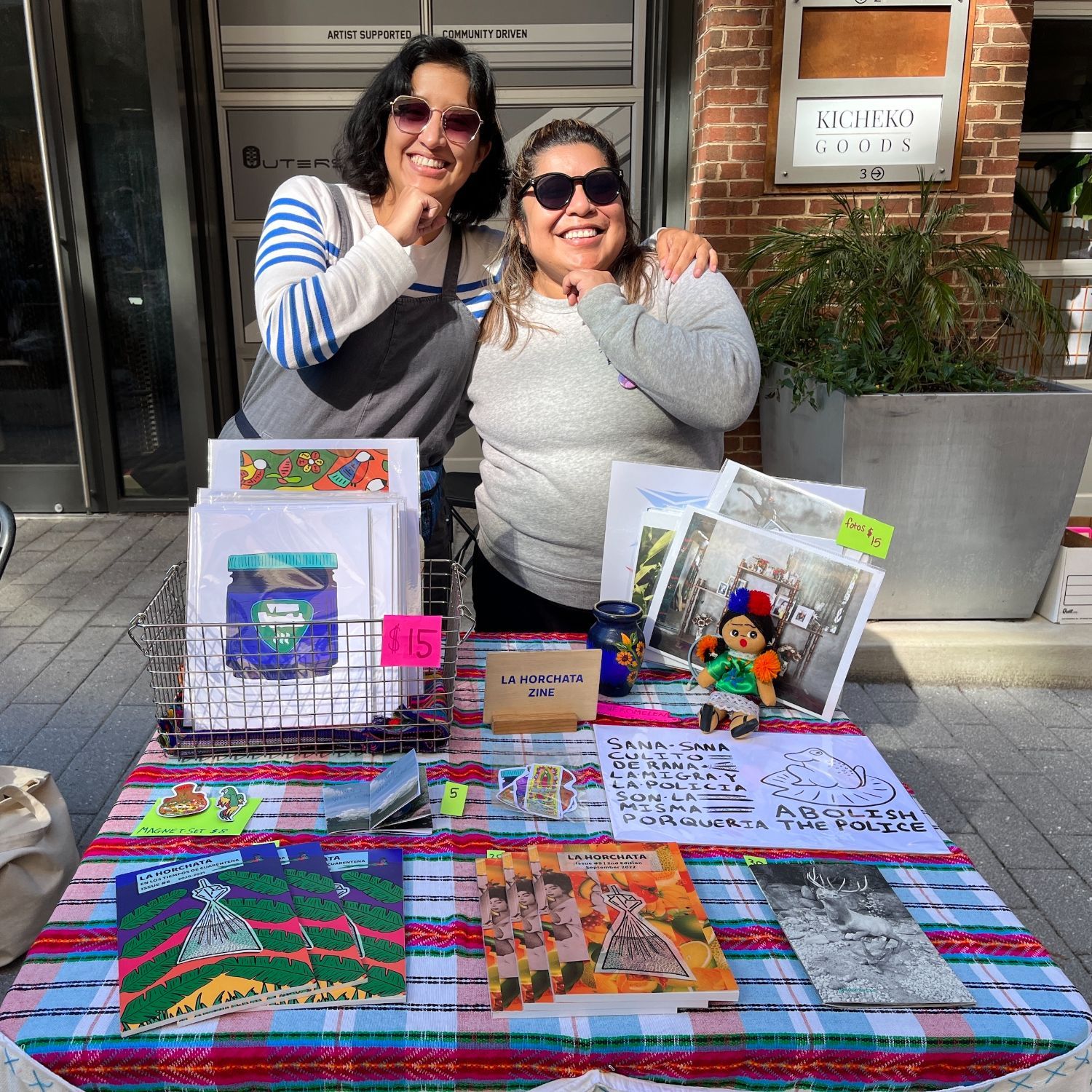 | Veronica Melendez and Kimberly Benavides are co-founders of La Horchata, an arts and culture zine founded for and by Central Americans in Washington, D.C. area. The zine has become one of the de facto living archives of Central Americanness in diaspora. Check out John Kennedy Godoy's web exclusive piece on La Horchata, part of the latest issue of the NACLA Report. (Courtesy of Veronica Melendez) |
|
|
| | | -
MEXICO’S JUDICIAL ELECTION — Despite an election campaign full of fearmongering by western journalists about the death of democracy, Mexican voters went to the polls on Sunday to choose thousands of judicial officials, including Supreme Court justices. As expected from such a large-scale, first-of-its-kind vote, there were many hitches, most notably a low turnout of only 13 percent, far below the 60 percent typical for presidential elections. While an opposition boycott played a role, much of the low turnout had to do with voter confusion: many struggled to fill out the complex ballots, resulting in a high percentage of blank or null votes. Still, the outcome was a resounding victory for MORENA, Mexico’s ruling party. While results are still being counted, all nine of the newly elected Supreme Court justices—five women and four men—were backed by the party. Leading the vote was Hugo Aguilar Ortiz, an Indigenous lawyer from Oaxaca who works at the National Institute of Indigenous Peoples and previously represented the Zapatista rebels during peace talks in the 1990s. He will now head the Supreme Court. -
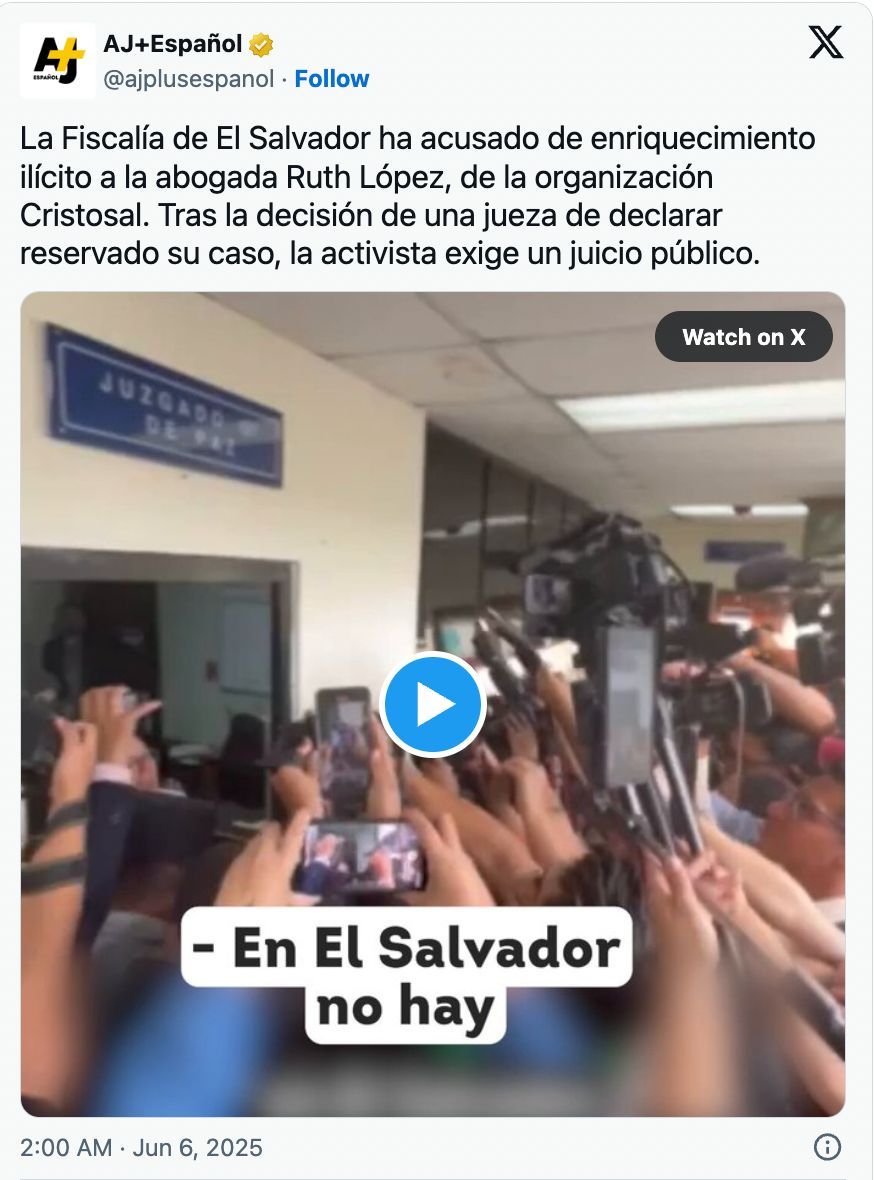
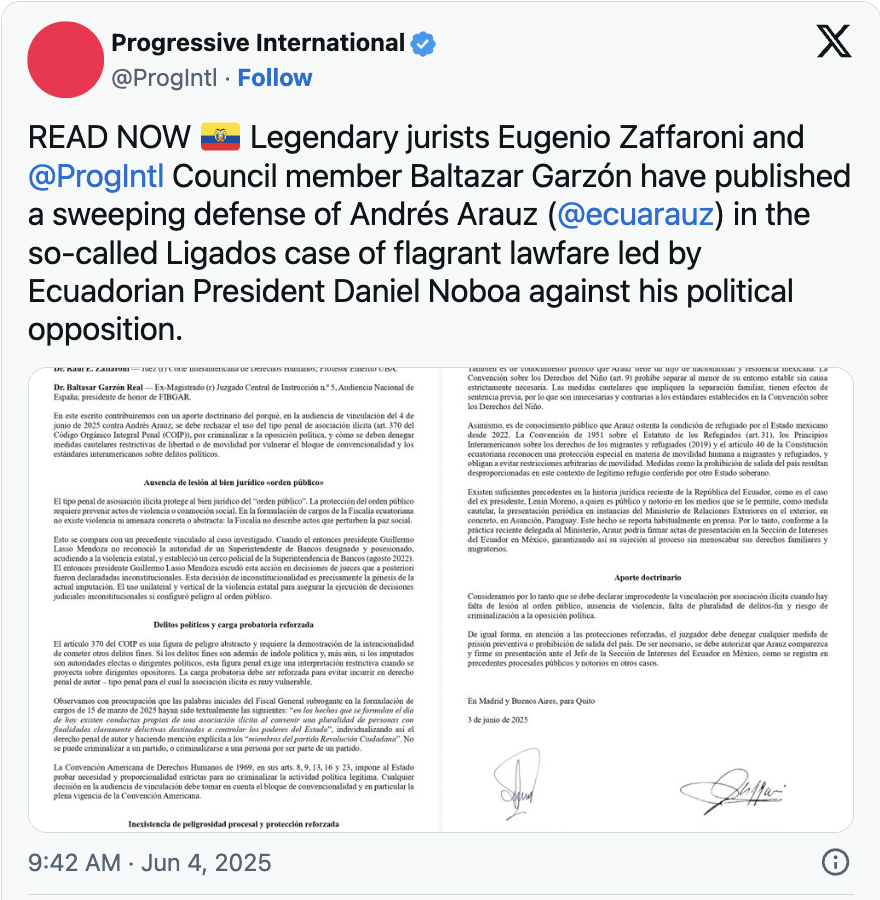
GUATEMALAN PROSECUTOR TARGETS COLOMBIANS — On Monday, Guatemala’s Prosecutor's Office demanded the arrest of two members of Colombia’s government for alleged corruption during their time in the country as members of a UN-backed anti-corruption task force. Public Prosecutor Rafael Curruchiche announced the charges against Colombian Attorney General Luz Adriana Camargo and former Colombian Defense Minister Ivan Velasquez and called on INTERPOL to enforce the arrests. The Colombian government, as well as the current Guatemalan government, swiftly denounced the charges as politically-motivated. Both Camargo and Velazquez played leading roles in the International Commission against Impunity in Guatemala (CICIG), a UN-backed task force that worked for more than a decade before it was shuttered in 2019. Velazquez headed the CICIG for six crucial years in which it unearthed corruption that led to the resignation and arrest of the country’s then president Otto Perez Molina. The hypocrisy of the charges was plain for all to see: Curruchiche is but one of scores of Guatemalan officials, including the Attorney General Consuelo Porras, who are currently sanctioned by the United States and Europe for undermining investigations into corruption and impeding the country’s democratic processes. |
|
|
| -
MILITARY TRIAL IN EL SALVADOR — On Tuesday, three former Salvadoran military officers were convicted for the 1982 killings of four Dutch journalists during the country’s civil war. The three officers—all of whom are older than 85—received 15 year prison sentences for their roles in the murders of Jan Kuiper, Koos Koster, Hans ter Laag and Joop Willemson, who were killed minutes after linking up with leftist rebels who they planned on filming. A later investigation found the attack was a deliberate set up to kill the journalists. The case, long pursued by the Dutch government, was reopened after a 2016 Supreme Court ruling declared El Salvador’s postwar general amnesty was unconstitutional. In addition to convicting the military officers, the jury also ordered President Nayib Bukele—the leader of the country’s armed forces—to issue a public apology. But Salvadorans aren’t holding their breath. This week, the Salvadoran leader leaned into the “dictatorship” label in a speech marking one year since his unconstitutional re-election. “I don’t care if you call me a dictator,” he said. “Better than seeing Salvadorans killed in the streets.” -
TRAVEL BANS AND PROTECTED STATUS REVOCATIONS — The U.S. Supreme Court ruled last Friday that the Trump administration was allowed to revoke the temporary legal status of about 530,000 migrants living in the United States from Cuba, Haiti, Nicaragua, Venezuela, overturning a lower-court ruling that had halted the move. On Wednesday, nationals from Cuba, Haiti, and Venezuela received another harsh blow—this time by the Trump administration’s new travel ban. Citing national security and terrorism concerns—specifically the recent attack on pro-Israel protesters in Boulder—the Trump administration imposed travel bans on 12 countries, including Haiti, and partial bans on seven others, including Cuba and Venezuela. In response, the Venezuelan government labelled the Trump administration as “fascist,” while the Cubans slammed the policy as “racist." |
|
|
|
|
|
|
| | | North American Congress on Latin America
53 Washington Sq South, Fl. 4W | New York, New York 10012
(212) 992-6965 | [email protected] |
| |
|
| |
|
|