Is the right wing poised to consolidate its position even further in Latin America? Upcoming presidential runoffs in Colombia and Peru will put the right’s momentum to the test. Initial signs point toward right-wing victories in both countries, though the outcome is far from certain. Voters in Peru will go to the polls this Sunday, and the runoff in Colombia is scheduled for June 21.
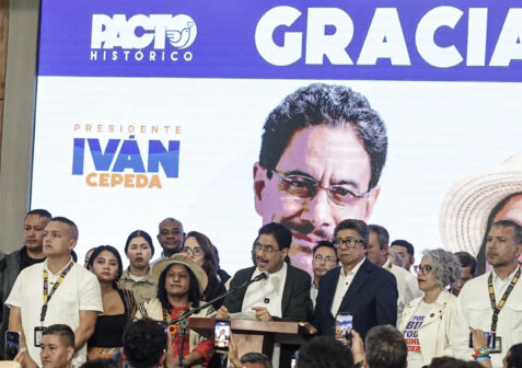
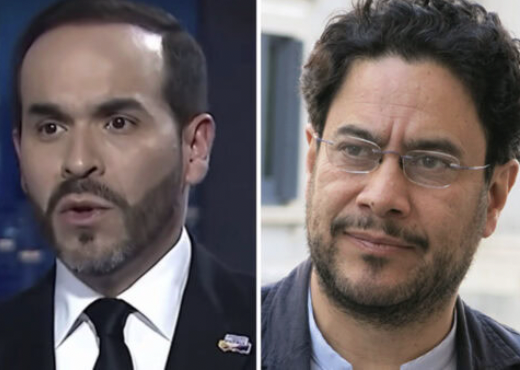
Last Sunday, Colombians voted in the first round of presidential elections, where left-wing Senator Iván Cepeda was heavily favored to come out ahead—his campaign even believed he could clear the 50 percent threshold and win the election outright. Instead, Cepeda was overtaken by far-right populist Abelardo De La Espriella in a shocking outcome that defied the polls. While the lawyer had been surging in the campaign’s final days, virtually no poll came close to capturing his eventual tally of more than 10.3 million votes, or 43.7 percent of the total. De La Espriella ended up besting Cepeda, the candidate of the ruling Pacto Histórico coalition, who secured 40.9 percent, trailing by nearly 700,000 votes.
There is still a chance that Cepeda can expand his coalition and win. Current President Gustavo Petro won the second round of the 2022 presidential election after receiving just 40 percent of the vote in the first round, and the combined right-wing vote share was larger than it was on Sunday. Even so, early polling indicates that De La Espriella is in the driver’s seat, a position bolstered by President Trump’s endorsement on Tuesday.
Even though De La Espriella’s has made a career of defending the same narco-paramilitary figures associated with former President Álvaro Uribe and his Centro Democrático party, his brand of right-wing politics differs from those of Colombia’s traditional right. His style has the populist tint of global far-right leaders like Argentina’s Javier Milei and El Salvador’s Nayib Bukele, whose gang crackdown he has pledged to replicate in Colombia. De La Espriella is similarly brash, openly spouting sexist, homophobic, and anti-migrant rhetoric while promising to reopen long-settled debates over issues like abortion and adoption. Voters rewarded that approach, leaving the traditional right candidacy of Senator Paloma Valencia with little support. Once seen by analysts as a favorite to win, she flopped on Sunday, receiving less than 7 percent of the vote, and quickly endorsed De La Espriella.
Peru is also headed toward a runoff between a left-wing and a far-right candidate, with right-wing Keiko Fujimori currently in the lead. Though equally polarized, Peru’s political context is starkly different from Colombia’s. The country’s long-running institutional crisis—which has seen 10 presidents in the last 10 years—has fractured the electorate. Voters spread their support across a record 36 candidates in the first round, making polling highly unpredictable. Fujimori’s 14 percent vote share was lower than the combined total of blank and null votes. Pollsters failed to predict the late surge of left-wing congressman Roberto Sánchez, who secured 12 percent of the vote and narrowly edged out former right-wing Lima mayor Rafael López Aliaga for a place in the runoff.
While López Aliaga’s brand of right-wing populism is more aligned with that of De La Espriella and Trump—he has explicitly embraced the MAGA movement—Fujimori is also running on a deeply conservative platform. The daughter of disgraced former leader Alberto Fujimori, she has pledged to crack down on gangs and expand the role of the military in public security. Yet despite leading the race, she carries significant political baggage. As Javier Puente wrote in his recent article for NACLA, she has “consolidated her legacy as one of the most unsuccessful presidential candidates in the history of the world,” having lost in the second round three times in a row.
In 2021, Fujimori was defeated by Pedro Castillo, a left-wing leader whose turbulent presidency ended with a failed self-coup and his own imprisonment. Sánchez, an ally of Castillo who served in his cabinet, has vowed to pardon him. While Sánchez is campaigning on a similar platform of structural redistribution and a new constitution—and draws much of his support from the Andean highland areas most subjected to the classism and racism of Peruvian elites, he has assembled a wide coalition that calls into question his leftist bonafides. As Puente argues, to label his “uncanny blend of strategies, symbols, and alliances as simply ‘left’ is profoundly myopic.”
The elections in Peru and Colombia come at a critical time for the region. As the United States ramps up pressure on allies and adversaries alike to accept a greater U.S. military presence under the banner of combatting drug trafficking, Latin America’s remaining progressive governments have been the lone hold outs against imperial creep. While Sánchez and Cepeda differ in style and political trajectory, both leaders have at times advanced proposals that challenge U.S. hegemony in the region and sought to deepen ties with other countries in the Global South.
Since its founding in 1967, NACLA has worked to expose and oppose U.S. intervention in Latin America. In the face of lies and propaganda generated by the U.S. government, and a mainstream media often complicit in legitimizing U.S. actions, NACLA has sought to be a source of reliable information about the facts on the ground.
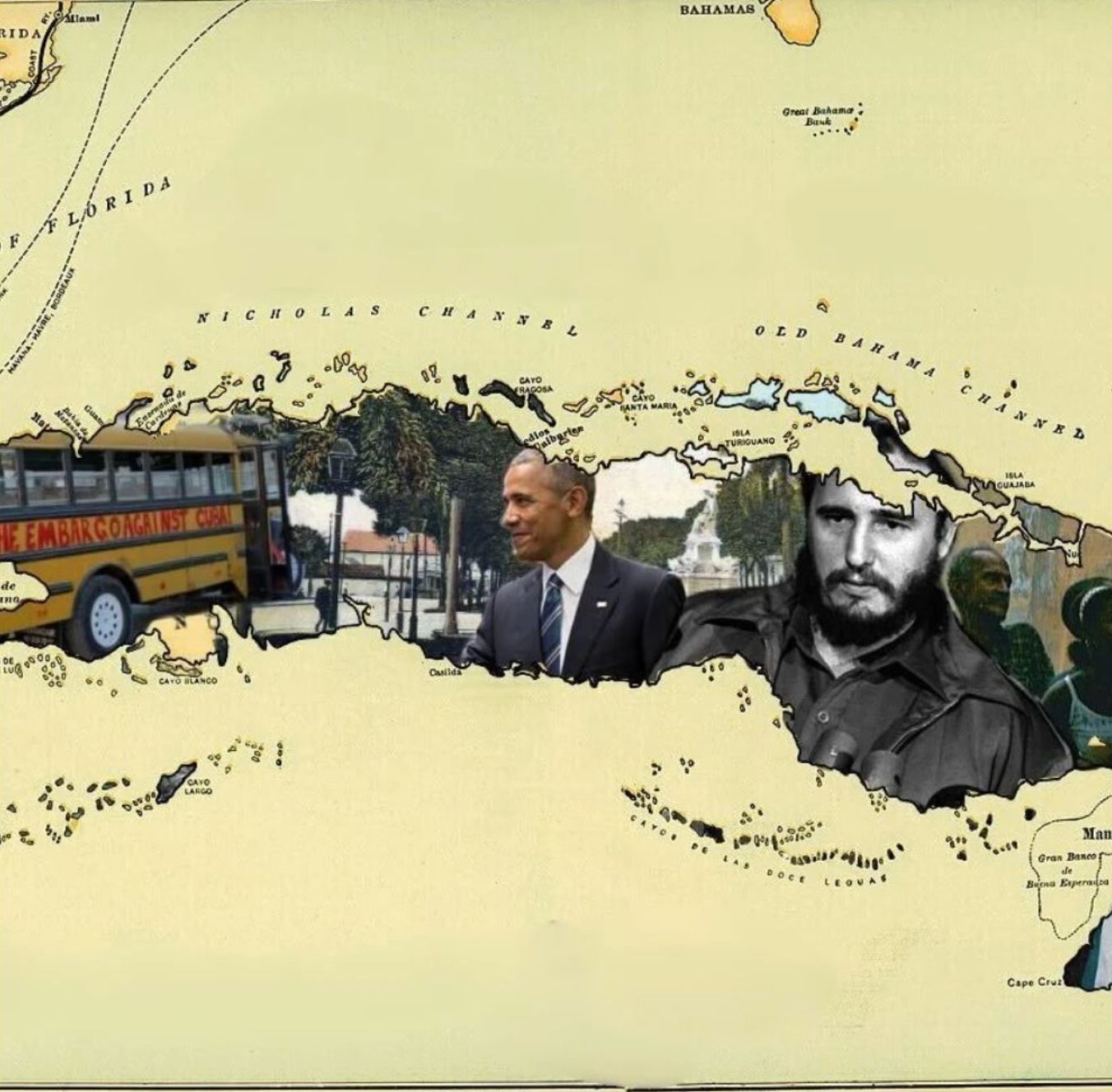
In this dossier of more than 30 articles, special print issues, and exclusive web series, NACLA's editors have curated a guide that touches on some of the most salient issues in recent Cuban history, including six decades of U.S.-led war, Cuba's role on the global stage, the Obama ‘thaw," the July 11 Protests, the role of the diaspora, and more.
NEW ISSUE COMING SOON!
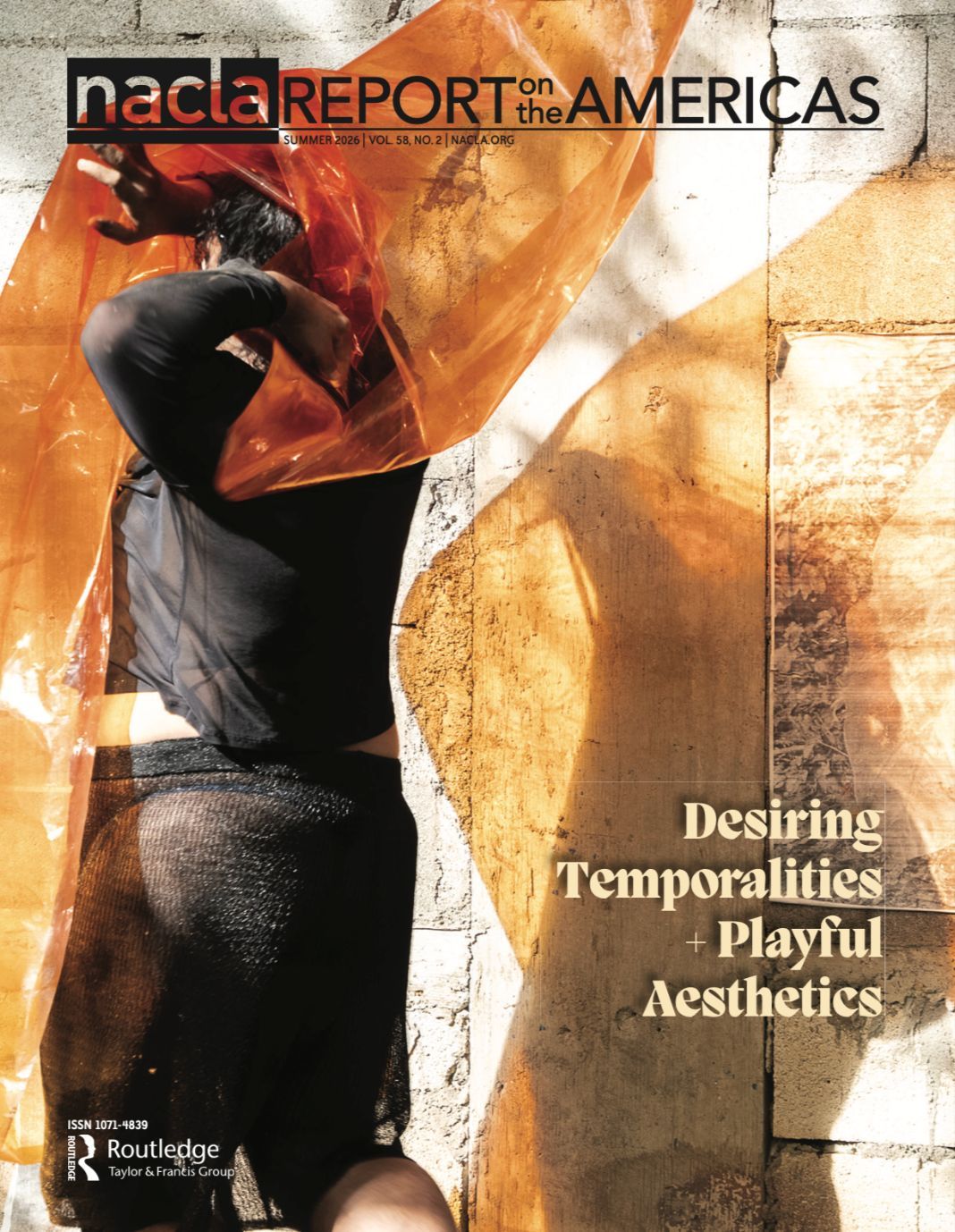
Subscribe NOW to get your copy of NACLA's Summer issue, "Desiring Temporalities + Playful Aesthetics."
Guest edited by Ángeles Donosy Macaya and Laura Juliana Torres Rodríguez, the summer issue explores artistic practices of creation and research that experiment with ways of inhabiting, (re)writing history, activating memory, engaging the archive, and stirring the senses in and from conditions of present dispossession.
If you haven't already, subscribe by June 5 to get your copy in the mail. And donate nowto support our work in the future.
PURCHASE OUR SPRING ISSUE!
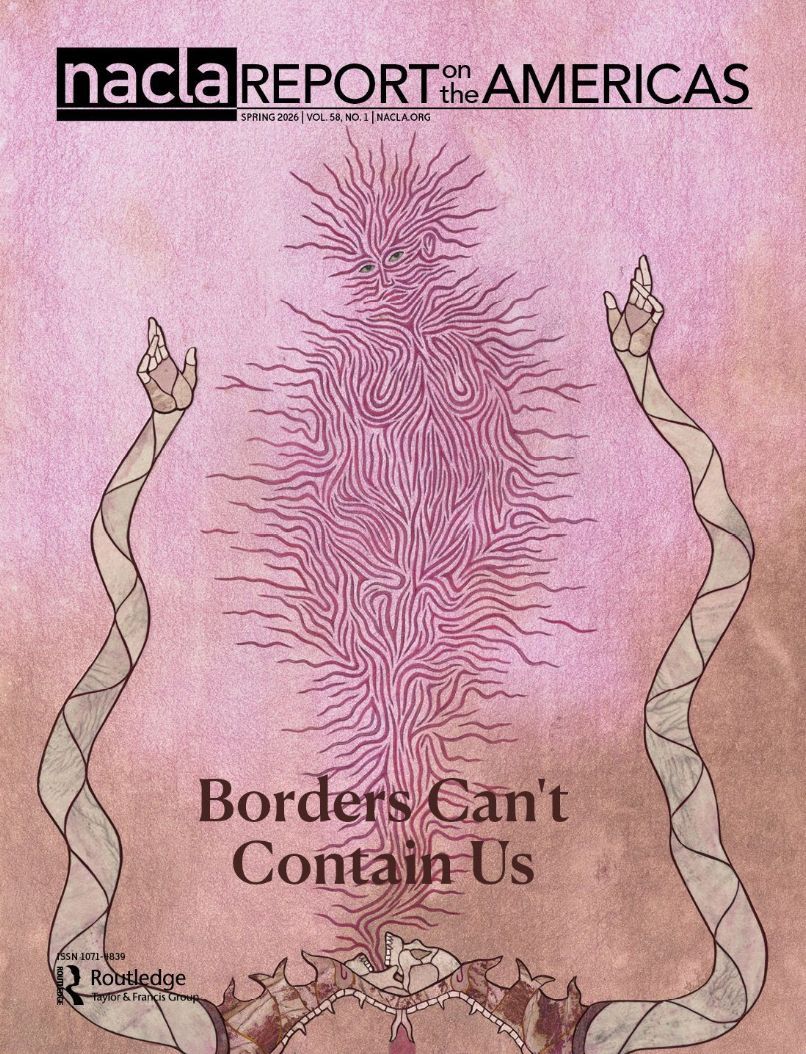
This issue of the NACLA Report examines the consolidation of a hemispheric bordering regime whose violence now extends far beyond any single boundary line. Across the Americas, border enforcement operates through infrastructure projects, detention systems, policing practices, and migration controls that reshape everyday life within and across national territories.
Take advantage of this special offer to purchase an individual issue of "Borders Can't Contain Us."
Offer valid for U.S.-based addresses only and while supplies last. Readers outside the United States may contact us at [email protected] to inquire about international shipping options.
NACLA offers a 5-10 hour/week internship opportunity for students who will receive course credit and/or funding from their educational institution for the internship as part of their studies. This opportunity is ideal for undergraduate students with an interest in alternative media, non-profit operation, and left politics and history in Latin America and the Caribbean.
To apply, please email [email protected] with a resume and a brief summary of why you are interested in working with NACLA.
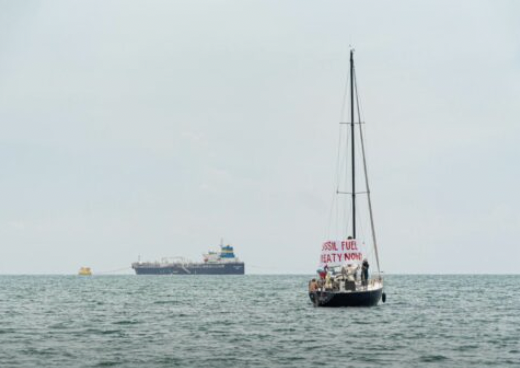
Despite co-hosting a milestone climate conference, the Netherlands has left the Dutch Caribbean islands alone in their fight against climate change.
IMAGE OF THE WEEK
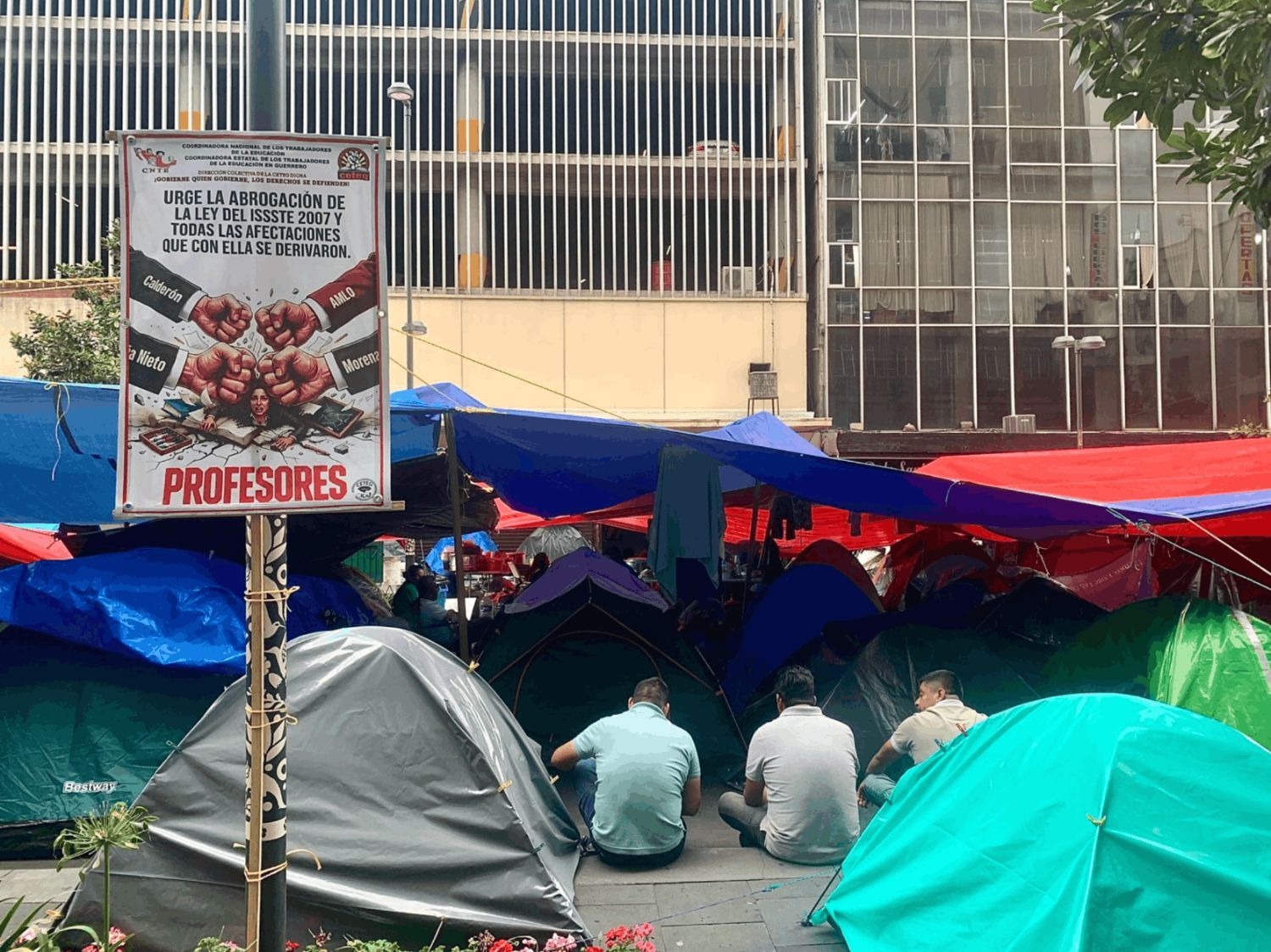
Teachers affiliated with the National Coordinator of Education Workers (CNTE) have been demanding increased wages and the repeal of an unpopular pension reform, promises made on the campaign trail by President Claudia Sheinbaum. Here, a photo of their current encampment in Mexico City. For more on the CNTE, read Isabel Villalón's article, "Mexico's Teachers Demand Pensions Over Profit." (Isabel Villalón)
AROUND THE REGION
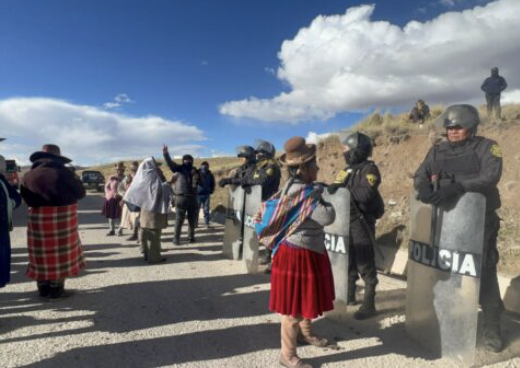
BOLIVIA’S CRISIS—Wednesday marked four weeks since anti-government protests led by Bolivian miners, campesinos, and Indigenous groups brought much of the country to a standstill, notably the administrative capital La Paz, which has experienced massive shortages in supplies due to roadblocks. Officials in the Department of La Paz declared a “health and humanitarian emergency” this week as four people have reportedly died as a result of not receiving timely medical attention. The measure, which seeks to deepen collaboration with the government and prioritize the delivery of essential goods, is a band-aid upon a larger political crisis that shows no signs of abating. Social movements leading the protests—which began as a response to center-right President Rodrigo Paz’s failure to deal with rising inflation, a fuel crisis, and political exclusion—continued to demand his resignation. Meanwhile, sectors of the opposition, business owners, and other affected organizations have ratcheted up the pressure on Paz to crack down on the roadblocks. On Tuesday, Paz’s defense minister resigned as a result of the ongoing protests.
MEXICO’S STRIKING TEACHERS—Riot police fired tear gas and projectiles at Mexican teachers in order to keep them out of Mexico City's central plaza, the Zócalo, where authorities are constructing a fan zone for the upcoming FIFA World Cup. The day after, the teachers continued their strike, bringing much of downtown to a standstill. The clashes occurred as part of wider mobilizations led by teachers affiliated with the National Coordinator of Education Workers (CNTE), who have been demanding increased wages and the repeal of an unpopular pension reform, promises made on the campaign trail by President Claudia Sheinbaum. The CNTE also launched spontaneous mobilizations across the country on Monday: thousands of teachers participated across at least 10 different states. Tensions with the teachers, which have lasted more than a year, have put the Sheinbaum administration in a bind at a difficult time; the teachers have threatened to disrupt World Cup events if their demands are not met. After unsuccessful negotiations on Tuesday, CNTE threatened to continue their strike; their demand to meet with Sheinbaum was also rejected.
CHILEAN AUSTERITY—Protesters clashed with police in Santiago on Wednesday as a march of thousands of students, teachers, and social activists was met with tear gas and water cannons. The protest was against cuts to spending in education, as well as a bill that would punish students for protesting. Clashes in Santiago came two days after the police cracked down on protests against austerity in the city of Valparaiso, where far-right President Jose Antonio Kast was giving his first State of the Union address to congress. In his address, Kast spoke of the country’s “emergency”, a situation he argued could be rectified by approval of his “mega-emergency” bill, a sweeping set of reforms that would drastically reduce state spending and lower taxes for the rich, among other provisions. The bill is currently in the senate, though the government is facing pushback from many sectors to change some of its more radical provisions.
BRAZIL IN THE U.S. CROSSHAIRS—The Trump administration proposed a 25 percent tariff on many Brazilian goods on Monday, arguing that the country was engaged in unfair trade practices. Unlike the tariffs that Trump imposed by decree, which were struck down by the Supreme Court in February, these tariffs are the result of an investigation into Brazilian practices conducted under Section 301 of the Trade Act of 1974. The Trump administration has used these tariffs on 59 countries and the European Union in order to circumvent Supreme Court restrictions. The proposed 25 percent tariff on Brazilian goods came after weeks in which it appeared the U.S.-Brazil relations were improving. The proposed tariff also came shortly after the Trump administration designated two Brazilian gangs as terrorists, a move decried by President Luiz Inácio “Lula” da Silva, who raised concerns about Brazil’s sovereignty, and argued that the designation could hinder securitycooperation between the two countries.