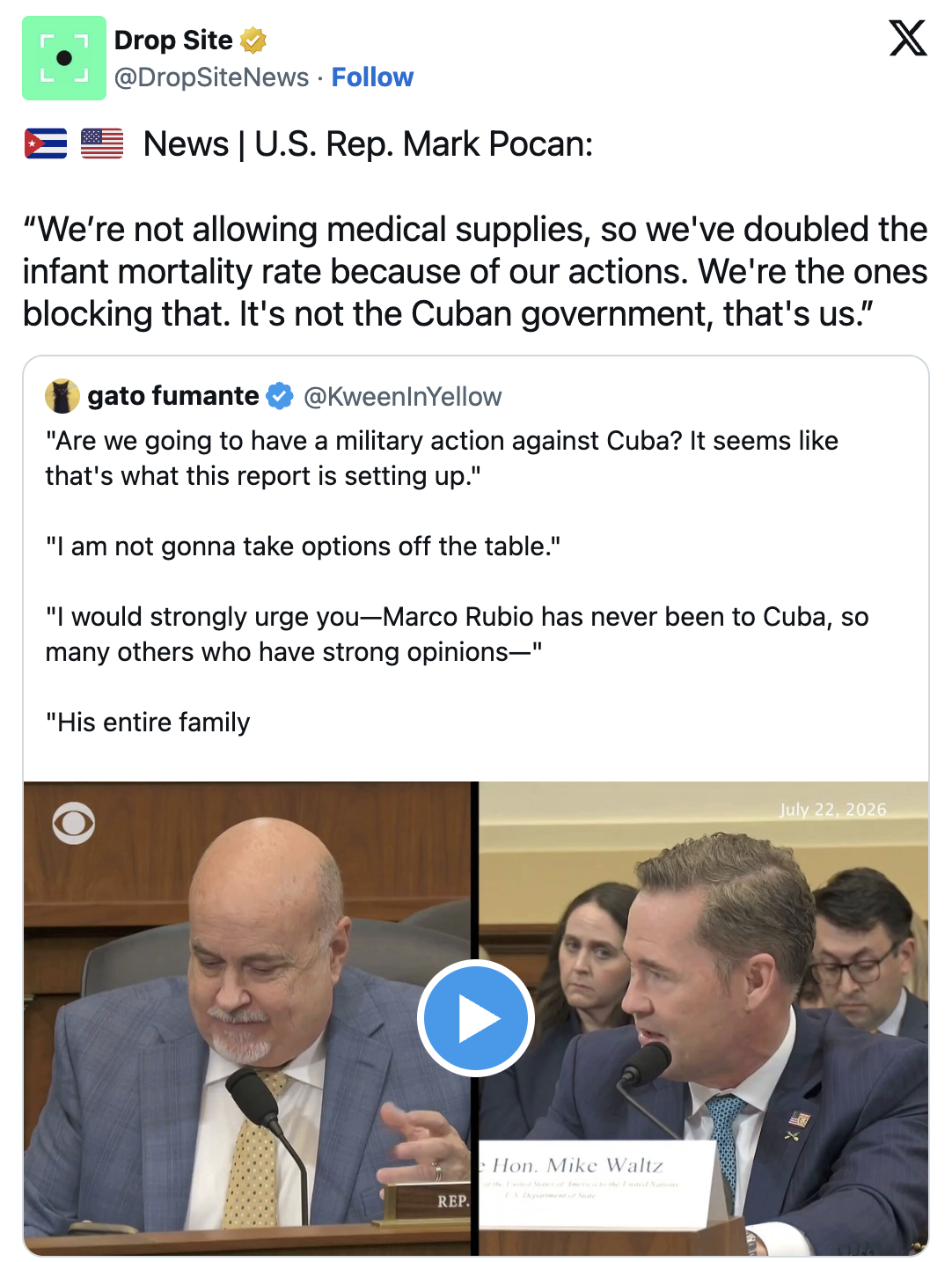
According to a State Department report released Monday, Cuba—an island and people battered by decades of increasingly severe U.S. sanctions—represents perhaps the greatest threat to the survival of the region, the United States, and “western civilization itself.” The 100-page document seeks to blame social unrest across the region, both past and present, on the Cuban government’s support for “foreign radicals” and, more broadly, on the ways its “terrorist” ideology have inspired activists around the world to fight in the name of such ills as anti-racism, anti-colonialism, and anti-capitalism. Were it not for the real consequences that could befall a wide range of activists and organizations accused of subversion, this latest attempt to revive a Cold War-style “Red Scare” around Cuba’s alleged role as the “capital of 21st-century Communism” would be laughable.
It is less important to catalogue the report’s historical distortions than to consider its broader political purpose. The document appears designed to build support for another unpopular war—this time casting Cuba as the sponsor of “left-wing terrorism” at a moment when the Trump administration faces growing domestic discontent. While decades of U.S. policy towards Cuba have laid the groundwork for such an approach, National Security Presidential Memorandum (NSPM-7), issued on September 25, 2025, provides a quasi-legal framework for the administration’s accelerating campaign against what it terms “radical left terrorism.” The national security memorandum identifies “anti-Americanism,” “anti-Christianity,” and “anti-capitalism” as indicators of potential political violence and emboldens security agencies to take preemptive action against groups deemed to embody these views. The administration has grouped a broad range of progressive organizations under the label of “anti-fascism,” going to great lengths to portray beliefs long associated with social justice causes as evidence of extremism and the product of shadowy groups like “Antifa.”
The report on Cuba is but the latest step in a series of recent escalations against alleged “left-wing terrorism.” Just last week, on July 16, the Trump administration convened representatives from 65 countries for a political conference dedicated to the issue of “far-left terror.” In their speeches, Secretary of State Marco Rubio and White House Deputy of Staff Stephen Miller portrayed radical left movements as among the gravest threats facing Western Civilization. Unable to point to more compelling contemporary examples, Rubio relied on FBI domestic bombing statistics from 1971 and 1972 in a much-ridiculed attempt to place groups like the Weather Underground and Black Lives Matter within a single, uninterrupted tradition of political terror. Framing Cuba as the ideological sponsor of these movements was the next logical step in that narrative.
The Trump administration increasingly organized its counterterrorism strategy around three pillars: “islamoterrorism,” “narcoterrorism,” and “violent left-wing extremism.” These frameworks were combined to portray Venezuela as a national security threat and justify invasion: former President Nicolás Maduro was accused of playing host to Iran, heading a mythical narcoterrorist “cartel”, and providing critical support to Cuba. Having struggled to make similar claims about Cuba itself—despite repeated efforts on both fronts—the administration now appears to be advancing a new rhetorical line of attack centered on Cuba’s alleged sponsorship of left-wing terrorism.
While this latest charge is as ludicrous as the others, it does touch on something real: the influence the Cuban Revolution has exercised on generations of activists around the world. The State Department presents that influence as evidence of clandestine networks and violent subversion. Others see it as part of a broader history of struggles against colonialism, racism, inequality, and economic exploitation. It is the Revolution’s audacity and enduring commitment to struggles for freedom, both at home and abroad, that has long inspired movements across the region, as complicated as Cuba’s present day realities may be. As long as the United States continues to wage imperial wars, bomb its neighbors, back coups, and fund and arm genocides, activists will continue to look to histories of anti-imperialist resistance for inspiration.
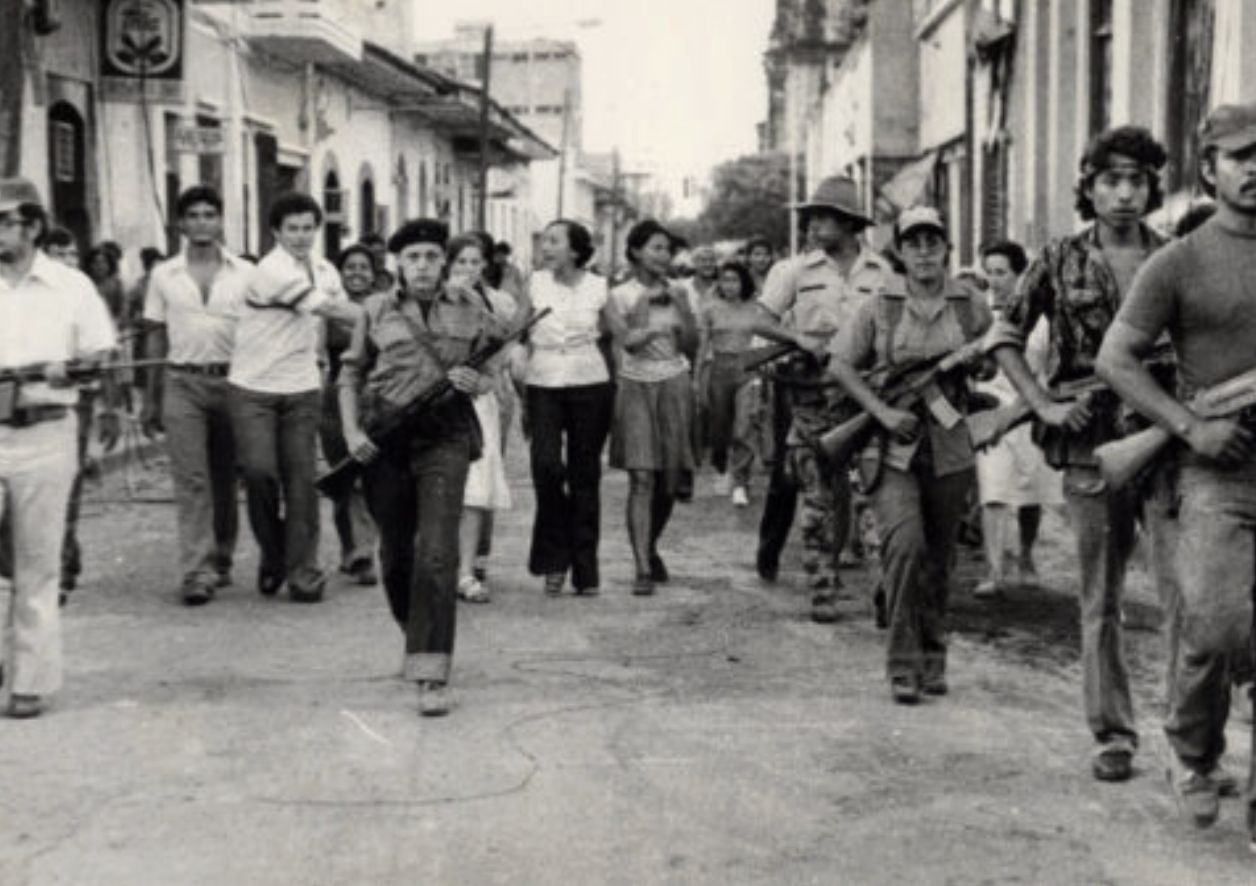
For nearly six decades, NACLA has reported on, documented, and formed coalitions with many of the movements and organizations cited in the report as evidence of “left-wing extremism,” from the Students for a Democratic Society (SDS) and the Venceremos Brigade to solidarity movements with revolutionary Nicaragua. Today, that commitment continues. NACLA stands against imperialism and supports people's movements working toward more just, democratic, and equitable futures. Our recent reporting has covered and stood alongside movements labelled in the report as examples of “terrorism,” including the “Nuestra América” convoy challenging the U.S. blockade on Cuba and the student-led anti-genocide encampments protesting U.S. support for Israel’s war in Gaza.
As NACLA approaches its 60th year, we hope you will continue supporting us in our mission to provide a platform for the region’s progressive social movements, amplify the voices and ties between struggles across the Global South, and expose the enduring structures and consequences of U.S. empire in the Americas.
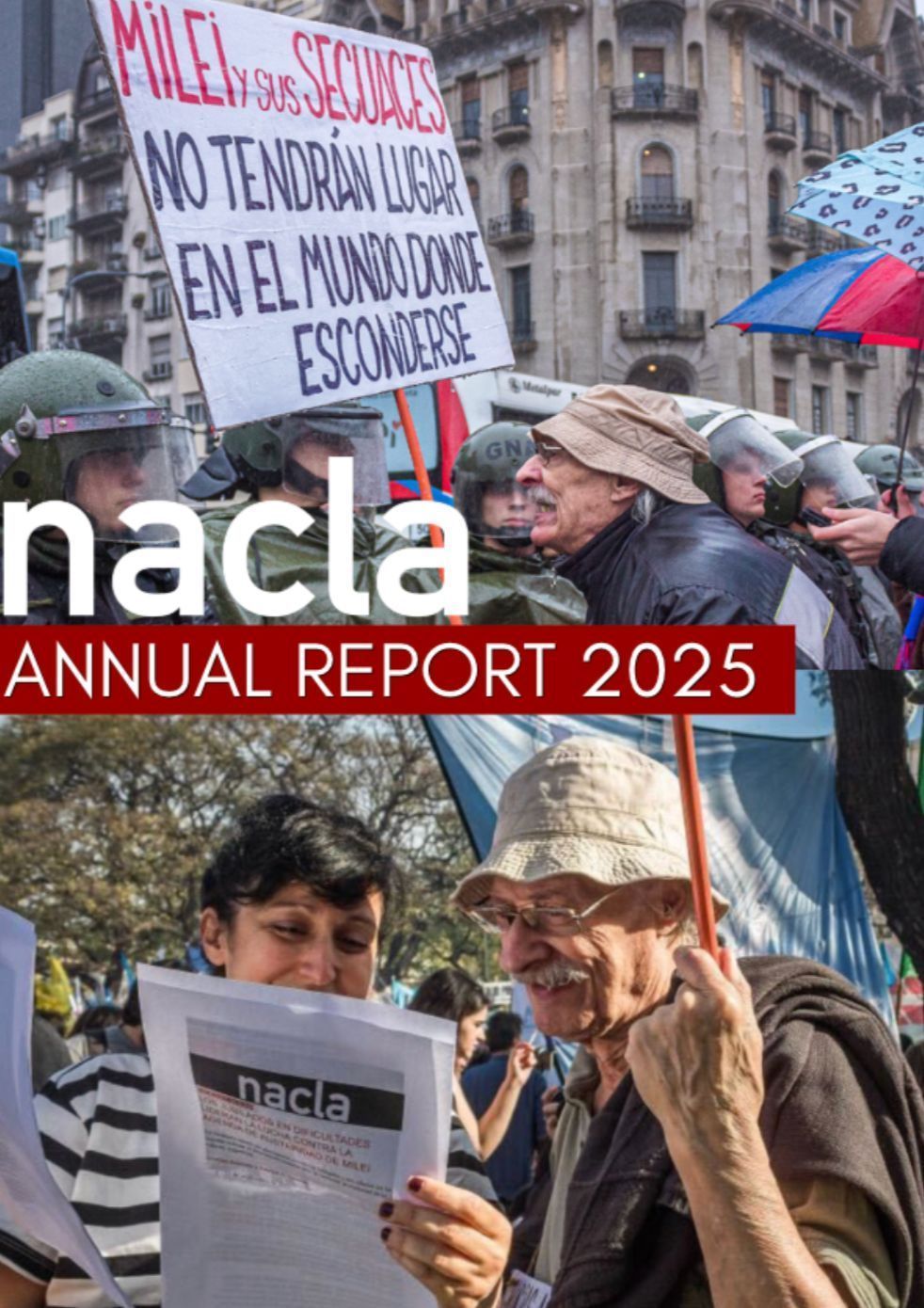
We’re pleased to share NACLA’s 2025 Annual Report. As you’ll see, reduced institutional funding meant that our expenses outpaced our revenue in 2025. Currently, only 4 percent of Naclistas make a financial contribution to support our work. Can you help us close that gap by becoming a monthly contributor today?
We're launching a reader survey to better understand our community! We'd love to hear what you think! The survey takes just 5–10 minutes to complete, and you'll be entered to win a one-year digital subscription to the NACLA Report and some NACLA swag. 📗😎
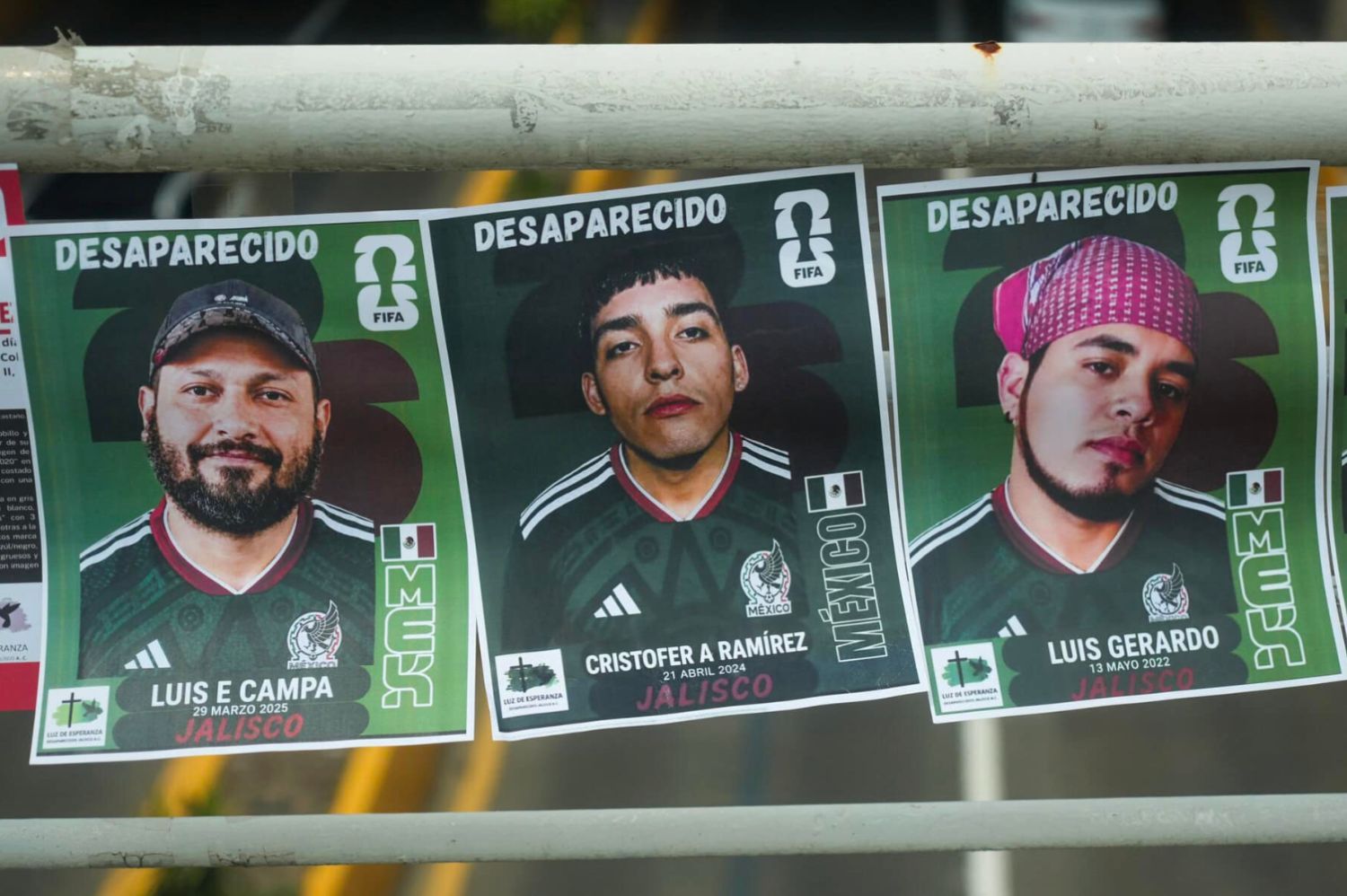
Fútbol has always belonged to the people, no matter how deeply FIFA’s elites may want it to be otherwise.
In this selection of articles, NACLA contributors cover the intersection of fútbol and politics from a wide variety of angles. Read on to learn more about historical attempts to boycott the World Cup; the way social movements have used the event as a means to advance their causes, and the ties between fútbol and historical memory in Latin America
Four years into a crackdown on alleged gang members that has discarded civil liberties, recent constitutional reforms create opportunities for further abuse.
Ante la proximidad del 47º aniversario de la victoria sandinista en Nicaragua, la excomandante Dora María Téllez detalla cómo el movimiento perdió el rumbo y cómo se puede recuperar el futuro.
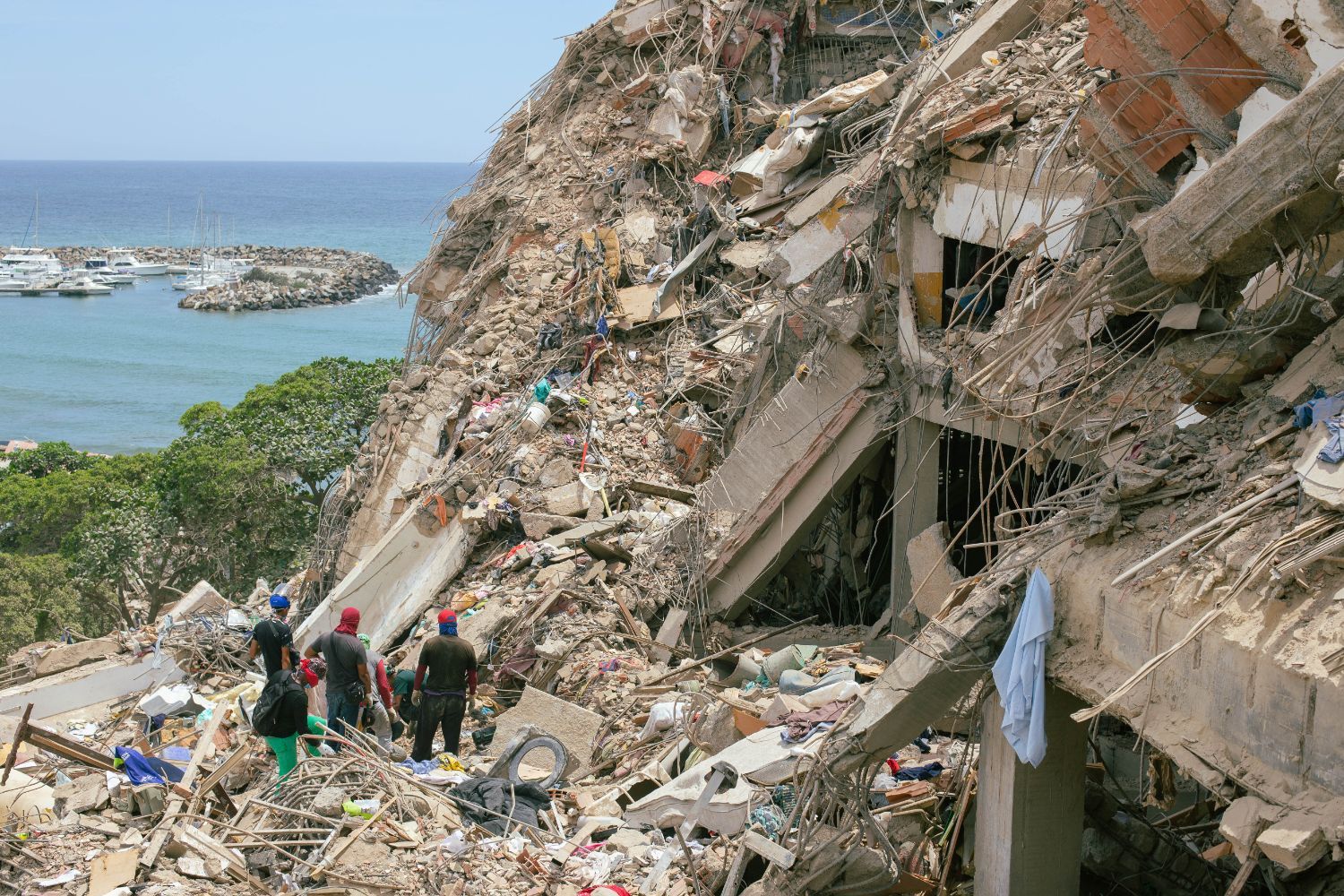
Family members search for their loved ones in the rubble of Belo Horizonte apartment complex in Playa Grande, Catia La Mar, La Guaira. Read more about the reconstruction efforts in "Venezuela Dealt Another Blow," an article by Ociel Alí López. (Alex Bartsch)
AROUND THE REGION
COLOMBIA’S TENSE TRANSITION—During his final two public speeches marking Colombia’s Independence Day celebrations on Monday, outgoing President Gustavo Petro sharply ratcheted up political tensions. Speaking first to supporters in southern Bogotá and then to Congress during the inauguration of its new session, Petro doubled down on his claim that far-right narco-lawyer Abelardo de la Espriella had won the election as a result of fraud. “The Colombian people elected Iván Cepeda,” he declared during his morning speech, promising to provide evidence for his contentious claim, which he did later on X. Petro also called on his supporters to prepare to mobilize “by the millions” to defend his government’s social reforms, which he argued before Congress had contributed to unprecedented economic growth. He also took aim at incoming president de la Espriella’s foreign policy choices, critiquing his move to restore relations with Israel and arguing that he would be merely a “servant” to the Trump administration. De la Espriella, meanwhile, has focused on bolstering his image as a security hardliner, breaking with tradition by seeking to be sworn in at a military garrison and announcing that Medellín will host a regional office of the U.S.-led anti-cartel alliance known as the “Shield of the Americas.”
U.S. ROLE IN ECUADOR’S SECURITY ABUSES—According to a new Human Rights Watch (HRW) report, the Trump administration’s security partnership with Ecuador warrants greater scrutiny. Released on Monday, the report examines four cases of collaboration—a military operation along the Colombian border and three separate attacks on fishing vessels off the Galápagos Islands—finding evidence of rampant human rights abuses. In the first case, in March, U.S. and Ecuadorian forces touted a land operation in San Martín as the destruction of an armed group’s training camp. In reality, they had attacked a dairy farm, bombed its buildings, and tortured its workers. In the remaining three other cases, investigators found that U.S. forces had been directly involved, despite the Trump administration’s denials. In early March, two fishing crews were reportedly taken aboard ships carrying U.S. military personnel after their vessels were attacked by a drone. In a third incident, in which eight crew members from the Fiorella remain missing, survivors reported seeing a U.S. flag. HRW’s Americas director, Juanita Goebertus, argued that U.S. congressmembers should “demand real answers and effective safeguards” before “more harm is done.”
JOH RETURNS TO HONDURAS—Juan Orlando Hernández (JOH)—who served as president of Honduras from 2014 to 2022, was extradited to the United States, sentenced to 45 years in prison on drug trafficking and weapons charges, and pardoned by Trump in early December—is set to return to Honduras on Sunday. Once there, JOH will seek to have the outstanding fraud and money laundering charges against him dismissed. Experts believe it is quite possible he will escape further legal consequences: other high-ranking officials tried in the same corruption case, including former President Porfirio Lobo, have had their charges dismissed. The recent election of right-wing leader Nasry Asfura has also produced a favorable political climate for JOH, who maintains close ties to the new president. Indeed, as the “Hondurasgate” scandal revealed—reported on in a recent episode of NACLA’s podcast Under the Shadow— Asfura and JOH discussed the latter’s political future at length. In a series of phone calls documented by Diario Red, the two can be heard laying out a plan to secure JOH’s return and reintegration into Honduran politics.
MADURO TRIAL— Judge Alvin Hellerstein has set June 1, 2027, as the start of the trial of former Venezuelan President Nicolás Maduro and his wife, Cilia Flores. Both defendants, who previously pleaded non-guilty to charges of drug trafficking, appeared in a New York City courtroom on Wednesday for a 15-minute hearing. They have been held in Brookyln’s Metropolitan Detention Center since their kidnapping on January 3. During the brief hearing, neither defendant spoke. Maduro and Flores continue to reject the legitimacy of the proceedings, a position echoed by Maduro’s lawyer, Barry Pollack, who will continue to seek the dismissal of the case on sovereign immunity grounds. Although the Trump administration has characterized its attack on Caracas as a “surgical law enforcement operation,” Maduro’s defense argues that the criminal charges have served as a pretext for regime change and the seizure ofVenezuela’s oil resources—a claim they contend is supported by the shifting nature of the Justice Department’s case and Trump’s own public statements. If convicted of conspiring to traffic cocaine to the United States, both defendants could face life in prison.