Guatemalan President Bernardo Arévalo, a center-left anticorruption crusader who campaigned against emulating El Salvador’s hardline gang crackdown, has declared a 30-day state of emergency. Announced Sunday and approved by Congress on Monday, the measure temporarily restricts certain rights including freedom of assembly and movement, authorizes detentions without a judicial warrant, and expands the role of the Army in domestic security.
The declaration followed a bloody weekend of coordinated prison uprisings and targeted attacks led by the country’s leading gangs that left 10 police officers dead. On Saturday, inmates at three separate prisons held at least 46 prison guards hostageto challenge the government effort to strip gang leaders of their privileges. After anti-riot police stormed one of the prisons to free the hostages, gang leaders ordered retaliatory attacks on police in and around Guatemala City. Authorities blamed the violence on the Barrio 18 street gang, one of the country’s two dominant gangs. In September, the Trump administration designated the group a Foreign Terrorist Organization; a month later, Guatemala’s Congress passed an anti-gang law that did the same.
The weekend’s uprising has again exposed the country’s dysfunctional prison system. In October, revelations that 20 leading Barrio 18 gang members had escaped from a maximum security prison prompted Arévalo to call for a complete penitentiary overhaul, reshuffle his cabinet, and seek U.S. assistance. While these moves to reign in the gangs were necessary, critics warned against following the course of neighboring El Salvador, where a prolonged state of exception under President Nayib Bukele has reduced crime at the expense of rampant human rights abuses. While other Central American countries like Honduras and Costa Rica have drawn inspiration from the “Bukele model,” Guatemala had largely managed to resist it, until now.
The state of emergency comes at a crucial time for Arévalo, a leader whose reform agenda has often been stifled by intense opposition from corrupt members of the state. Arévalo blamed the violence on this entrenched corruption, arguing that “criminal political mafias” are seeking to destabilize the country ahead of a rare institutional reset. Between February and August, Guatemala will see simultaneous renewals of key posts, including the attorney general, the comptroller general, the Supreme Electoral Tribunal, the Supreme Court, and the head of its largest university, who are all set to be either nominated by commissions or chosen by the legislature and executive. It will mark the country’s largest institutional reset since its return to democracy in 1986. Analysts broadly agree with Arévalo that the unrest is likely linked to efforts by entrenched power groups to perpetuate impunity at such a crucial moment.
Police in Guatemala have already begun to flex their new powers. On Tuesday, soldiers and police deployed checkpoints and patrols in Zone 18, a gang-affected area in Guatemala City. On Wednesday, Arévalo announced that nearly 300 people had been detained, including 23 gang members, in the first 48 hours of the state of emergency.
Since its founding in 1967, NACLA has worked to expose and oppose U.S. intervention in Latin America. In the face of lies and propaganda generated by the U.S. government, and a mainstream media often complicit in legitimizing U.S. actions, NACLA has sought to be a source of reliable information about the facts on the ground.
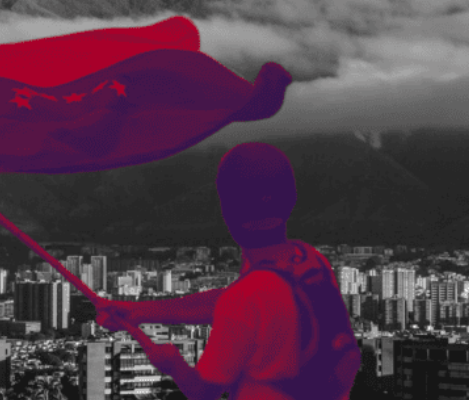
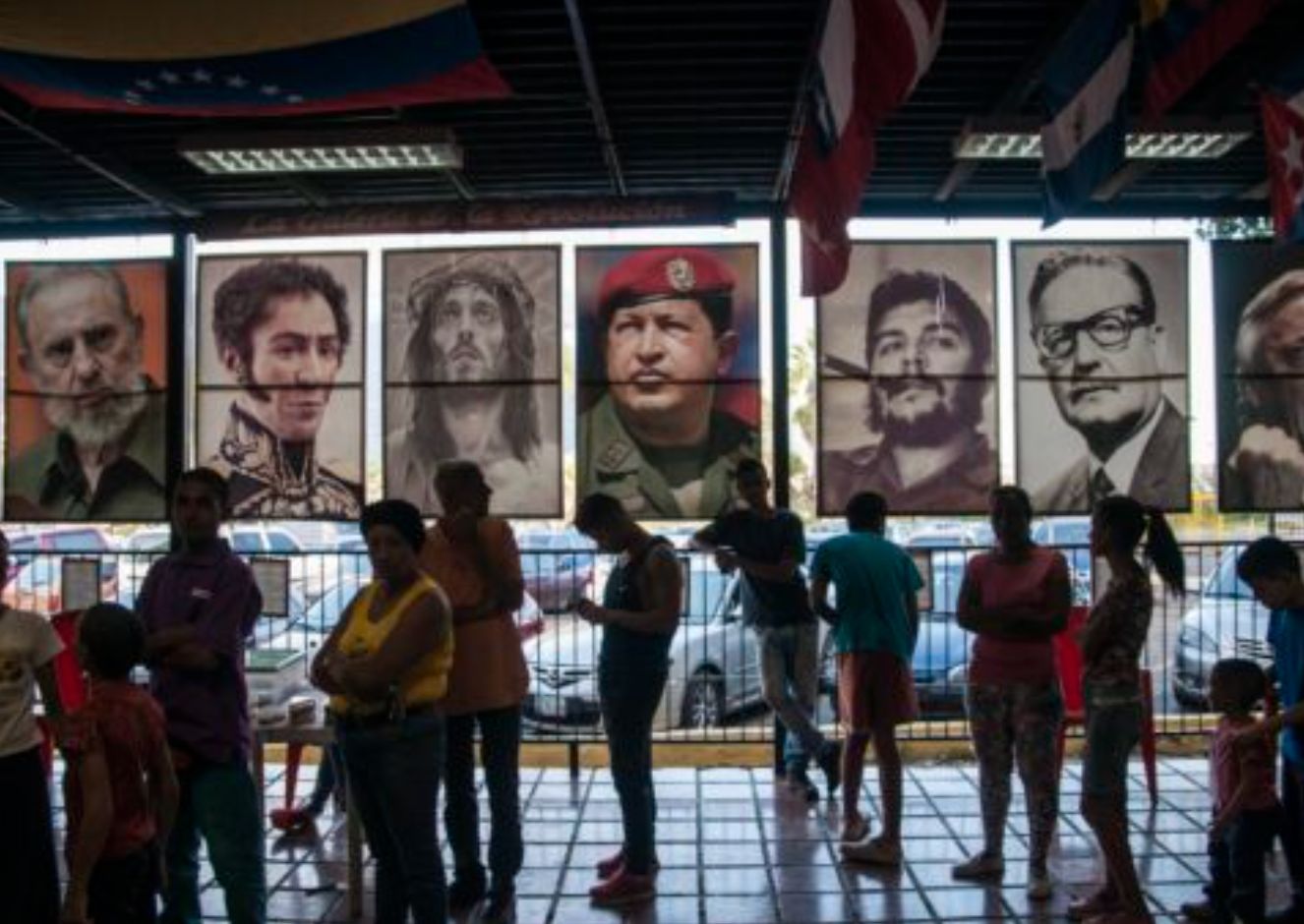
In this dossierof articles and podcast episodes, NACLA offers several pieces that aim to help readers understand the facts about Venezuela’s recent history, the rise and significance of the Chavista movement, the role of oil in shaping the country’s political economy, and evolving relations between the Maduro government and the United States.
WINTER ISSUE AVAILABLE OPEN-ACCESS
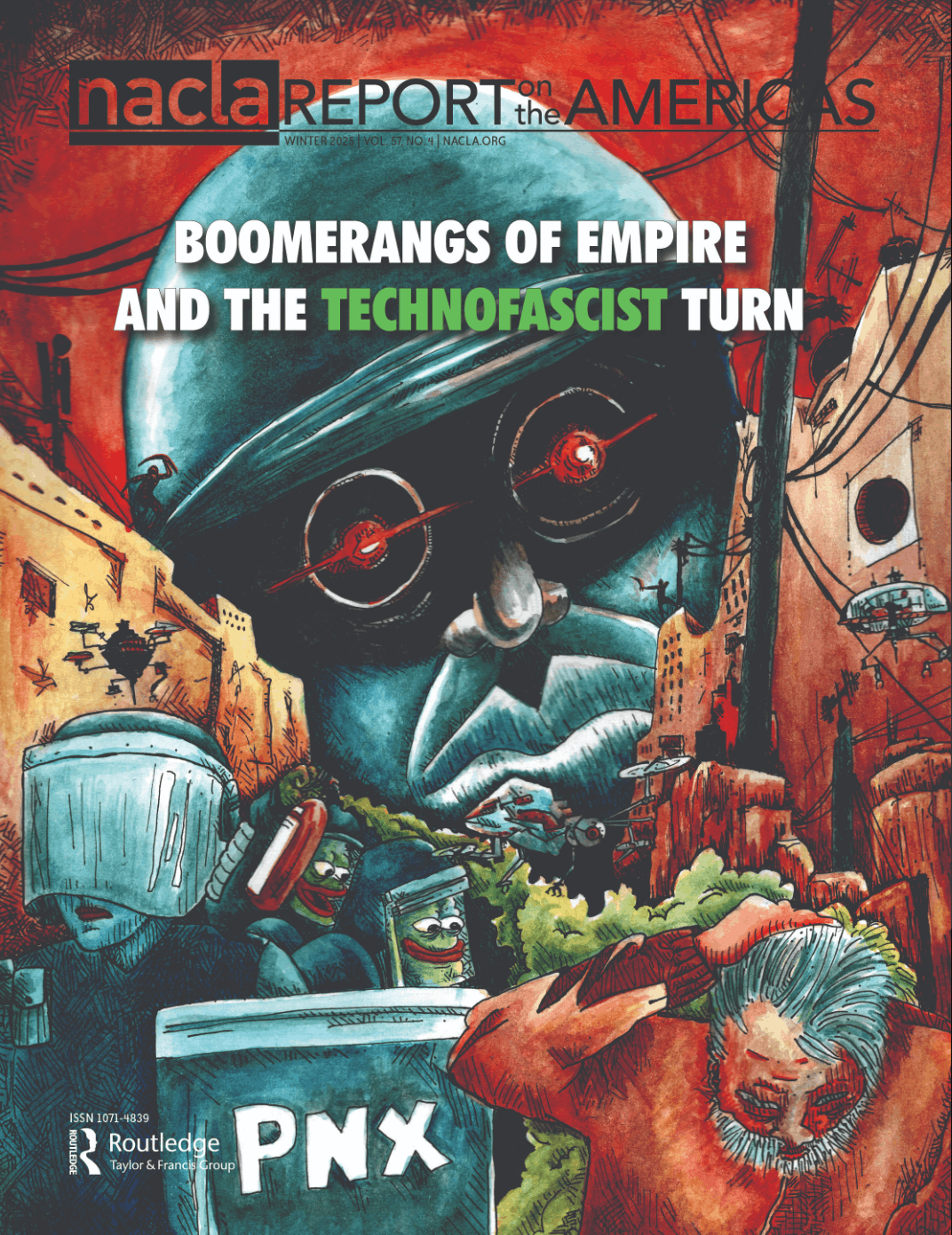
After long delays on the part of our publisher, our winter issue is out and available free to access in its entirety for a limited time! Read it here! If you are a subscriber, print copies will arrive in the mail soon.
In 1950, Martinican author Aimé Césaire used the term "imperial boomerang" to describe a historical circuit, in which the tactics of imperial domination tested abroad return home, reshaping the very societies that invented them. Our winter issue, “Boomerangs of Empire and the Technofascist Turn,” takes Césaire’s insight not as metaphor but as method, tracing how this returning and disseminating violence is shaping the Americas today.
Please consider making a donation to support more work of this kind at a time of increased hardship and pressures for independent media.
We are so grateful to those who donated to our end-of-year campaign. We're excited to keep bringing our readers the content they need to understand the region.
If you haven’t yet donated to NACLA, please consider making a tax-deductible donation today!
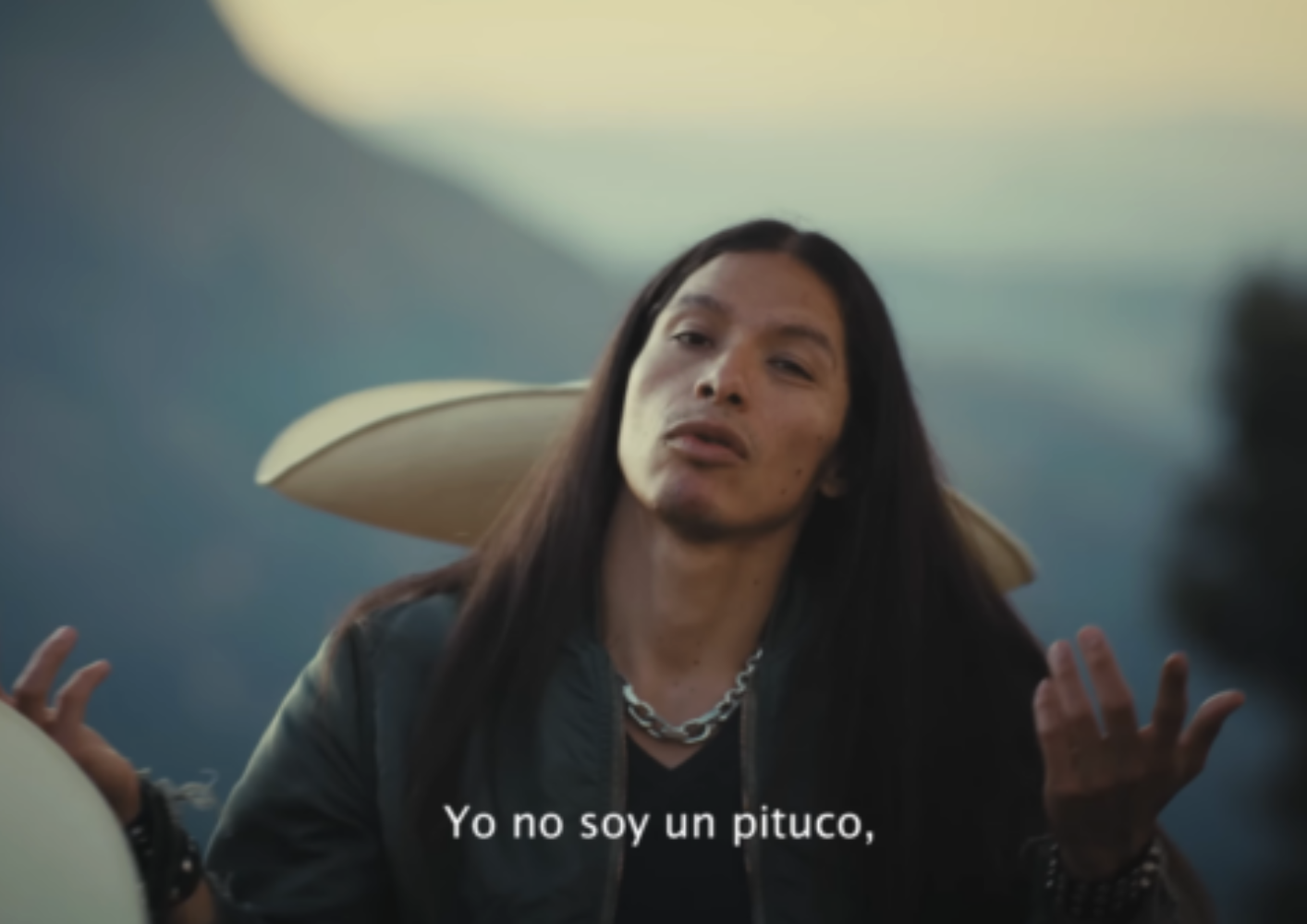
A.Chal’s new track “Pituko” is a creative disruption of postcolonial geographies across Peru, and a blend of old and new genres that creates a unique postcolonial sound.
Más allá de la apropiación de los recursos petroleros y minerales de Venezuela, la invasión del 3 de enero es parte de la crisis de época del capitalismo global.
After the U.S. invasion of Venezuela, the Trump administration has threatened other countries in Latin America, but some of the region's leaders and people are standing up.
IMAGE OF THE WEEK
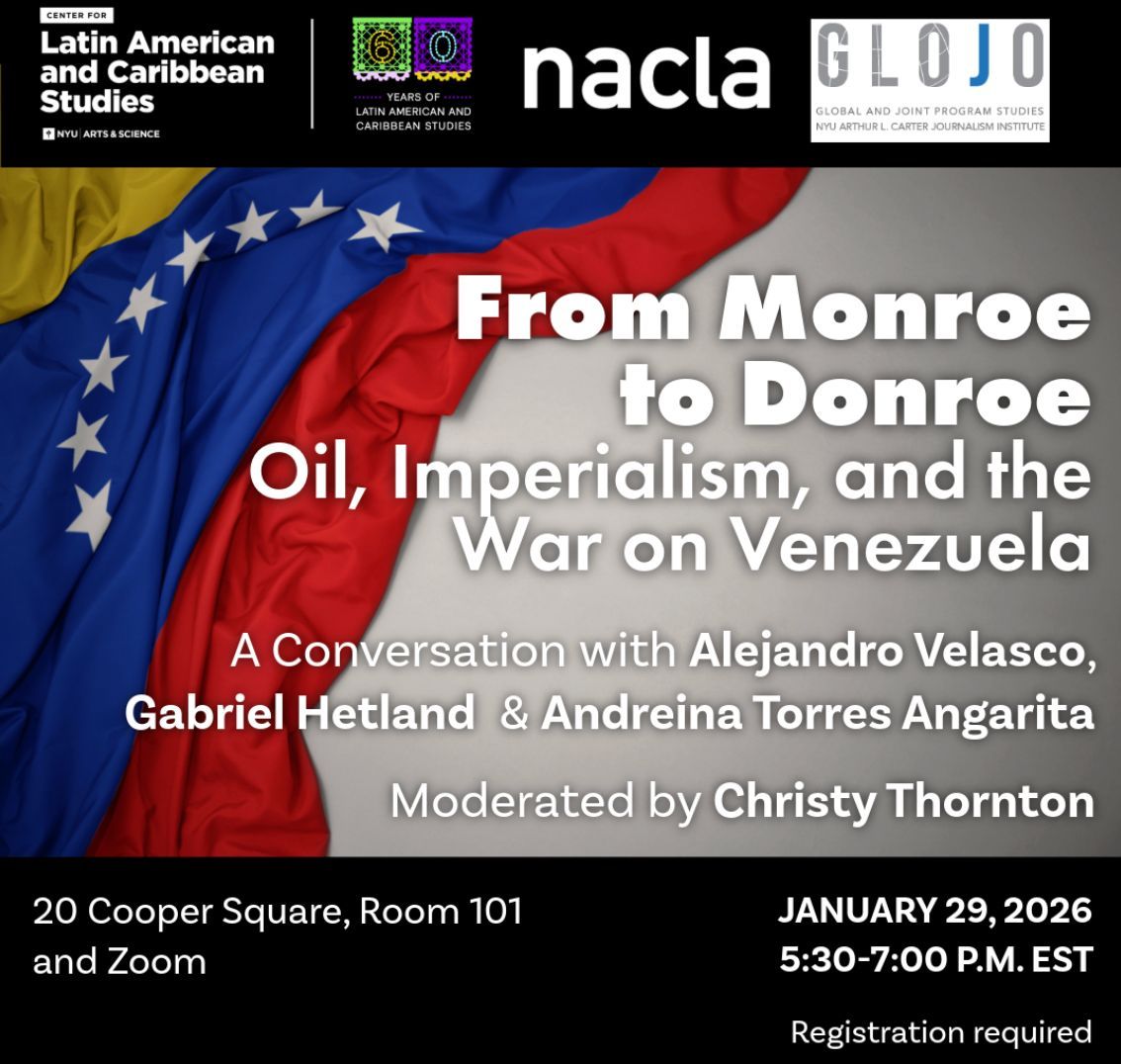
Join CLACS, NACLA, and NYU Global Journalism for a conversation on the crisis in Venezuela. This event is open to the public both in person and via Zoom. Please register in advance; note that physical seating is limited.
AROUND THE REGION
U.S.-VENEZUELA TIES DEEPEN?: Ties between the United States and Venezuela appear to be warming under the new government led by Delcy Rodríguez, though the scope of collaboration remains unclear. On Monday, parliamentary leader and brother of the president Jorge Rodríguez announced aslate of reforms aimed at attracting more foreign investment; a day later, Delcy Rodríguez confirmed that revenue from U.S.-brokered oil sales would be used to stabilize the economy. On Wednesday, a senior U.S. official announced that Rodríguez would soon visit the White House—the first sitting Venezuelan president to do so in more than 25 years. The following day, U.S. officials told The Guardian that the White House had held talks with Rodríguez and figures close to Nicolás Maduro prior to his removal—a long-rumored claim. Still, the path ahead remains uncertain: even as the Trump administration has praised Rodríguez, the House Foreign Affairs Committee called for free and fair elections and backed opposition leader María Corina Machado after meeting with her on Tuesday. Venezuelan civil society groups echoed those demands this week, calling for new elections and the release of all political prisoners in a unified declaration.
KAST’S CABINET—The proposed cabinet of José Antonio Kast, Chile’s recently elected far-right president set to assume power on March 11, was revealed on Tuesday. Its composition of business leaders with conflicts of interests, abortion opponents, and Pinochet apologists, as well as the haphazard way in which it was assembled, drew criticism from parties across the political spectrum. Progressive parties and social movements focused their attention on a few of the most egregious picks, including Fernando Barros and Fernando Rabat, nominated for the Ministries of Defense and Justice and Human rights, respectively. Both men provided legal counsel to Augusto Pinochet after the end of his dictatorship; Rabat’s nomination sparked particular outrage among the family members of the disappeared, given that the ministry he is set to head is still overseeing cases linked to Pinochet’s rule. Kast’s pick to head the Ministry of Gender Equality, 30-year-old Judith Marín, also drew backlash over her vehement anti-abortion stance. Meanwhile, many conservative lawmakers, including members of Kast’s own party, voiced frustration that his cabinet is composed overwhelmingly of independents with few ties to traditional parties.
SHEINBAUM’S BIND—Mexican President Claudia Shenbaum defended her decision to send 37 alleged cartel members to the United States, calling it a "sovereign decision.” Her Wednesday remarks came as a response to concerns that her security policy is being shaped by pressure from the Trump administration, which has increasingly threatened to take action against Mexico over cartel violence. The transfers, which occurred on Tuesday and included several high ranking figures, marked the third such extradition agreement—each one following U.S. threats of tariffs or military action. Security Minister Omar García Harfuch said the transfers brought the total number of extradited cartel members to 92. While the U.S. invasion of Venezuela has left Mexico on edge, Sheinbaum has largely stuck to the path of collaboration as a means to avoid further escalation. Still, nerves remain frazzled: on Monday, she sought to reassure the public after the U.S. Federal Aviation Authority announced it was conducting “military exercises” in the eastern Pacific Ocean near Mexico and Central America.
COLOMBIAN PEACE PROCESSES: Former Colombian paramilitary leader Salvatore Mancuso was sentenced Tuesday to 40 years in prison for crimes committed against Indigenous communities during the country’s armed conflict. Mancuso, a former leader of the right-wing paramilitary group known as the United Self-Defense Forces of Colombia (AUC) was returned to Colombia in 2024 after serving 12 years in a U.S. federal prison on drug trafficking charges. Tuesday’s conviction, issued by Colombia’s peace tribunal, the Special Jurisdiction for Peace (JEP), dealt with 117 different violent acts carried out by forces under his command in the department of La Guajira between 2002 to 2006. Mancuso’s sentence could be reduced to eight years if he cooperates with a set of truth and reparations processes. The same day, Colombia’s Inspector General’s Office accused the Revolutionary Armed Forces of Colombia (FARC) of violating a key provision of the 2016 peace deal by failing to turn over promised assets—such as land and gold—meant to fund reparations. A new report found that the group turned in only a fraction of the resources they had promised.