The U.S. noose around Cuba is tightening as the Trump administration escalates its campaign against the island. Multiple airlines have suspended flights amid a shortage of jet fuel, dealing a heavy blow to the tourism industry. The Cuban government announced a far-reaching energy-saving plan to prepare for cascading difficulties, while the Cuban people face the brutal humanitarian consequences of blackouts, food shortages, and strain on the medical system—as they have for decades.
Since the 1962 imposition of the U.S. trade embargo on Cuba, U.S. sanctions have been designed explicitly to bring about “hunger, desperation, and the overthrow of” the Cuban government. This policy has failed remarkably to bring about regime change but has inflicted severe humanitarian costs. In recent weeks, worsening shortages have led critics to accuse the Trump administration of deliberately seeking to “induce a famine.”
The crisis deteriorated rapidly after the Trump administration’s January 3 invasion of Venezuela and kidnapping of President Nicolás Maduro. Secretary of State Marco Rubio, reportedly the mastermind behind the illegal operation, has long seen the end of Chavismo as a step towards toppling Cuba’s socialist government. In the immediate aftermath of the invasion, Rubio and Trump warned that Cuba would be next. After a brief window in which Trump ruled out direct military intervention, on January 29 the administration declared a “national emergency” over what it called an “unusual and extraordinary threat” from Cuba and threatened tariffs on any country that sells oil to the island, a move widely interpreted as targeting Mexico.
The regional fallout has been swift. Chastened by an unpredictable U.S. administration that has threatened direct intervention across the region, progressive governments and historic allies have had to walk a fine line between solidarity and complicity. While President Claudia Sheinbaum’s government has expressed solidarity with the Cuban people through a massive shipment of humanitarian aid, it has temporarily halted oil shipments—the island’s biggest need. This concession to the Trump administration, echoed by other regional governments, has been criticized by Mexican activists who point to the further isolation of the Cuban people. On Sunday, the Nicaraguan government reinstated visa requirements for Cubans, closing a key migration route, and Guatemala has withdrawn from a medical cooperation program employing Cuban doctors, cutting off a major source of income for the Cuban government that has long been targeted by Rubio.
As blackouts worsen, the Cuban government has responded by prioritizing essential services, ramping up solar power generation, cutting transport services, and closing schools, universities, and workplaces early. President Miguel Díaz-Canel has reiterated his willingness to negotiate on issues including human rights, tourism, and democracy. Trump has claimed that talks are underway, but reporting from Drop Site News suggests no such talks exist and that Rubio is actively blocking dialogue in order to mislead the president and move on to more aggressive tactics.
Activists from around the world, meanwhile, are stepping up their actions to help the Cuban people. Mexicans are gathering food donations, Argentinians are raising money for solar panels, and French Communists are collecting medicine. Inspired by the Global Sumud Flotilla to Gaza, an international coalition of activists has begun organizing the “Nuestra América Flotilla” to deliver essential aid and “break the siege.” It will set sail for Cuba next month.
For more info on Cuba, keep an eye out for NACLA’s forthcoming Cuba Reader.
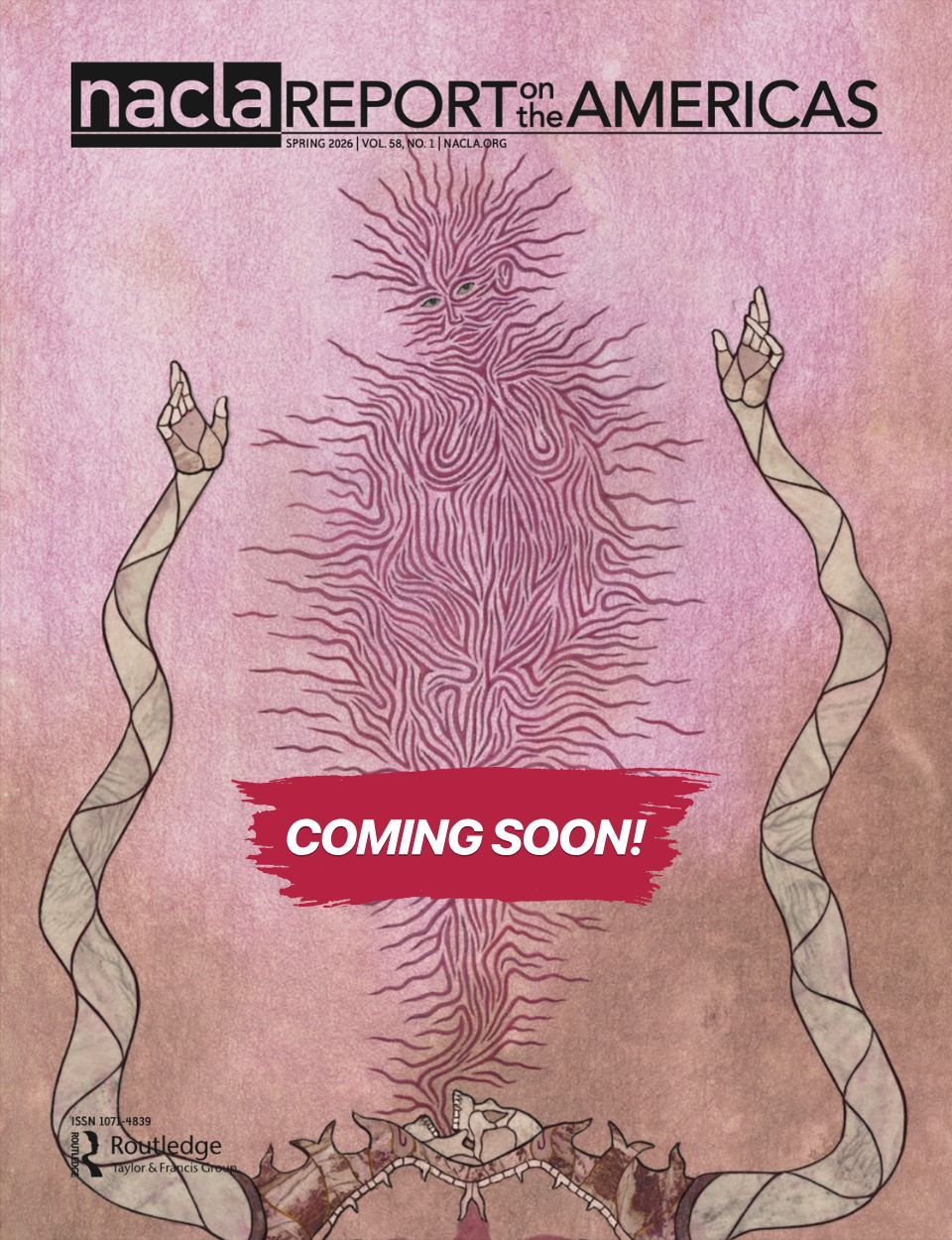
The Spring 2026 issue of the NACLA Report, “Borders Can’t Contain Us,” will be out soon!
Guest edited by Soledad Álvarez Velasco, Dawn Marie Paley, and P.S.D., the issue explores the historical contours, regional variations, and lived consequences of a hemispheric bordering regime that now extends far beyond any single boundary line.
“Moving between a critical review of border externalization and the inexorable forms of migrant resistance that echo long genealogies of anticolonial, antiracist, anti-imperialist, feminist, Indigenous, and Black social struggles in Latin America and the Caribbean, this dossier makes a clear political gesture,” write the guest editors in their introduction. “It insists on the political importance of both recording and archiving, by whatever means possible, the present moment of fascist bordering, while recovering the lessons of struggle forged across the region.”
Subscribe today to get your copy of this urgent issue in the mail. The deadline to subscribe is February 25th. Donate now to support this work.
Cover art by Felipe Baeza, insurgent intimacies, 2026.
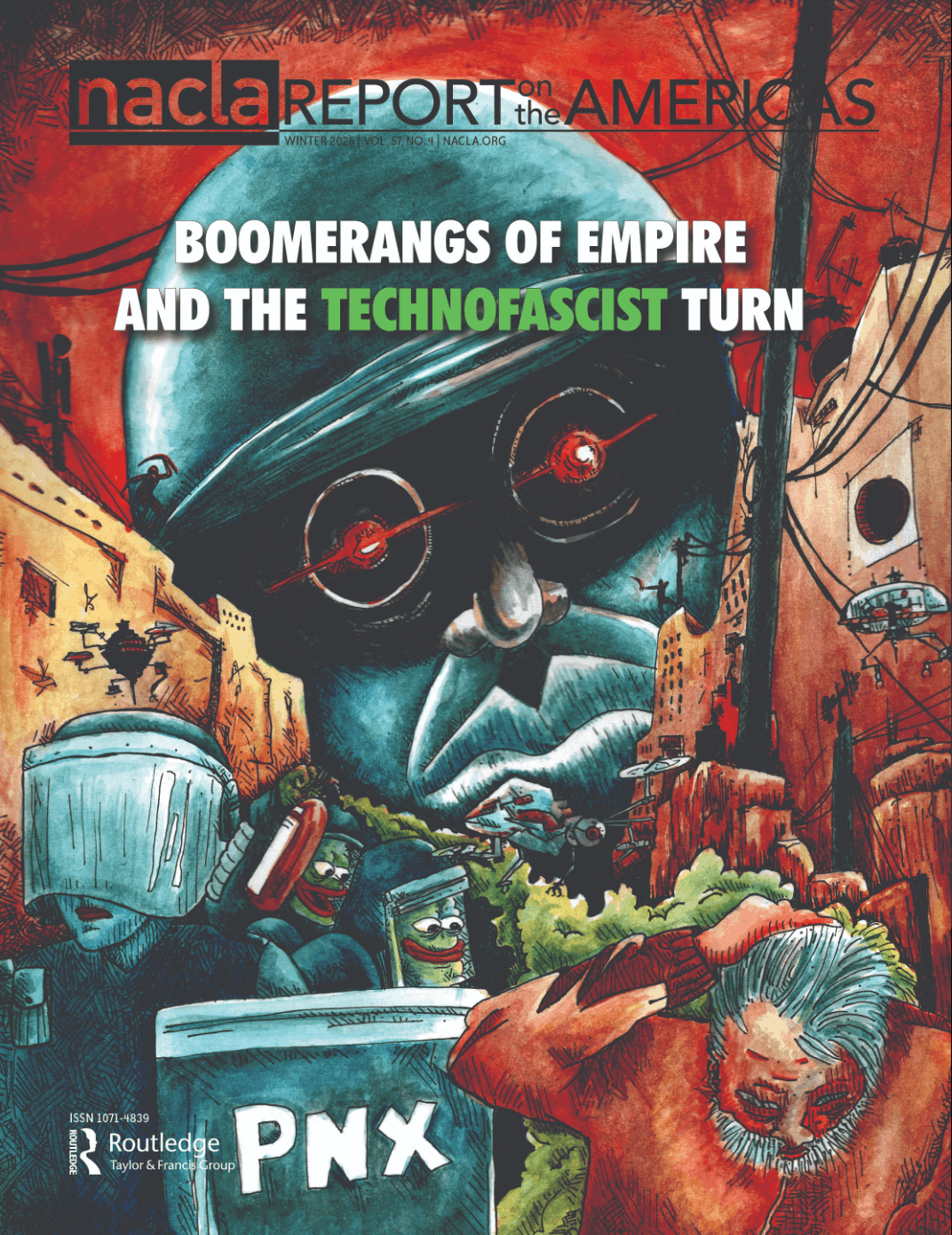
WINTER ISSUE AVAILABLE OPEN-ACCESS
After long delays on the part of our publisher, our winter issue is out and available free to access in its entirety for a limited time! Read it here! If you are a subscriber, print copies will arrive in the mail soon.
In 1950, Martinican author Aimé Césaire used the term "imperial boomerang" to describe a historical circuit, in which the tactics of imperial domination tested abroad return home, reshaping the very societies that invented them. Our winter issue, “Boomerangs of Empire and the Technofascist Turn,” takes Césaire’s insight not as metaphor but as method, tracing how this returning and disseminating violence is shaping the Americas today.
Please consider making a donation to support more work of this kind at a time of increased hardship and pressures for independent media.
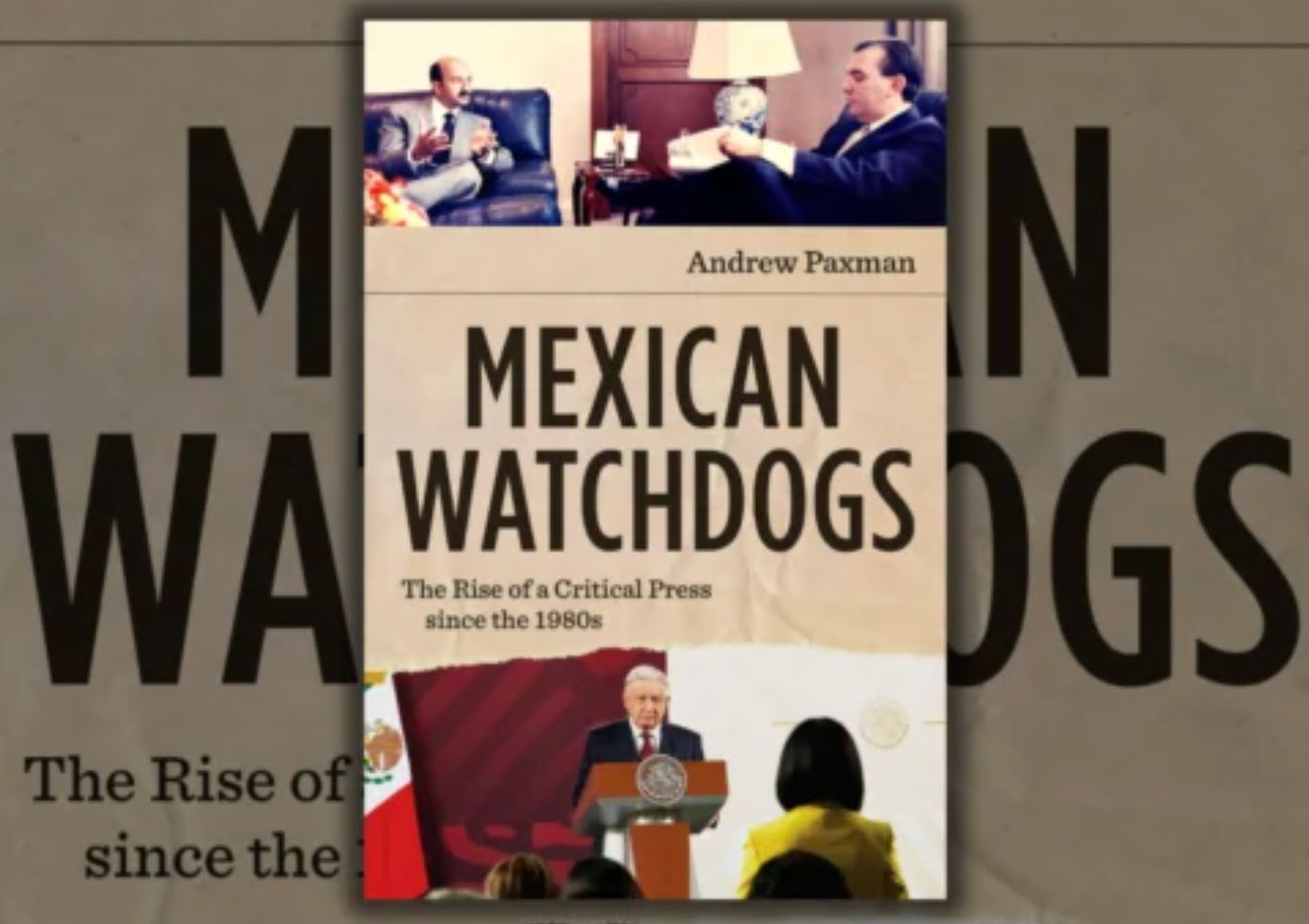
The political and business history of Mexico’s beleaguered critical press, caught between drug traffickers and the state, is the subject of Andrew Paxman’s new book.
In an interview, Ecuadorian politician and foreign policy expert Guillaume Long explains how the “Donroe Doctrine” could reshape Latin American politics.
Amidst rising fears of insecurity, Costa Ricans elected Laura Fernández, a continuity candidate whose predecessor presided over a political project that breaks with the country’s democratic traditions.
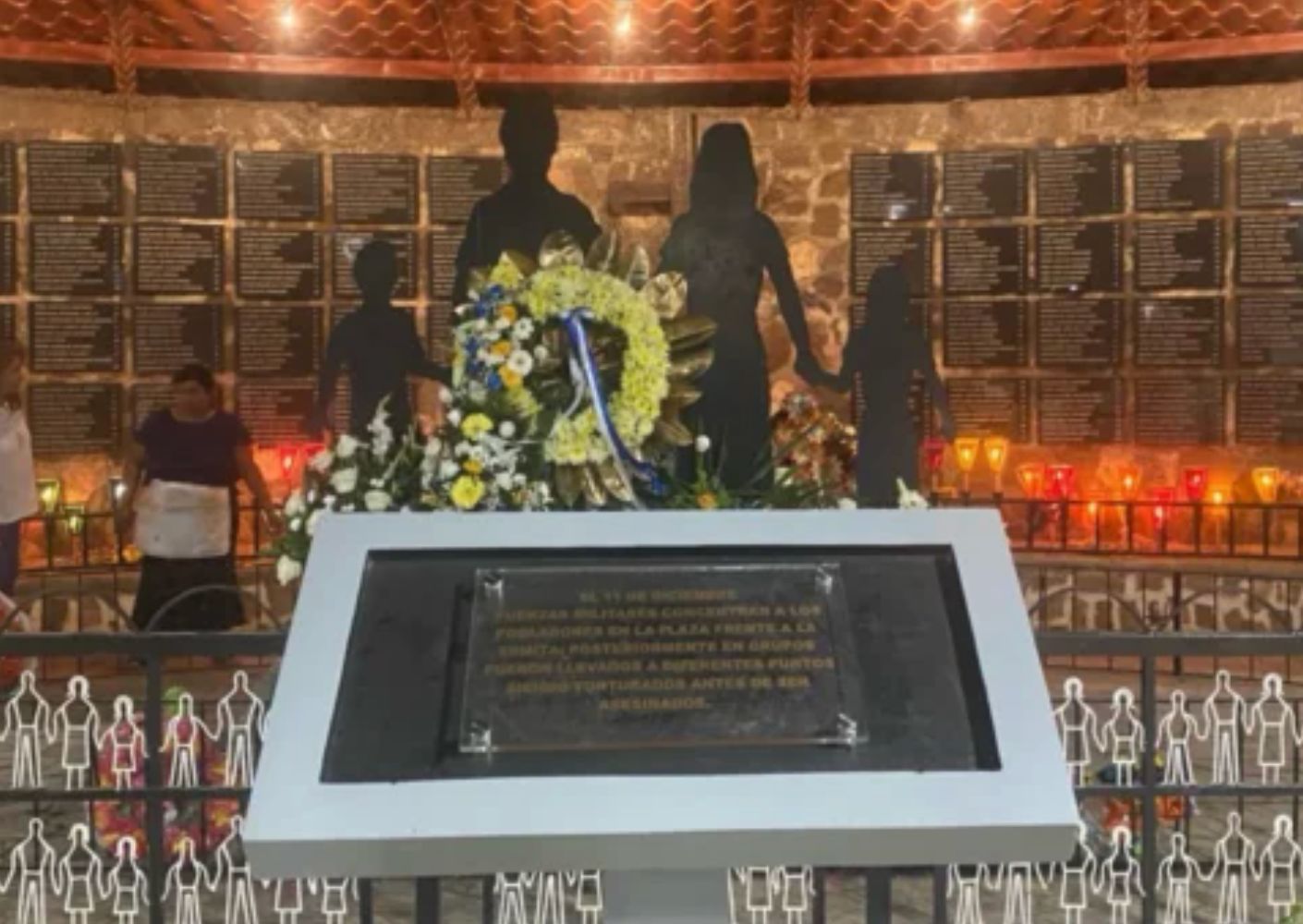
Una película apoyada por el estado que narra la masacre de El Mozote en 1981 abre preguntas sobre la guerra civil, mientras que las víctimas siguen buscando justicia.
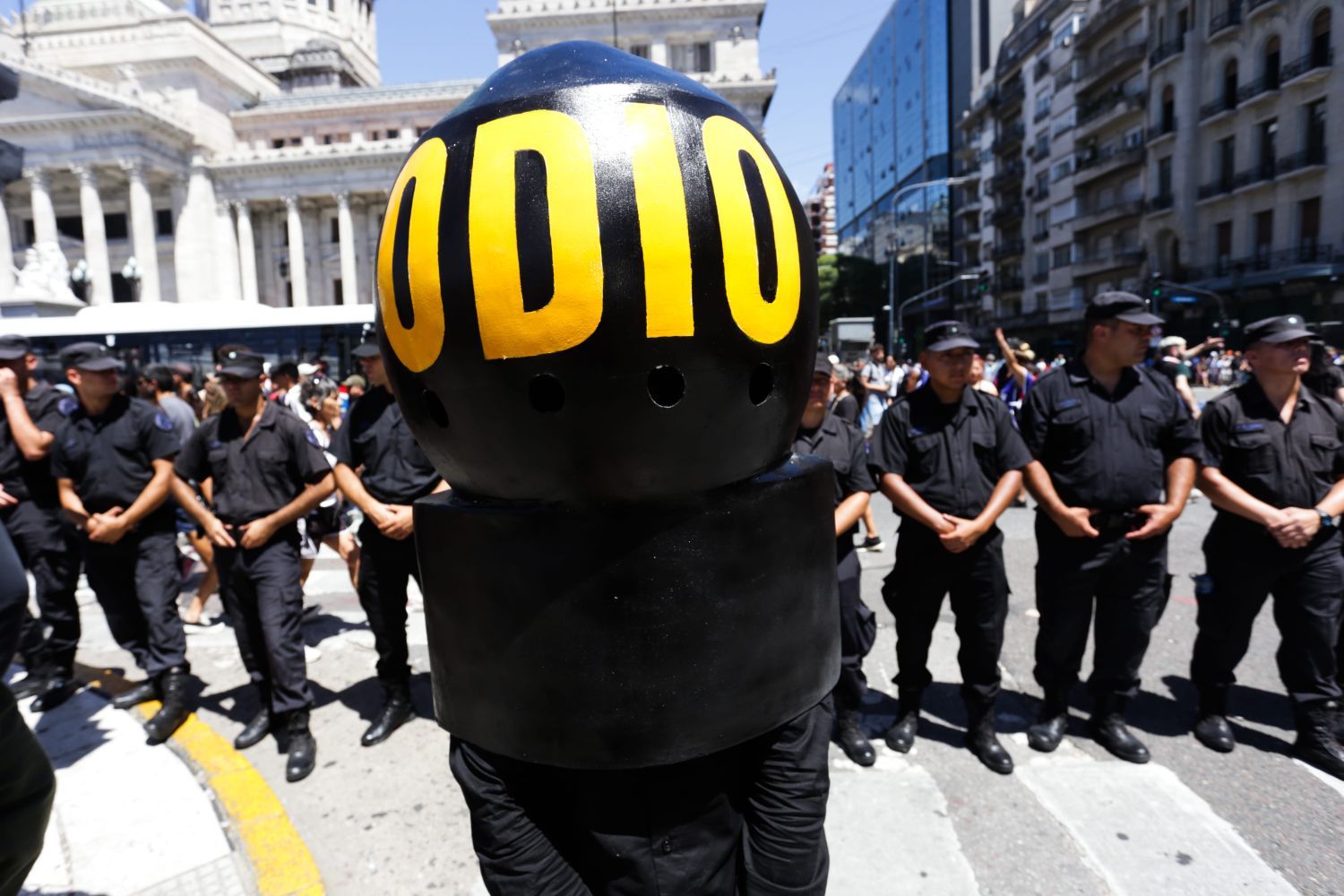
“Hatred.” A performance denouncing repression by Argentina’s security forces, performed before a police cordon during a demonstration at the National Congress in Buenos Aires, January 23, 2024. This image accompanies the Editor's Introduction in the forthcoming issue of the NACLA Report, titled "Borders Can't Contain Us." Subscribe today to get your copy in the mail! (Susi Maresca)
AROUND THE REGION
HAITI’S POLITICAL CRISIS—Haiti’s political crisis deepened as the tumultuous tenure of its unelected Transitional Presidential Council (TPC) came to an end on Saturday, leaving power in the hands of a U.S.-backed Prime Minister Alix Didier Fils-Amié—who only weeks ago was nearly ousted from the council. Fils-Amié now leads a country in profound crisis: Haiti has had no elected president since the 2021 assassination of Jovenel Moïse, gangs control upwards of 90 percent of the capital, an estimated 1.5 million people have been displaced, and some 16,000 killed in the last few years. Since assuming power in April 2024, the TPC was plagued by infighting and accusations of corruption. It also struggled to bring security to the country despite the presence of a multinational force led by Kenyan police that has largely failed to meet its goals. When the majority of council members moved to remove Fils-Aimé, the Trump administration accused them of conspiring with gangs, revoked the visas of some council members, and reaffirmed its support for the prime minister. He is expected to remain in power until Haiti’s first general elections in a decade, tentatively set for August.
COLOMBIAN POLITICAL VIOLENCE—President Gustavo Petro’s helicopter was forced toreroute over the open sea and await Naval support after what he described as an assassination attempt stymied his attempt to visit flood-stricken communities on the Caribbean coast. Petro, who has long warned of threats from drug traffickers, said Tuesday he was unable to land because he was “trying to escape being killed.” The same day, Aida Quilcué, a senator and Indigenous activist from Petro’s Historic Pact coalition, was briefly kidnapped by armed men in her native Cauca department before being released. The incidents come as the country prepares for congressional elections in March and a highly polarized presidential election in May. Colombia’s Electoral Observation Mission (MOE) has warned that more than 300 municipalities—around one-third of the country—face a high risk of electoral violence.
ARGENTINA’S LABOR REFORM—Buenos Aires saw heated debate and protests Wednesday as the Senate opened discussions on President Javier Milei’s flagship “Labor Modernization Act.” While lawmakers debated inside Congress, protesters clashed with police outside, who fired tear gas and rubber bullets as some demonstrators responded by launching stones or molotov cocktails. The bill’s path to the floor was uncertain, requiring last-minute negotiations and the removal of some of the bill’s more controversial provisions—including corporate tax cuts and reductions to employer contributions to union healthcare funds. Even with those concessions, unions warn that the bill will make life significantly more difficult for Argentine workers. After 12 hours of debate, the Senate approved the measure, and it will now move to the lower chamber. The proposal seeks to remove alleged barriers to job creation by flexibilizing working hours, salaries, and severance pay, discouraging labor lawsuits, and lowering taxes on employers—changes critics say will erode hard-won labor protections.
VENEZUELA’S OIL—U.S. Energy Secretary Chris Wright met with interim President Delcy Rodríguez in Caracas on Wednesday to push deeper foreign investment in Venezuelan oil, marking the highest-level U.S. visit focused on energy policy in decades. Wright, a former fossil fuel executive, is the first cabinet member to visit Venezuela since the January 3rd invasion. He pledged that there would soon be a “dramatic increase in Venezuelan oil production” and praised the new hydrocarbon law recently signed by Rodríguez. The Trump administration has remained almost refreshingly open about the fact that its invasion of Venezuela was motivated almost entirely by the drive to control its oil, a point reiterated in a speech last week by Vice President J.D. Vance. On Monday, U.S. military forces boarded a sanctioned oil vessel in the Indian Ocean after having tracked it from the Caribbean.