The rising wave of far-right populism has arrived in Chile. Jose Antonio Kast, a 59-year old ultra-conservative who campaigned on fighting crime and mass deportations, defeated left-wing candidate Jeanette Jara by about 16 points. His victory marks the country’s furthest shift to the right since the restoration of democracy after the brutal dictatorship of Augusto Pinochet 30 years ago—an era and figure Kast has openly admired.
Kast’s success largely stemmed from his ability to fuse the electorate’s top two concerns: crime and migration. Though Chile remains one of the safest countries in Latin America, transnational criminal groups have played a role in a slight uptick in violent crime that, though far less extreme than perceived, has captured public attention. Venezuela’s Tren de Aragua has taken advantage of the country’s porous northern border to traffic drugs and weapons that have been linked to a series of high profile crimes, contributing to a backlash against migrants—especially Venezuelans—even though they are often among the primary victims of this violence. Kast has exploited these anxieties, painting a dark picture of a country where “criminals are free and citizens are living as if in a prison,” blaming migrants writ large, calling for walls and electric fences, and vowing to begin mass deportations.
Kast’s ascent will affect far more than security and migration. A devout Catholic and father of nine, he opposes abortion, same-sex marriage, and what he calls “gender ideology.” A fan of neoliberal economic policies, he has promised sweeping spending cuts. Most troubling for Chilean progressives, however, is his open admiration for Pinochet. Writing for TheNew York Times, Ariel Dorfman argues that Kast’s support for Pinochet makes the country’s turn towards “nativist authoritarianism” unique. For Dorfman, his willingness to release former military officials convicted of heinous crimes and nostalgia for a dictatorship that claimed thousands of lives constitute a “political and ethical earthquake” in a country where “many considered the long struggle for democracy to have been won.”
Xenophobia and fears of crime alone, however, do not explain Kast’s victory. Public disappointment with the Left was crucial as well. Elected on promises of structural reform after the 2019 popular uprising, left-wing President Gabriel Boric struggled to live up to the immense expectations thrust upon him. A progressive new constitution was voted down, his deployment of the military against Mapuche communities incensed many of his supporters, and economic growth faltered. These issues overshadowed the administration's concrete gains: a more just foreign policy, expanded healthcare access for the poor, protections for gig workers, pension reform, a rise in the minimum wage, and the introduction of a 40-hour work week. As labor minister Jara played a key role in many of these accomplishments, but it was not enough to overcome the malaise and disillusionment that shaped the election.
Kast will not assume power until March, but the shockwaves are already being felt across the region. Following in the footsteps of other Latin American conservatives, his administration is expected to align closely with U.S. foreign policy imperatives. During a visit to Argentina, he promised to support “any situation” aimed at removing Venezuelan President Nicolas Maduro, whom he called a “narco-dictator.” Kast’s victory prompted various reactions from the region’s progressive leaders. Brazilian President Luiz Inácio “Lula” da Silva offered muted congratulations, Mexican President Claudia Sheinbaum denounced Pinochet and called his victory a “moment of reflection” for progressives, and Colombia’s Gustavo Petro vowed to never “shake hands with a Nazi.”
We will be taking a break from the newsletter next week. See you in 2026!
With only 12 days left in 2025, we are less than halfway to our year-end goal of raising $30,000 to sustain our work in 2026. We need your support. ¡Juntos lo podemos lograr!
Most readers know that NACLA is small but mighty. But many don’t realize just how bare-bones this operation is. The managing editor is NACLA’s only full-time staff position. The outstanding work that NACLA has and continues to produce is, without a doubt, thanks to the incredible commitment of past and current staff, Editorial Committee and Board members, guest editors, and contributors. NACLA’s survival also depends on the support of readers like you, especially now amid escalating attacks on journalists and independent media.
Our Board and Editorial committee will match your donations up to $4,500 through this week, so double your impact by donating today and help carry NACLA's work into it's seventh decade!
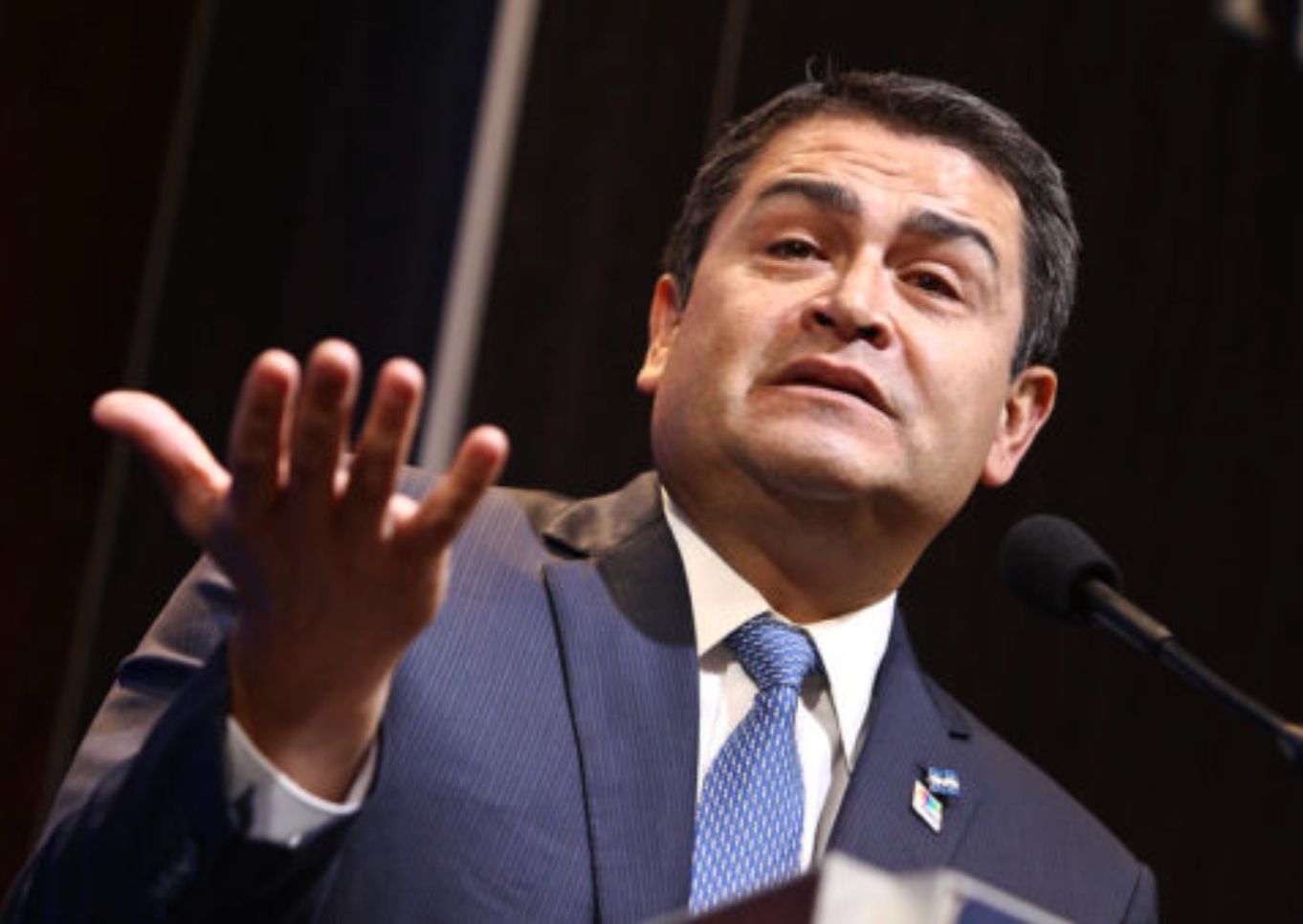
Extrajudicial executions of Latin American fishermen and the pardon of a former Honduran President and cocaine kingpin reveal the deadly contradictions of the U.S. "War on Drugs."
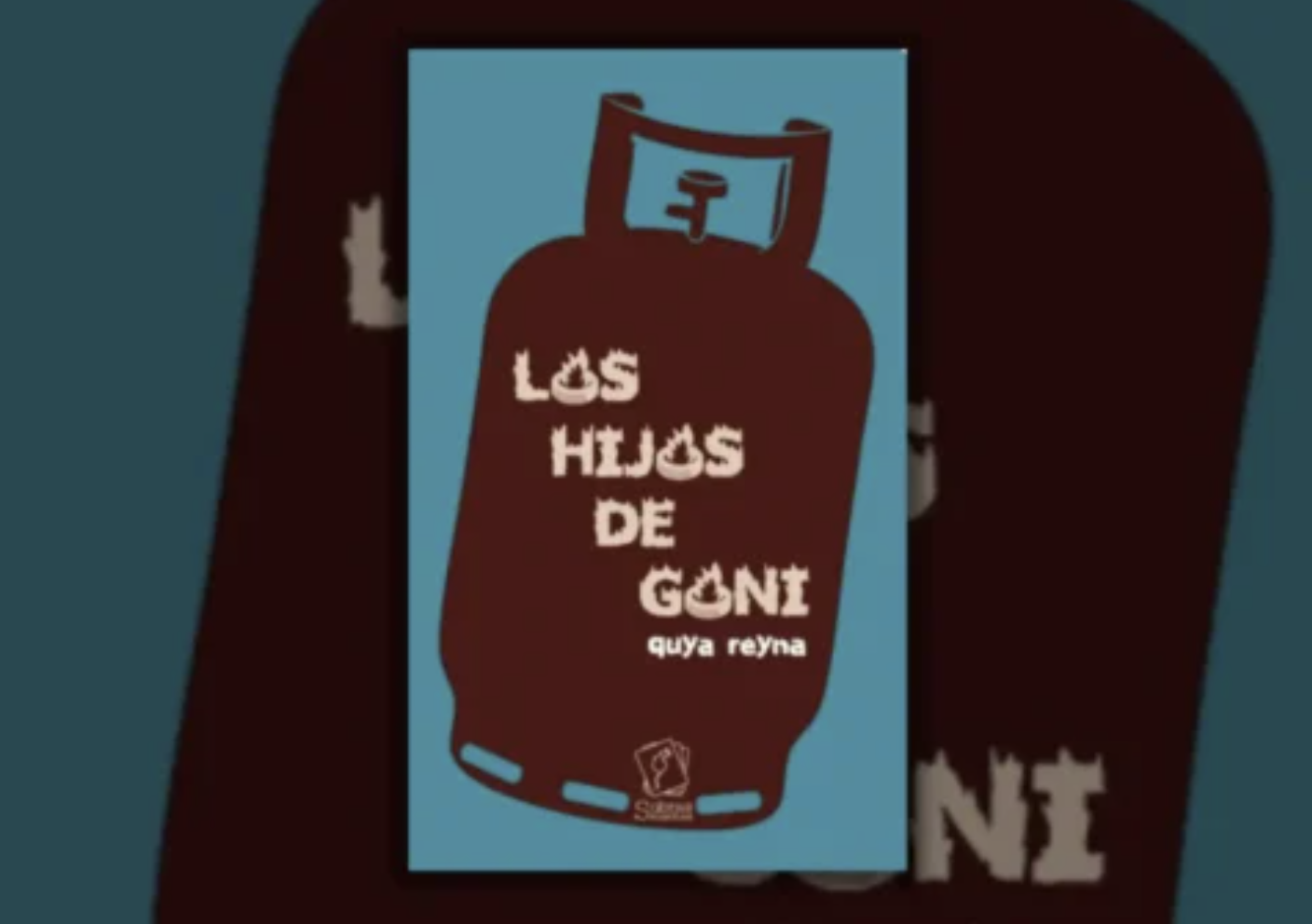
Los Hijos de Goni and No Me Jodas, No Te Jodo, two books from El Alto publishing house Sobre Selectas, invite people to experience the intricacies of the city and its people.
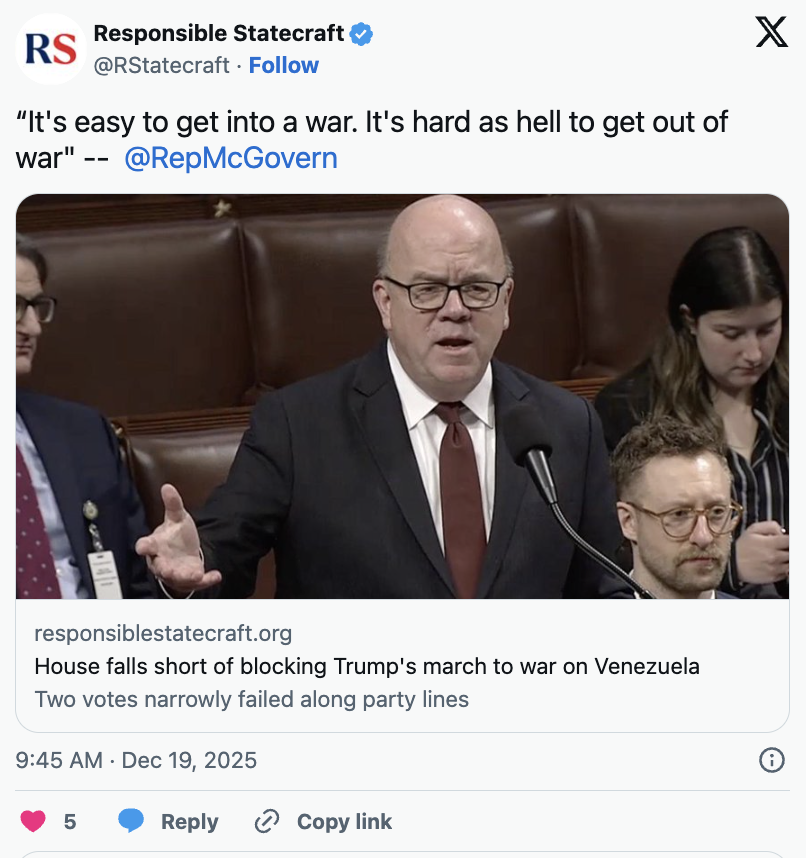
U.S.-VENEZUELA TENSIONS—In an intense escalation of its sabre-rattling toward Venezuela and President Nicolás Maduro, the Trump administration designated the Venezuelan government a “Foreign Terrorist Organization” and threatened a “total and complete blockade” of sanctioned oil vessels. Yet, as with previous rounds of threats against the country, the immediate consequences were unclear. While some U.S. lawmakers described the move as an “an act of war” and the Venezuelan Navy responded by escorting oil tankers, experts questioned the order’s legal ramifications and noted that its focus on “sanctioned oil tankers” suggested that not all naval traffic would be targeted. The tanker dispute was soon overshadowed by a new line of attack that further exposed the hollowness of the administration’s counter-narcotics narrative. On Wednesday, Trump accused the Venezuelan government of taking U.S. land and “oil rights” and demanded their return, an ahistorical, colonial claim that struck a nerve in a country whose fortunes have been deeply tied to oil. Maduro, for his part, said Trump’s true motives “have been revealed.”
BOLIVIAN FUEL SUBSIDIES—President Rodrigo Paz announced on Wednesday that his administration would end critical fuel subsidies that have served as a lifeline for Bolivia’s popular classes for two decades. Paz, a center-right politician inaugurated in November, argued that the subsidies were “poorly designed,” too costly, and a major source of state corruption. The move formed part of Decree 5503, which set new fuel prices while slightly raising the minimum wage and increasing payouts to senior citizens and students. Fuel prices were set to surge immediately—a liter of diesel jumped from around $.50 to $1.40 while premium nearly doubled to $1 per liter—as did the price of public transit. In response to the news, public transit workers went on strike and announced meetings to plan their next moves. The reforms were greeted warmly by the Trump administration as “historic.” But Paz is seeking more than just approval: according to Foreign Minister Fernando Aramayo, they want a debt swap similar to the recent U.S.-Argentina deal.
HONDURAS ELECTION—Honduran election officials have yet to begin an official recount of nearly 2,800 ballot boxes from last month’s presidential election, a crucial last step before a winner can be declared. The head of the electoral council blamed protests in the capital for preventing the “necessary conditions” for the recount to begin. On Wednesday, supporters of the ruling left-wing Libre Party rallied outside the presidential palace, summoned by President Xiomara Castro to “defend democracy.” Castro, her husband and former president Manuel Zelaya, and Libre candidate Rixi Moncada reiterated their claim that the election was invalid due to U.S. interference, arguing that Washington’s threats prevented voters from choosing freely. The Trump administration, which has backed right-wing businessman Nasry Asfura and threatened to withhold aid if he does not win, urged officials to proceed immediately with a recount of the final votes, insisting there was no fraud. Salvador Nasralla, a center-right former vice president trailing Asfura by a narrow margin, has also alleged fraud, accused Trump of tipping the scale, and demanded a full recount—a call echoed by Libre but rejected by the electoral council.
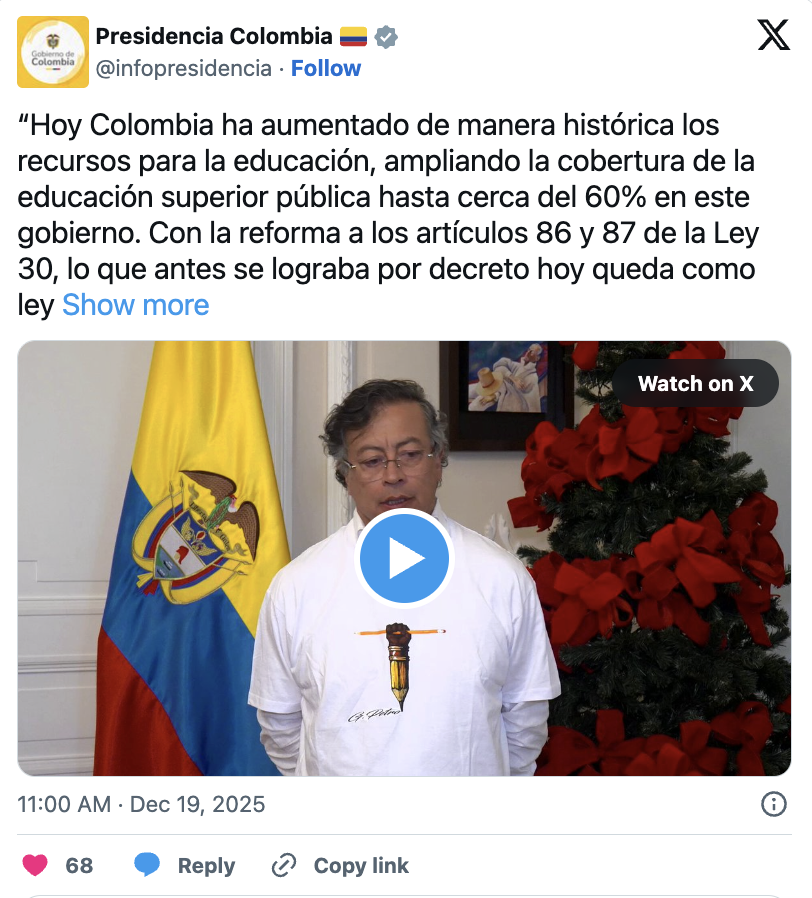
U.S. THREATS ON COLOMBIA—The Trump administration’s threats against Colombia and its left-wing president Gustavo Petro continued this week as the U.S. military struck three more alleged drug boats in the Eastern Pacific, a region increasingly targeted off the country’s coast. The strikes, which killed eight people, came days after Trump issued his starkest warning yet, telling reporters that Petro is “going to be next” in the administration's murderous campaign against alleged drug traffickers. That campaign—if taken at face value—has been undercut by Trump’s moves against Petro, including labeling him as an "illegal drug dealer” and slashing crucial foreign assistance in October that the Colombian state relies on to combat drug trafficking organizations. On Tuesday, the administration delivered another blow to Petro’s security agenda by designating the Clan de Golfo, Colombia’s largest armed group, a Foreign Terrorist Organization. Though violent and deeply involved in drug trafficking, the move threatens to derail peace talks currently underway in Qatar between the group and the government, just as they appear on the verge of breakthrough.