Brazil officially kicked off its election season on Sunday, ushering in a crucial six weeks of campaigning that will culminate in a first round presidential vote on October 4. While there were a slew of other candidates, all eyes were on President Luiz Inácio “Lula” da Silva and right-wing challenger Senator Flávio Bolsonaro, the two front-runners who are projected to face off in a runoff on October 25. The stakes of the election cannot be overstated: after Colombia’s recent turn to the far-right, only Brazil and Mexico remain as nominally progressive forces in the region that have the size and strength to stand up to an emboldened Trump administration that is openly seeking to assert its dominance.
Lula, an 80-year-old former metalworker and trade unionist, chose a symbolic spot to launch his fourth and final presidential bid—Vila Euclides stadium. Decades before, Lula had spoken to striking metalworkers as their union leader in the same place during the so-called “ABC strikes,” a series of industrial actions in Greater Sao Paulo that led to the birth of the Workers Party in 1980. The strikes contributed to the eventual fall of the military dictatorship in 1985 and were central to Lula’s eventual rise to the presidency—first in 2002, then in 2006, then again in 2022. Over the course of his many years in politics, much has changed: he saw his successor impeached, spent 580 days in prison between 2018 and 2019 on trumped-up corruption charges, and developed skin cancer in recent months, a serious concern given his age. Nevertheless, his magnetism remains constant, as has his fight for workers’ rights, crusade to end poverty, and defense of multilateralism.
Surrounded by tens of thousands of followers on Sunday, Lula vowed to uphold and deepen the policies that have contributed to the dramatic social and economictransformations in favor of working people under his past leadership, incomplete though they may be. While he spoke at length about improving Brazilians’ material security by bolstering spending on healthcare, education, and social services, his approach to achieving this growth—namely by pushing for more oil drilling, often in sensitive areas like near the mouth of the Amazon River, or playing loose with environmental regulations—has at times caused tensions with the Indigenous communities and activists that make up a part of his base. His fight alongside the country’s working classes for dignified labor conditions, long a key plank of his appeal, has also run into some limits; there are signs that his emphasis on workers’ rights and the role of unions fit awkwardly in an economy that is increasingly informal, with large swaths of the country relying employment through apps and gig work to sustain themselves.
While Brazil has serious social and economic issues, the far-right’s fearmongering is less tethered to that reality. Kicking off his campaign at Copacabana Beach in Rio de Janeiro, Flávio Bolsonaro—son of former president and convicted coup-plotter Jair Bolsonaro—painted an extremely dark vision of Brazilian society. In front of his supporters, Bolsonaro railed against Lula for allegedly “burdening Brazilians with debt,” letting “guns and drugs” flow into the country, and neglecting the fight against organized crime. He vowed to crack down on crime, treat criminal organizations as “terrorists,” and “restore Brazilian sovereignty.” Nevertheless, his claim to defend the country’s sovereignty attempted to make a strength out of his campaign’s biggest weakness—the popular notion that he and his family are “puppets” of the Trump administration. His vow to designate criminal groups as “terrorist” organizations threatened to reinforce that perception—he and his brother, Eduardo, reportedly lobbied the U.S. to do the same.
As the threat of U.S. interference has hung over the election, the left has successfully cast itself as the true defenders of sovereignty, unlike in recent elections in Chile, Honduras, or Colombia where the U.S.-backed far-right candidates benefitted from Trump’s endorsement. U.S. tariffs on Brazilian goods have been blamed on the Bolsonaros, who at times seemed to actively lobby for sanctions. Lula has continued to lean into this, vowing on Sunday to protect the country from outside intervention and defend its mineral resources. As tensions with the U.S. have been on the rise in recent weeks—mostly over diplomatic issues and fears of election interference—the issue of sovereignty is expected to continue to play a large role.
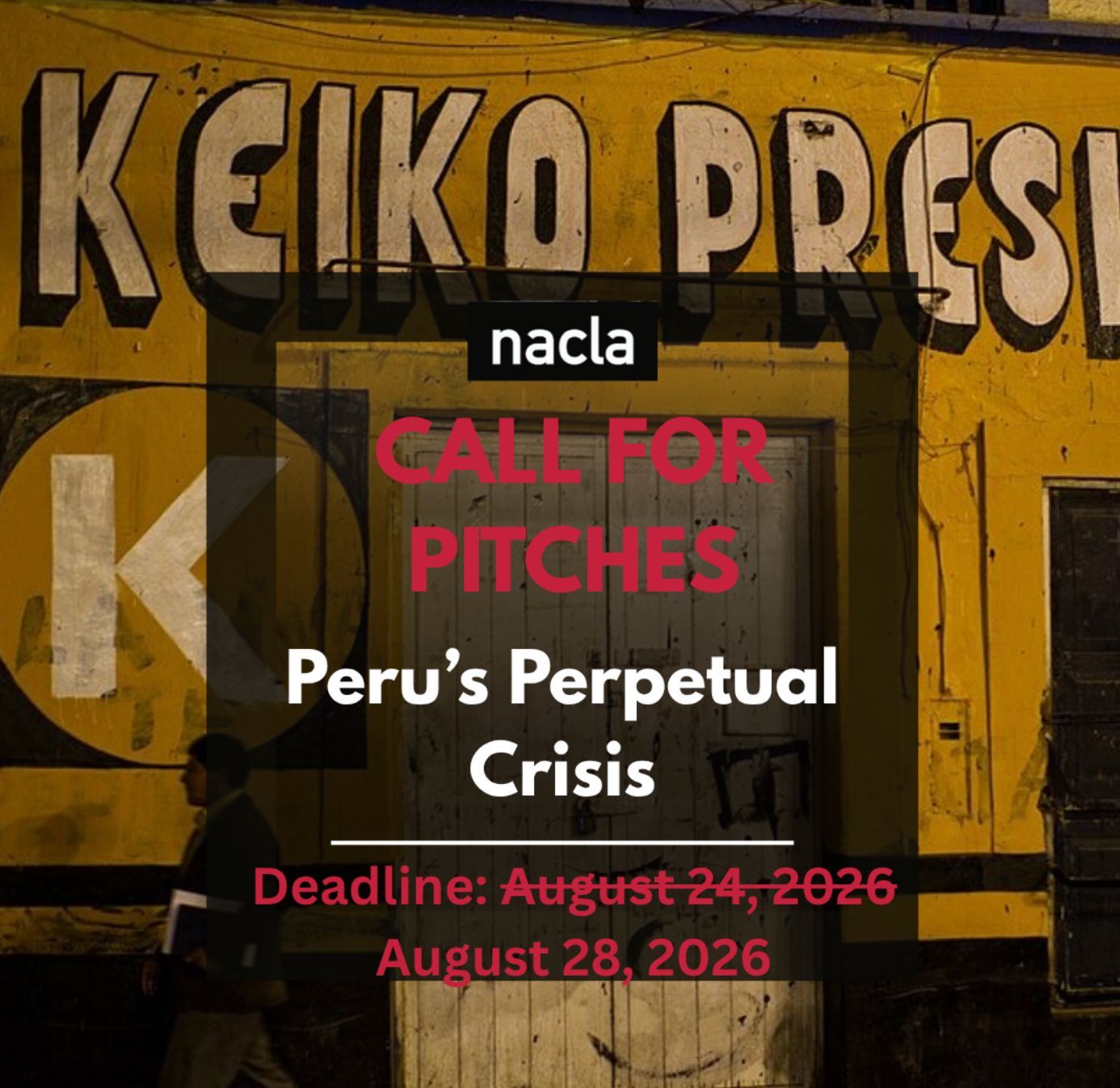
NACLA invites original contributions centered on Peru’s enduring institutional and political crisis (2018 – present), the legacy and resurgence of historical Fujimorismo, and the challenges ahead following Keiko Fujimori’s election as president for our Spring 2027 issue. Guest edited by Javier Puente and Gonzalo Romero, this issue will bring together detailed perspectives that collectively dissect Peru’s seemingly perpetual crisis and the emergence of a “hybrid regime” combining authoritarianism, corruption, and social repression, with troubling consequences for popular democratic legitimacy.
Please send a brief pitch (250 words) outlining the central argument, approach, and tone of your proposed contribution and why you are well positioned to write it by August 28 to managing editor Julianne Chandler at [email protected]. We will respond to pitches by early September. Drafts of accepted articles (2,500-3,500 words) will be due on December 1, 2026.
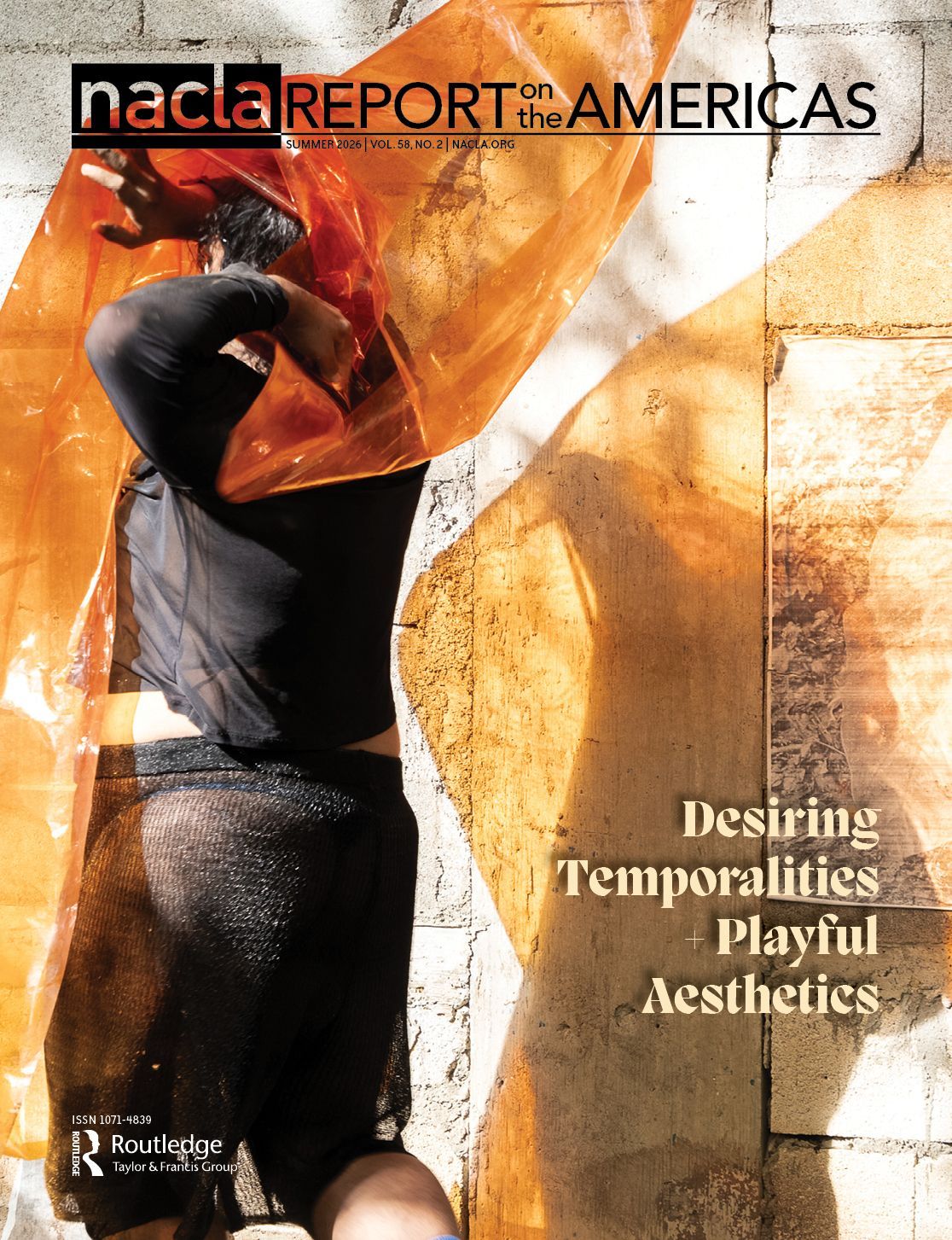
CHECK OUT OUR SUMMER ISSUE WEB COLLECTION!
The Summer 2026 issue of the NACLA Report explores artistic and research practices that activate memory, engage the archive, and expand the possibilities of collective life amid ongoing forms of dispossession, militarization, and war. From Puerto Rico and Palestine to Colombia, Ecuador, Mexico, and the diaspora, contributors examine how artists, writers, performers, and organizers are creating new ways of inhabiting history, preserving memory, and imagining futures that exceed the limits imposed by colonialism, racial capitalism, and state violence.
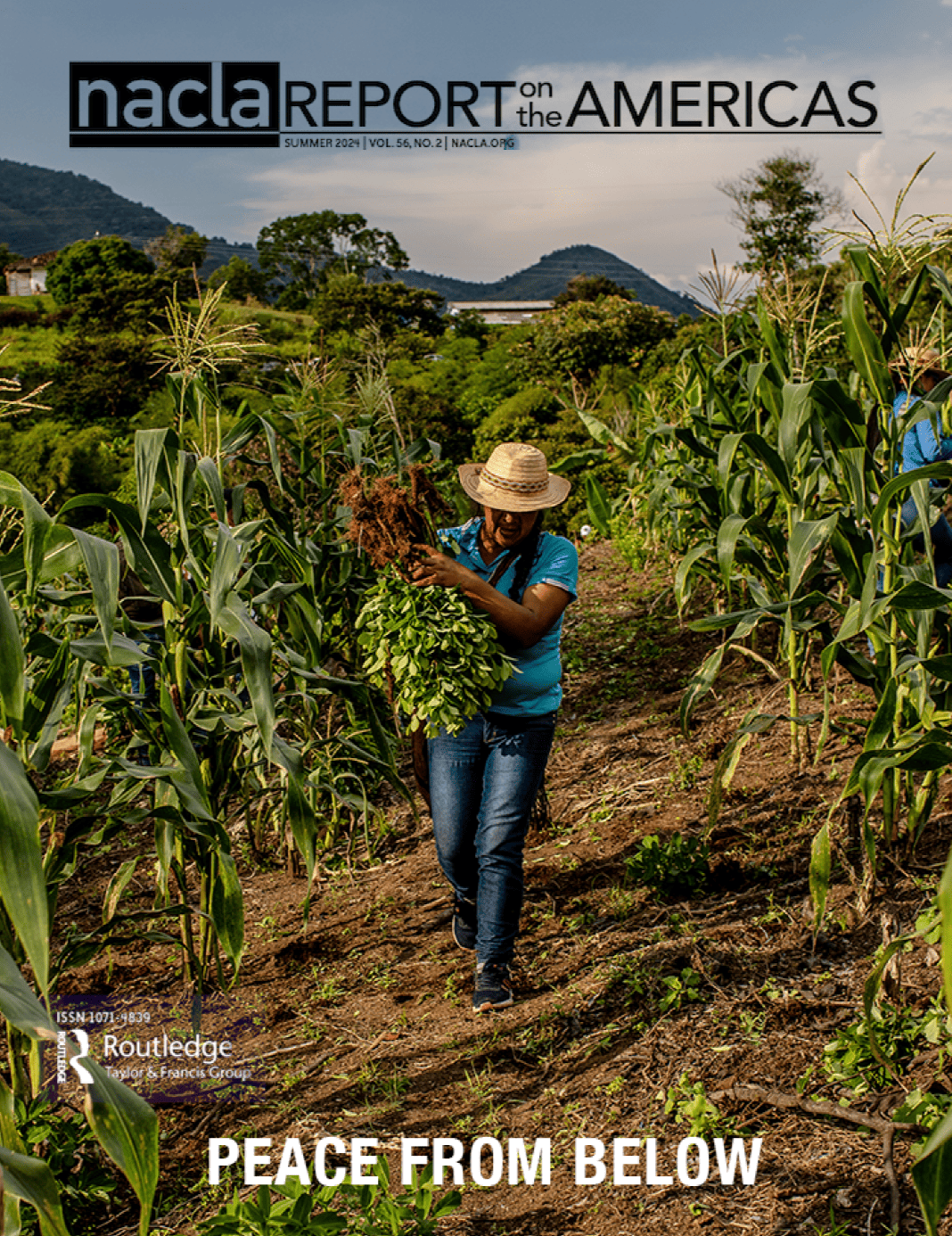
Subscribe now to receive NACLA’s fall 2026 issue, “Peace from Below,” examining the promises, achievements, and shortfalls of Colombia’s historic Peace Agreement signed a decade ago.
Guest edited by Anthony Dest and Diana Gómez Correal, the issue foregrounds the voices, analysis, and testimony of grassroots movements at the forefront of building peace, including former insurgents, buscadoras leading the search for the disappeared, victims of state violence, exiles displaced by the armed conflict, and campesino, Indigenous, and Afro-descendant communities that continue to confront multiple forms of violence at the hands of armed groups. At a critical moment, when an incoming far-right administration threatens to undo the hard-fought gains of the peace process, this collection centers the proposals, struggles, and demands of Colombians deeply committed to building peace from below.
If you haven’t done so already, subscribe byAugust 31to receive your issue in the mail. And, as always, please consider supporting this work.
Through essays, interviews, experimental poetry, photography, music, and performance, contributors examine how memory is made in the present and how artistic and collective practices can forge spaces of resistance and worldmaking
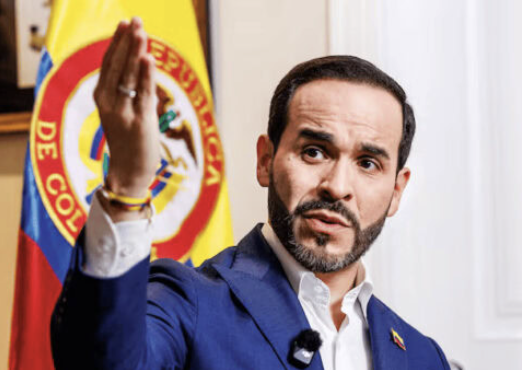
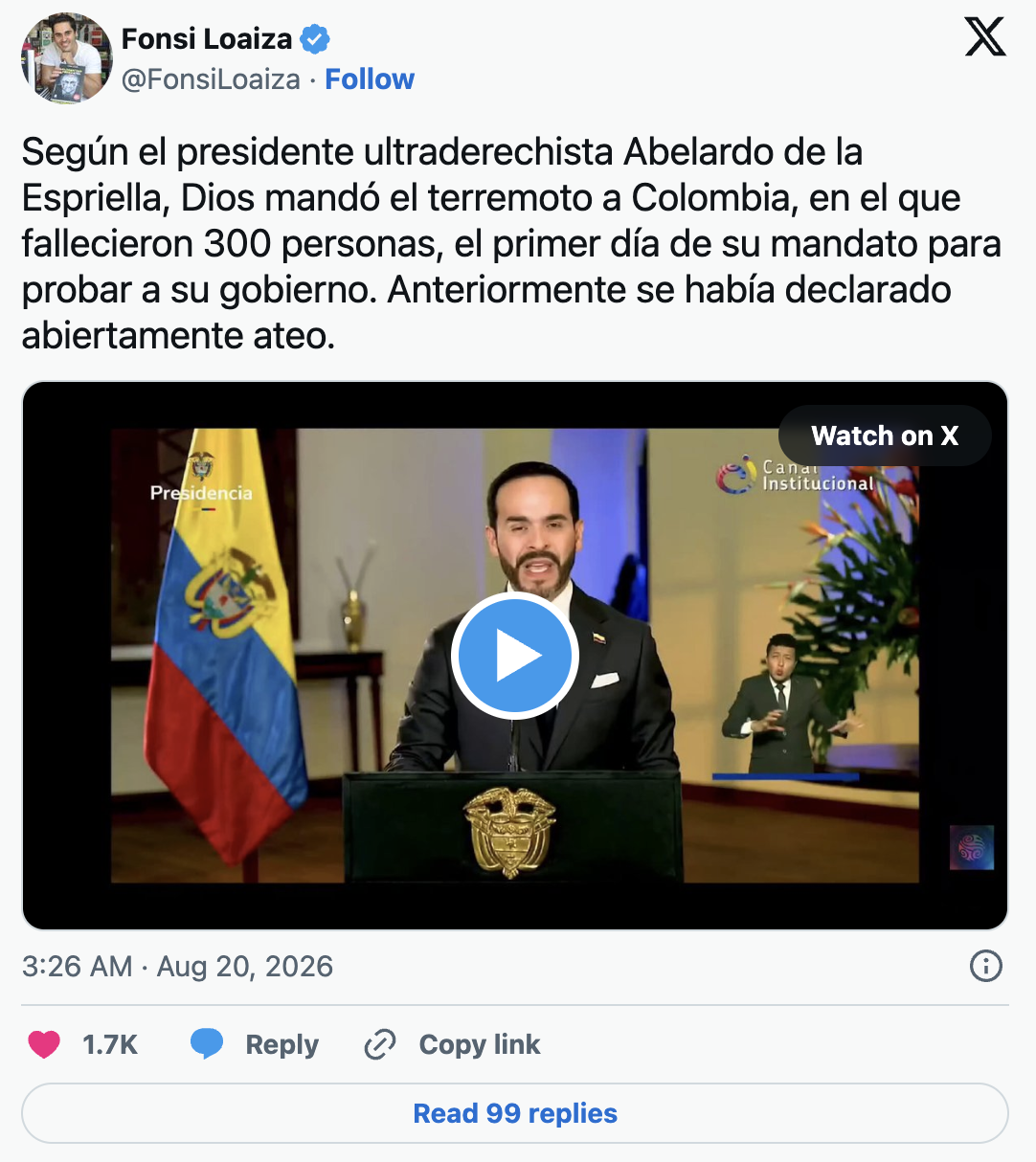
Under the cover of earthquake response, Colombian President Abelardo de la Espriella has dramatically reversed Colombia’s stance toward Israel, recognizing controversial Israeli claims over the occupied Golan Heights
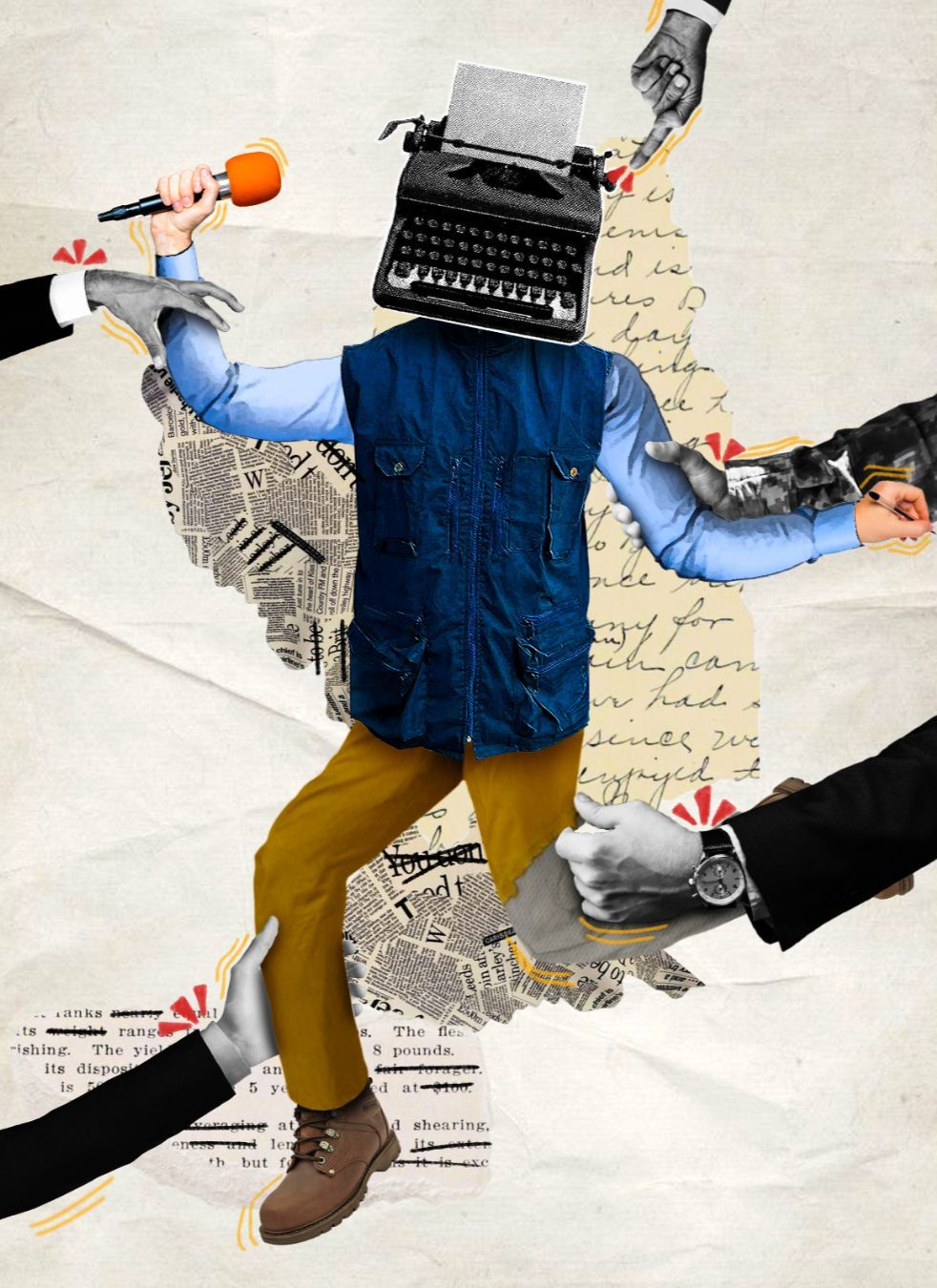
IMAGE OF THE WEEK
As Lara Loaiza recounts in her upcoming piece for the Fall issue, journalists in Latin America face old and new threats across the region. Here's a sneak peek of art from the issue that goes with her piece. (Catalina Roncancio, @caotica.tt).
AROUND THE REGION
COLOMBIA’S FUMBLED RECOVERY—As the country nears two weeks since the devastating 7.4 magnitude earthquake of August 10, popular dissatisfaction with the response of the new administration of far-right President Abelardo de la Espriella continues to mount. On Sunday, anger was directed at Jaime Beltrán, the government’s housing minister, who was spotted relaxing at the beach only 10 days after being sworn in. The same day, de la Espriella visited the city of Buenaventura and held a press conference where he announced measures to help in the city’s reconstruction. He quickly erased much of that goodwill by tossing out branded soccer balls to children, much to the chagrin of activists demanding real aid who have been left to play a leading role in their own recovery efforts. In response to the flawed relief effort, the left-wing opposition—led by former President Gustavo Petro and recent candidate Ivan Cepeda—delivered its first televised address to critique the government. The situation remains dire across the country: towns across the isolated Chocó department are desperate for help; thousands of schools, roads, and health clinics remain inoperable; and the death toll continues climbing, reaching 319 by last count.
PROPOSED CONSTITUTIONAL REFORM IN CHILE—The government of far-right President José Antonio Kast submitted a constitutional reform bill to the Senate on Tuesday that would dramatically increase the power of the executive to restrict the rights and freedoms of Chilean citizens, raising immediate concerns about the erosion of democratic norms. The bill, which was submitted on a legislative fast-track that limits debate to 15 days, consists of eight proposed amendments that include enshrining the right to “public security” in the constitution, harsher prison sentences, granting the president the ability to classify a criminal organization as a terrorist group, and, most controversially, creating a new constitutional state of exception of public security. for up to 120 days—subject to a one-time renewal—without congressional oversight. The proposed reforms have drawn widespread backlash, even from allies, and comparisons to the Pinochet-era dictatorship. Approval is far from certain—the administration is currently short of even the quorum necessary to begin debate—though some previous opponents have come out in favor of the bill.
BOLIVIA’S ECONOMY—Jose Gabriel Espinoza, Bolivia’s Economy Minister, was formally censured by the country’s Congress on Tuesday by a majority vote, a result that would force President Rodrigo Paz to remove him within 24 hours. Nevertheless, the government has alleged that the vote did not meet constitutional requirements for his removal and argued the Constitutional Tribunal must review the decision. The minister was censured after failing to appear before Congress to answer questions about the government’s wider economic policies, which months ago triggered crippling roadblocks that only came to an end in late June. While the economy remains fragile, the government is in the midst of a dramatic restructuring that risks furthering popular outrage—Congress is debating a new business-friendly foreign investment law; the IMF agreed to provide nearly $2 billion in loans; and on Monday the price of diesel for large buyers was nearly doubled by decree, a move meant to address the country’s fuel debt of around $800 million but which immediately prompted backlash.