| |  | | A series of scandals have rocked Ecuadorian president Daniel Noboa in the lead-up to Sunday’s tight run-off election between Noboa and his left-wing challenger Luisa González. Noboa has been accused of participating in schemes ranging from corruption and drug trafficking to violating the constitution and colluding with Ecuador’s Attorney General to obstruct the investigation into the 2023 murder of a prominent politician for political gain. These revelations have surfaced as new polling shows that a growing number of Ecuadorians are fed up with the country’s worsening physical, economic, and social insecurity. Noboa’s reelection campaign has been by all accounts illegal. Though Ecuadorian law requires that incumbents seeking reelection take a leave of absence during the campaign period, Noboa has consistently skirted these rules. Ahead of the first round on February 9—in which Noboa and González each earned 44 percent of the vote—Noboa stepped down for only a few days of the month-long campaign. During this run-off period, he has similarly refused to step down, a refusal linked to his distrust of his former Vice President Verónica Abad, who he has fought to replace for months. In November, Abad was suspended from her role as VP amid accusations of “unjustified abandonment” of her duties. More recently, Noboa has been embroiled in a scandal involving a banana-exporting company owned by his family. The company, Noboa Trading, has been accused of sending banana shipments to Europe with cocaine inside. According to reporting by the Colombian outlet Revista Raya, a man hired by the company to inspect shipments for drugs was arrested three separate times but walked free in each case, due to legal representation from Noboa’s closest adviser. Though Noboa stated during a televised presidential debate that he did not own the company, reporting in Agencia Pûblica has challenged this claim. Perhaps the biggest revelation of the week dealt with Fernando Villavicencio, the presidential candidate who was assassinated in 2023. In a video published on X, Verónica Sarauz, his widow, confirmed that Ecuador’s Attorney General Diana Salazar, Noboa, and their allies in the U.S. government conspired to falsely blame the candidate’s murder on the left-wing opposition. According to earlier reporting by DropSite News, this effort to frame the Citizen Revolution Movement (RC) for the murder—a potentially decisive factor in the tight presidential election of 2023—continued even after Salazar had evidence that criminal groups were responsible for Villavicencio’s murder. As part of their investigation, DropSite News also obtained text messages reportedly sent by Salazar revealing that Villavicencio was a U.S. informant, that the FBI was impeding the investigation into his death, and that the U.S. government was actively working to ensure that the progressive CR party was defeated at the ballot box. In the lead-up to Sunday’s runoff, the current president has again turned to the United States for support. In hopes of attracting a new U.S. military presence in Ecuador, Noboa has for months been pushing a constitutional amendment that would overturn the country’s constitutional ban on foreign military bases. The government has already started construction on a military base it hopes the United States will soon occupy. In late March, Noboa—who was born in the United States—briefly met with Donald Trump in Florida. And then last week, as part of an earlier deal to collaborate on security, he invited Erik Prince, founder of the controversial private miliary firm Blackwater, to join a domestic law enforcement operation. Noboa is under pressure to project an image of security. A recent poll revealed that nearly 60 percent of Ecuadorians do not feel that the country has gotten safer under Noboa. His recent actions to preemptively pardon security forces involved in human rights abuses as part of the government’s war against the gangs is unlikely to make Ecuadorians feel safer. |
| |
|
|
|
| | | | Boomerangs of Empire: The Americas as Colonial Laboratory | | | |
| | |
|
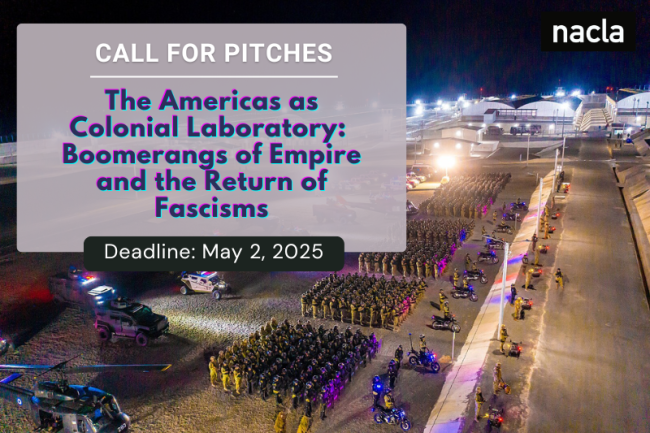
| | NACLA is currently accepting proposals for our Winter 2025 issue on the Americas as a colonial testbed—where imperial violence and fascism return, mutate, and advance through new infrastructures of control. Send us your pitches by May 2, 2025. The Winter 2025 issue of the NACLA Report will be guest edited by Romina Green Rioja and Sergio Beltrán-García. For this issue, we invite scholars, artists, and activists to interrogate the Americas as both site and system of imperial experimentation and return. | | | |
| |
|
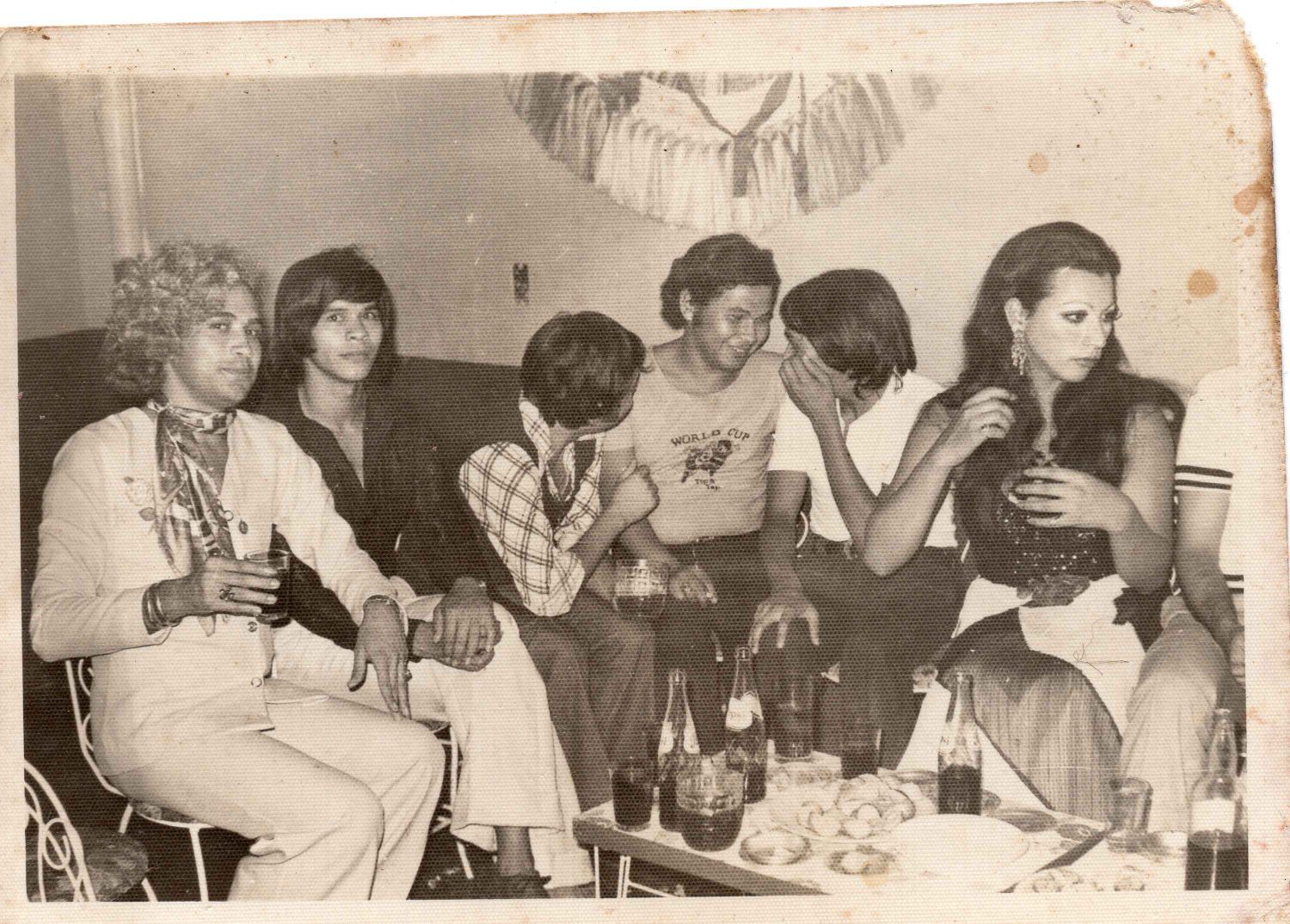
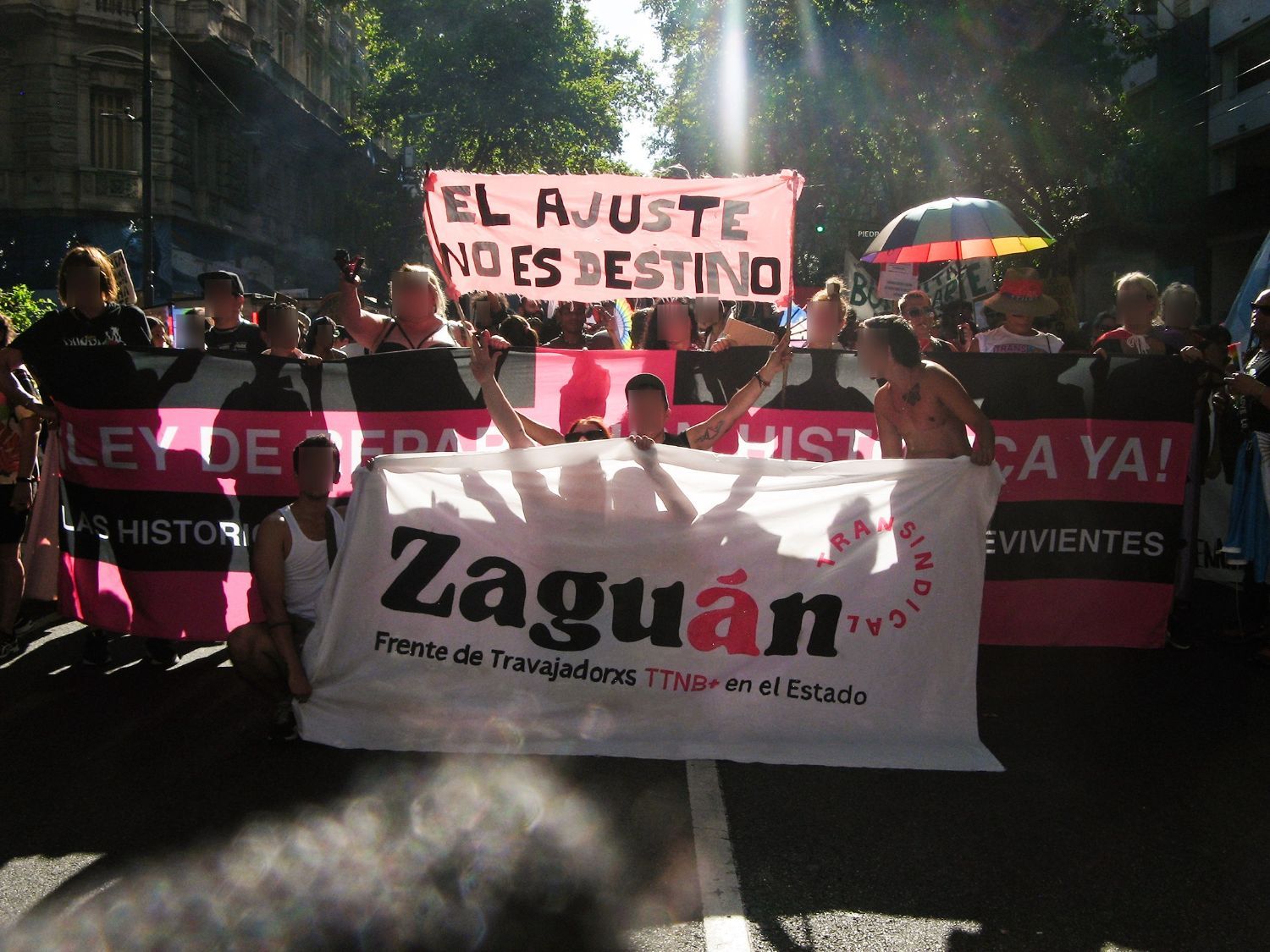
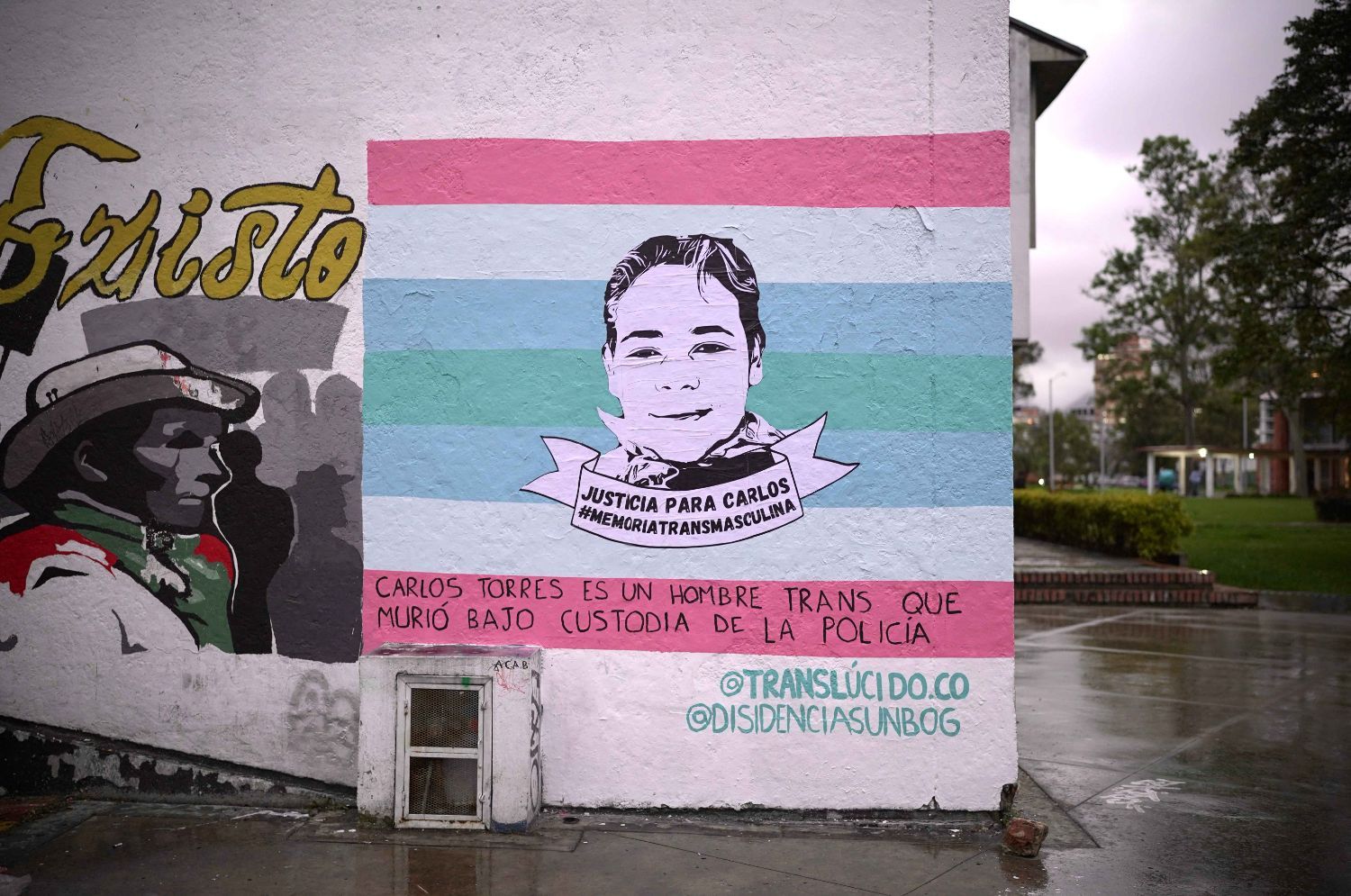
| | Furia archivística: una conversación con archivos trans, travesti y cuir Yuri Fraccaroli, Cole Rizki, María Belén Correa, Aldri Covarrubias, Angel Natan, Denis Rivera, and Nahil Zerón | April 8, 2025 Desde la ternura, amistad y cuidado, una creciente ola de proyectos archivísticos en América Latina y el Caribe desafía los modos hegemónicos de narrar la historia. |
|
|
| | | | 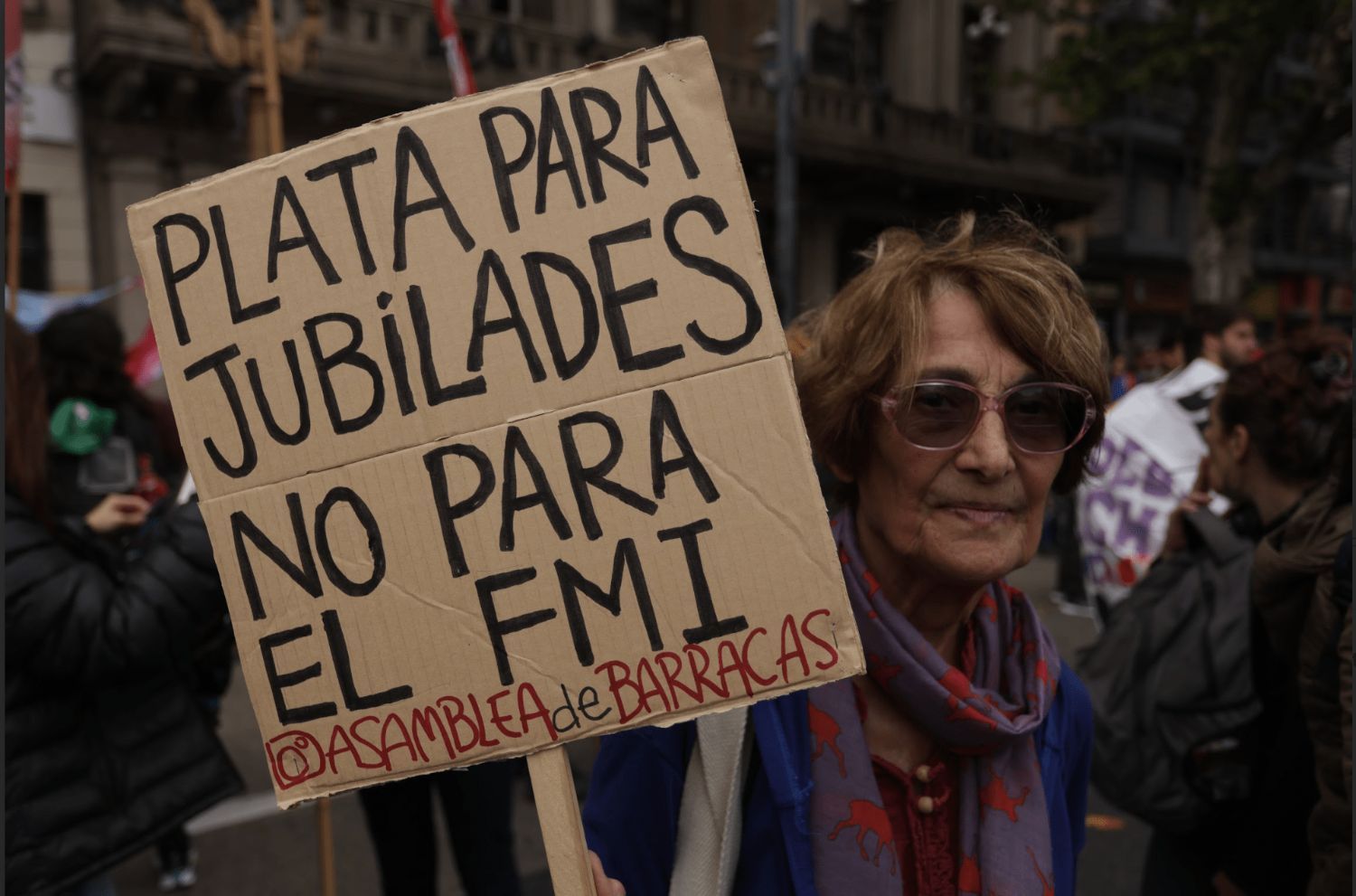 | A protester in Buenos Aires holds a sign that reads "money for retirees, not the IMF" during this week's pensioners' protest in front of Argentina's national congress. Wednesday's protest was the start of a massive 36-hour general strike led by the country's largest trade union federation, the General Confederation of Labour (CGT). (Susi Maresca) |
|
|
| | | -
THE PANAMA CANAL — Tensions over the Panama Canal intensified this week after Defense Secretary Pete Hegseth visited the country to attend a Central American security conference and meet with President José Raúl Mulino. Hegseth’s visit, which was the first by an American Defense Secretary in more than two decades, was focused entirely on the United States’ allegations—thoroughly debunked—of Chinese government control over the Canal. While Hegseth praised Mulino after their meeting, thanking him for his “security cooperation,” the two governments seemed to be on different pages as to what had actually been agreed upon. During the visit, the two countries issued joint statements about deepening security cooperation; however, the English-language version released by the Pentagon excised key information included in the Panamanian government’s Spanish document about control over the Canal. Since his return from Panamá, Hegseth has suggested that the United States could “revive” military bases “by invitation,” something the Panamanian government immediately rejected. It may be too late to stop the deployment. During a cabinet meeting at the White House on Thursday, President Trump seemed to admit that troops were already in Panama, saying “We’ve moved a lot of troops to Panama…and I think it’s in very good control, right?,” to which Hegseth replied, “Yes, sir.” -
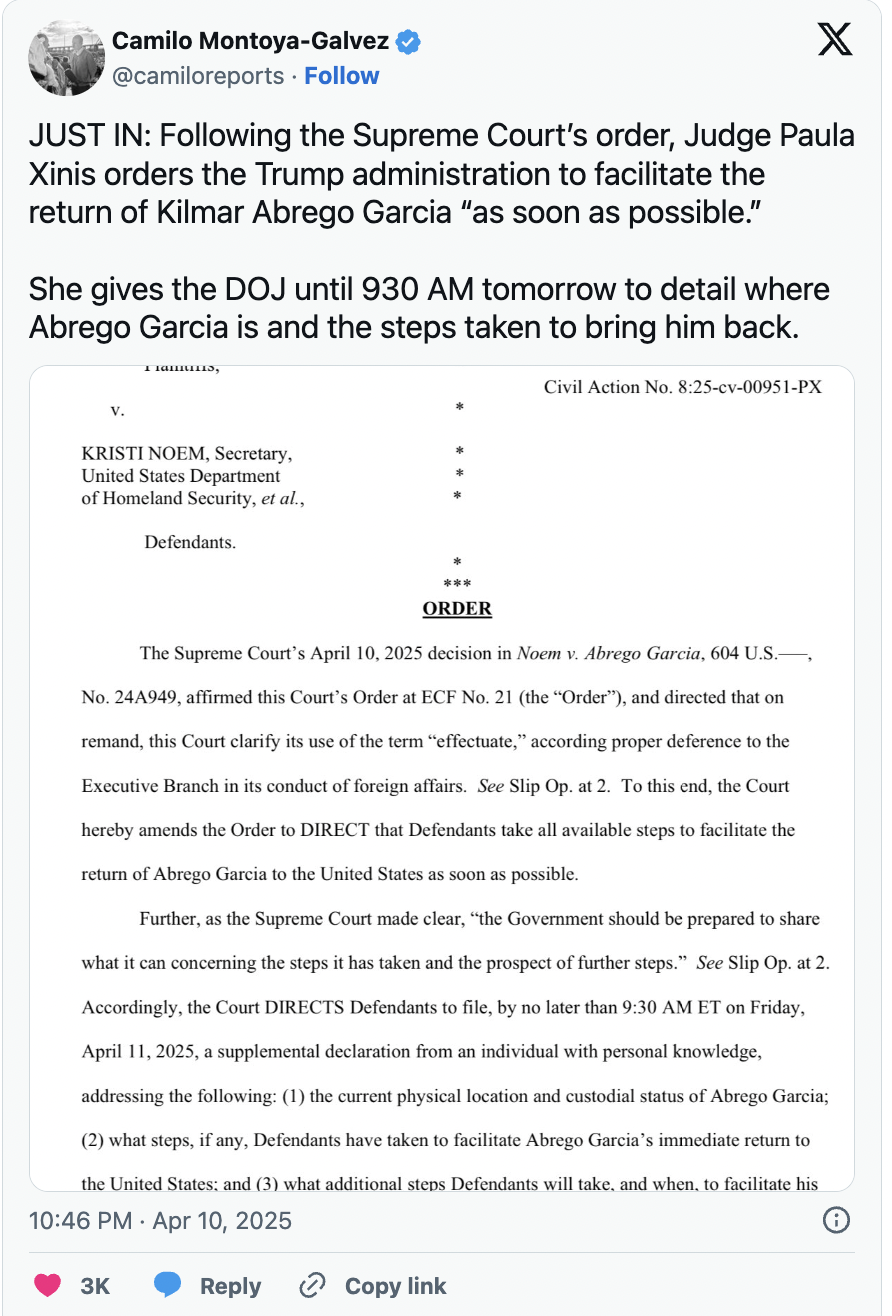
COURTS ON IMMIGRATION — On Monday night, the Supreme Court ruled that the deportations of Venezuelans using the Alien Enemies Act can resume, for now, though all nine justices agreed that detained migrants must receive advance notice of their deportation as well as “reasonable time” to challenge it in court. The Court’s ruling overturned the temporary hold put on the deportations by a lower court. In the brief, unsigned order issued by the Court, the conservative majority skirted the main question of the case—the constitutionality of invoking the 1798 Alien Enemies Act as a vehicle to deport Venezuelan migrants—by arguing there was a procedural irregularity at the heart of the case. The majority argued that the deportees should have filed their cases in Texas, where they were detained, rather than in Washington D.C. Even though the ruling was lambasted by the Court’s liberal justices for taking place in the “shadows of [the] emergency docket” and for failing to consider the “grave harm” the deportees would face in El Salvador, the ruling was heralded as somewhat of a victory by the ACLU and Democracy Forward in that it “underlined that people targeted for removal under the act are entitled to challenge their removal.” On Thursday, in a rare unanimous decision, the Supreme Court instructed the Trump administration to take steps to return Kilmar Armando Abrego Garcia, a Salvadoran migrant it had wrongly deported to El Salvador. |
|
|
| - GENERAL STRIKE IN ARGENTINA — On Thursday, Argentina’s unions led their third general strike in the 16-months since far-right president Javier Milei took office. The strike, called for and led by the country’s largest trade union federation, the General Confederation of Labor (CGT), challenged the administration’s agenda of “chainsaw austerity” lasted for a total of 36 hours. The country’s leading unions kicked off the protest by joining pensioners on Wednesday during their weekly, mid-day protests outside Congress. After protesting throughout the day, more union members—including train conductors, teachers, customs officials, trash collectors, and postal workers—walked off the job at midnight. Trains, subways, and flights were immediately disrupted; banks were closed; and deliveries were halted. The massive protests against austerity came at a critical time: the Milei government is currently awaiting final confirmation of a $20 billion bailout from the International Monetary Fund (IMF). IMF deals, which come laden with demands for further cuts in public spending, are extremely contested in Argentina as they bring to mind memories of the country’s traumatic financial crisis in 2001. The government broadcast statements in deserted train stations labelling the strikes an “attack on the republic.”
-
CELAC SUMMIT — On Wednesday, upwards of 30 regional leaders met in Tegucigalpa at the annual summit of the Community of Latin American and Caribbean States (CELAC) to discuss a coordinated response to issues like climate change, migration, and Washington’s escalating global trade war. Colombian President Gustavo Petro, who assumed the presidency of CELAC on a temporary basis, stressed the need to deepen connections between Latin America and the rest of the world. The leaders of Mexico and Brazil, Claudia Sheinbaum and Luiz Inácio “Lula” da Silva, announced that they would strengthen trade between the region’s two largest economies. Renewed threats of U.S. aggression in the region were also a topic of immense concern. In his speech, Petro called on the region’s leaders to stand together more forcefully to resist U.S. aggression, shining a spotlight on Haiti, Cuba, Venezuela, and Panamá. Nevertheless, the participants were limited in their ability to respond by the veto power held by right-wing, pro-U.S. governments like Argentina and Paraguay, who vetoed statements denouncing the Trump administration’s increasing regional aggression. Since its founding in 2011, the region’s right-wing governments have viewed the organization with indifference and suspicion; former Brazilian president Jair Bolsonaro withdrew his country from CELAC in 2020, a move Lula quickly reversed in 2023. |
|
|
|
|
|
|
| | | North American Congress on Latin America
53 Washington Sq South, Fl. 4W | New York, New York 10012
(212) 992-6965 | [email protected] |
| |
|
| |
|
|