On Sunday, more than 27 million Peruvians will have the chance to vote for president and for all seats in Congress which, for the first time in decades, will be bicameral after a 2024 electoral reform restored the Senate. The election comes at a time of intense political crisis, made manifest by a revolving-door presidency—nine presidents in one decade—entrenched institutional corruption—four former presidents are currently in prison—and rising crime, which tops the list of voter concerns.
A record 36 candidates are running for president, a situation one voter described as a “headache.” Given the instability of the moment and the extremely crowded field, pollingremains inconclusive as to who will emerge as Peru’s next leader. The only near certainty is that a run-off is likely, as candidates must secure more than 50 percent of the vote to avoid a second round between the two top finishers. Though no candidate is close to that threshold, several front-runners have emerged, even as the battle for second place remains fluid.
Currently leading the pack is Keiko Fujimori, the daughter of former President Alberto Fujimori (1990-2000), who ruled the country with an iron fist and was later imprisoned for human rights abuses. Even so, Keiko has benefitted politically from some of the perceived “positive” legacies of her father’s time in office, including the country’s tentative economic revival, the defeat of guerrilla insurgencies, and expanded social programs. She has not escaped scandal herself: she spent more than 16 months in pretrial detention over money-laundering allegations tied to the Brazilian construction firm Odebrecht, though the case was later dismissed. Fujimori previously ran for president in 2011, 2016, and 2021, losing in the run-off by a narrow margin each time. Like her competitors, she has vowed to crack down on organized crime by deploying the military to the streets and prisons.
The battle for second is currently between Lima’s far-right mayor Rafael López Aliaga and Carlos Álvarez, a conservative outsider and comedian who has been gaining ground. López Aliaga, a Trumpian business magnate known as “Porky” due to his resemblance to Porky Pig, ran for president in 2021 and narrowly missed advancing to the run-off. He too has also promised aggressive anti-crime and anti-corruption measures. Long seen as a front-runner, he has recently been overtaken by Álvarez, a TV personality who has cast himself as a Peruvian “Bukele,” proposing to combat organized crime by building new prisons, expanding the use of the death penalty, and relying more heavily on the military. Not far behind is Roberto Sánchez, the leading candidate on the left, who was explicitly tapped by former President Pedro Castillo. Castillo’s imprisonment has been widely denounced as unjust, and Sánchez has pledged to secure his release.
Peru’s current president, José María Belcazar, comes from the political left but has largely served in a caretaker role following the February removal of interim President José Jerí. Nevertheless, because the election has been defined primarily by concerns over rising crime—particularly extortion and homicide—analysts predict that candidates proposing mano dura policies will likely win the day.
Whoever wins the presidency, however, further institutional gridlock is likely. Since 2016, no Peruvian president has completed a full term. While Peru’s leaders have been forced out for a range of reasons, including deadly crackdowns on protesters, corruption allegations, and failed attempts to dissolve Congress, the sweeping power of the legislature to remove presidents is a defining feature of the country’s “hollow democracy.” Since 2021, the country’s right-wing Congress has targeted Peruvian institutions through a series of authoritarian reforms that have “weakened the autonomy of the Federal Attorney General’s Office, undermined the national elections authority, insulated congressional decisions from judicial oversight, and reshaped the composition of the National Board of Justice,” wrote Madeleine Penman in the Winter 2025 issue of the NACLA Report.
Join us for a virtual discussion on the production of this important issue.
The latest issue of the NACLA Report, "Borders Can't Contain Us," examines the consolidation of a hemispheric bordering regime whose reach now extends far beyond any single boundary line, tracing how border violence has moved from the margins to the center of political life across the Americas.
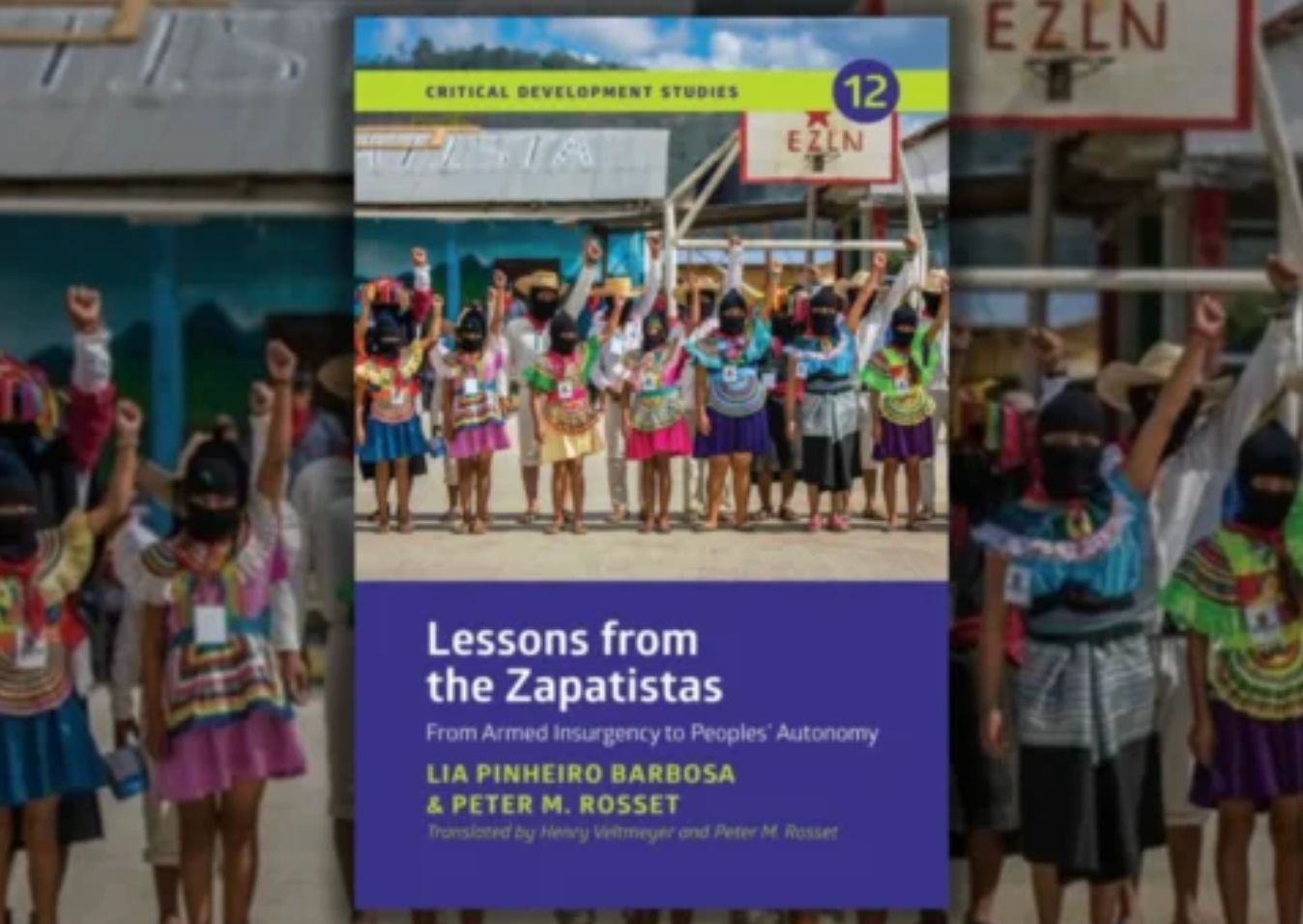
A new book summarizes nearly 30 years of Zapatista political activity, tracing the construction of Mayan self-governance, unpacking the insurgency’s “critical theory,” and drawing lessons for the present.
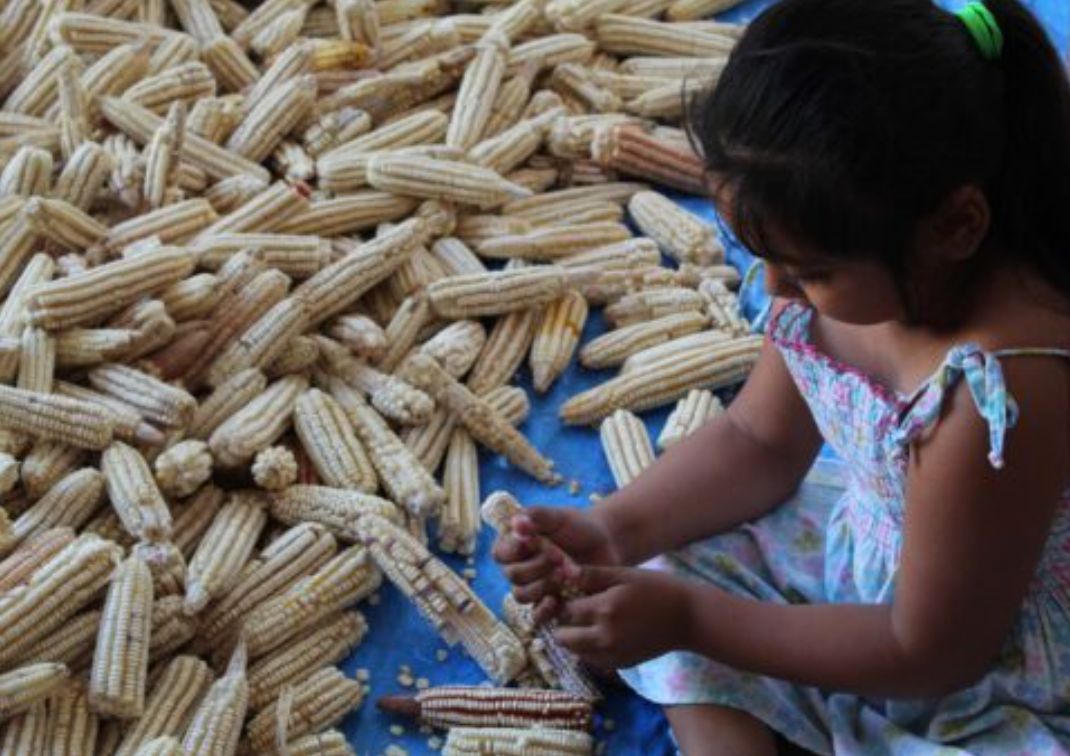
Drugs. They have been the boogeyman across Latin America for decades. An excuse that has led to so much violence. And Trump is turning up the temperature.
From the Bracero crisis of 1954 to today's cartel wars, Mexico has framed subordination as partnership, though history suggests that room to maneuver exists—albeit within limits set by Washington.
IMAGE OF THE WEEK
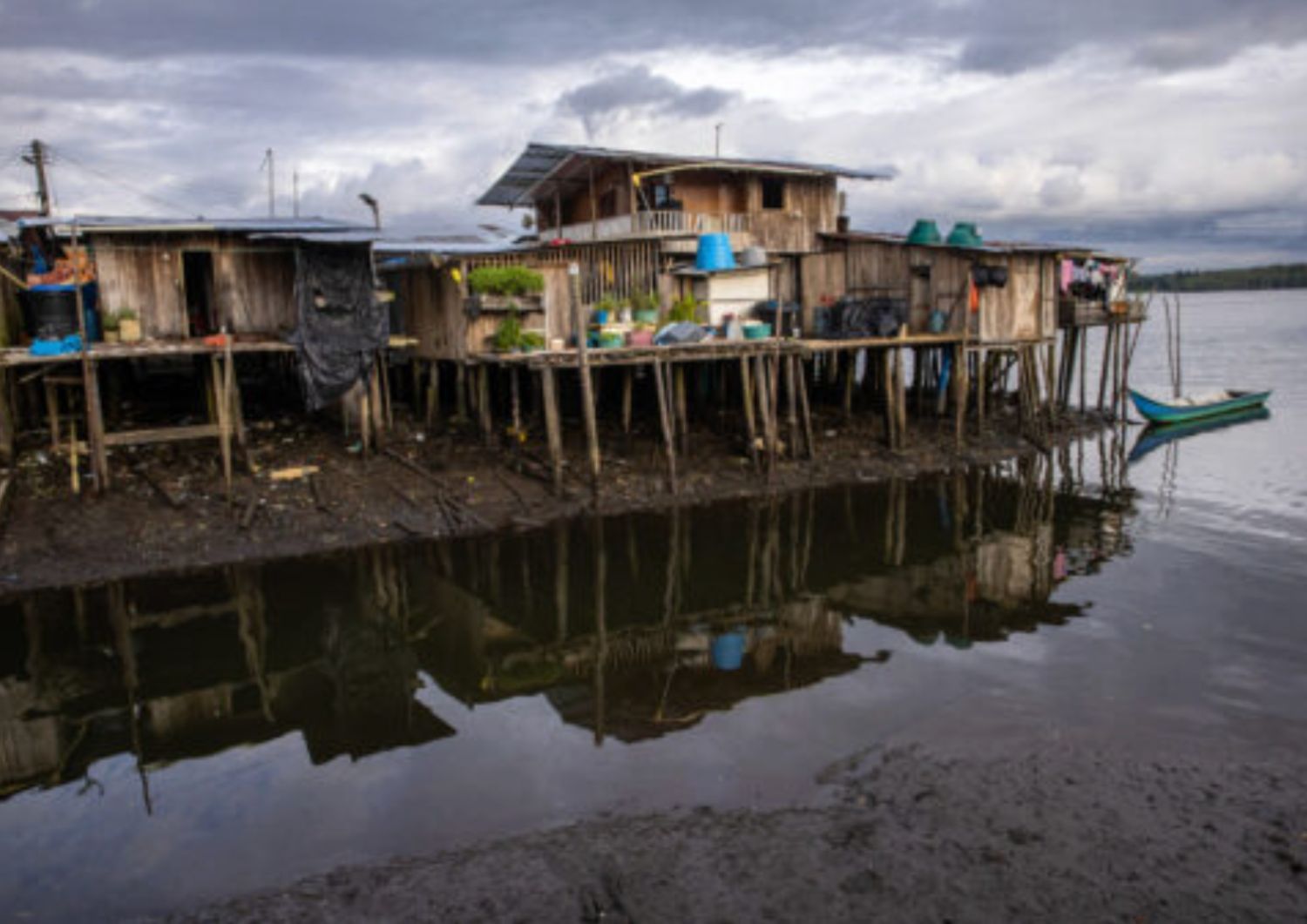
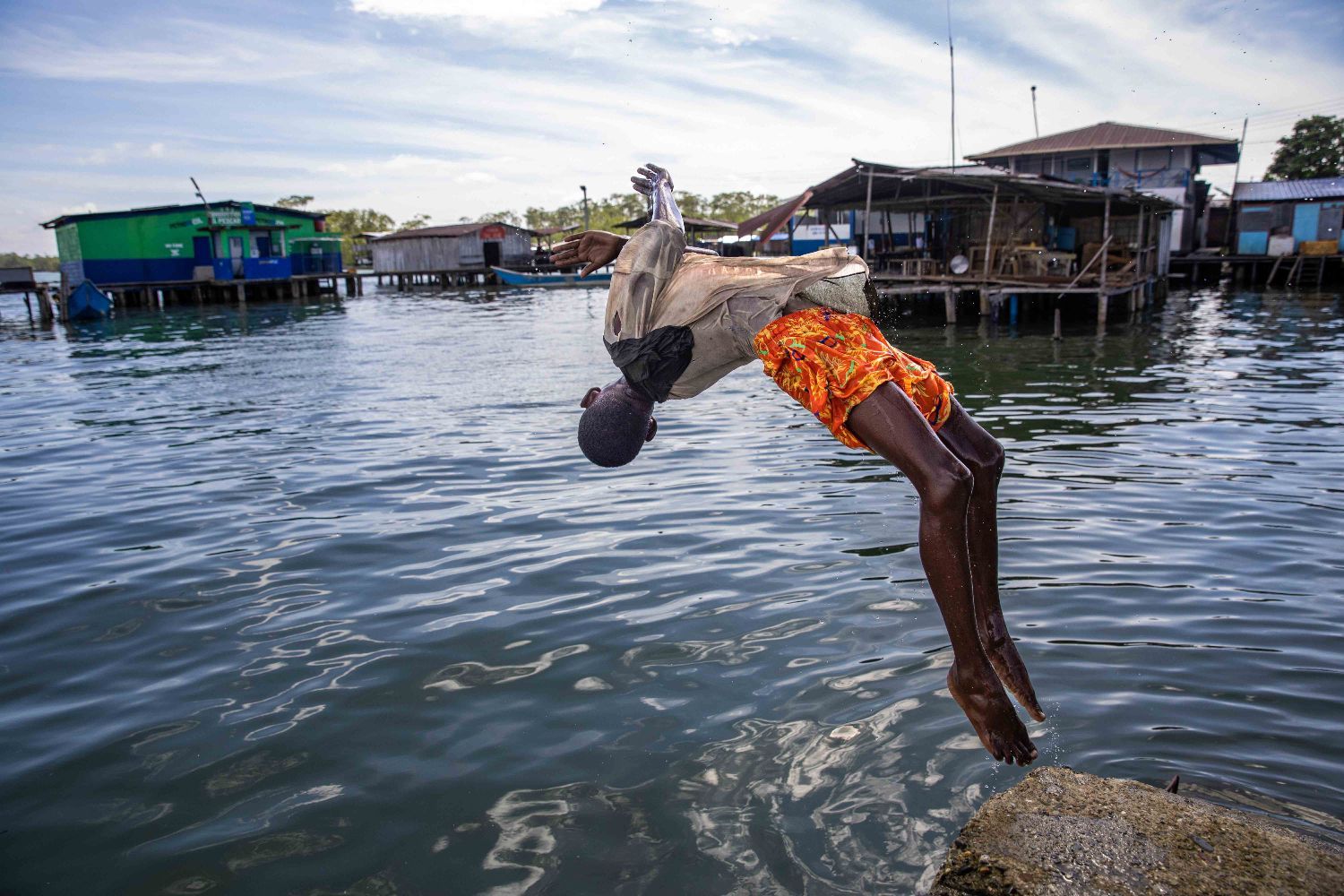
A young boy jumps into the sea from one of the piers on Bazán. The community has a close and profound bond with the sea from an early age. (Antonio Cascio) Read more about how conservation in Colombia is leaving behind local communities in an article published this week by Natalia Torres Garzón and Antonio Cascio.
AROUND THE REGION
KILMAR ABREGO—The travails of Kilmar Abrego García, a Salvadoran man living in Maryland whose mistaken deportation to a maximum security prison in El Salvador last year became a flashpoint in debates over the Trump administration’s immigration crackdown, have continued. On Tuesday, U.S. government attorneys told a federal judge that the Department of Homeland Security still intends to send him to Liberia, a move that appears more vindictive than a matter of policy. Abrego García has made clear that if he must be deported, he would prefer to be sent to Costa Rica, a country that already has an agreement with the Trump administration to receive third-country nationals and had previously agreed to accept him. Since his return from prison in El Salvador—which came months after the Supreme Court mandated the administration bring him back—Abrego García has faced disputed human smuggling charges, spent months detained in a Tennessee jail, been re-arrested and later released by ICE, and been threatened with deportation to several African nations. Last month, a federal judge ruled that the government could not detain him again, an order the administration seems set on ignoring.
VENEZUELA’S RESOURCES—Venezuela’s National Assembly approved a mining law on Thursday intended to open the sector to greater private and foreign investment. Lawmakers argued that the unanimously passed legislation would help spur the economy, though the role of the Trump administration cannot be ignored. In March, interim President Delcy Rodríguez announced the proposal after meeting with U.S. Interim Secretary Doug Burgum, who visited Caracas and championed the reform. The legislation follows massive reforms to Venezuela’s hydrocarbon industry earlier this year that similarly opened the oil sector to foreign investment and privatization. Venezuelan oil has become even more important in recent weeks as the Israeli-U.S. war on Iran has disrupted key global supplies and sent prices skyrocketing, prompting record imports by U.S. firms as well as countries like India. Since the U.S. invasion of Venezuela in early January, revenue from Venezuela’s oil has been controlled by Washington and distributed to the Venezuelan government in lump sums with limited transparency, amounting to a brazenly neocolonial arrangement with minimal safeguards.
TROUBLE FOR MILEI?—One of the earliest scandals of the far-right government of Javier Milei—his promotion of a cryptocurrency that briefly surged in value before dropping precipitously and losing investors millions—has returned with a vengeance. Though Milei has long asserted that he was merely promoting a private business venture and had no connection to the cryptocurrency known as $Libra, a federal investigation by Argentine prosecutors suggest his ties ran much deeper. Phone logs obtained by investigators show that on the same night he promoted the currency, Milei made seven calls to one of the project’s principal entrepreneurs. The investigation also revealed that while serving as a congressman, he received regular payments from a businessman linked to the token. The cryptoscandal, combined with allegations of illicit enrichment swirling around his chief of staff, Manuel Adorni, as well as a faltering Argentine economy, have taken a toll on Milei’s popularity, which fell seven points between February and March.
COLOMBIAN FINANCES—Colombian President Gustavo Petro announced Tuesday that his administration would submit a new tax reform bill and an economic emergency decree to Congress in order to balance the budget, warning that he could pass both measures by decree if lawmakers refused to act. Petro described the moves as necessary to protect the country’s “standard of living,” which he had earlier argued was threatened by the Central Bank’s decision to raise interest rates last week. In response to the rate increase, Finance Minister Germán Ávila withdrew from the Central Bank’s board, a step that threw the institution into legal limbo, as it effectively cannot operate without him. Ávila justified the move by arguing the rate hike “serves only the interests of a small group of investors and representatives of the financial sector,” while Petro accused the banks of trying to undermine the economy ahead of upcoming elections. The government also announced a series of subsidies to cushion the blow of what Petro called the “outrageous” interest rate hike. Meanwhile, the budget imbalance—caused by Congress’s passing of a budget that failed to cover all necessary expenditures—remains unresolved, a crisis exacerbated by the Constitutional Court’s temporary blocking of the government’s previous attempt to declare an economic emergency. In response to growing fiscal concerns, the country’s credit rating was downgraded by the S&P on Wednesday.