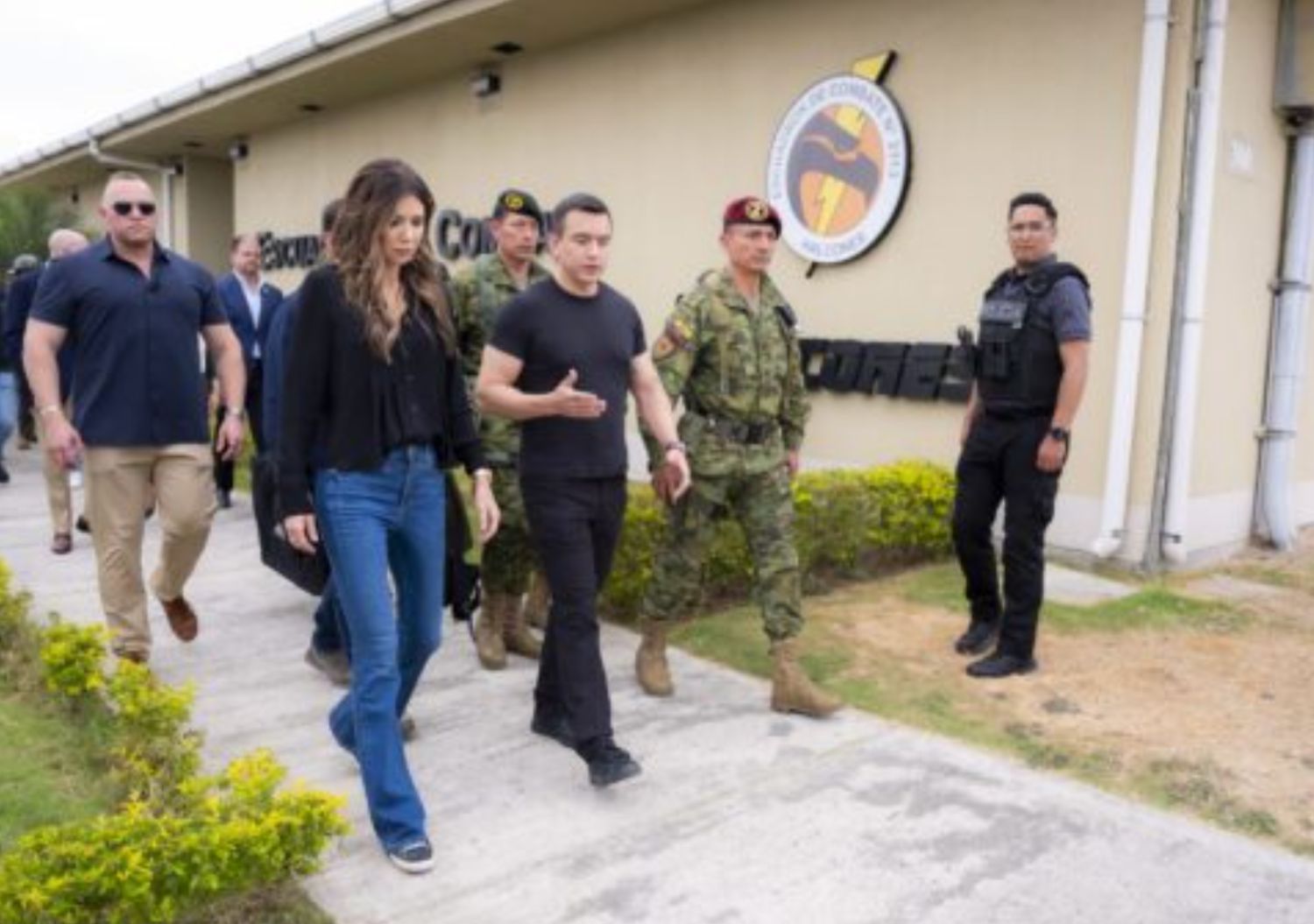
Millions of Ecuadorians head to the polls on Sunday to elect mayors to run their cities, prefects to govern their provinces, as well as thousands of other local-level positions on urban and rural councils. The elections are taking place against the backdrop of an ongoing security crisis, economic insecurity, and rising fears about right-wing President Daniel Noboa’s increasing authoritarianism.
The country’s National Electoral Council (CNE) agreed to move the elections forward by a few months, ostensibly fearing heavy rains would dampen turnout on the original date of February 14, 2027. The CNE’s ruling was heavily criticized as a means to shorten the democratic process and undermine the opposition, which it has also targeted through a series of other maneuvers. The CNE —staffed with allies of Noboa—has also dissolved opposition parties across the political spectrum. A separate electoral body, the Electoral Dispute Tribunal (TCE), has also issued rulings against the opposition, notably suspending the left-wing Revolución Ciudadana (Citizens’ Revolutions, RC) movement for nine months in March, effectively barring it from participating in Sunday’s election. Months later, the TCE also suspended AMIGO, the political party through which RC had planned to run in local elections. Then, in late October, the repression reached new heights when former presidential candidate Luisa González was taken into custody on spurious charges of irregular campaign financing. González was barred from running for prefect months earlier by the CNE and remains in custody. In total, at least 11 current and former mayors and mayoral candidates have been arrested.
President Noboa has also overseen the militarization of the country under a state of emergency that has severely curtailed Ecuadorians’ civil liberties. Ostensibly declared to address the country’s very real security crisis, the government’s war on “narcoterror” has seen limited security gains at the expense of human rights abuses committed by the armed forces, including cases of enforced disappearance and extrajudicial killings. Civil society has been targeted by this offensive as Indigenous communities, land defenders, and social movement leaders have borne the brunt of state repression. The involvement of the United States in the country’s internal security has emboldened the Noboa administration to intensify its crackdown, kill more civilians, and further limit space for justice for the victims of state terror. However, the Noboa administration’s authoritarian creep may be reaching a limit for the Trump administration. The U.S. recently paused joint operations with the Ecuadorian government in response to allegations of extrajudicial killings by security forces, according to media reports.
Security remains a top priority for the nearly 14 million Ecuadorians who are eligible to vote. Economic issues are the second most important concern, especially given the threat of increasingly unstable weather. Ecuadorians last took to the polls in November 2025. At the time, they rejected a series of constitutional amendments championed by Noboa’s government, delivering a stinging rebuke to his administration.
Noboa has been campaigning hard for candidates of his Acción Democrática Nacional (National Democratic Action, ADN) party, especially in mayoral races in Quito and Guayaquil, where incumbent members of the left-wing opposition face right-wing challengers. These local elections cannot be separated from the authoritarian climate in the country: the results will be a new referendum on Noboa’s leadership. Noboa currently holds an approval rating in the 40s, though rising crime and economic insecurity have left their mark.
We are deeply grateful to everyone who helped us raise nearly $25,000 in our recent emergency fundraiser. Your generosity carried NACLA through a critical moment and reminded us of the community standing behind our work. Now, we’re looking ahead to an important milestone: 60 years of critical reporting and analysis on Latin America and the Caribbean.
Our goal is to raise $30,000 by December 31 to ensure NACLA can keep publishing in 2027 and beyond. Your support sustains our small, dedicated staff, emerging writers, and the critical left perspective on the Americas that has defined NACLA for six decades.
Will you make a gift this Giving Tuesday to help secure NACLA’s next 60 years?
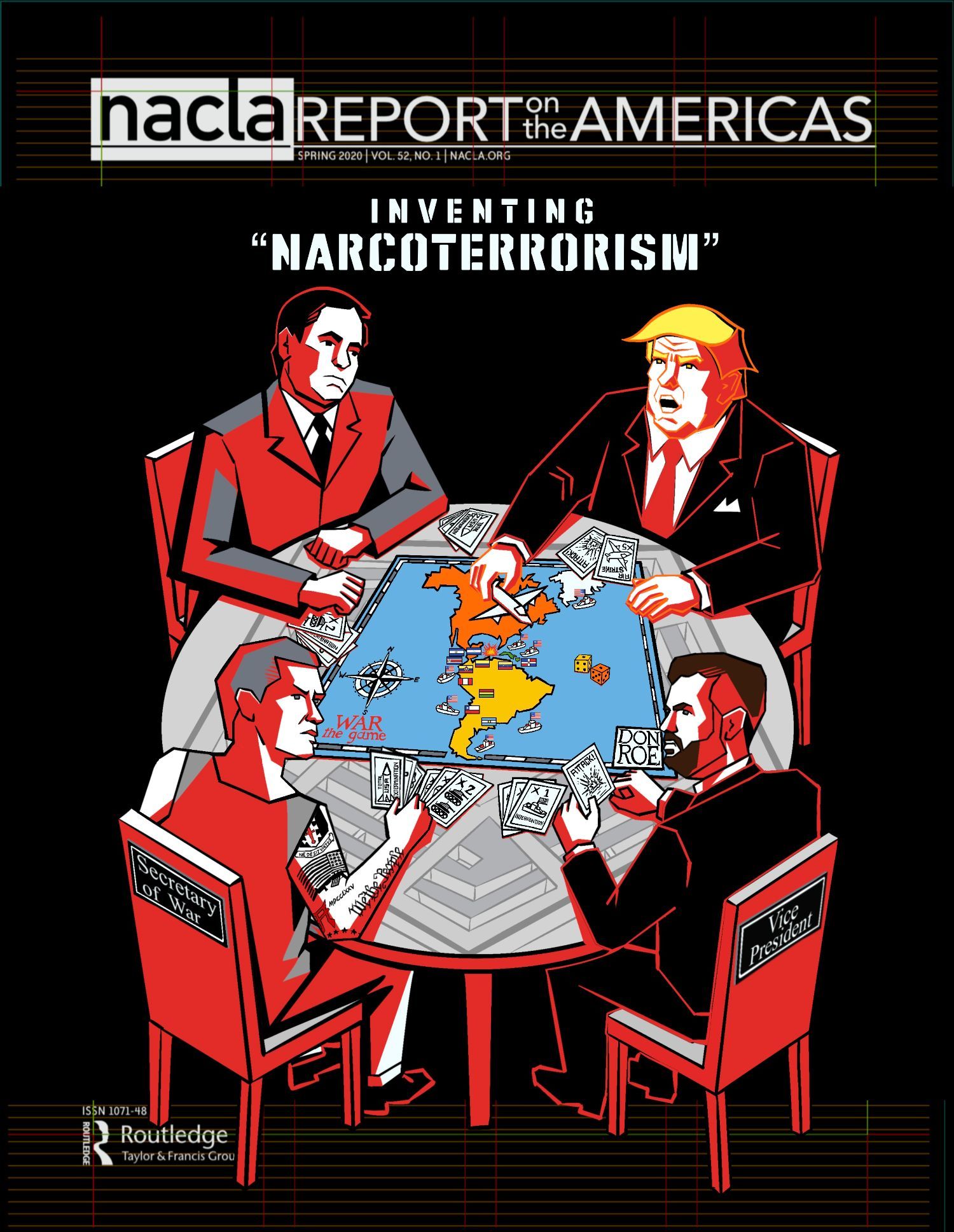
Make sure to renew your subscription before our brand new issue “Inventing ‘Narcoterrorism’” goes out to Naclistas!
Resubscribe by Friday, December 11, to receive our Winter 2026 issue and to keep getting the NACLA Report in your mailbox every quarter.
“Inventing ‘Narcoterrorism,’” brings together scholars and journalists to offer historical and on-the-ground perspectives from across the region that examine who gets labeled a “narcoterrorist,” whose lives are endangered by these designations, and how state violence intersects with organized crime, racism, and inequality. Challenging conventional narratives of security and counterterrorism, these contributions reveal the human consequences of the latest iteration of the War on Drugs and the long history of U.S. intervention behind it.
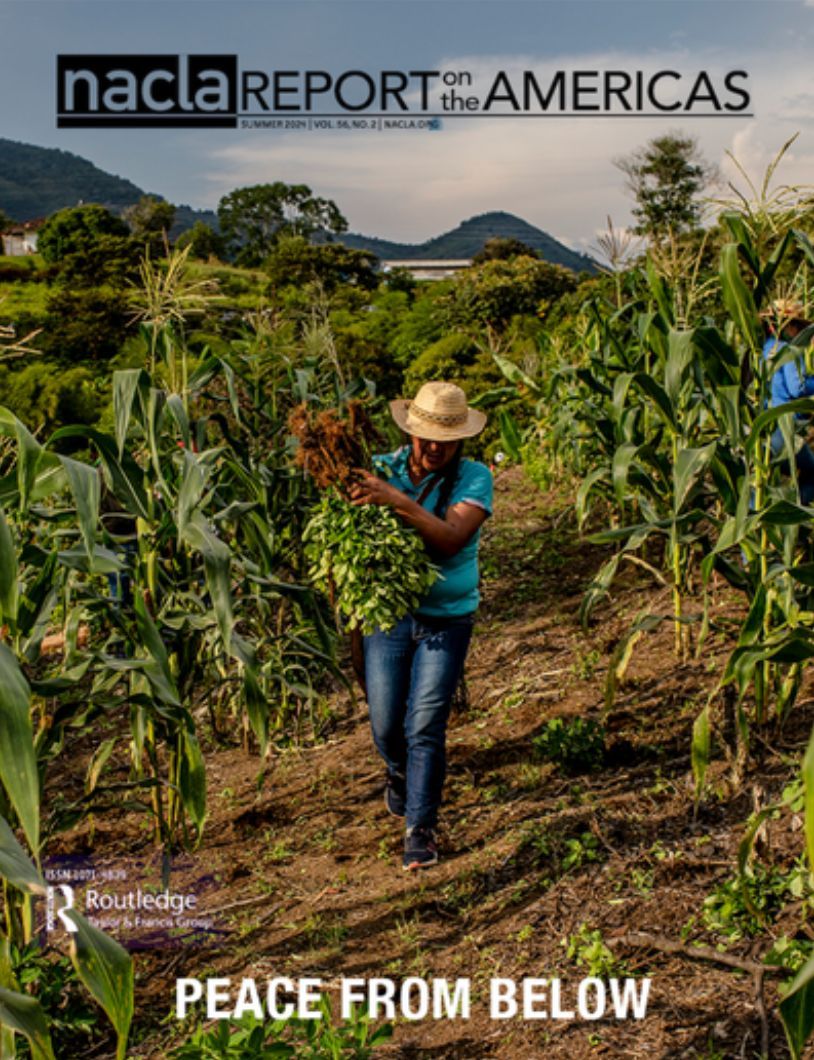
The Fall 2026 issue of the NACLA Report, “Peace from Below,” guest edited by Anthony Dest and Diana Gómez Correal, reflects on the promises, achievements, and shortcomings of Colombia's 2016 Peace Agreement, by foregrounding the people and communities most affected by the armed conflict. Bringing together voices from across Colombia—including Peace Agreement signatories, victims’ organizations, campesinxs, Indigenous and Afro-descendant communities, and women’s and LGBTIQ+ organizations—the issue examines how communities continue to organize amid enduring violence and uncertainty. At a critical political juncture, their experiences illuminate both the limits of institutional peacebuilding and the possibilities of building peace from below.
Take advantage of this special offer to purchase an individual issue of "Peace From Below."
Offer valid for U.S.-based addresses only and while supplies last. Readers outside the United States may contact us at [email protected] to inquire about international shipping options.
El gobierno atribuye el aumento de la violencia al cierre de una base estadounidense en 2009, pero los hechos —incluida la cronología de una nueva acusación de Estados Unidos contra sus opositores— indican lo contrario.
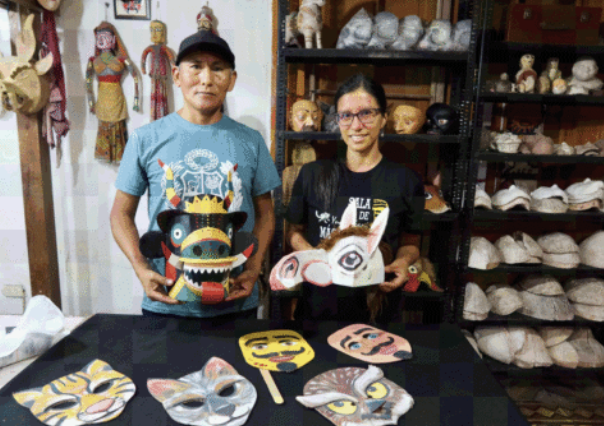
Drawing on the art of mask-making, master Segundo Rojas Flores and artist Lourdes Rodas Mendizabal reflect on their educational work, the origins of their calling, and the journey that has led them to discover various dance communities throughout Peru.
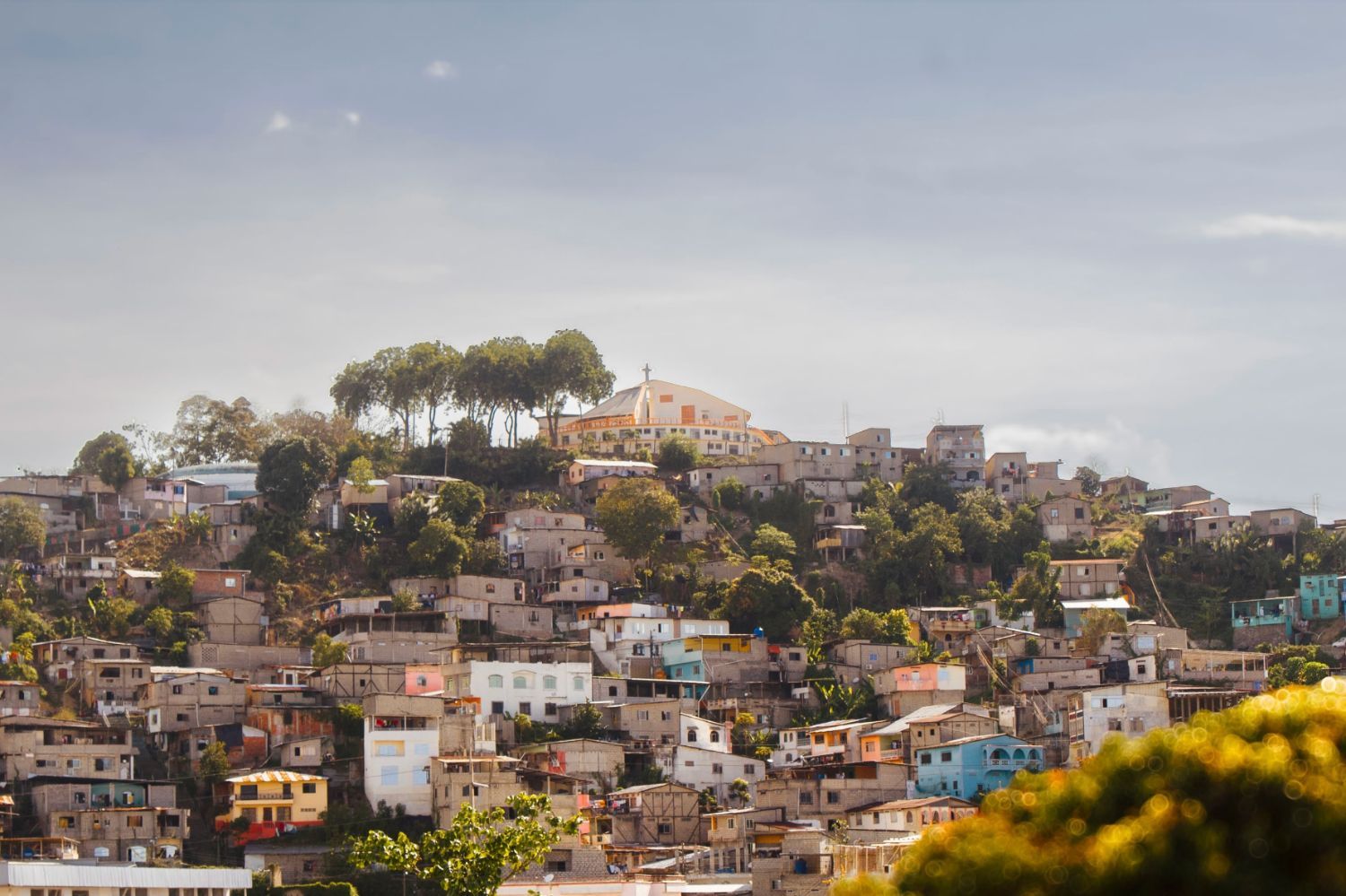
Homes climb a hillside in the Santa Cruz neighborhood of Esmeraldas, Ecuador. The city is dominated by gangs, which exercise criminal governance in the territories they control. In hill neighborhoods like these, narrow alleys and few entrances make outsiders easy to spot. (Ismael Bernal) The photo comes from our upcoming issue, Inventing "Narcoterrorism." Subscribe by Friday, December 11 to receive our Winter 2026 issue.