|
|
|
|
 |
|
|
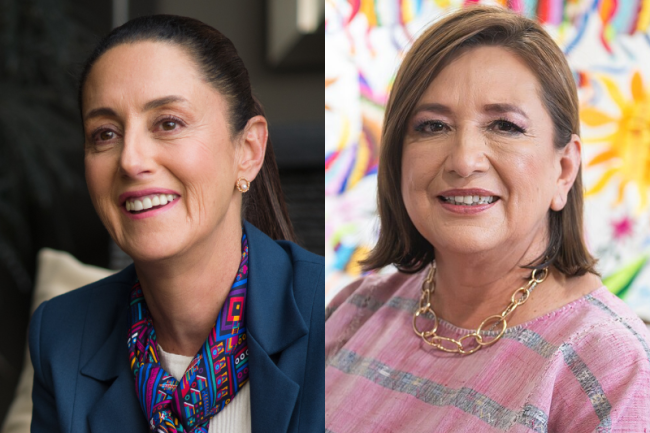
Mexicans will vote on Sunday in the largest—and most violent—elections in the nation’s history. Two women lead the contest, with outgoing President Andrés Manuel López Obrador’s hand-picked successor Claudia Sheinbaum leading the polls by a wide margin. Aside from the presidential race, also on the ballot this weekend are seats for 128 senators, 500 congressional representatives, and nearly 20,000 local government positions.
The campaign period closed this week in a flurry of bloodshed: mayoral candidate Alfredo Cabrera was shot dead on camera in the state of Guerrero on Wednesday, a municipal candidate from the state of Jalisco was shot multiple times by intruders in his campaign offices late Tuesday, and an alternate candidate from Morelos, just south of Mexico City, was killed by gunmen on a motorcycle the same day.
The election season has been plagued by political violence, with at least 26 municipal candidates assassinated in the lead-up to the vote. Approximately 163 people have been killed in acts of “political-criminal violence” in Mexico so far this year, according to tracking by the human rights organization Data Cívica. The group defines political-criminal violence as “the attacks that groups linked to organized crime exercise against political actors” with the goal of exerting influence and control over “electoral processes, political institutions, and public resources.”
 Writing for NACLA, Pablo Pérez García notes that municipal candidates are particularly vulnerable to being targeted as organized criminal groups vie for territorial control. “While partisan organizations mobilize through their electoral bases, and big business uses the economy as leverage to influence political decisions, the primary tool of criminal organizations is violence,” he writes.
The increase in violence coincides with the largest territorial presence of the Army, Navy, and recently created National Guard since the Mexican Revolution, an expansion we covered in the Winter 2023 issue of the Nacla Report. As Pérez García and analysts have highlighted, a focus on militarization does not address the financial structures or networks of corruption through which criminal groups in Mexico sustain their operations—capabilities which the military lacks.
Neither of the leading candidates—Sheinbaum representing the governing Morena party and Xóchitl Gálvez of the conservative National Action Party (PAN)—have offered comprehensive proposals to address the alarming rates of political violence, attacks on journalists, femicide and gender-based violence, and forced disappearances.
Research has shown that political violence correlates with lower vote turnout, likely because voters assume that local candidates are being selected by criminal groups. As security expert Victoria Unzueta Reyes told Pérez García: “A society that lives in fear cannot be democratic.”
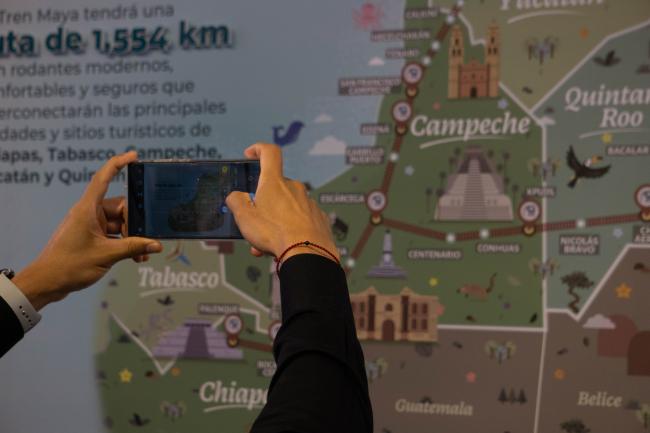
While reporting a piece for NACLA on Mexico’s controversial Maya Train, recently inaugurated by López Obrador, journalist Jack Phillips happened to ride the train with Sheinbaum and asked her about the environmental consequences of the megaproject. Sheinbaum’s dismissive response was revealing: “All projects have impacts,” she stated, mentioning the damage wrought by the tourism industry in Cancún and the Maya Riviera. “The environmentalists of today never said anything about these impacts. And now they are talking about the impact of the Maya Train, which has a lot to do with politics and little to do with knowledge.”
|
|
|
|
|
|
|
|
|
|
|
|
|
|
|
|
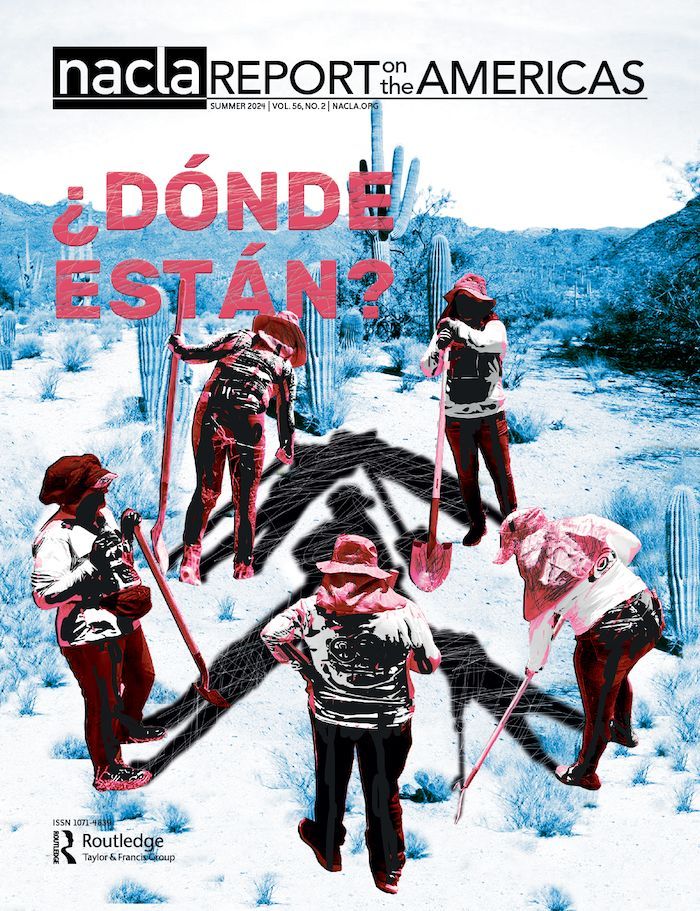
¿DÓNDE ESTÁN? THE SEARCH FOR THE DISAPPEARED As rising authoritarianism throws societies further into political and social chaos, this issue of the NACLA Report on the Americas excavates how disappearance has reemerged—or persisted—as a dependable technique of terror, social control, and revisionism. Across the region, societies now facing an erosion of their human rights protections are the same societies that remain indelibly marked by past episodes of militarized repression. This issue also explores these legacies—disappearance’s afterlife—from the ongoing forms of disappearance that impede truth and justice, to the ways families and advocates continue to resist erasure. If you haven't already, SUBSCRIBE BY MONDAY, JUNE 3RD to get your copy on the mail. |
|
|
|
|
|
|
|
|
|
|
|
|
|
|
|
|
|
|
|
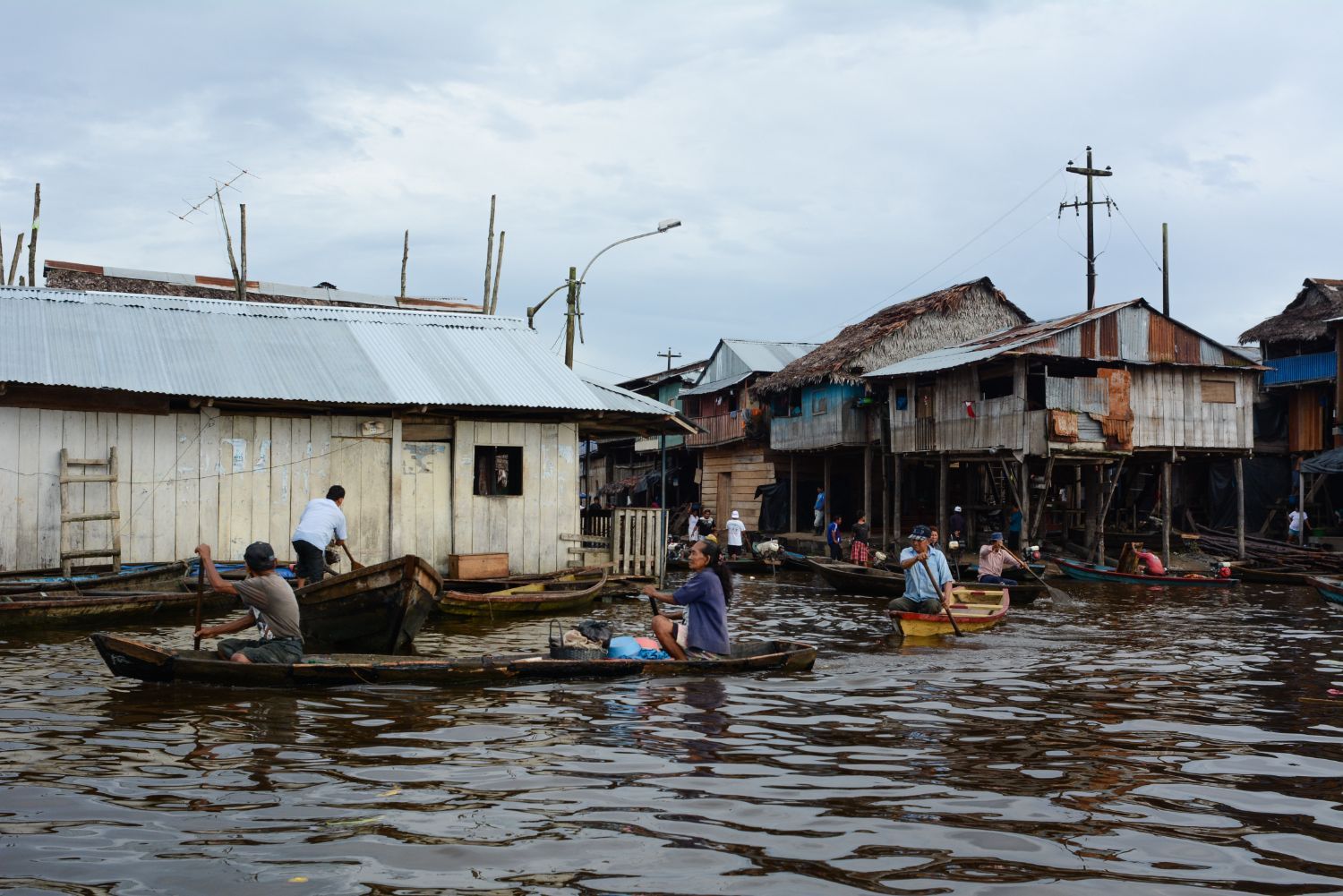 |
The Belén district of Iquitos in the Peruvian Amazon. The community, where daily life revolves around water, recently hosted a floating international film festival showcasing films about tropical forests. Many residents who attended the event had never seen a movie on a big screen. Image: MM / Wikimedia Commons |
|
|
|
|
|
- NEW PM IN HAITI — Haiti’s presidential transition council has selected a new prime minister, humanitarian aid official Garry Conille. Conille previously served as prime minister of Haiti from October 2011 to May 2012 under then-President Michel Martelly, and was chief of staff to Bill Clinton during the ex-president’s role as UN special envoy to Haiti. He studied medicine and public health, and was heavily involved in reconstruction efforts after the devastating 2010 earthquake. In order to assume the position, Conille will step down as UNICEF’s regional director for Latin America and the Caribbean, a post he has held since January 2023. The announcement came days after a Haitian aid worker and two American missionaries were killed in an attack by gangs in Port-au-Prince. Gangs are now believed to control about 90 percent of the capital city. Kenyan President William Ruto congratulated Conille; a multinational security force led by Kenya is expected to be deployed to Haiti next month.
|
|
|
|
-
LULA WITHDRAWS AMBASSADOR TO ISRAEL — Brazilian President Luiz Inácio Lula da Silva withdrew his ambassador to Israel on Wednesday over criticism of Israel’s ongoing bombardment of Gaza. According to Brazil’s foreign ministry, the removal is a response to Brazilian ambassador Frederico Meyer having been humiliated by Israel’s foreign minister Israel Katz, who reprimanded the ambassador publicly in February after Lula likened Israel’s offensive on Gaza to the holocaust. The Brazilian Embassy in Israel remains open under the leadership of the chargé d’affaires. Danielle Ayres, an international relations professor at the Federal University of Santa Catarina in southern Brazil, told AP the decision was largely “symbolic;” Lula has stopped short of severing diplomatic ties with Israel while strengthening his criticism of Israel’s genocidal campaign in Gaza. Separately, Brazil’s foreign ministry applauded the formal recognition of the Palestinian state by Ireland, Norway, and Spain.
-
VENEZUELA REVOKES EU ELECTION MISSION — The Venezuelan government has rescinded an invitation to EU observers to monitor the country’s presidential elections in July, further dampening hopes for a free and fair vote. The country’s National Electoral Council cited economic sanctions imposed by the European Union as rationale for revoking the invitation. “It would be immoral to allow their participation knowing their neocolonialist and interventionist practices against Venezuela,” said Council president Elvis Amoroso in a televised statement about the decision. AP reports that the EU bloc maintains sanctions against approximately 50 individuals accused of repression and undermining democracy, and not against the government as a whole. Earlier this month, the EU temporarily lifted sanctions against four individuals linked to the electoral council, including Amoroso. The EU said in a statement that it regrets the government’s decision and calls on authorities to reconsider.
-
FORMER NACLA EDITOR DEPORTED FROM NICARAGUA — Former NACLA editor Judith Butler has become entangled in a conflict between Nicaraguan leader Daniel Ortega and his brother, former head of the Nicaraguan Army Humberto Ortega. Retired General Ortega has been under de facto house arrest since May 19, after he criticized his brother’s dictatorial leadership in an op-ed for the exiled newspaper La Prensa. Butler, who has lived in Nicaragua for 41 years where she works as a journalist and translator, agreed to a personal request by General Ortega to translate the 800-word article to English. On Tuesday night, several police officers came to Butler’s home and ordered her to pack a small bag. Her cell phones and computer were confiscated, and within hours she was forced to board a flight to the United States. "They did not interrogate me, did not accuse me, and did not present a warrant. Until now, I still do not know why I was deported," Butler, who is 83, told the news site Confidencial. Butler worked as an editor at NACLA between 1977 and 1983.
-
FLOATING FILM FESTIVAL IN PERUVIAN AMAZON — Residents of the Belén neighborhood of Iquitos, in the Peruvian Amazon, enjoyed a 10-day international film festival showcasing films about tropical forests. Many who attended the event, which concluded on Sunday, had never seen a movie on a big screen. Organizers of the Muyuna Floating Film Festival—Muyuna means “a whirlpool formed in mighty rivers” in Quechua—hung the screen from a 33-foot high wooden structure, allowing viewers to enjoy the films from their river canoes. “The festival aims to be a tribute to the jungles of the world and its people, to the Indigenous communities, in which we believe lies the answer to the challenges and destruction that forests face now that everyone is talking about climate change,” said Daniel Martínez-Quintanilla, co-executive director of the festival.
|
|
|
|
|
|
|
|
|
|
|
|
North American Congress on Latin America
53 Washington Sq South, Fl. 4W | New York, New York 10012
(212) 992-6965 | [email protected] |
|
|
|
|
|
|
|
|
|