The world’s First Conference on Transitioning Away from Fossil Fuels, hosted in the Colombian port city of Santa Marta, concluded on Wednesday. The historic six-day gathering brought together Indigenous Peoples, Afro-descendant and peasant communities, academics, parliamentarians, civil society organizations, and representatives from 57 fossil fuel producing and consuming countries. The framing of the task itself was historic: no longer up for discussion was whether or not fossil fuels should be phased out, but rather how that transition could be achieved.
The conference followed in the footsteps of last year’s People’s Summit in Belém, Brazil, where a similar coalition convened to "achieve broad alignment on just transition demands,” as José T. Bravo, Fernando Tormos-Aponte, and Catalina de Onís wrote for NACLA last week. According to these scholars and activists, the “grassroots movement power-building generated during the summit” in Brazil helped lay the groundwork for the gathering in Santa Marta. Like the People’s Summit, which occurred parallel to the official United Nations-sponsored deliberations at COP30, the Santa Marta conference took place outside formal UN processes, whose scope participants viewed as severely limited. Four days of civil society-led workshops preceded higher level talks that began on Tuesday.
Freed from the constraints that often accompany UN-sponsored climate negotiations, the conference explicitly sought to build a "coalition of the willing” to phase out fossil fuel dependence—an energy system that attendees frequently argued disproportionately burdens the Global South. Indeed, the conference took place against the backdrop of an illegal war on Iran whose effects on global energy markets have fallen most heavily on less well-off nations. At the same time, attendees noted that the crisis has provided an opportunity to accelerate an overdue transition away from fossil fuels. Such discussions were further reinforced by remarks from the head of the International Energy Agency, Fatih Birol, who said last Friday that the war had already changed the fossil fuel industry forever and would provide a “significant boost to renewables.”
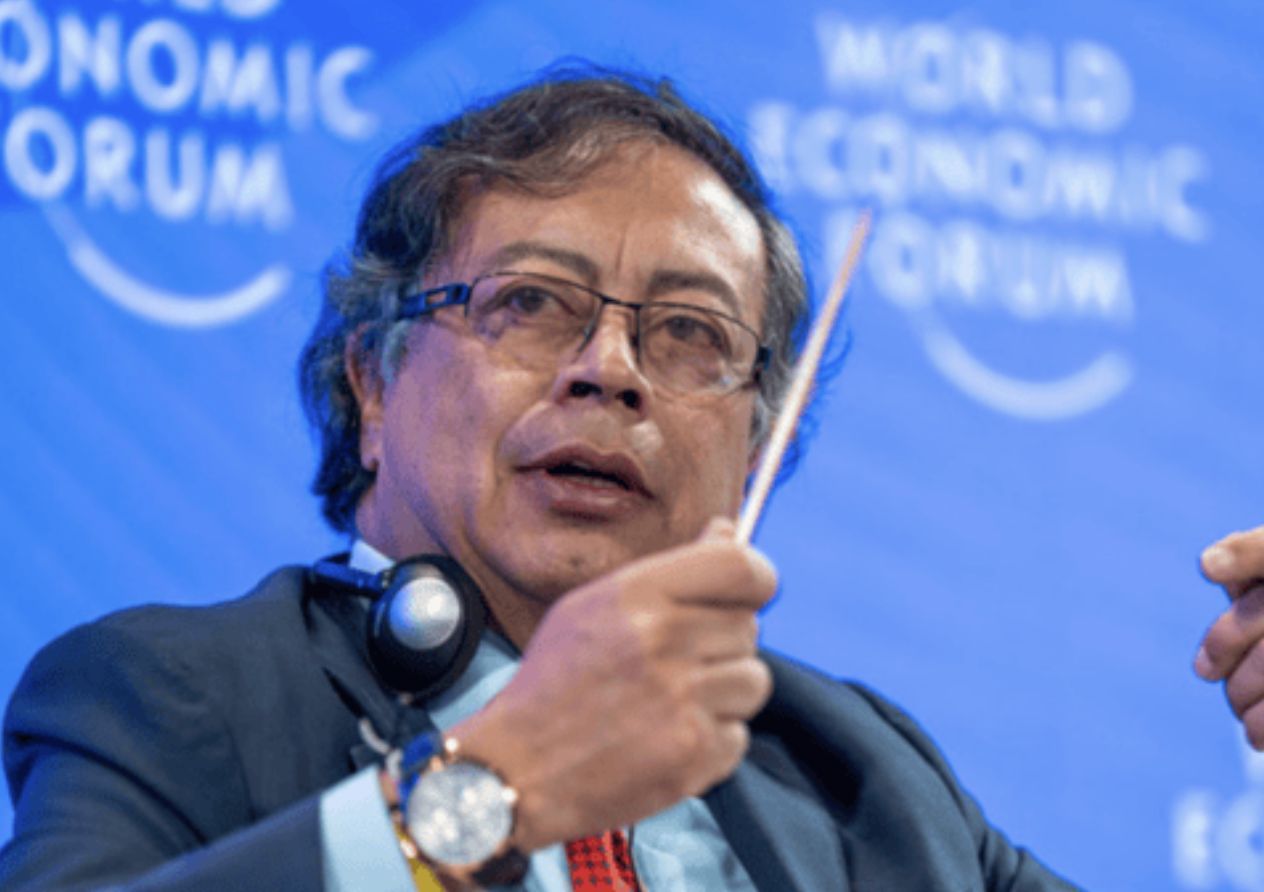
Representatives from countries accounting for more than 30 percent of global fossil fuel consumption attended the conference in Colombia, a country that has recently presented itself as a leaderin the global energy transition. Left-wing President Gustavo Petro, whose government co-hosted the event with the Netherlands, has long warned about the world’s dependence on fossil fuels, using his first UN speech in 2022 to describe it as a global addiction that could "extinguish global humanity.” He repeated this warning in his opening remarks, calling the current global energy system “suicidal” and questioning whether capitalism itself can “adapt to a non-fossil energy model.” During his presidency, Petro has sought to increase taxes on hydrocarbons, ban new oil exploration—especially in the Amazon, and expand investment in renewable energy. His government has also withdrawn from international arbitration courts that prevent countries in the Global South from reclaiming control over their natural resources from multinational corporations. Still, Colombia’s renewable sector has faced challenges and oil remains key to economic growth, making the country’s full-scale transition away from fossil fuels more difficult.
Colombia is not alone in demonstrating the scale of financial support that Global South countries will need to achieve a just transition away from fossil fuels. Conference participants widely agreed that inadequate financing remains the primary obstacle to any wider transition. So too is the limited political will of many of the world’s largest polluters—including the United States, China, Russia, and India—none of which were in attendance. Nevertheless, participants expressed frustration with waiting for these countries to act. Instead, they set about learning from each other, proposing concrete frameworks that center frontline workers and communities, and launching new scientific bodies to help map out the transition ahead. A follow-up conference will take place in the island nation of Tuvalu in February 2027.
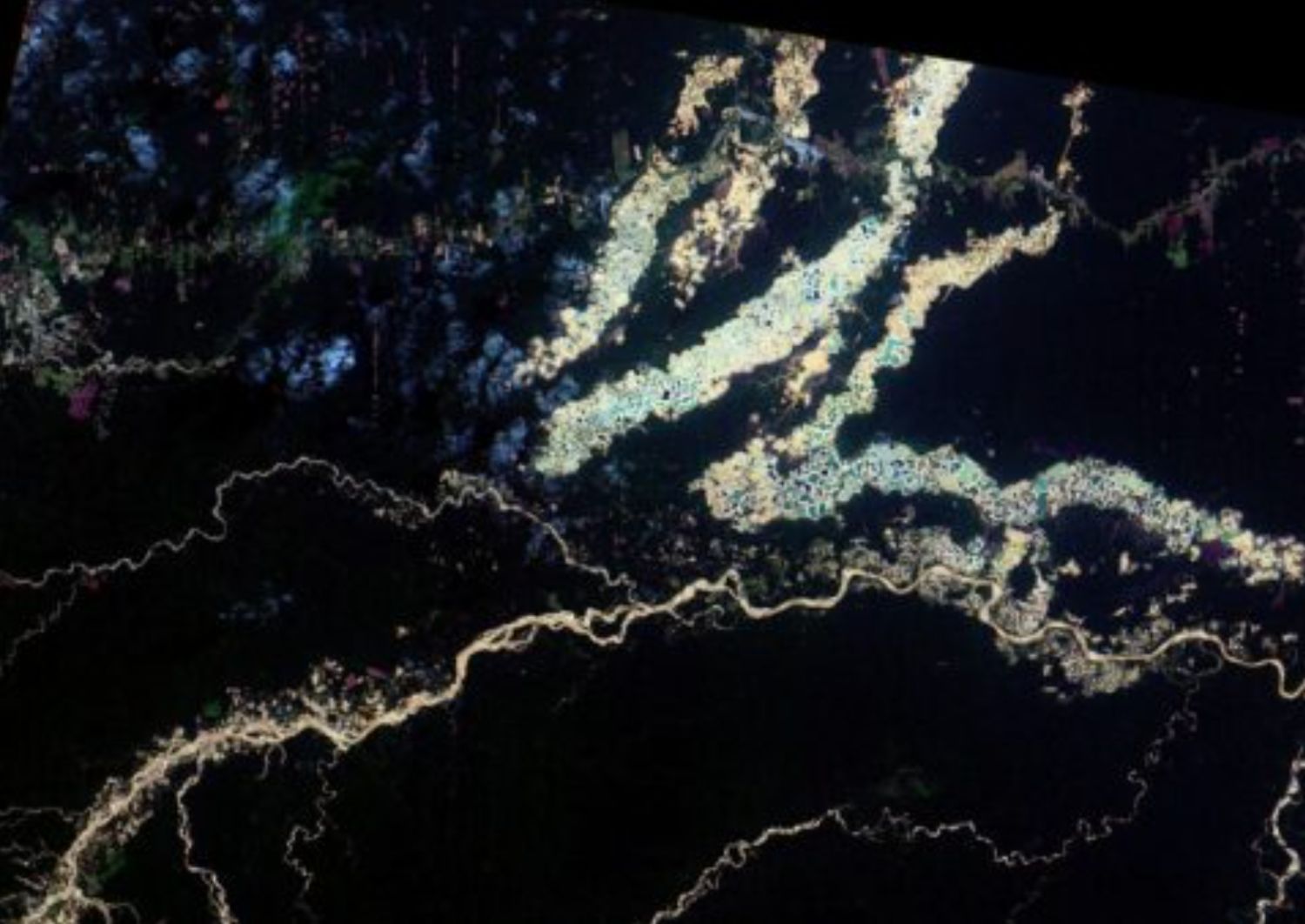
As environmental crimes threaten Indigenous communities in the Amazon, their struggles are ignored by a humanitarian system that has rendered such emergencies invisible.
The “Donroe Doctrine” is compelling Latin American governments into arbitration courts that benefit large multinational corporations, with limited success.
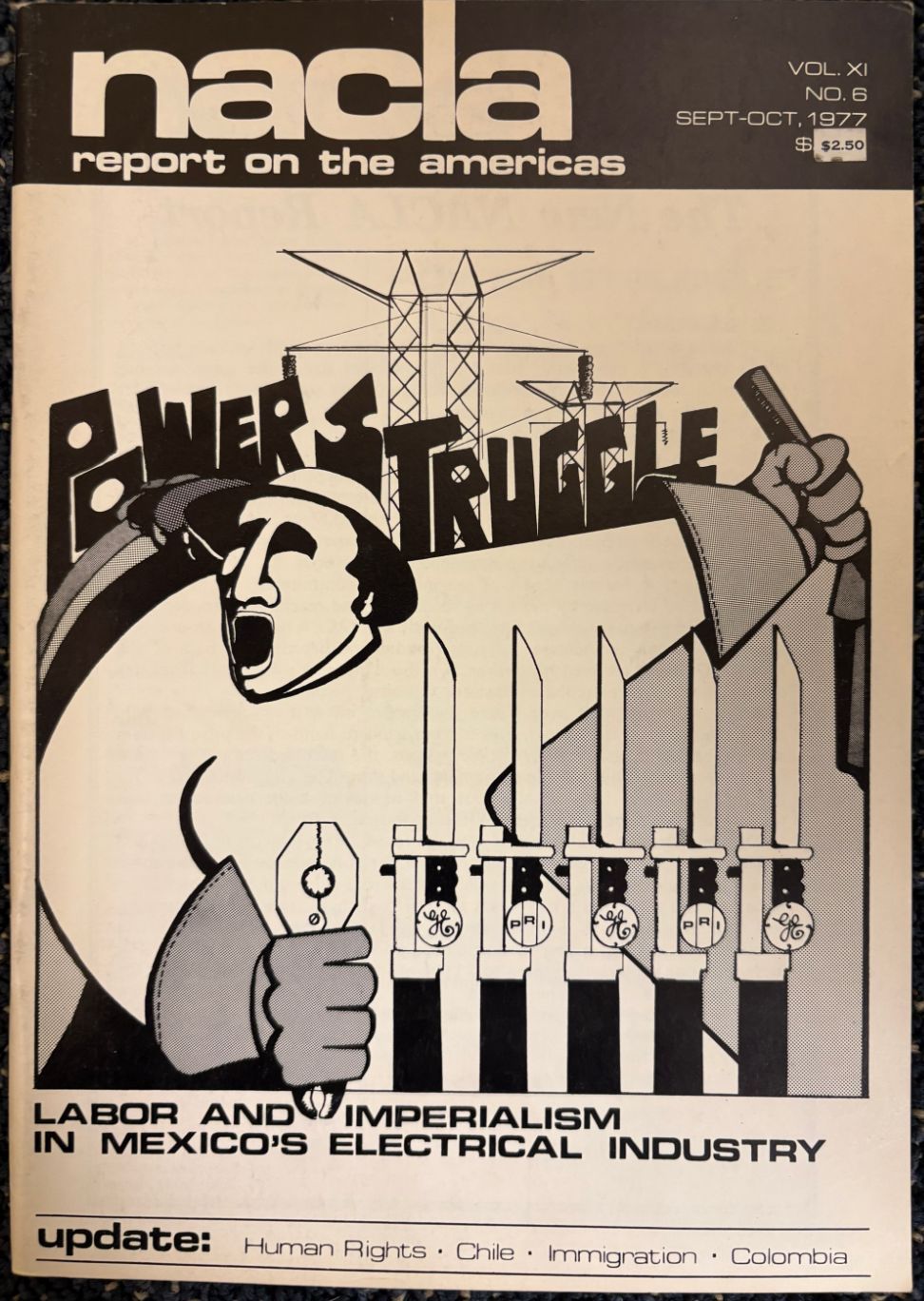
IMAGE OF THE WEEK
In honor of International Workers' Day, this week's photo comes from the NACLA archive. The cover story of our Sept-Oct issue in 1977 was dedicated to the struggle over Mexico's electrical industry.
AROUND THE REGION
SHEINBAUM’S WARNING—The government of Mexican President Claudia Sheinbaum sent a diplomatic note to the Trump Administration warning that the unauthorized presence of U.S. agents in anti-narcotics operations is not to be repeated. Monday’s announcement came about a week after the deaths of two CIA agents in a car crash in northern Mexico revealed their involvement in on-the-ground counter-narcotics operations—apparently without proper federal authorization. The revelation came as a surprise to Sheinbaum, who has emphasized security “collaboration” but long rejected any form of direct U.S. troop involvement in Mexico. The two agents, reportedly joined by two additional foreign operatives, appear to have participated in the operation through agreements between U.S. officials and authorities in the state of Chihuahua, prompting Sheinbaum and her allies to direct their criticism at local officials for bypassing the federal government. The fallout continued this week with the resignation of Chihuahua Attorney General César Jáuregui, over his role in the affair. Despite the diplomatic protest, Sheinbaum once again sought to avoid direct conflict with the Trump administration, describing the episode as “an exceptional case.” Nevertheless, a new conflict erupted Wednesday when the U.S. accused a leading governor of her party, Rubén Rocha Moya, of ties to a powerful drug trafficking cartel, alongside nine other Mexican officials. Sheinbaum has so far resisted pressure to arrest and extradite him.
ISLAS MALVINAS IN THE SPOTLIGHT—Last week, Reuters reported that the Trump administration was considering punishing NATO allies Spain and the United Kingdom for their insufficient support for its illegal war on Iran. In the case of the United Kingdom, U.S. officials are reportedly considering revoking recognition of British territorial claims over what it calls the Falkland Islands—known in Spanish as las Islas Malvinas—an archipelago long claimed by Argentina and the site of a 10-week war in 1982 that left around 900 dead. The Islands remain under British administration, but memories of the dispute continue to shape Argentine culture and politics. President Javier Milei, who has long angered war veterans by praising Margaret Thatcher and supporting Falklander’s “self-determination”—which a 2013 referendum showed strongly favors remaining British—hardened his tone after news broke of Washington’s potential reversal. Vice President Victoria Villaruel did too, arguing that if island residents “feel English, they should go back to their country.” The United Kingdom doubled down on its claims as well.
CUBAN SANCTIONS AND FAILED WAR POWERS RESOLUTION—The Center for Economic Policy Research released a new report detailing the devastating consequences of nearly a decade of expanded U.S. sanctions on Cuba’s tourism sector, economic growth, and, notably, its healthcare system. The report, “U.S. Sanctions and the Sharp Rise in Infant Mortality in Cuba,” finds that since the first Trump administration hardened sanctions in 2017—largely kept in place by the Biden administration—infant mortality has surged 148 percent. Perhaps even more harrowing than the estimated 1,800 additional infant deaths is the fact the study predates the Trump administration’s recent “maximum pressure campaign,” including a crushing oil blockade that has caused widespread harm and further strained the country’s already fragile healthcare system. Though Russian ships have recently delivered fuel to the island for the first time in months, the blockade remains largely in force—a situation likely to continue after a Democrat-led attempt to end the Trump administration’s fuel blockade failed to pass the Senate on Tuesday. Trump’s allies argued the resolution was out of order because the United States is not engaged in formal hostilities with Cuba. Similar War Powers Resolutions dealing with strikes on Venezuela and alleged drug boats have also failed in recent months.
COLOMBIA’S BLOODY WEEKEND—Over the weekend, rebel groups carried out at least 26 coordinated attacks on military bases and public infrastructure in southwestern Colombia, including the bombing of a bus on the Pan-American Highway that killed 21 people—the deadliest such attack in decades. Authorities blamed a dissident faction of the Revolutionary Armed Forces of Colombia (FARC), known as the FARC-EMC, accusing the group of, in the words of leading leftist presidential candidate Iván Cepeda, "generating a climate of fear to favor the interests of the far right.” While political violence often increases in the lead-up to elections, 2026 is already Colombia’s most violent year since the 2016 peace accords with the FARC, which were rejected by various rebel offshoots, including the EMC. The escalating security crisis has pushed the failure of the government’s “Total Peace” strategy to the center of the presidential race, especially given Cepeda’s role as one of its chief architects. He continues to defend the policy, blaming the violence on structural inequalities, while the leading right-wing candidatesPaloma Valencia and Abelardo de la Espriella have called for a return to all-out war. Polling indicates that Cepeda maintains a wide first-round lead, but also suggests that insecurity is the ruling coalition’s greatest vulnerability.