|
|
|
|
 |
|
|
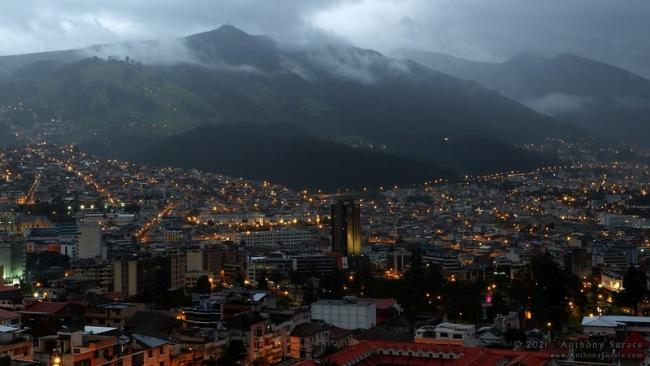
After a hiatus of five years, the Uruguayan left formally returned to power on Saturday with the inauguration of President Yamandú Orsi. The 57 year old former mayor and history teacher won a tight election in late November as the candidate of the Broad Front, a left-wing coalition of moderates, social democrats, and communists that ruled the country from 2005-2020. Orsi, a more moderate member of the Broad Front than his predecessors, will have to navigate the tensions that inevitably emerge within this wide coalition. Orsi’s inauguration came after elections that were noted for their lack of excitement. Orsi won an election between two relative moderates that was more about various corruption scandals that implicated the country’s conservatives and nostalgia for the earlier rule of the Broad Front than sharp policy differences. Even so, Orsi did propose a different vision for the country than that of his rival Álvaro Delgado, who ran on a platform of continuity with the incumbent government of Luis Lacalle Pou. Orsi promised to boost welfare spending, dramatically decrease child poverty, and lower the retirement age. Orsi inherits a country that is in relatively good shape. Uruguay ranks first in Latin America in a plethora of categories, including per capita income, social mobility, political stability, civil liberties, and anti-corruption, to name but a few. Even still, the country, like many of its neighbors, has been affected in recent years by a significant increase in organized crime. Once known for its security, Uruguay’s homicide rate is now among the highest in the region. While insecurity was identified as the number one concern for voters, Orsi secured a victory without promising any type of draconian crackdown. Compared to Delgado’s promises to build a new prison, lengthen sentences, and increase the use of solitary confinement, Orsi’s “holistic, community-based approach” to crime was enough to convince voters. Orsi is representative of a younger, more moderate wing of the Broad Front than his predecessors, Tabare Vasquez (2005-2010 and 2015-2020) and Jose “Pepe” Mujica (2010-2015). Vazquez and Mujica were both adults during the country’s military dictatorship (1973-1985); the latter, a member of the Tupamaros urban guerrilla group, spent 14 years in prison, including more than a decade in solitary confinement where he was exposed to constant torture. The violence of Uruguay’s military dictatorship is not just a thing of the past; the struggle to hold those accountable for rampant human rights violations is ongoing. An amnesty law for crimes committed by the military, passed in 1986, was overturned in 2011, but accountability efforts have faced constant opposition. While the ongoing excavations of former military bases for human remains is widely supported, the country’s previous president, the conservative Lacalle Pou, stymied many attempts at accountability as part of a governing coalition with a far-right party that pushed hard for a new amnesty law. How far Orsi will be able to further the country’s ongoing reckoning with its violent past, or whether he will even try to do so, is unclear. The issue of Venezuela, which hung over the elections, will be an early test of the government’s foreign policy. Orsi’s initial moves are further evidence of his moderate instincts. While the new government reversed the country’s recognition of opposition candidate Edmundo González as president, it was quick to make clear that they did not recognize Nicolas Maduro as president either. Orsi had previously labeled Maduro’s government as an “authoritarian regime” and accused the Venezuelan leader of “cheating.” Orsi’s approach to Venezuela is in line with previous Broad Front presidents. Mujica has called Venezuela an “indefensible” regime and Vazquez voted to expel Venezuela from Mercosur, the South American trade bloc, in 2017. |
|
|
|
|
|
|
|
|
|
SUBSCRIBE NOW TO GET OUR NEW ISSUE |
|
|
|
|
|
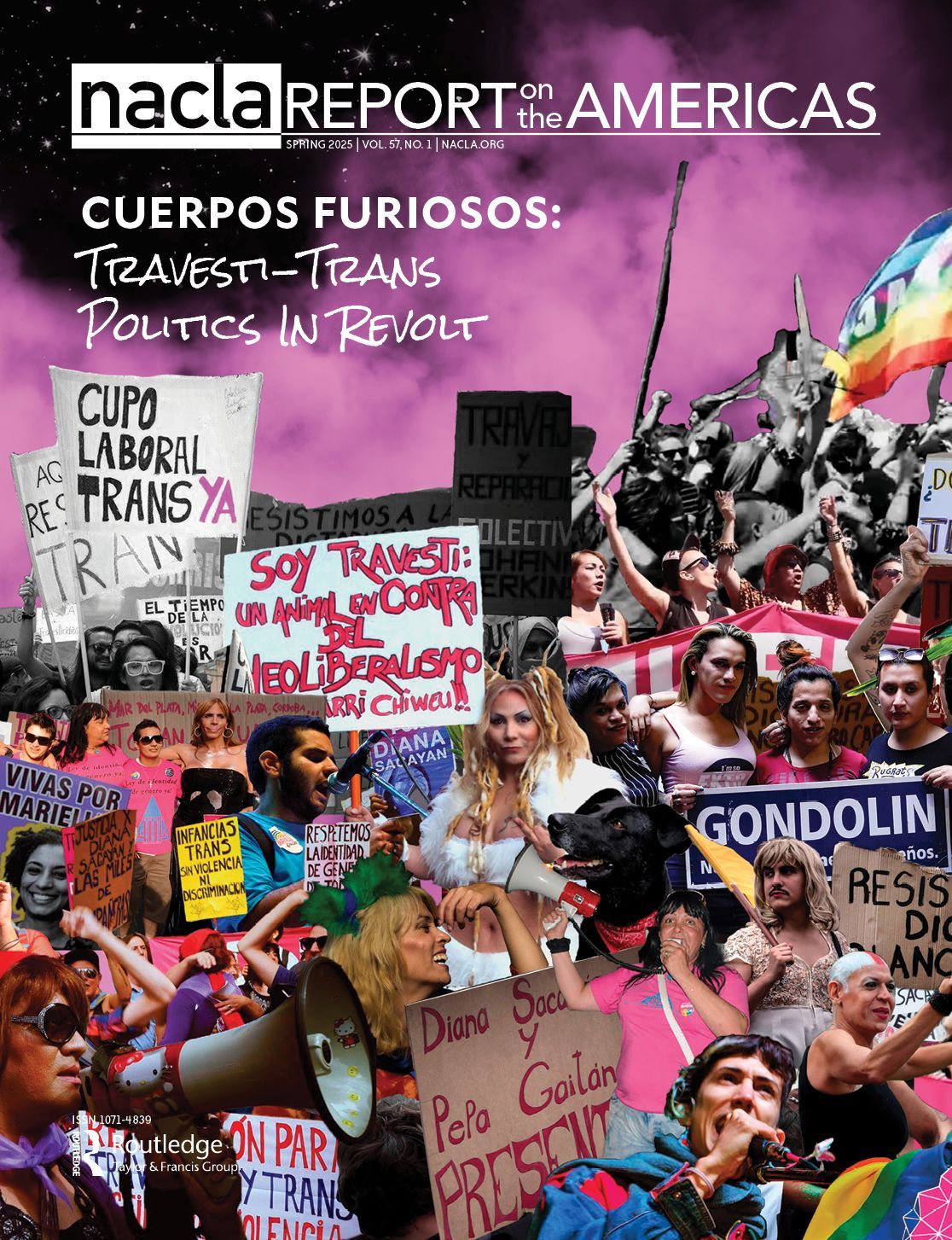
New issue alert! Our Spring 2025 issue on travesti-trans politics in the Americas has gone to press! Subscribe by March 10 to get your copy of this historic issue in the mail. ¡Es potente y urgente! "As this special Report shows us,” writes guest editor Cole Rizki, travesti and trans politics respond to the current fascist turn “with potent and shattering force. They are also not primarily a politics of sex and gender. They constitute an antifascist and transversal politics with the power to reshape our world.” Cover art by Mal Gallina Robert (IG @mal.flash). And please consider donating to help us cover the costs of this important issue! |
|
|
|
|
|
|
|
|
|
|
|
|
|
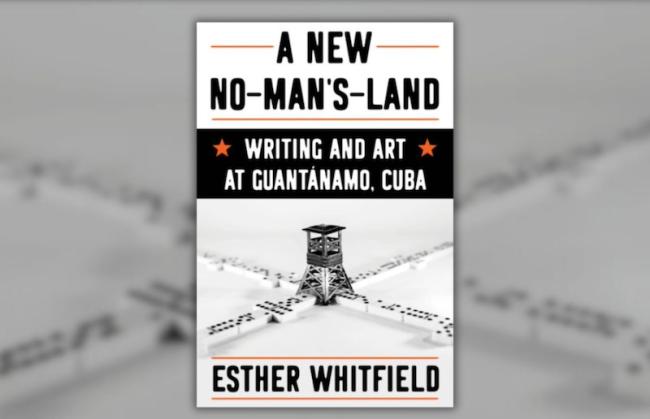
A New No-Man’s Land: Writing and Art at Guantánamo, Cuba (Review) Jacqueline Loss | March 7, 2025 Esther Whitfield's book examines how art produced in Guantánamo transcends cultural and linguistic divides to find common ground, reimagining empathy and resistance against political forces. |
|
|
|
|
|
|
|
|
|
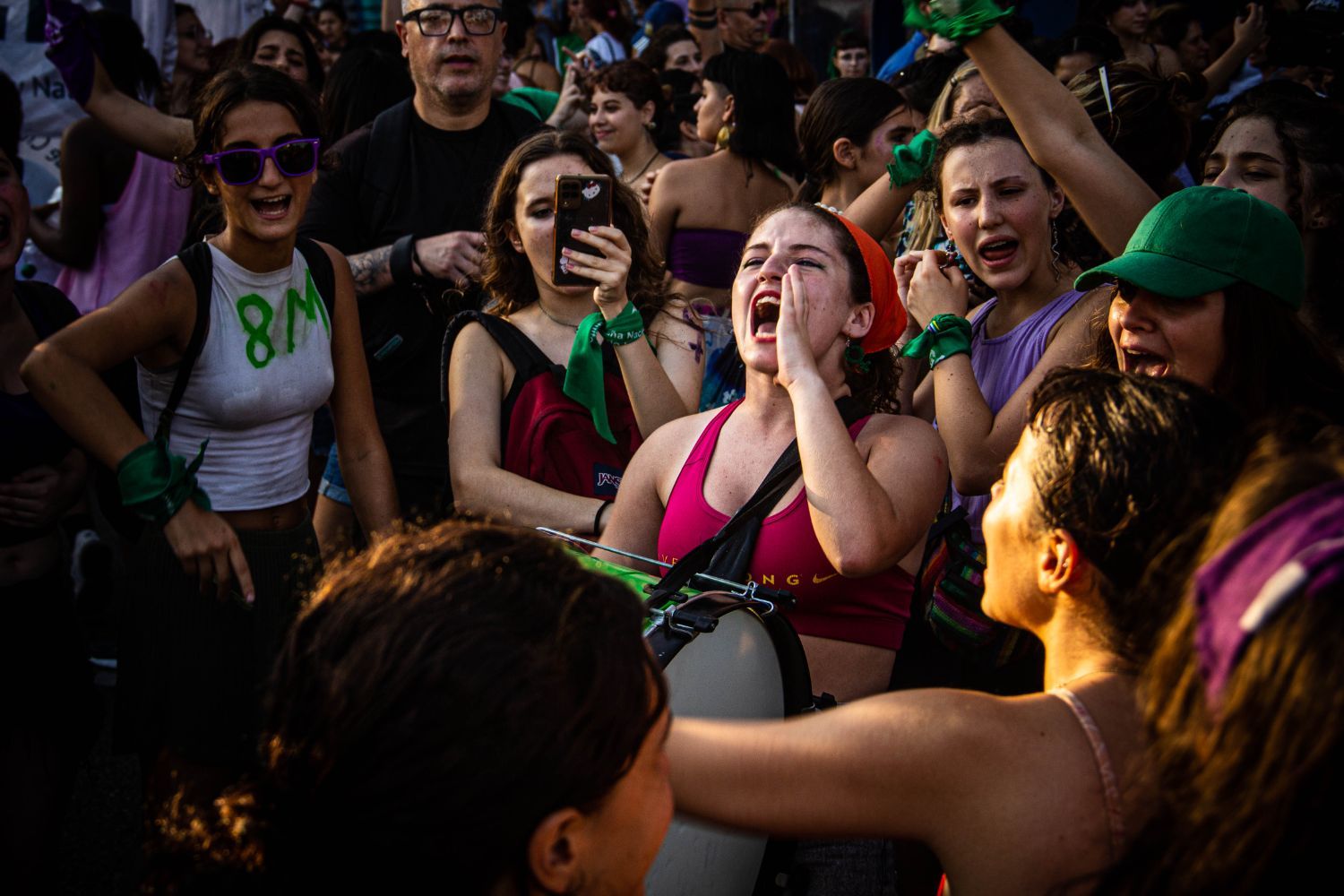 |
Tomorrow, March 8, hundreds of thousands of women and sexual dissidents will take to the streets across the Americas in honor of International Women's Day. Here, demonstrators chant slogans during the march in Buenos Aires in 2023. (Virginia Tognola). |
|
|
|
|
|
|
|
-
SHEINBAUM WINS ANOTHER TEMPORARY REPRIEVE — Mexican President Claudia Sheinbaum secured another temporary delay on the imposition of 25 percent tariffs on Mexican exports to the United States. Two days after tariffs on Mexican and Canadian goods formally went into effect, causing U.S. markets to tank, Donald Trump quickly suspended tariffs on all goods covered by the US-Mexico-Canada trade agreement. Sheinbaum’s approach differed markedly from that of Canadian leader Justin Trudeau, who responded immediately with retaliatory tariffs on U.S. goods. Sheinbaum instead opted to de-escalate, refraining from immediately levying retaliatory tariffs and reportedly pressing her case over the phone with Trump effectively. In his announcement of the delay, Trump thanked Sheinbaum for her “hard work” and described their relationship as “a very good one”—in contrast to his treatment of Trudeau, who has drawn the ire of the U.S. President. Mexicans have rewarded Sheinbaum for her diplomatic prowess, as well as her wider defense of Mexican sovereignty, history, and culture. Recent polling puts her approval rating as high as 85 percent, a number that was never reached by her popular predecessor and that represents a nearly 15 percent boost since her October inauguration.
-
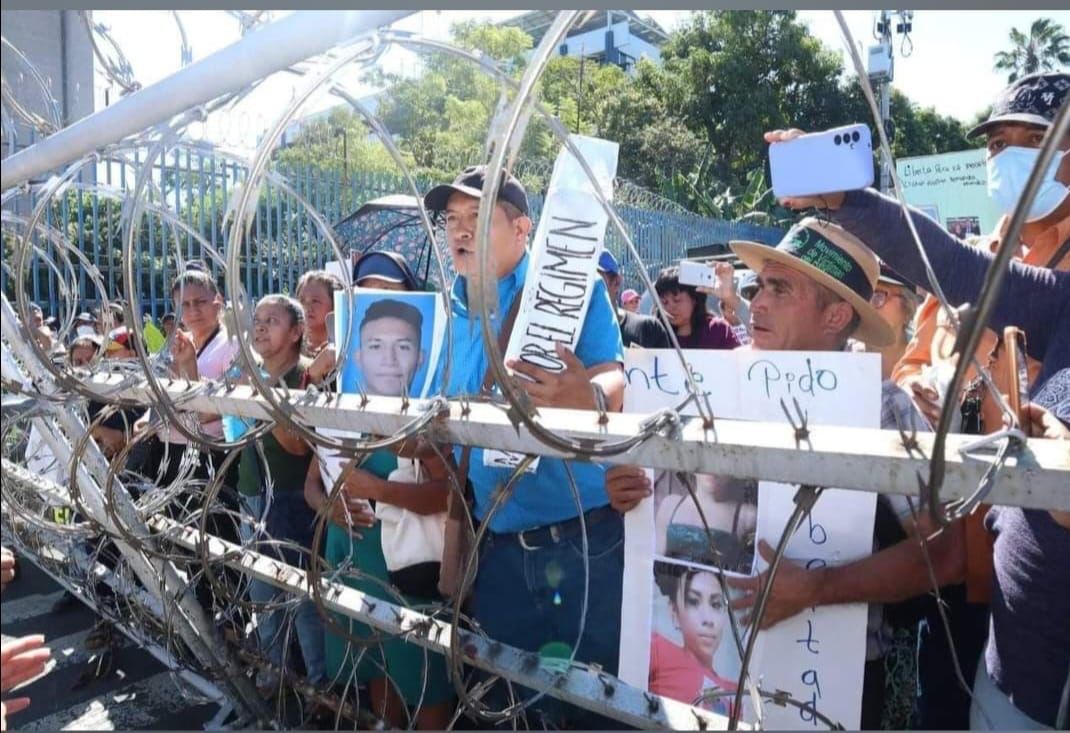
BUKELE CLINGS TO CRYPTO DREAM — Days after the International Monetary Fund (IMF) approved a $1.4 billion loan to El Salvador that was dependent on reforming the country’s cryptocurrency regulations, the Salvadoran government announced that it had purchased more bitcoins. A direct act of defiance given that the accumulation of the digital currency was required to end as part of the deal, the move was followed by an aggressive tweet by the country’s president, Nayib Bukele: “It’s not stopping.” Even so, bitcoin’s “days as legal tender,” which began in El Salvador in 2021, have effectively come to an end. As part of the conditions attached to the loan, the government had to ensure that taxes could no longer be paid in bitcoin and Salvadoran businesses could decide voluntarily whether or not to accept the cryptocurrency. The IMF, worried about the financial stability of cryptocurrency, as well as its potential use in “money-laundering and other crimes,” made clear that crypto reforms were a precondition of any loan. Even though an undisclosed amount of public money has been invested in crypto by Bukele, Salvadorans will not lament bitcoin’s loss of status: in 2024, 92 percent of citizens had never used the crypto currency. .
|
|
|
|
-
ELECTIONS AT THE OAS — On Monday March 10, the Organization of American States (OAS) will elect a new Secretary General (SG) to a term of five years. The race to replace Luis Almagro, the current SG from Uruguay, has come down to two main candidates, Albert Ramdin, the foreign minister of Suriname, and Ruben Ramírez Lezcano, the foreign minister of Paraguay. The region’s progressive governments have rallied around Ramdin. In a joint statement released on Tuesday, the leaders of Brazil, Bolivia, Chile, Colombia, and Uruguay announced their support for Ramdin, joining the organization’s 14 Caribbean member nations who also backed him. The involvement of progressive leaders is noteworthy: the OAS has long been an object of suspicion by the region’s left-wing governments, especially during the Cold War, when the United States often used the body to advance its own anti-communist aims. The organization’s recent history has not done a good job of dispelling this suspicion. Almagro, the departing SG, was repeatedly criticized for his interventionism and alleged subservience to the United States. As proof, critics pointed to the organization’s role in Bolivia’s 2019 political crisis, as well as its acceptance of Venezuelan opposition figure Juan Guaidó.
-
VENEZUELA-GUYANA TENSIONS — In an interview on Thursday, Venezuelan President Nicolás Maduro criticized his Guyanese counterpart, Irfaan Ali, calling him the “Zelensky of the Caribbean” and imploring him to stop “violating international laws.” The interview came days after a Venezuelan warship entered Guyanese waters and questioned the crew of an Exxon Mobil oil facility. According to Ali, the Venezuelan vessel transmitted a message saying that it was operating in “‘disputed international waters.’” In response, Guyana mobilized its own military and appealed to the international community for help. The tensions between the two countries can be traced back to Maduro’s attempts in late 2023 to annex large swaths of Guyanese territory. Claiming that the oil-rich Essequibo region historically belonged to Venezuela, Maduro organized a referendum on whether to proceed with annexation that was approved by voters. While a summit that followed produced a declaration that no force would be used, an agreement on the disputed region was not reached. Last year, Venezuela began amassing troops along the border. Weeks ago, six Guyanese soldiers were fired upon by armed men stationed on the Venezuelan side of the border
|
|
|
|
|
|
|
|
|
|
|
|
North American Congress on Latin America
53 Washington Sq South, Fl. 4W | New York, New York 10012
(212) 992-6965 | [email protected] |
|
|
|
|
|
|
|
|
|