|
|
|
|
 |
|
|
On Tuesday, members of Colombia’s government officially presented to the public 12 questions that President Gustavo Petro hopes will be presented to the country’s citizens as part of his push for a popular referendum on his stalled labor reform agenda. The nature of the proposals, which involve expanding the pay, rights, and stability of Colombian workers, represent a clear attempt at compromise. While opposition members and business leaders blasted the proposals and the turn to a popular referendum writ large, initial responses to the government’s announcement suggests that Petro’s more moderate approach may soon bear fruit. Petro hoped to avoid the complicated process of a popular referendum to pass much needed labor reform. Nevertheless, his attempt to rewrite Colombian labor law to better protect the country’s increasingly precarious workforce has encountered roadblocks every step of the way. In mid-March, the various proposals that constitute his labor reform package —including expanding overtime pay and making it more difficult to hire workers as subcontractors to avoid providing benefits—were rejected once again in a crucial Senate vote. At a special rally convened by the government to demonstrate popular support for his proposals, Petro announced upon learning of the Senate’s rejection of the package that he would press ahead with a plan to organize a popular referendum to deal with the issue. When Petro initially introduced the idea of a popular referendum, he dismissed critics of his reform agenda as “monarchs and tyrants” who aspire to “govern the people.” But as details on the referendum questions emerged, so did signs of moderation. While the government consulted heavily with the country’s leading trade union federations, Petro ended up striking some of the more radical proposals championed by labor leaders—even while keeping most of their key demands. He also used deliberately vague language to allow space for opponents to hop on board, and framed the proposal as an opportunity to form a broad coalition. The proposal consists of 12 questions, to which citizens will respond with either a “yes” or “no” if it reaches the public vote. The topics are wide-ranging: expanding overtime and holiday pay, hiring practices related to workers with disabilities, and the extension of low-interest loans for cooperatives, to name a few. Most target the informal labor sector, asking explicitly whether subcontracting should be banned and whether scores of informal jobs—such as those held by delivery workers, domestic workers, community caregivers, and artists—should be formalized and granted access to social security. One question poses time off for medical treatments and “debilitating menstrual periods.” Petro’s more measured approach mirrors smaller labor reform packages previously introduced by centrist lawmakers. The government’s strategy immediately bore fruit: Jaime Salamanca, head of the Chamber of Representatives and a member of the Green Party, immediately came out in favor of moving forward with the popular referendum. Nevertheless, significant hurdles remain. For the popular vote to proceed, the Senate must approve the proposal with at least 53 votes out of 105—a difficult threshold given that the government lacks a majority. Business leaders and the opposition have come out firmly against the proposal, repeating familiar arguments about the costs to “small businesses,” the risk of capital flight, and the limited impacts of the reform on unemployment. Even if the Senate votes to move forward with the referendum, which will be formally introduced by the government on May 1, Petro will still confront the challenge of voter turnout. For the results to be valid, at least 13.6 million Colombians must cast a ballot, a difficult number to reach given that Petro won the presidency with just 11.2 million votes. If these thresholds are cleared, any question that receives more than 50 percent approval will become law. The stakes are high for Petro: his approval rating has fallen in the face of the country’s ongoing armed conflict, and the right-wing is surging in early polling for the 2026 presidential elections. Meanwhile, attacks on Petro have grown farcical: this week, a former member of his cabinet and prominent ally publicly accused the president of being a drug addict. |
|
|
|
|
|
|
|
|
|
|
|
|
|
|
|
|
|
|
|
|
|
|
|
|
|
|
|
|
|
|
|
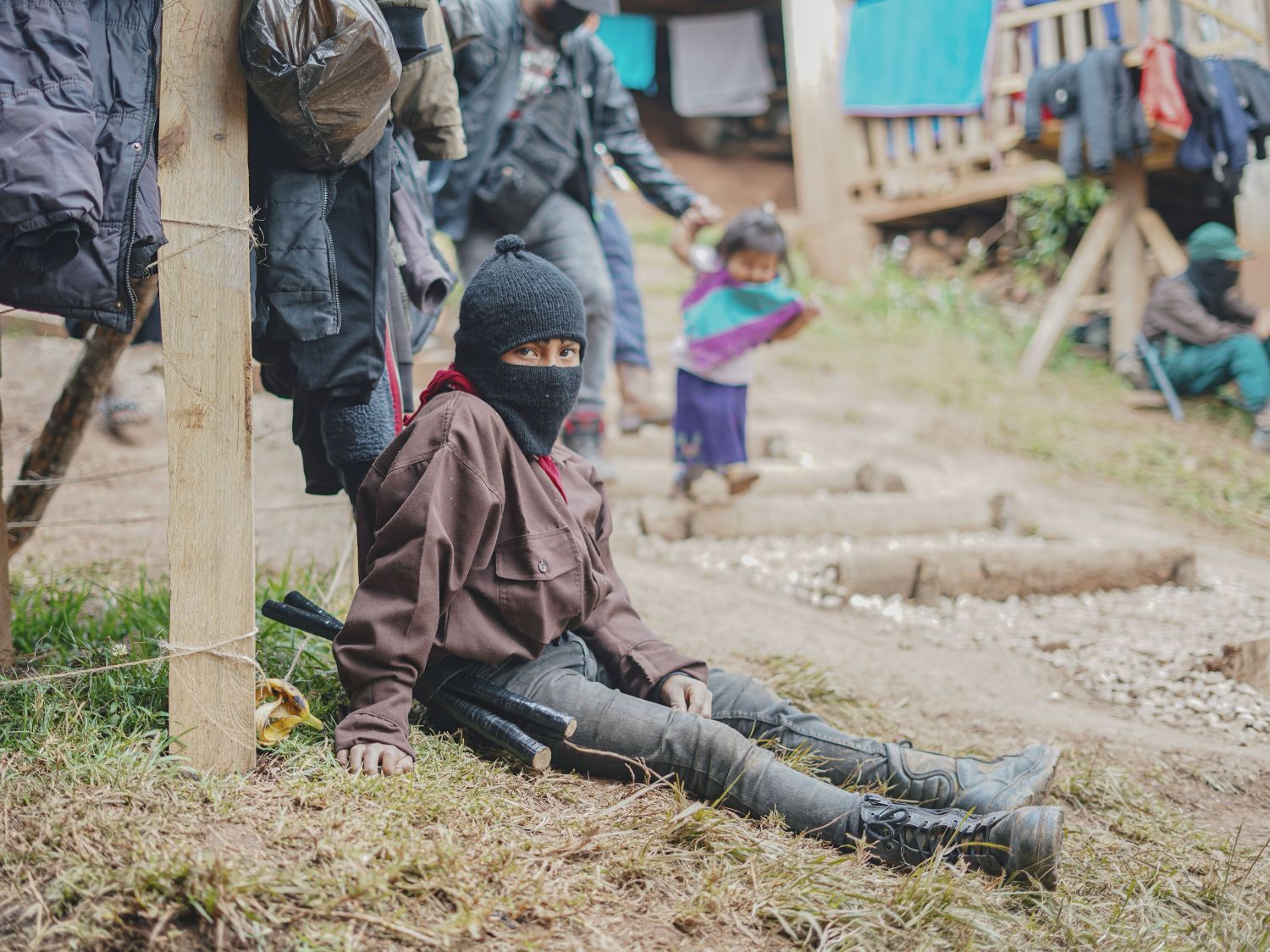 |
A young Zapatista in Tenejape, Caracol Jacinto Canek, Chiapas. Part of a recent photo essay, "A brief history of EZLN: the Zapatistas in images," published by Pirate Wire Services. (Daniela Diaz) |
|
|
|
|
|
|
|
-
GUATEMALA ARRESTS INDIGENOUS LEADER — On Wednesday, Guatemalan authorities arrested Luis Pacheco, an Indigenous leader and member of President Bernardo Arévalo’s government. Pacheco is accused of terrorism for his leadership role in nationwide protests in 2023 that called for the peaceful transfer of power to Arévalo and the removal of Attorney General Consuelo Porras. For many protesters, respecting the will of the voters meant ousting Porras, who aggressively fought to prevent Arévalo’s ascension to power, has been sanctioned by the United States for impeding anti-corruption efforts, and continues to launch sham investigations into Arévalo’s party. It comes as no surprise that Pacheco was targeted by the Attorney General’s Office: years ago, Pacheco himself noted that he would probably be persecuted for his activism. Árevalo, who would not be in power without the immense sacrifice of the country’s Indigenous movements, immediately came to Pacheco’s defense. He denounced the arrest as “spurious” and warned that it “criminalizes principles and rights that are guaranteed.” At the time of his arrest, Pacheco was serving as the deputy minister for sustainable development in the Ministry of Energy and Mines.
-
BUKELE PROPOSES PRISONER SWAP — On Sunday, Salvadoran President Nayib Bukele proposed a prisoner swap that would see him repatriate 252 Venezuelans in exchange for “an identical number of the thousands of political prisoners” held in Venezuela’s jails. Directing his post on X to Venezuelan President Nicolas Maduro, Bukele suggested the two countries reach a “humanitarian agreement” on the prisoners, even though he argued that El Salvador “has no political prisoners.” Bukele singled out a few prominent members of the Venezuelan opposition for potential release, including the family members of former presidential candidate Edmundo González and opposition leader María Corina Machado. Venezuelan government officials responded by accusing Bukele of human trafficking; the country’s Attorney General, Tarek William Saab, called him a narcissistic “neo-Nazi” who had “kidnapped” his countrymen. Desperate family members of prisoners in both countries immediately rejected the idea of their loved ones being treated as “merchandise,” “toys,” and bargaining chips. Bukele’s offer, which Maduro rejected, came the same week that Bukele denied four visiting Democratic lawmakers the chance to speak with Kilmar Abrego García, the wrongfully-imprisoned Maryland man.
|
|
|
|
-
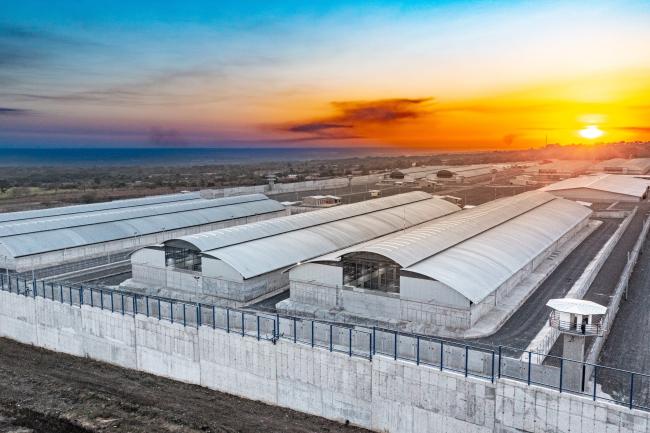
HAITIAN GANGS AS TERRORISTS — The State Department is preparing to designate the financiers, leaders, and members of some of Haiti’s most powerful gangs as “terrorists.” According to reporting by The Miami Herald, the terrorist label would open the possibility of Haitians being deported to Salvadoran prisons. A senior State Department official confirmed as much, telling The Herald that “Haitian gang leaders and members could end up at CECOT, alongside fellow designated terrorists from MS-13 and Tren de Aragua.” There is some domestic Haitian support for classifying Haiti’s gangs as terrorists. In January, before the Trump administration moved against the Tren de Aragua, a coalition of prominent Haitian politicians petitioned the U.S. government to designate the Viv Ansanm gang coalition as a Foreign Terrorist Organization. Nevertheless, reception to the move has been mixed: critics worry it could be used as a pretense for the United States to invade Haiti, and highlighted the rampant human rights violations in El Salvador’s prisons. In late February, the Dominican Republic designated scores of Haitian gangs as terrorist organizations and vowed to try any members under a harsh new “anti-terrorism” law.
-
BATTLE OVER MEXICAN AIRWAVES — On Monday, Mexican President Claudia Sheinbaum announced that she will seek to ban the broadcasting of foreign advertising in Mexican territory. The announcement was the latest salvo in her weeks-long battle against a series of hateful, anti-immigrant ads that have aired during popular programs and sporting events. The ads, which feature U.S. Secretary of Homeland Security Kristi Noem warning migrants that if they come to the United States, “we will hunt you down, arrest you, and deport you,” are part of a massive ad campaign recently launched by Noem’s Department. Sheinbaum has denounced the “discriminatory content” of the ads. While she and members of her government have attempted to persuade Mexican broadcasters to pull the ads, she argued that the lack of a legal mechanism through which to do so was impeding her ability to effectively pull harmful content from the airwaves.
|
|
|
|
|
|
|
|
|
|
|
|
North American Congress on Latin America
53 Washington Sq South, Fl. 4W | New York, New York 10012
(212) 992-6965 | [email protected] |
|
|
|
|
|
|
|
|
|